Metallised conductive fabric and fleece
- Technology
- EMI shielding materials
- Partner
- MTC
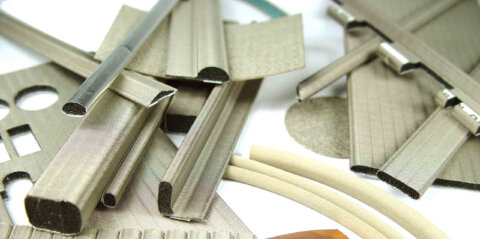
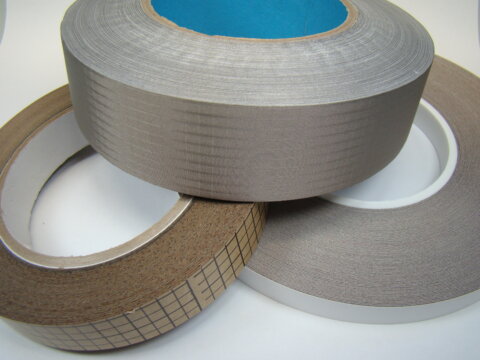
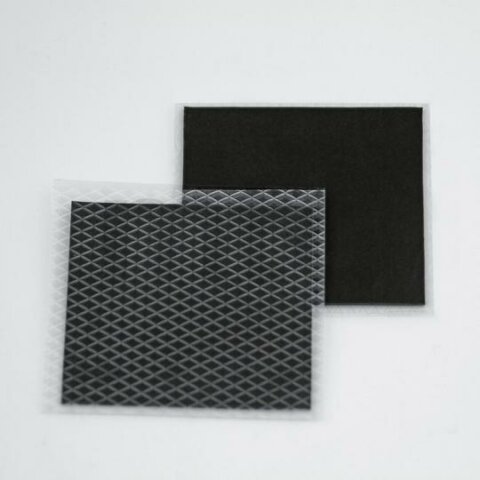
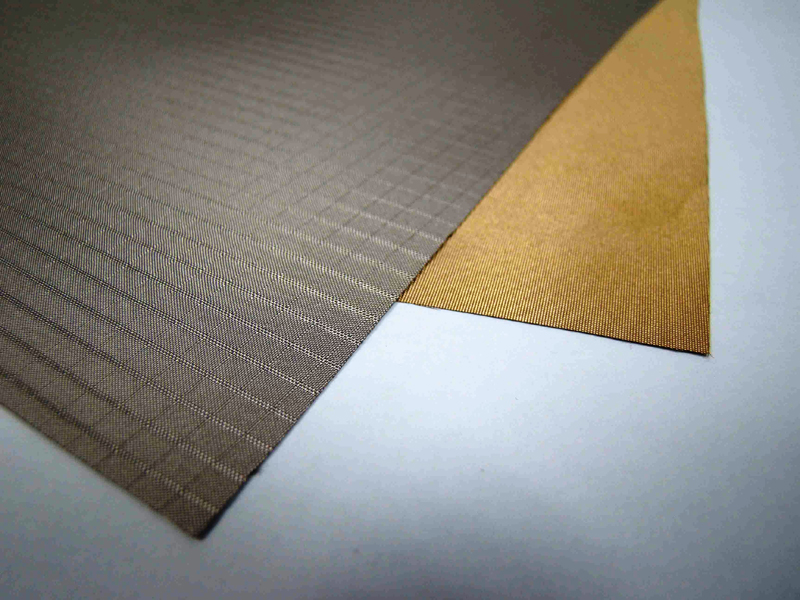
The RGW Series is a range of metallised conductive fabrics and fleeces developed for effective EMI shielding in applications where flexibility and low weight are important. Each material uses a polyester substrate that is fully metal plated to provide electrical conductivity throughout the textile. These shielding materials are easy to cut, wrap and fit over large surfaces or complex shapes where rigid metal shielding is impractical. The range includes woven fabrics, rip-stop reinforced variants, ultra-thin grades, non-woven fleece and open mesh options to suit different mechanical and shielding requirements. Available metallisations include nickel/copper based systems, with additional coating options available for specialised needs. Typical shielding performance ranges from about 70 to 90 dB across frequencies from around 100 MHz to 18 GHz, depending on the grade selected. The materials can be supplied on rolls or in custom dimensions to simplify integration into enclosures, cable wraps, room shielding and other EMC applications. Optional conductive or non-conductive adhesive backing is available to support easier installation. The fabrics are also RoHS and REACH compliant, with optional anti-tarnish coating available for extended durability.
Range features
A high level overview of what this range offers
- Multiple metallisation options: Available in nickel/copper based constructions, with additional options such as tin, silver or gold on request for tailored shielding and surface performance.
- Wide choice of fabric formats: Includes rip-stop woven fabric, standard woven fabric, ultra-thin woven grades, non-woven fleece and open mesh for different strength, thickness and transparency needs.
- Optional adhesive backing: Can be supplied with conductive or non-conductive self-adhesive backing to simplify installation and suit grounding or isolation requirements.
- Lightweight and highly flexible: Easy to cut, fold and wrap around curved or irregular surfaces, making the material suitable for large-area coverage and complex assemblies.
- High EMI shielding effectiveness: Depending on the variant, typical attenuation reaches approximately 70 to 90 dB across frequencies from about 100 MHz to 18 GHz.
- Custom supply formats: Available on rolls up to around 1070 to 1170 mm wide and also in customer-specific widths or pre-cut shapes.
- Regulatory compliance: Produced to meet RoHS and REACH requirements for use in regulated industries.
- Optional anti-tarnish protection: A urethane topcoat can be added on request to reduce oxidation and help preserve long-term conductive performance.
Downloads
for Metallised conductive fabric and fleece
What’s in this range?
All the variants in the range and a comparison of what they offer
| Property | RGW-WR-260-PCN | RGW-WD-250-NICO | RGW-W-290-PCN | RGW-WPD-300-PCN | RGW-NW-50-PCN | RGW-M-80-PCNR |
|---|---|---|---|---|---|---|
Basic material | 100% polyester (rip-stop) | 100% polyester (woven) | 100% polyester (plane weave) | 100% polyester (woven) | 100% polyester (non-woven fleece) | 100% polyester (mesh) |
Plating | Ni + Cu + Ni | Ni + Cu + Ni-Co | Ni + Cu + Ni | Ni + Cu + Ni | Ni + Cu + Ni | Ni + Cu + Ni-Sn |
Colour | Grey | Bright grey | Grey | Grey | Grey | Black |
Weight | 80 g/m² ±5 | 100 g/m² ±5 | 81 g/m² ±5 | 63 g/m² ±5 | 74 g/m² ±5 | 34 g/m² ±3 |
Thickness | 0.10 mm ±0.01 | 0.11 mm ±0.01 | 0.10 mm ±0.01 | 0.055 mm ±0.01 | 0.19 mm ±0.03 | 0.105 mm ±0.005 |
Standard width | 1170 mm ±5 | 1070 mm ±10 | 1070 mm ±10 | 1070 mm ±10 | 1120 mm ±5 | 1070 mm ±10 |
Density (warp/weft) | 136 / 126 | 142 / 118 | 188 / 92 | 186 / 111 | – | 90 / 86 |
Surface resistance | <0.03 Ω/□ | <0.05 Ω/□ | <0.05 Ω/□ | <0.05 Ω/□ | <0.05 Ω/□ | <0.2 Ω/□ |
Shielding effectiveness | 80–90 dB (100 MHz–18 GHz) | 85 dB (E) / 20 dB (H) | 70 dB @100 MHz; 78 dB @500 MHz | 75–90 dB (100 MHz–18 GHz) | 67 dB @100 MHz; 75 dB @500 MHz | 52 dB @100 MHz; 54 dB @500 MHz |
Breaking strength (warp/weft) | 479 / 391 N | 566 / 432 N | 571 / 392 N | 399 / 313 N | 16 / 8 (kg/5 cm) | 192 / 183 N |
Elongation (warp/weft) | 32% / 30% | 34% / 30% | 3% / 37% | 30% / 40% | 18% / 18% | 31% / 31% |
FAQs
for Metallised conductive fabric and fleece
Each variant in the range is designed for different priorities. Standard nickel/copper woven fabrics are a strong choice for general-purpose high-frequency shielding. The Ni-Co plated RGW-WD-250-NICO is better suited where improved low-frequency magnetic attenuation is needed. RGW-WPD-300-PCN is ideal for tight spaces because of its ultra-thin profile. RGW-NW-50-PCN is a soft non-woven fleece that conforms easily and can be layered. RGW-M-80-PCNR is useful where visibility through the shield is required, such as display shielding, because it combines EMI performance with optical transparency. For higher tear resistance, RGW-WR-260-PCN is the preferred rip-stop reinforced option.
The fabric can be ordered with a self-adhesive backing for simpler installation. Conductive adhesive is used when electrical bonding to a metal surface is required, while non-conductive adhesive is suitable where electrical isolation is preferred. Non-adhesive versions can be fixed using contact adhesives, epoxy, clamping, fasteners or tape. Because the material is flexible and easy to cut, it can be fitted neatly into enclosures, wrapped around cables or applied to irregular surfaces.
These fabrics are highly effective against high-frequency electromagnetic interference, but thin conductive textiles are less effective against low-frequency magnetic fields. The Ni-Co plated variant improves magnetic shielding performance compared with standard grades, but attenuation at very low frequencies is still limited. For strong mains-frequency magnetic fields, thicker metal or specialised high-permeability shielding materials are usually required.
The RGW Series is intended for shielding across a broad RF spectrum, typically from about 100 MHz up to 18 GHz depending on the material grade. Within this range, many variants provide attenuation in the region of 70 to 90 dB. This makes them suitable for reducing interference from common communications, wireless and industrial frequency bands. Very low-frequency or DC magnetic fields are outside the primary effective range of this type of shielding textile.
Yes. The material can be cut using scissors, blades or punch tools to create custom shapes. The woven versions are designed with stable weaves, including rip-stop construction in some grades, to minimise fraying. The non-woven fleece can also be cut easily and does not fray in the same way as woven textiles. For precise repeat parts, custom pre-cut or die-cut formats can also be supplied.
The metal coating is designed to bond well to the fibre structure, so it does not flake off easily during normal handling or flexing. Nickel in the plating system helps protect against corrosion, while the conductive performance remains stable in typical indoor environments. In more demanding conditions, some tarnishing may occur over time, but an optional anti-tarnish urethane coating is available to provide additional protection against oxidation.
For best shielding performance, the conductive fabric should be electrically connected to the common ground of the enclosure or device. This is usually done by overlapping or clamping the fabric onto a grounded metal surface, placing it under a grounding screw, or using conductive adhesive to bond it directly to a metal chassis. Conductive tapes or metal foil bridges can also be used where needed. The important point is to create reliable metal-to-metal contact between the plated fabric and the grounding structure.
The standard RGW Series materials are not described as specifically fire-retardant and no UL94 rating is provided in the supplied product information. Because the base material is polyester, it can melt or burn if exposed to sufficient heat or flame. Applications with strict flame-resistance requirements may need an additional fire barrier or a specialised custom solution.