Thermally conductive insulator
- Technology
- Thermal interface materials
- Partner
- MTC
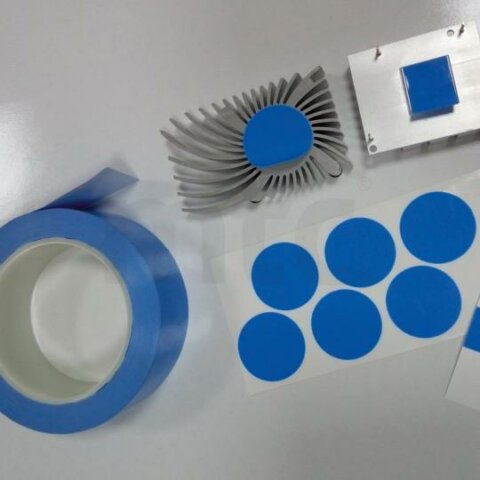
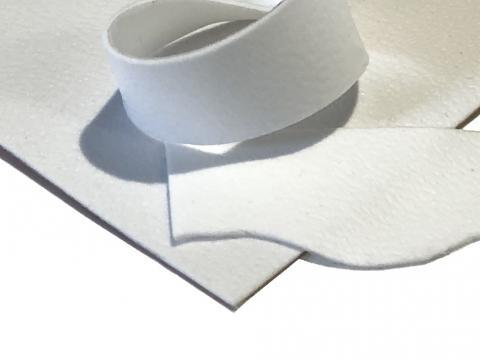
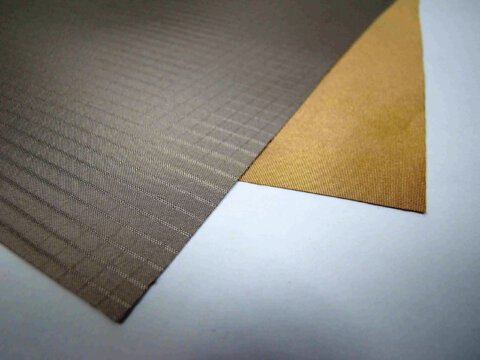
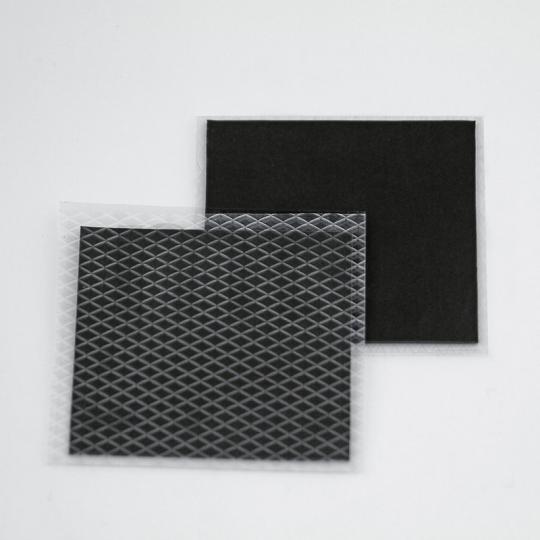
Thermally conductive insulator pads from the TCIN series provide reliable heat management for electronics that also require electrical isolation. These silicone rubber sheets are available in thermal conductivity grades from 1.2 to 7.0 W/mK, allowing engineers to match performance to the application. Their smooth, compliant surfaces conform well to component and heatsink interfaces, enabling effective cooling even with low mounting pressure. The pads act as an insulating barrier between power devices and heatsinks or chassis to prevent electrical contact and dielectric breakdown. Thickness options from 0.18 mm up to 10 mm make them suitable for both thin interface layers and larger gap filling. All variants support continuous use from -40°C to +200°C and meet UL 94 V-0 flammability requirements. Many grades are reinforced with fibreglass or polyimide film for improved handling and durability. Optional adhesive backing and die-cut supply options further simplify assembly in power, automotive and industrial electronics.
Range features
A high level overview of what this range offers
- High thermal conductivity: Efficient heat transfer from 1.2 to 7.0 W/mK for cooling loaded electronic components.
- Electrical isolation: Provides safe insulation between device and heatsink with high dielectric strength.
- Low thermal resistance: Smooth, compliant surfaces reduce contact resistance and improve heat flow.
- Wide thickness range: Available from 0.18 mm up to 10.0 mm for thin interfaces or larger gaps.
- Low-pressure conformity: Soft silicone variants adapt to uneven surfaces with minimal clamping force.
- Reinforced constructions: Fibreglass or polyimide-backed options improve tear resistance and handling.
- Assembly friendly: Can be die-cut or kiss-cut, with optional adhesive on one or both sides.
- High temperature stability: Continuous operating range from -40°C to +200°C.
- Flame retardant: UL 94 V-0 rated for safer use in electrical and electronic equipment.
- Compliant materials: RoHS and REACH compliant for broad industrial and consumer use.
Downloads
for Thermally conductive insulator
What’s in this range?
All the variants in the range and a comparison of what they offer
| Property | TCIN 1.2 | TCIN 1.3 | TCIN 1.5 | TCIN 1.6 | TCIN 2.0 | TCIN 3.0 | TCIN 3.6 | TCIN 5.0 | TCIN 7.0 |
|---|---|---|---|---|---|---|---|---|---|
Base material | Silicone rubber | Silicone on polyimide film | Silicone rubber | Silicone rubber | Silicone rubber | Silicone rubber | Silicone rubber | Filled silicone elastomer | Filled silicone elastomer |
Reinforcement/backing | Fibreglass | Polyimide film | Fibreglass | Fibreglass | (none) | Fibreglass | Fibreglass | Fibreglass | Fibreglass |
Thermal conductivity (W/mK) | 1.2 | 1.3 | 1.5 | 1.6 | 2.0 | 3.0 | 3.6 | 5.0 | 7.0 |
Thickness (mm) | 0.18 – 1.0 | 0.20 ±10% | 0.25 – 0.60 | 0.23 | 0.15 – 1.00 | 0.25 – 0.60 | 0.50 – 10.00 | 0.40 – 10.00 | 0.50 – 5.00 |
Hardness (Shore) | 70 A | 80 A | 20–60 00 | 85 00 | 50–80 00 | 40–65 00 | 10–60 00 | 45 00 | 55 00 |
Continuous use temp (°C) | -40 to 200 | -50 to 200 | -40 to 200 | -40 to 200 | -40 to 200 | -40 to 200 | -40 to 200 | -40 to 200 | -40 to 200 |
Tensile strength (MPa) | 17.6 | 27.6 | 17.6 | 9.0 | 0.2 | 17.6 | 44 | 44 | 0.22 |
Density (g/cm³) |
| 2.5 |
| 2.5 | 2.5 |
| 3.1 | 3.1 | 3.5 |
Flammability rating | UL 94 V-0 | UL 94 V-0 | UL 94 V-0 | UL 94 V-0 | UL 94 V-0 | UL 94 V-0 | UL 94 V-0 | UL 94 V-0 | UL 94 V-0 |
FAQs
for Thermally conductive insulator
They are commonly used to thermally interface power semiconductors and other hot components with heatsinks or chassis while keeping them electrically isolated. Typical examples include mounting power transistors, MOSFETs, voltage regulators or high-power LEDs onto heatsinks. They are also used in automotive electronics, power converters, motor drives and other industrial systems where heat dissipation and insulation are both essential.
The pads use a silicone-based composite filled with thermally conductive particles while maintaining very high electrical resistance. This allows heat to pass through the material while blocking electrical current. Depending on the variant, dielectric strength is in the kilovolt-per-millimetre range, enabling thin pads to isolate high-voltage components safely.
Compared with mica washers, silicone pads are more compliant and easier to handle because they do not crack and do not require perfectly flat surfaces. They conform to surface irregularities to reduce thermal resistance without messy grease. Unlike grease, they are solid materials that do not pump out or dry over time, helping maintain long-term thermal performance.
Choose thickness based on the gap size and flatness of the mating surfaces. Thinner pads are best for low thermal resistance where the component sits close to the heatsink, while thicker pads help bridge larger gaps or uneven surfaces. Softer grades conform more easily and work well under low clamping force, whereas harder grades can improve handling and durability during assembly.
Yes. The material is commonly supplied in sheet form and can be cut to size, die-cut or kiss-cut to suit a specific design. Pre-cut shapes with holes or custom outlines can simplify installation and improve repeatability in production environments.
Many TCIN variants are available with adhesive on one or both sides to help hold the pad in position during installation. Even without adhesive, the natural tack of silicone plus mounting pressure from clips or screws is usually enough to keep the pad aligned. Their flexibility also makes them easier to position than brittle insulating materials.
These pads are designed to perform under low to moderate mounting pressure. Their compliant structure allows them to form effective thermal contact with minimal force, so a spring clip or lightly torqued screw is often sufficient. This makes them suitable for assemblies where excessive clamping pressure is not desirable.
Yes. All TCIN series pads are designed for continuous operation from -40°C to +200°C and carry a UL 94 V-0 flammability rating. Their high dielectric strength, stable silicone construction and, in many variants, fibreglass reinforcement support long-term use in demanding electrical and thermal environments.
Yes. The range is UL 94 V-0 rated and is described as RoHS and REACH compliant. This makes the pads suitable for use in many commercial and industrial electronic products where environmental and safety compliance is required.