Conductive tape
- Technology
- Thermal interface materials
- Partner
- MTC
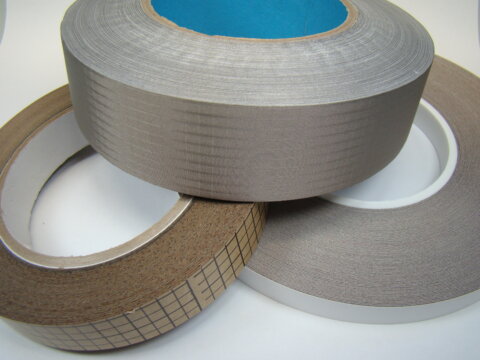
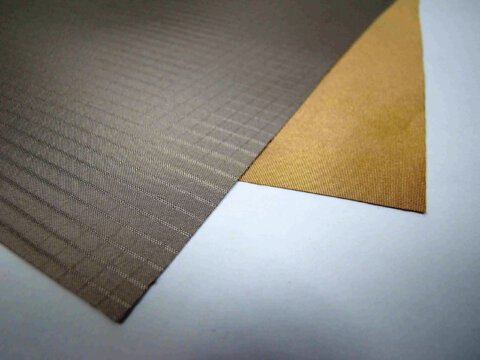
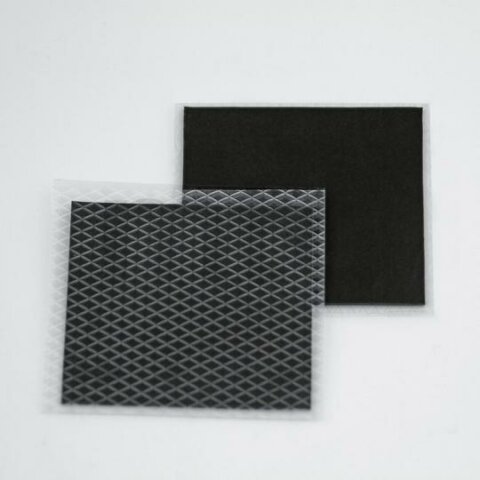
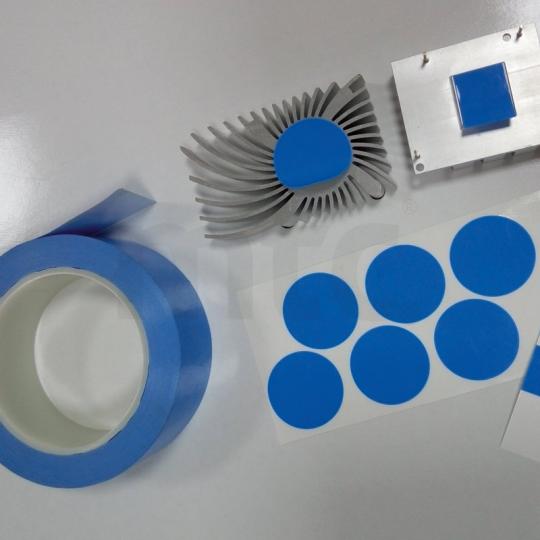
The TCAT series is a family of thermally conductive adhesive tapes designed to simplify thermal management in electronic assemblies. These double-sided, pressure-sensitive tapes allow engineers to attach heatsinks or heat spreaders directly to hot components, eliminating the need for mechanical fasteners or messy thermal paste. Each tape is filled with ceramic particles that conduct heat away from sensitive devices while also providing electrical insulation between surfaces. Multiple thermal performance grades from 1.0 W/m·K up to 2.0 W/m·K are available, along with a range of thicknesses to accommodate various gap sizes and surface flatness. The tapes conform easily to component surfaces and maintain stable performance over a broad temperature range, with certain types rated for continuous use up to 150 °C. Common applications include bonding heatsinks in power converters, LED lighting modules, and telecom or automotive electronics where a reliable thermal interface is needed without complex assembly steps. Supplied in sheets, rolls or custom die-cut shapes, the TCAT series offers a convenient drop-in solution to improve heat dissipation and device reliability.
Range features
A high level overview of what this range offers
- Double-sided adhesive: Enables fast, tool-free heatsink attachment without screws, clips or clamps.
- Thermally conductive ceramic filler: Supports efficient heat transfer with grades from 1.0 W/m·K to 2.0 W/m·K.
- Electrical insulation: Helps isolate live components from metal cooling parts with high dielectric strength.
- Thickness options: Available in multiple thicknesses from about 0.1 mm to 2.0 mm depending on series.
- Optional fiberglass reinforcement: Improves dimensional stability and handling for thicker variants.
- Wide operating temperature range: Suitable for demanding conditions, with selected types rated from –60 °C to +150 °C.
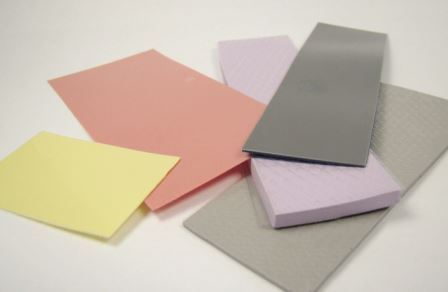
- Custom supply formats: Offered as sheets, rolls or die-cut parts for easy integration into production.
What’s in this range?
All the variants in the range and a comparison of what they offer
| Property | TCAT-1.0 series | TCAT-1.2 series | TCAT-1.5 series | TCAT-2.0 series |
|---|---|---|---|---|
Thermal conductivity (W/m·K) | 1.0 | 1.2 | 1.5 | 2.0 |
Hardness | 60 (Shore 00) | 45 (Shore A) ±10% | 45 (Shore A) | 60 (Shore 00) |
Base polymer material | Acrylic-based | Silicone-based | Acrylic-based | Silicone-based |
Filler type | Ceramic powder | Ceramic powder | Ceramic powder | Ceramic powder |
Adhesive type | Acrylic (PSA) | Acrylic (PSA) | Acrylic (PSA) | Acrylic (PSA) |
Service temperature range | –45 °C to +120 °C | –60 °C to +150 °C | –45 °C to +120 °C | –60 °C to +150 °C |
Breakdown voltage |
|
|
|
|
Density | 1.35 g/cm³ | 2.5 g/cm³ | 1.35 g/cm³ | 2.6 g/cm³ |
Available thicknesses | 0.3 mm – 2.0 mm | 0.3 mm – 2.0 mm | 0.1 mm – 0.5 mm | 0.3 mm – 2.0 mm |
Standard sheet size (L×W) | 400 mm × 300 mm | 400 mm × 300 mm | 297 mm × 210 mm | 400 mm × 300 mm |
Shelf life (at 23 °C, 60% RH) | 12 months | 12 months | 12 months | 12 months |
FAQs
for Conductive tape
The series includes grades with thermal conductivities of approximately 1.0 W/m·K, 1.2 W/m·K, 1.5 W/m·K and 2.0 W/m·K. This lets you choose a thermally conductive adhesive tape that matches everything from general-purpose cooling needs to higher thermal demands.
TCAT tapes use pressure-sensitive adhesive on both sides to bond the heatsink to the component. Unlike thermal paste or epoxy, they do not require curing and also provide the fixing function themselves. You simply remove the liners and press the tape between the surfaces for an immediate bond and a consistent thermal interface.
Yes. The tapes are electrically insulating due to their polymer construction and ceramic filler. They offer high dielectric strength, helping isolate components from metal heatsinks or chassis while still transferring heat efficiently.
The temperature range depends on the series. Silicone-based versions such as TCAT-1.2 and TCAT-2.0 can typically operate from about –60 °C to +150 °C, while acrylic-based versions such as TCAT-1.0 and TCAT-1.5 are typically rated for about –45 °C to +120 °C.
They are available as standard sheets, in roll form for higher-volume use, and as custom die-cut parts tailored to your required shapes or sizes. This makes integration easier for both prototyping and production assembly.
Yes. Depending on the material, the series is available in thicknesses from about 0.10 mm up to 2.0 mm. Thicker variants can include internal fiberglass reinforcement to improve handling and dimensional stability, while unreinforced versions can offer more conformability for micro-gap filling.
The tapes have a shelf life of approximately 12 months from delivery when stored in their original packaging under normal room conditions of around 23 °C and 60% relative humidity. Store them in a cool, dry place away from direct sunlight to preserve adhesive performance.
Typical applications include attaching heatsinks to power transistors, MOSFETs, voltage regulators, LED modules and processors. They are especially useful where mechanical fastening is impractical, space is limited, or a clean and vibration-resistant thermal bonding method is preferred.
These tapes are intended for permanent assembly and usually create a strong bond, so removal is not easy and may risk damaging components if done carelessly. If rework is necessary, any removed tape should generally be replaced with a fresh piece to maintain full thermal and adhesive performance.