Neutrino SWAP series MWIR camera modules
- Technology
- Visible camera modules
- Partner
- Teledyne FLIR
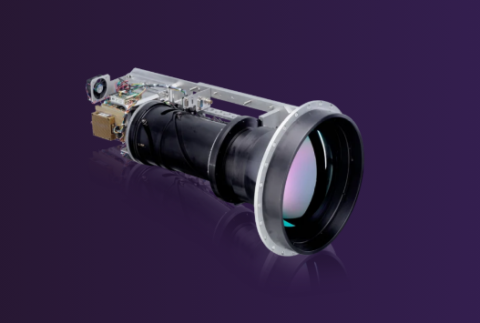
The Neutrino SWaP+C Series is a family of mid-wave infrared camera modules engineered for demanding OEM applications that require minimal size, weight, and power consumption without compromising thermal imaging quality. Each module in this series features a cooled MWIR detector, enabling clear and detailed heat-signature imagery even at long ranges or in challenging conditions. These modules are optimised for integration into platforms such as UAVs, handheld thermal imagers, targeting systems, and surveillance devices.
Integrators benefit from a balanced design that combines compact size, low mass, and cost-effectiveness for broader deployment. The modules include an integrated cryocooler and control electronics, helping reduce development effort during system integration. They can provide high-fidelity thermal video output and support standard industry interfaces for video and control. This makes the series well suited for advanced thermal imaging solutions where strict SWaP limitations must be met.
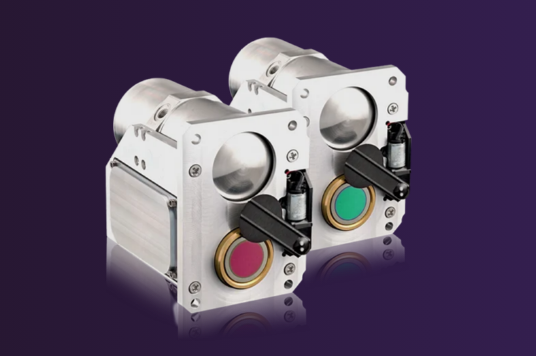
The Neutrino SWaP+C Series is built for OEM and integrator projects that need cooled MWIR performance in a very small package. With integrated cooling, compact mechanics, and standard interface support, these modules help developers bring thermal imaging capability into payloads and platforms where every gram, watt, and cubic centimetre matters.
Typical deployment areas include unmanned systems, handheld thermal devices, surveillance payloads, targeting solutions, and other compact electro-optical systems that require reliable mid-wave infrared imaging.
Range features
A high level overview of what this range offers
- Ultra-compact form factor: Designed for space-constrained systems such as small gimbals, drones, and handheld devices.
- Lightweight construction: Helps reduce payload burden in airborne and portable applications.
- Low power consumption: Typical steady-state draw of roughly 6-8 W supports battery-powered and thermally constrained platforms.
- Cooled MWIR imaging: Uses a cooled mid-wave infrared detector for strong sensitivity, image clarity, and long-range thermal performance.
- Multiple resolution options: Available in 640 × 512 and 320 × 256 configurations to balance detail, size, and budget needs.
- Integrated Stirling cryocooler: Built-in cooling supports easier integration and dependable operation over extended use.
- Standard digital video output: Simplifies connection to downstream processing and display systems.
- Rugged OEM-ready design: Suitable for demanding field, industrial, and defence-related deployment environments.
What’s in this range?
All the variants in the range and a comparison of what they offer
| Specification | Neutrino SWaP+C 640 | Neutrino SWaP+C 320 |
|---|---|---|
Detector Resolution | 640 × 512 pixels | 320 × 256 pixels |
Spectral Range | ~3.0 – 5.0 µm (MWIR) | ~3.0 – 5.0 µm (MWIR) |
Frame Rate | Up to 60 Hz full frame | Up to 60 Hz full frame |
Pixel Pitch | ~15 µm | ~15 µm |
Cooler Type | Integrated Stirling cooler | Integrated Stirling cooler |
Typical Power Draw | ~8 W (steady state) | ~6 W (steady state) |
Weight (without lens) | Approx. 380 g | Approx. 320 g |
Dimensions (L × W × H) | ~72 × 60 × 47 mm (estimated) | ~72 × 60 × 47 mm (estimated) |
Video Output | Digital (e.g. Camera Link) | Digital (e.g. Camera Link) |
Operating Temperature Range | Not stated | Not stated |
FAQs
for Neutrino SWAP series MWIR camera modules
The series provides high-quality mid-wave infrared imaging with a cooled sensor architecture that supports strong thermal sensitivity and detailed image output. Depending on the model, resolutions up to 640 × 512 pixels are available, helping users detect small or distant heat sources with clarity in darkness and degraded visibility conditions.
These modules are designed for tight integration into space- and weight-constrained systems. They are roughly palm-sized at about 72 × 60 × 47 mm and weigh only a few hundred grams, making them suitable for UAV payloads, handheld imagers, and other compact electro-optical platforms.
Typical steady-state power consumption is in the range of approximately 6-8 W, depending on the model. This low power draw helps extend battery runtime, reduces thermal management demands, and supports deployment in mobile or portable systems.
The modules use an integrated Stirling cryocooler to maintain the detector at its required operating temperature. Because the cooling system is built into the module, integrators can simplify system design and avoid adding separate external cooling hardware.
The SWaP+C Series is well suited to applications where size, weight, and power are limited but high-performance thermal imaging is still required. Typical use cases include UAV gimbals, handheld thermal systems, surveillance payloads, targeting systems, defence platforms, and compact industrial inspection solutions.
Integration is intended to be straightforward. The module provides a standard digital video output such as Camera Link and a control interface for configuration and status communication. Since the cryocooler and key electronics are already integrated, developers mainly need to handle mechanical mounting, power, data connection, and software-side control integration.
Yes. These cores are typically used as lens-less modules or core components that can be paired with suitable MWIR optics. This allows integrators to select lens assemblies based on required field of view, range, and system-level optical performance.
The modules include on-board image optimisation features such as non-uniformity correction (NUC) and automatic gain control (AGC). These functions help improve thermal image usability directly at the module level and reduce the need for extensive external image processing.