ClearLite® TruePhase® 1550 nm PM Optical Fibre
- Technology
- Speciality fibre
- Partner
- Lightera (formerly OFS)
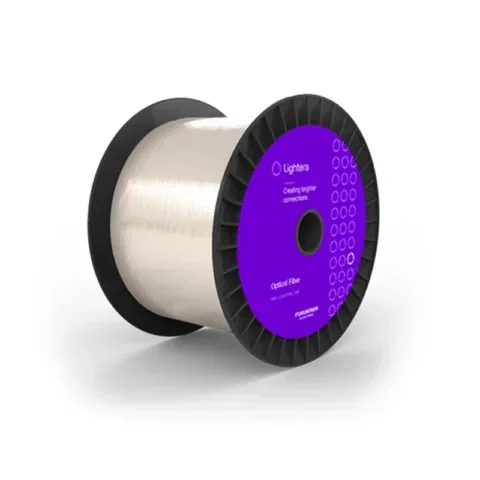
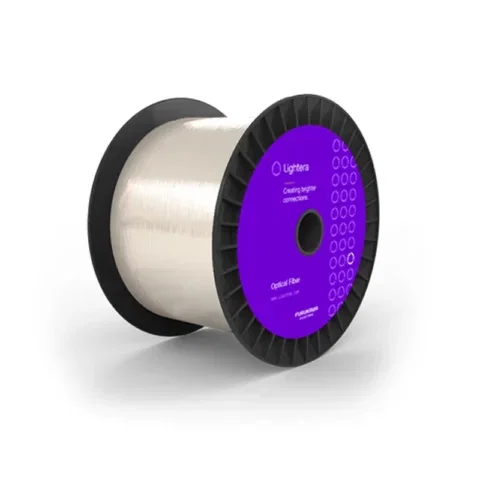
The ClearLite TruePhase 1550 nm polarisation-maintaining optical fibre is a specialty single-mode fibre designed to maintain a stable linear polarisation state of light at the 1550 nm wavelength. It is engineered for advanced photonic devices where preserving polarisation is critical to performance. Typical uses include laser pigtails, external modulators such as lithium niobate modulators, polarisation beam splitters and interferometric sensors.
By maintaining polarisation, the fibre helps preserve laser coherence for coherent communication systems and precise optical measurements. The fibre is available with either a 250 µm standard coating or a 400 µm thicker buffer to suit different handling and packaging requirements. The 250 µm version is especially suitable for longer fibre lengths and tighter coiling, while the 400 µm version offers improved handling robustness. The fibre combines low attenuation, low polarisation crosstalk and reliable mechanical performance for use in the 1550 nm band.
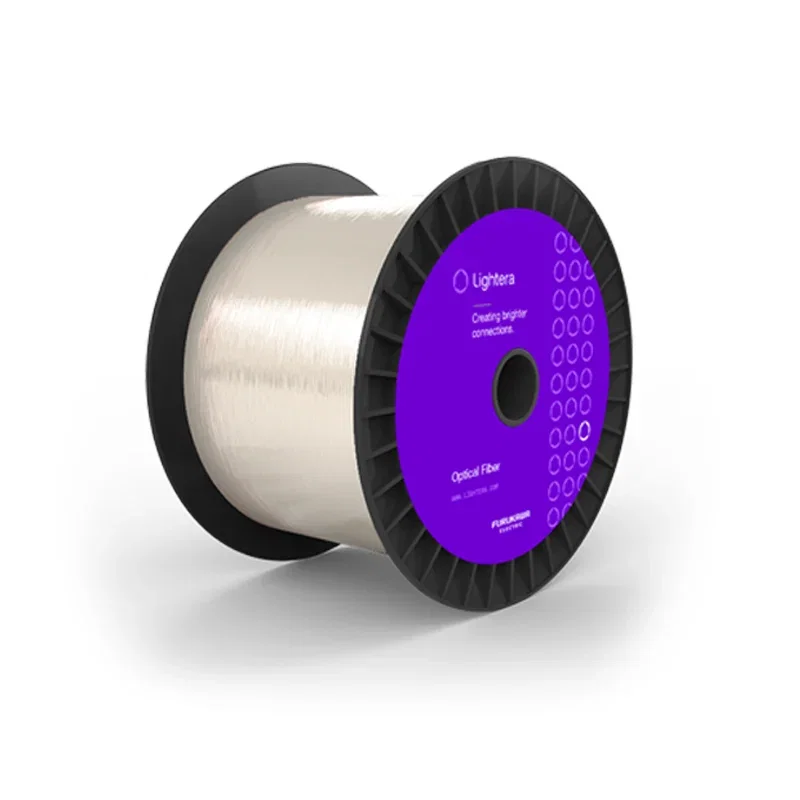
The ClearLite TruePhase 1550 nm polarisation-maintaining optical fibre is designed for applications where preserving a stable linear polarisation state is essential. It is well suited to laser pigtails, phase-sensitive modulators, interferometric sensors and other photonic assemblies that depend on consistent polarisation alignment.
Available in both 250 µm and 400 µm coating versions, this PM optical fibre gives design engineers flexibility for compact routing, handling preference and packaging requirements while maintaining strong optical performance at 1550 nm.
Range features
A high level overview of what this range offers
- Polarisation-maintaining design: Maintains a fixed linear polarisation state for stable performance in modulators, sensors and other polarisation-sensitive systems.
- Optimised for 1550 nm: Single-mode operation at the 1550 nm telecom wavelength with attenuation of ≤ 0.5 dB/km.
- Low polarisation crosstalk: Typical crosstalk of ≤ -35 dB per 100 m helps preserve high signal purity.
- Bend-tolerant performance: Supports compact routing with macrobending loss of ≤ 0.2 dB for 10 turns at a 7.5 mm radius at 1550 nm.
- High birefringence fibre: Beat length of ≤ 5.0 mm at 1550 nm supports stable polarisation retention over length.
- Mechanically robust: Dual UV acrylate coating and proof test level of ≥ 200 kpsi (1.38 GPa) for reliable handling and long-term use.
- Two buffer diameter options: Choose 250 µm for tighter coiling and longer runs or 400 µm for easier handling and added ruggedness.
- Easy system integration: Available with cabling and customisation options, and compatible with splicing into standard single-mode fibre systems.
Downloads
for ClearLite® TruePhase® 1550 nm PM Optical Fibre
What’s in this range?
All the variants in the range and a comparison of what they offer
| Specification | ClearLite TruePhase 1550 (250 µm) – BF06734-05 | ClearLite TruePhase 1550 (400 µm) – BF06734-06 |
|---|---|---|
Coating Type | Dual UV acrylate | Dual UV acrylate |
Cladding Diameter | 125 ± 1 µm | 125 ± 1 µm |
Coating/Buffer Diameter | 250 ± 10 µm | 400 ± 15 µm |
Clad Non-Circularity | ≤ 2.0% | ≤ 2.0% |
Core/Clad Offset | ≤ 0.5 µm | ≤ 0.5 µm |
Fibre Type (Mode) | Polarisation-maintaining single-mode | Polarisation-maintaining single-mode |
Operating Wavelength | 1550 nm | 1550 nm |
Cutoff Wavelength (λc) | ≤ 1470 nm | ≤ 1470 nm |
Mode Field Diameter @ 1550 nm | 10.5 ± 0.5 µm | 10.5 ± 0.5 µm |
Attenuation @ 1550 nm | ≤ 0.5 dB/km | ≤ 0.5 dB/km |
Beat Length @ 1550 nm | ≤ 5.0 mm | ≤ 5.0 mm |
Polarisation Crosstalk @ 1550 nm per 100 m | ≤ -30 dB | ≤ -30 dB |
Polarisation Crosstalk (typical) @ 100 m | ≤ -35 dB | ≤ -35 dB |
Crosstalk under bend (10 turns, 7.5 mm radius @ 1550 nm) | ≤ -30 dB | ≤ -30 dB |
Macrobending Loss (10 turns, 7.5 mm radius @ 1550 nm) | ≤ 0.2 dB | ≤ 0.2 dB |
Numerical Aperture (NA, nominal) | 0.13 | 0.13 |
Operating Temperature Range | -40 °C to +85 °C | -40 °C to +85 °C |
Minimum Bend Radius (short-term) | ≥ 5 mm | ≥ 5 mm |
Minimum Bend Radius (long-term) | ≥ 9 mm | ≥ 9 mm |
Proof Test Level | ≥ 200 kpsi (1.38 GPa) | ≥ 200 kpsi (1.38 GPa) |
Available Options | Cabling; alternate coating materials/dimensions; metallisation; custom optical properties; different proof test levels | Cabling; alternate coating materials/dimensions; metallisation; custom optical properties; different proof test levels |
FAQs
for ClearLite® TruePhase® 1550 nm PM Optical Fibre
This fibre is used wherever maintaining light polarisation is important. Typical applications include laser pigtails, external modulators such as lithium niobate modulators, polarisation-sensitive optical modules like polarising beam splitters or interferometers, and PMD compensators where long fibre lengths are required without introducing polarisation drift. In general, it is suitable for systems operating around 1550 nm that are sensitive to polarisation changes.
A polarisation-maintaining fibre has an internal birefringent structure that strongly separates two perpendicular polarisation axes. Light launched along one axis stays aligned instead of drifting as it would in a standard fibre. You would use a PM fibre when lasers, modulators, sensors or interferometers require a specific polarisation orientation for best performance. This helps maintain stable operation, signal coherence and high extinction ratio.
Lithium niobate modulators and many electro-optic devices are polarisation-sensitive and operate best when the input light is aligned to a required axis. This fibre maintains a fixed polarisation state, so it helps keep the light correctly aligned as it enters the modulator. The result is more stable modulation depth, better repeatability and fewer performance issues caused by fluctuating input polarisation.
Both versions share the same optical core and performance specifications. The main difference is the outer coating diameter. The 250 µm version is better suited to tighter coiling, longer lengths and compact assemblies. The 400 µm version provides a thicker protective coating that improves handling and ruggedness. Choose the 250 µm variant for dense or space-limited builds, and the 400 µm variant where easier manual handling or added protection is preferred.
This fibre supports a short-term minimum bend radius of ≥ 5 mm, meaning it can tolerate temporary tight bends during installation or handling. For permanent routing, the recommended long-term minimum bend radius is ≥ 9 mm. Keeping to the long-term bend radius in finished assemblies helps minimise stress, attenuation increase and long-term reliability risks.
At 1550 nm, the fibre attenuation is specified at ≤ 0.5 dB/km, which makes loss negligible over the short lengths often used in pigtails and optical modules. Typical polarisation crosstalk is ≤ -35 dB per 100 m, meaning leakage between the polarisation axes is extremely low. This helps preserve high extinction ratio and stable performance in sensitive polarisation-based systems.
Yes. The fibre has a mode field diameter of about 10.5 µm at 1550 nm and a nominal NA of 0.13, making it compatible with standard telecom single-mode fibres for low-loss splicing when properly aligned. When splicing PM fibre to PM fibre, the polarisation axes must also be aligned to preserve the PM function. If it is spliced to non-PM fibre, the connection can still be low-loss, but the polarisation-maintaining behaviour will not continue beyond the non-PM section.
A 200 kpsi proof test means the fibre has been tensile-tested to withstand at least that stress level during manufacturing. This helps confirm that the fibre is free from significant flaws such as micro-cracks that could lead to failure in use. For the end user, it indicates strong mechanical durability, good handling robustness and a higher confidence level for long-term reliability in demanding optical assemblies.
Yes. The fibre can be supplied with options such as cabling, alternate coating materials or dimensions, metallisation, tailored optical properties and different proof test levels. These options allow the product to be adapted to specific environmental, packaging or integration requirements. Custom configurations are useful when a project needs added protection, specialised handling characteristics or modified optical performance.