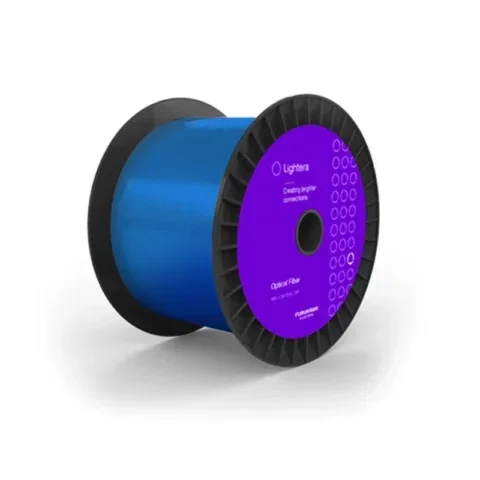
HCS® 200 µm 0.37 NA Low OH Optical Fibre
- Technology
- Speciality fibre
- Partner
- Lightera (formerly OFS)
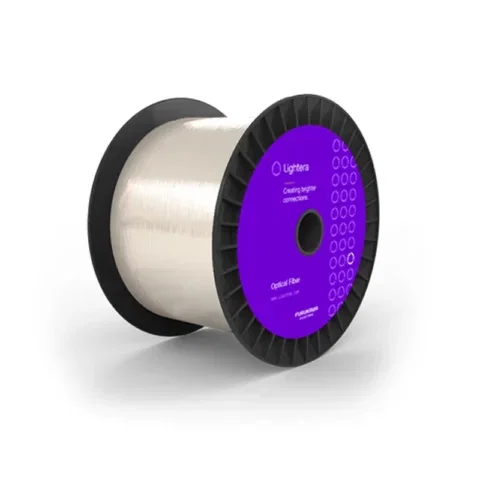
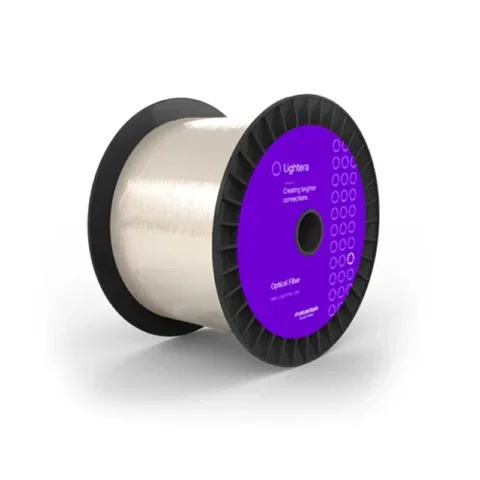
The HCP-M0200T is a 200 µm Hard-Clad Silica optical fibre designed for demanding industrial and scientific environments. Its pure silica Low OH core is optimised for efficient near-infrared transmission, especially around 850 nm, with low attenuation. The 0.37 numerical aperture and large core simplify light coupling from LEDs, VCSELs, and other broad-beam sources. A durable hard polymer cladding and ETFE buffer provide strong mechanical protection and reliable performance under vibration, bending, and chemical exposure. The fibre supports quick crimp-and-cleave termination, reducing installation effort and avoiding epoxy or polishing in many field applications. It is well suited to harsh industrial networks, optical sensing, medical laser delivery, and other applications where ruggedness and dependable optical performance are essential.
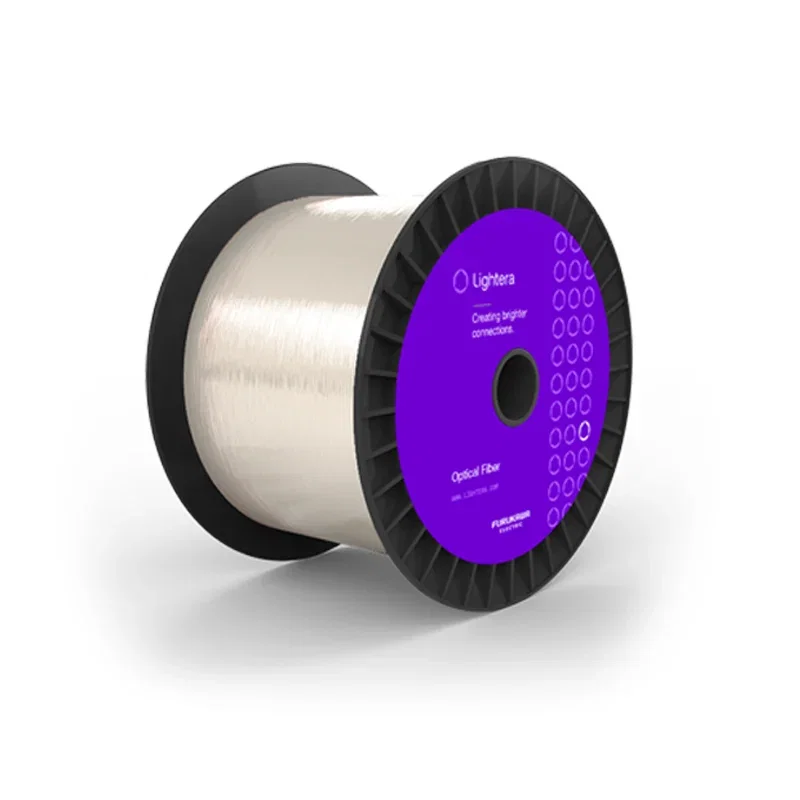
The HCP-M0200T is a rugged Hard-Clad Silica (HCS®) multimode step-index fibre built for applications that demand easy coupling, strong mechanical durability, and dependable near-infrared performance. Its 200 µm core, 0.37 NA, and Low OH silica construction make it especially suitable for use around 850 nm and in other NIR transmission tasks.
This fibre is a strong fit for industrial data links, optical sensors, medical laser systems, and high-power light delivery where installers need a more forgiving alternative to fragile all-glass fibre solutions.
Range features
A high level overview of what this range offers
- 200 µm large core: Supports efficient light capture and helps simplify alignment from LEDs and laser sources
- High numerical aperture (0.37): Accepts a wide cone of light for easier coupling and improved tolerance to misalignment
- Low OH silica core: Reduces attenuation at near-infrared wavelengths such as 850 nm
- Hard polymer cladding: Adds mechanical strength and durability for demanding installations
- Bend-insensitive performance: Maintains signal integrity in compact routing paths with tight bend radii
- ETFE buffer coating: Resists oils, solvents, and other industrial chemicals
- Wide temperature capability: Operates from –65 °C to +125 °C
- Crimp-and-cleave compatible: Enables fast field termination without epoxy or polishing
Optimised optical handling The combination of a large 200 µm core and 0.37 NA makes this fibre especially easy to work with in systems that use broad or divergent sources.
Built for harsh environments Its hard-clad silica structure with ETFE buffer helps the fibre withstand vibration, routing stress, and exposure to industrial chemicals.
Practical field installation Support for crimp-and-cleave termination reduces connectorisation time and makes on-site assembly more efficient.
Downloads
for HCS® 200 µm 0.37 NA Low OH Optical Fibre
What’s in this range?
All the variants in the range and a comparison of what they offer
Specification | Value |
Core Diameter | 200 ± 4 µm |
HCS® Cladding Diameter | 230 +0/–10 µm |
Buffer Coating Diameter | 500 ± 30 µm (ETFE polymer) |
Core/Clad Offset | ≤ 5 µm |
Cladding Material | HCS polymer (fluoroacrylate) |
Buffer Material | ETFE, natural colour |
Fibre Type | Multimode Step-Index |
Numerical Aperture (NA) | 0.37 |
Attenuation @ 850 nm | ≤ 6 dB/km |
Water Content | Low OH |
Operating Temperature | –65 °C to +125 °C |
Short-Term Bend Radius | ≥ 10 mm |
Long-Term Bend Radius | ≥ 16 mm |
Proof Test Level | ≥ 150 kpsi (≈ 1.03 GPa) |
Crimp & Cleave Compatible | Yes |
Order Code (Part No.) | CF01493-10 |
Product Code | HCP-M0200T |
FAQs
for HCS® 200 µm 0.37 NA Low OH Optical Fibre
A 200 µm core combined with 0.37 NA makes light coupling much easier from LEDs, VCSELs, and other broad-beam or misalignment-tolerant sources. The large core helps with optical power handling and relaxed positioning, while the high NA allows the fibre to accept light over a wider angle.
Low OH means the silica core contains reduced hydroxyl impurities. This lowers attenuation in the near-infrared range, especially around 850 nm and beyond, making the fibre better suited to NIR transmission, IR sensing, and laser delivery applications.
Yes. The fibre combines a hard polymer cladding, ETFE buffer, good bend tolerance, and resistance to many oils, solvents, and industrial chemicals. These characteristics make it a strong choice for factory automation, sensing, instrumentation, and other demanding installations.
This fibre supports crimp-and-cleave termination, allowing compatible connectors to be attached without epoxy or polishing in many cases. That can reduce installation time and simplify field connectorisation compared with more traditional all-glass fibre termination methods.
Typical connector options include ST and SMA styles, especially where ruggedness or high optical power delivery is required. Connector hardware should be selected specifically for 200 µm polymer-clad fibre to ensure correct fit and alignment.
Yes, the large core and silica light path make it suitable for many medical and industrial laser delivery applications. As with any higher-power optical system, connector choice, coupling quality, and thermal management should be considered to avoid localised heating at the termination.