PbS Detectors
- Technology
- Infrared photodetectors
- Partner
- IR Materials
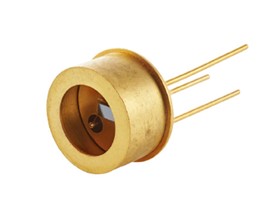
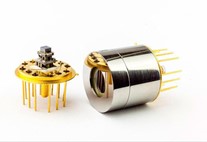
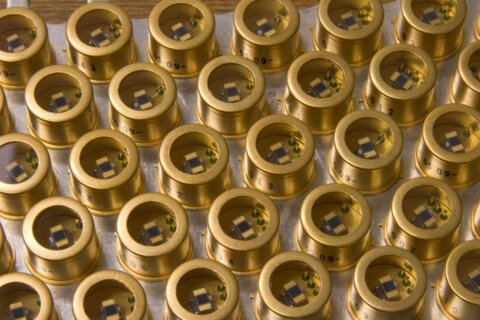
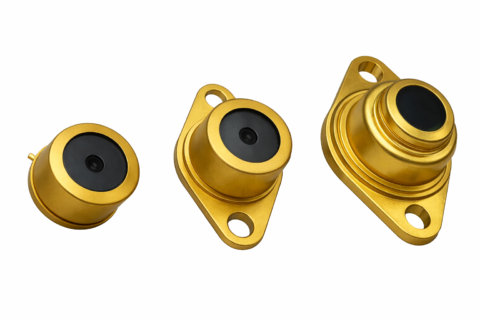
PbS photoconductive infrared detectors are single-element lead-salt photon detectors designed for short-wave infrared sensing up to around 3.3 µm. Built from polycrystalline lead sulphide, they change electrical resistance in response to incident infrared radiation. A key advantage is reliable room-temperature operation, allowing economical IR detection without cryogenic cooling. For higher sensitivity and lower noise, thermoelectrically cooled versions are available in 2 W and 3 W configurations. The range includes multiple active areas from 1 × 1 mm to 10 × 10 mm, as well as flatplate, hermetic can, and lens-equipped package options. Typical applications include spectroscopy, gas and moisture analysis, flame detection, and industrial process monitoring. With fast response, strong ambient-temperature performance, and cooled detectivity reaching up to about 3 × 10^11 Jones, PbS detectors provide a compact and versatile SWIR sensing solution.
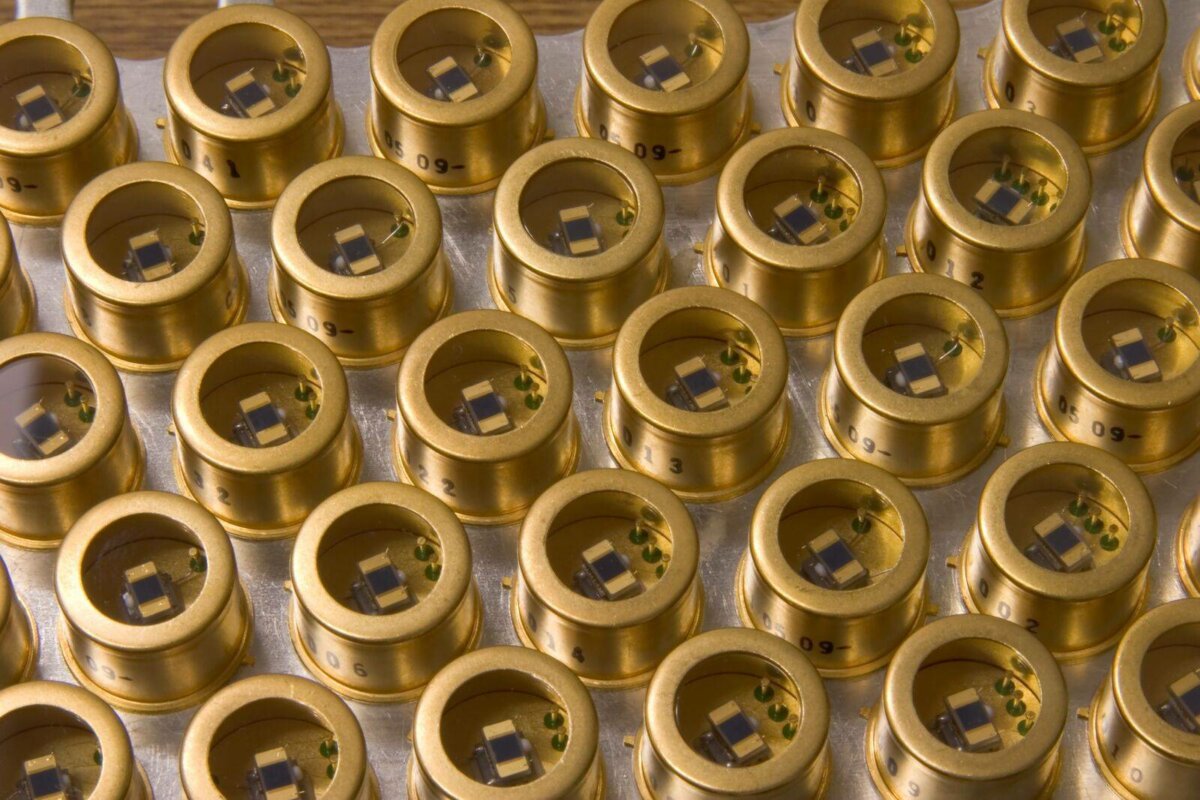
PbS infrared detectors are photoconductive IR sensors designed for short-wave infrared detection from about 1 µm to 3.3 µm. They offer a practical balance of sensitivity, speed, and cost, making them a strong choice for instruments that need dependable IR sensing without cryogenic cooling.
This product range includes uncooled flatplate elements, hermetically packaged detectors, lens-equipped variants, and TE-cooled PbS sensors for applications requiring reduced noise and improved detectivity. Typical uses include spectroscopy, gas and moisture analysis, flame monitoring, and industrial process control.
Range features
A high level overview of what this range offers
- Broad spectral response (≈1–3.3 µm): Covers the SWIR range for detecting relevant substances and thermal events in this band.
- High sensitivity at ambient temperature: Supports simplified, lower-cost system designs without mandatory cooling.
- Optional thermoelectric cooling: 2 W and 3 W cooled versions reduce noise and improve detectivity for lower-signal measurements.
- Fast photoconductive response: Uncooled detectors can achieve response times as fast as about 100 µs.
- Stable operation in warm environments: Rated for detector element temperatures up to around +65 °C.
- Multiple active area options: Sizes from 1 × 1 mm to 10 × 10 mm support different sensitivity and field-of-view needs.
- Flexible package styles: Available as flatplate chips, hermetic can packages, and lens-equipped versions.
- Optional integrated thermistor: Available on cooled models for temperature monitoring and control.
Uncooled options
- Flatplate bare elements
- Hermetic packaged versions
- Lens-equipped detector variants
- Strong room-temperature performance
TE-cooled options
- 2 W and 3 W cooler versions
- Lower detector noise
- Higher detectivity up to about 3 × 10^11 Jones
- Optional thermistor integration
Typical applications
- Spectroscopy instruments
- Gas and moisture analysers
- Flame detection
- Industrial process control
- Portable and field IR instruments
Downloads
for PbS Detectors
What’s in this range?
All the variants in the range and a comparison of what they offer
| Detector Category | Typical Cooling Power at/near Max Cooling | Model Number | Element Size (mm) | Wavelength Peak Signal (μm) | D* (λpk, 630 Hz, 1 Hz) (cm Hz¹ᐟ² W⁻¹) | Blackbody D* (500 K, 630 Hz, 1 Hz) (cm Hz¹ᐟ² W⁻¹) | Responsivity Minimum (V/W) | Responsivity Typical (V/W) | Dark Resistance (MΩ) | Time Constant (μsec) | Operating Temperature (°C) | ΔT at Maximum Cooling (°C) | Standard Package Options |
|---|---|---|---|---|---|---|---|---|---|---|---|---|---|
Flatplate Detectors | Not applicable | A1 | 1x 1 | 2.4 typ | 8.0×10¹⁰ min; 1.0×10¹¹ typ | 1.0×10⁸ min; 1.5×10⁹ typ | 530000 | 800000 | 0.2–3.5 | 100–400 | 25 | N/A | Flatplate |
Flatplate Detectors | Not applicable | A2 | 2x 2 | 2.4 typ | 8.0×10¹⁰ min; 1.0×10¹¹ typ | 1.0×10⁸ min; 1.5×10⁹ typ | 270000 | 400000 | 0.2–3.5 | 100–400 | 25 | N/A | Flatplate |
Flatplate Detectors | Not applicable | A3 | 3x 3 | 2.4 typ | 8.0×10¹⁰ min; 1.0×10¹¹ typ | 1.0×10⁸ min; 1.5×10⁹ typ | 170000 | 260000 | 0.2–3.5 | 100–400 | 25 | N/A | Flatplate |
Flatplate Detectors | Not applicable | A6 | 6x 6 | 2.4 typ | 7.0×10¹⁰ min | 1.0×10⁸ min; 1.5×10⁹ typ | 90000 | 140000 | 0.2–3.5 | 100–400 | 25 | N/A | Flatplate |
Flatplate Detectors | Not applicable | A10 | 10x 10 | 2.4 typ | 6.0×10¹⁰ min | 1.0×10⁸ min; 1.5×10⁹ typ | 50000 | 75000 | 0.2–3.5 | 100–400 | 25 | N/A | Flatplate |
Ambient Packaged Detectors | Not applicable | A1-5 | 1x 1 | 2.4 typ | 8.0×10¹⁰ min; 1.0×10¹¹ typ | 1.0×10⁸ min; 1.5×10⁹ typ | 530000 | 800000 | 0.2–3.5 | 100–400 | 25 | N/A | TO-5 |
Ambient Packaged Detectors | Not applicable | A2-5 | 2x 2 | 2.4 typ | 8.0×10¹⁰ min; 1.0×10¹¹ typ | 1.0×10⁸ min; 1.5×10⁹ typ | 270000 | 400000 | 0.2–3.5 | 100–400 | 25 | N/A | TO-5 |
Ambient Packaged Detectors | Not applicable | A3-5 | 3x 3 | 2.4 typ | 8.0×10¹⁰ min; 1.0×10¹¹ typ | 1.0×10⁸ min; 1.5×10⁹ typ | 170000 | 260000 | 0.2–3.5 | 100–400 | 25 | N/A | TO-5 |
Ambient Packaged Detectors | Not applicable | A6-8 | 6x 6 | 2.4 typ | 7.0×10¹⁰ min | 1.0×10⁸ min; 1.5×10⁹ typ | 90000 | 140000 | 0.2–3.5 | 100–400 | 25 | N/A | TO-8 |
Ambient Packaged Detectors | Not applicable | A10-3 | 10x 10 | 2.4 typ | 6.0×10¹⁰ min | 1.0×10⁸ min; 1.5×10⁹ typ | 50000 | 75000 | 0.2–3.5 | 100–400 | 25 | N/A | TO-3 |
Ambient Lens Detectors | Not applicable | A1-5(M)-L | 1x 1 | 2.4 typ | 2.5×10¹¹ min | Not specified on source page | 2000000 | 2400000 | 0.2–3.5 | 100–400 | 23 | N/A | 1/2 ball Lens /TO-5 header |
Ambient Lens Detectors | Not applicable | A1-5(M)-LF | 1x 1 | 2.4 typ | 6×10¹¹ min | Not specified on source page | 6000000 | 7200000 | 0.2–3.5 | 100–400 | 23 | N/A | Full Ball Lens / TO-5 Header |
2 Watt TE Cooled Detectors | 0.9 volts @ 1.2 amps | A1-7C3T | 1x 1 | 2.5 typ | 1.0×10¹¹ min; 1.5×10¹¹ typ | 2.2×10⁹ min; 4.2×10⁹ typ | 1300000 | 2000000 | 2.0–15.0 | 1250–2500 | -35 | 55 min; 60 typ | TO-37 |
2 Watt TE Cooled Detectors | 0.9 volts @ 1.2 amps | A2-7C3T | 2x 2 | 2.5 typ | 1.0×10¹¹ min; 1.5×10¹¹ typ | 2.2×10⁹ min; 4.2×10⁹ typ | 660000 | 1000000 | 2.0–15.0 | 1250–2500 | -35 | 55 min; 60 typ | TO-37 |
2 Watt TE Cooled Detectors | 0.9 volts @ 1.2 amps | A3-7C3T | 3x 3 | 2.5 typ | 1.0×10¹¹ min; 1.5×10¹¹ typ | 2.2×10⁹ min; 4.2×10⁹ typ | 430000 | 640000 | 2.0–15.0 | 1250–2500 | -35 | 55 min; 60 typ | TO-37 |
3 Watt TE Cooled Detectors | 1.8 volts @ 1.2 amps | A1-8C4T | 1x 1 | 2.7 typ | 2.0×10¹¹ min; 3.0×10¹¹ typ | 2.9×10⁹ min; 5.2×10⁹ typ | 1400000 | 2100000 | 2.0–20.0 | 1750–3500 | -50 | 70 min; 75 typ | TO-8, TO-66 |
3 Watt TE Cooled Detectors | 1.8 volts @ 1.2 amps | A2-8C4T | 2x 2 | 2.7 typ | 2.0×10¹¹ min; 3.0×10¹¹ typ | 2.9×10⁹ min; 5.2×10⁹ typ | 700000 | 1100000 | 2.0–20.0 | 1750–3500 | -50 | 70 min; 75 typ | TO-8, TO-66 |
3 Watt TE Cooled Detectors | 1.8 volts @ 1.2 amps | A3-8C4T | 3x 3 | 2.7 typ | 2.0×10¹¹ min; 3.0×10¹¹ typ | 2.9×10⁹ min; 5.2×10⁹ typ | 430000 | 650000 | 2.0–20.0 | 1750–3500 | -45 | 70 min; 75 typ | TO-8, TO-66 |
3 Watt TE Cooled Detectors | 1.8 volts @ 1.2 amps | A6-8C2T | 6x 6 | 2.7 typ | 1.0×10¹¹ min | 2.9×10⁹ min; 5.2×10⁹ typ | 240000 | 360000 | 2.0–20.0 | 1750–3500 | -25 | 50 min; 55 typ | TO-8, TO-66 |
Representative ambient models
- A1 / A1-5: 1 × 1 mm, 2.4 µm peak, D* up to 1.0 × 10^11 typ
- A2 / A2-5: 2 × 2 mm, 2.4 µm peak, D* up to 1.0 × 10^11 typ
- A3 / A3-5: 3 × 3 mm, 2.4 µm peak, D* up to 1.0 × 10^11 typ
- A6 / A6-8: 6 × 6 mm, D* from 7.0 × 10^10 min
- A10 / A10-3: 10 × 10 mm, D* from 6.0 × 10^10 min
Representative cooled models
- 2 W TE-cooled: Detector temperatures down to about –35 °C and ΔT up to about 60 K
- 3 W TE-cooled: Detector temperatures down to about –50 °C and ΔT up to about 75 K
- Lens variants: Full-ball and half-ball lens options for improved signal collection
- Thermistor option: Available on cooled assemblies for monitoring and control
FAQs
for PbS Detectors
PbS photoconductive detectors are sensitive to infrared wavelengths from about 1 µm to 3.2–3.3 µm. This places them in the short-wave infrared (SWIR) range. Their peak response is typically around 2.2–2.4 µm.
A TE-cooled PbS detector runs at a lower operating temperature, which reduces noise and improves sensitivity. Compared with ambient operation, cooled versions can increase detectivity from roughly 1 × 10^11 to around 3 × 10^11 Jones, making them well suited to low-signal or longer-distance measurements.
Uncooled PbS detectors are fast, with typical electrical time constants of about 100–300 µs. TE-cooled versions are slower, typically in the 1–3 ms range, but still suitable for many spectroscopy, gas monitoring, and fast event detection tasks.
No. One of the main advantages of PbS infrared detectors is that they can operate effectively at room temperature. Cooling is optional and mainly used when the application needs lower noise or higher detectivity.
Yes. PbS detectors are rated for stable operation up to around +65 °C at the detector element. This makes them useful in warm industrial environments, provided they are kept within the specified temperature limits.
Typical applications include IR spectroscopy, spectrophotometers, gas analysers, moisture analysers, flame detectors, process monitoring systems, and other industrial or scientific instruments that require compact SWIR photodetectors.
PbS detectors cover shorter infrared wavelengths, typically about 1–3 µm, and are commonly used at room temperature. PbSe detectors extend further into the mid-infrared, often up to about 4–5.5 µm, making them better suited to longer-wavelength gas detection applications such as CO₂ sensing.
A PbS detector behaves like a variable resistor whose resistance changes with incident IR radiation. It is typically biased with a DC voltage, used with a load resistor in series, and read using a voltage amplifier or trans-impedance amplifier. Cooled versions may also include a thermistor for temperature monitoring or stabilisation.