MCT Multi Element Arrays
- Technology
- Infrared photodetectors
- Partner
- Infrared Associates
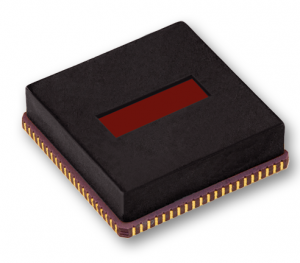
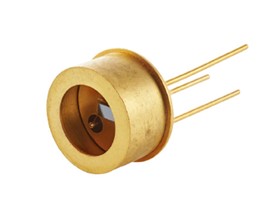
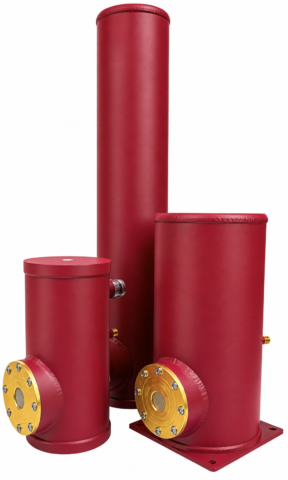
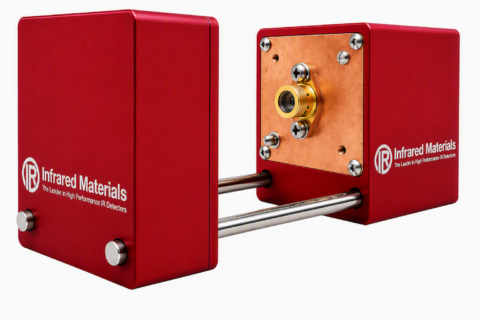
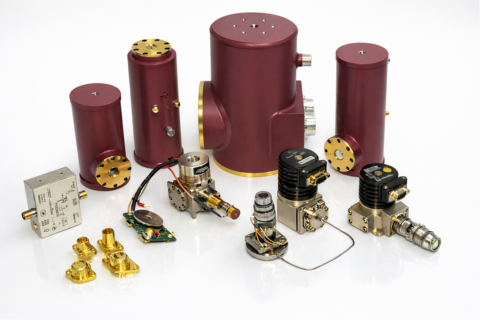
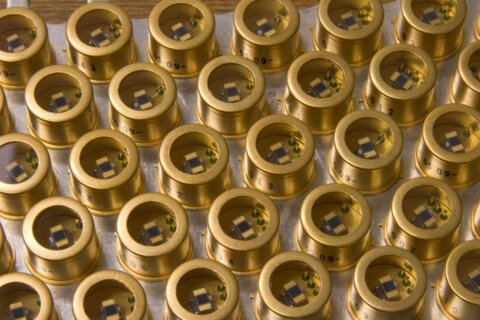
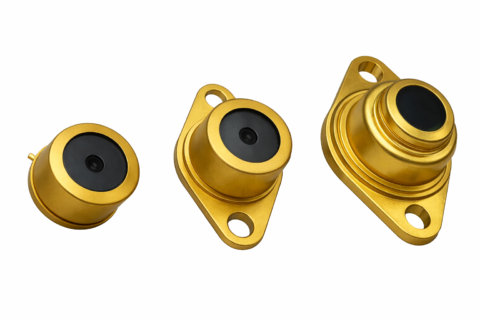
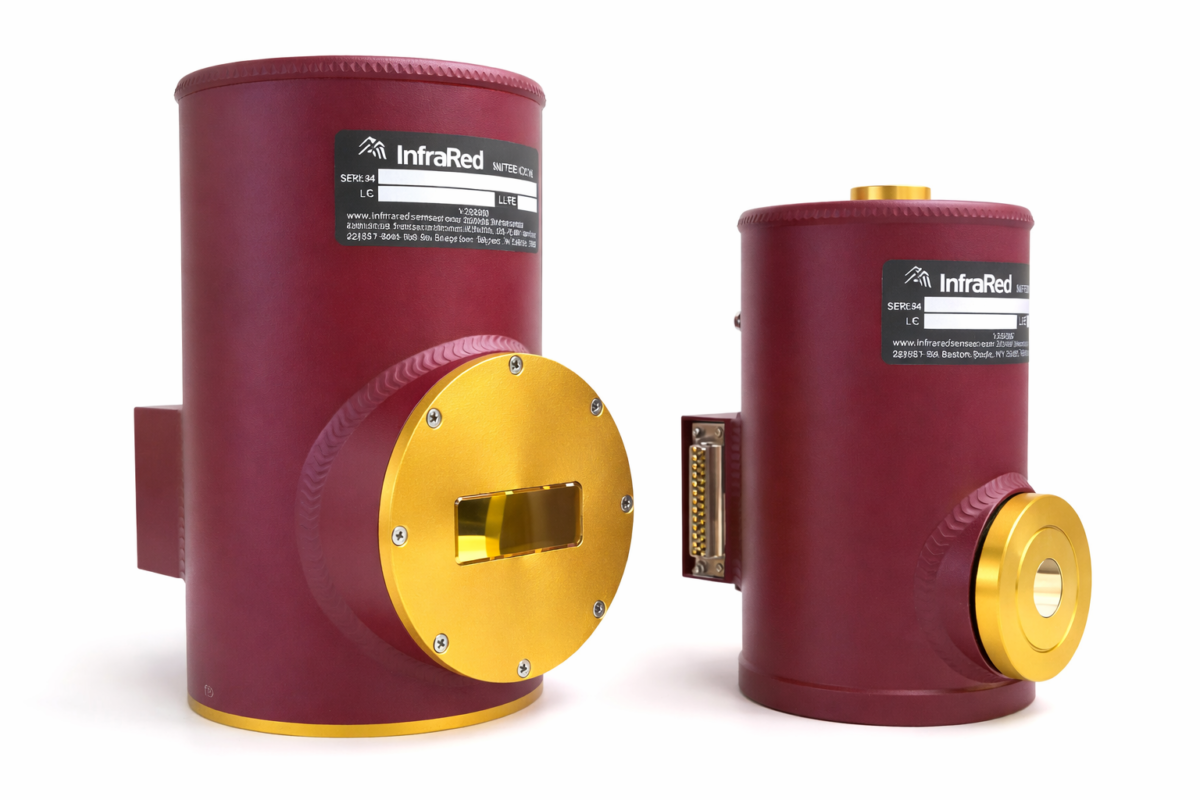
Mercury Cadmium Telluride (HgCdTe) multi-element arrays are infrared detectors with multiple sensor elements, designed for mid- to long-wave IR sensing in demanding applications. They use photoconductive HgCdTe technology and typically operate with cooling (thermoelectric modules, Stirling engines, or liquid nitrogen dewars) to achieve low-noise, high-sensitivity performance. The arrays can be custom-built with anywhere from 4 up to 128 detector elements, arranged either in a single linear row or as a two-dimensional matrix of pixels. By adjusting the HgCdTe alloy composition, the detector’s spectral response can be tuned for specific wavelength ranges (approximately from 2 µm up to a ~16 µm cut-off). This flexibility makes the arrays well-suited for applications such as thermal imaging, tunable laser spectroscopy (pump-probe measurements), FTIR spectrometry, and multi-channel gas analysis. The product range also supports custom packaging and integrated electronics (e.g. preamplifiers or even complete turn-key detection systems), simplifying the process of integrating these detector arrays into end-user instruments.
Range features
A high level overview of what this range offers
- Up to 128 elements – enabling multi-point infrared detection with fine spatial resolution in a single module
- Linear or 2D array formats – adapt the detector configuration to either scanning-line or area imaging requirements
- Fine 12 µm element spacing – achieves a high pixel density for detailed IR measurements
- Adjustable spectral response (~2–16 µm) – arrays can be tuned for specific infrared wavelength bands as needed
- Two element size options (0.2 × 0.5 mm or 0.5 × 1.0 mm) – choose smaller pixels for finer spatial resolution or larger pixels for higher per-element sensitivity
- Multiple cooling packages (TE, Stirling, LN₂) – integrate with various cooling methods to meet different performance and design needs
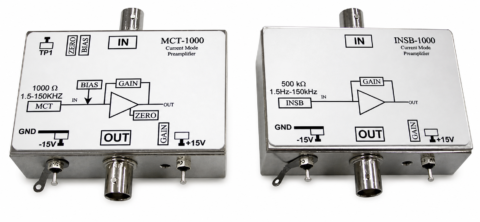
- Optional integrated preamplifiers and electronics – reduces integration effort with ready-to-use multi-channel signal conditioning and readout hardware
What’s in this range?
All the variants in the range and a comparison of what they offer
| Specification | Quadrant (MCT-Q1) | 16-element (MCT-16 or 2 × 8) | 32-element (MCT-32 or 2 × 16) | 64-element (MCT-64 or 2 × 32) | 128-element (MCT-128 or 2 × 64) |
|---|---|---|---|---|---|
Detector element size (mm) | 1.0 × 1.0 | 0.2 × 0.5 or 0.5 × 1.0 | 0.2 × 0.5 or 0.5 × 1.0 | 0.2 × 0.5 or 0.5 × 1.0 | 0.2 × 0.5 or 0.5 × 1.0 |
Wavelength range (selectable) | ~2 – 24 µm | ~2 – 20 µm | ~2 – 20 µm | ~2 – 20 µm | ~2 – 20 µm |
Array format | 2 × 2 (quadrant) | 1 × 16 linear or 2 × 8 matrix | 1 × 32 linear or 2 × 16 matrix | 1 × 64 linear or 2 × 32 matrix | 1 × 128 linear or 2 × 64 matrix |
Cooler / package options | TE, Stirling, or LN₂ | TE, Stirling, or LN₂ | TE, Stirling, or LN₂ | TE, Stirling, or LN₂ | TE, Stirling, or LN₂ |
FAQs
for MCT Multi Element Arrays
The spectral response of these HgCdTe arrays is customisable by adjusting the material composition. In practice, they can be tuned to detect infrared wavelengths from roughly 2 µm (short-wave IR) up to about a 16 µm cut-off in the long-wave IR. Certain specialised configurations even extend towards the ~20 µm region. This allows a detector to be optimised for the specific IR band required by the application.
Yes. Photoconductive MCT detectors generally need cooling to suppress thermal noise and operate effectively. These arrays can be provided in packages with a thermoelectric (TE) cooler for convenient, compact operation, or with cold-finger assemblies for cryogenic cooling such as liquid nitrogen (LN₂) dewars or integrated Stirling-cycle mini coolers. The choice of cooling method depends on the performance needed: for example, LN₂ cooling typically offers better sensitivity for longer-wave IR detection (albeit with more complexity), whereas TE coolers are maintenance-free and suitable for portable or lower-power systems.
The product range covers several array sizes, from a 4-element quadrant up to 16, 32, 64, and as many as 128 elements. Each of these can be configured either as a linear array (a single row of detectors) or as a two-dimensional matrix (two rows of detectors). For instance, a 16-element array might be built as one line of 16 detectors, or as a 2 × 8 matrix with two rows of 8. This flexibility lets you choose a format that best suits your optical layout—linear arrays are often used for line-scanning or spectrometer slits, while 2D arrays can capture a small image or multiple channels simultaneously.
Yes. These multi-element detector arrays are highly customisable to meet special requirements. Pixel dimensions can be tailored—beyond the standard 0.2 × 0.5 mm or 0.5 × 1.0 mm element sizes, other pixel sizes or aspect ratios can be produced on request. Likewise, the number of elements and the array layout (linear vs matrix) can be adjusted if a non-standard configuration is needed. Even the HgCdTe alloy composition and the infrared window or packaging can be modified, allowing bespoke variants to be developed for unique applications.
Yes. With appropriate high-speed electronics, photoconductive MCT arrays can capture rapid infrared transients and pulsed events. These detectors have fast response times, making them suitable for time-resolved measurements such as pulsed laser spectroscopy. In a pump-probe experiment, for example, an array can record the spectrum of each laser pulse even at repetition rates on the order of tens of kilohertz (up to ~100 kHz) when used with the proper readout circuitry. The actual speed capability will depend on the specific preamplifier bandwidth and system design, but the technology is well capable of monitoring high-frequency IR signals.
Using a photoconductive MCT array requires low-noise, multi-channel readout electronics. Each detector element generates a signal (a change in current or voltage under infrared illumination) that typically must be fed into a transimpedance preamplifier or similar circuit. Multi-channel preamplifier modules are used so that all elements can be read simultaneously. For user convenience, complete electronics packages are available to interface with these arrays – including preamplifiers for each pixel and sometimes analog-to-digital converters – so the array can be integrated into a system with minimal custom electronics development.
These HgCdTe multi-element arrays are used in a variety of high-end IR sensing applications. Typical use cases include thermal imaging systems (for instance, in astronomy or target tracking, where a small array of detectors can scan an image), Fourier-transform infrared (FTIR) spectrometers and multi-channel IR spectrophotometers for chemical analysis, gas analyzers that monitor multiple infrared absorption lines at once, and advanced laser spectroscopy setups like 2D IR or pump-probe spectroscopy. Essentially, any application requiring sensitive detection across multiple points or wavelengths in the mid- to long-wave infrared can benefit from this type of detector array.