Phase change material (PCM)
- Technology
- Thermal interface materials
- Partner
- MTC
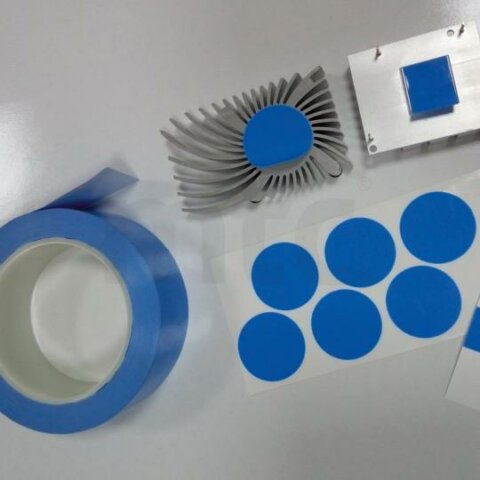
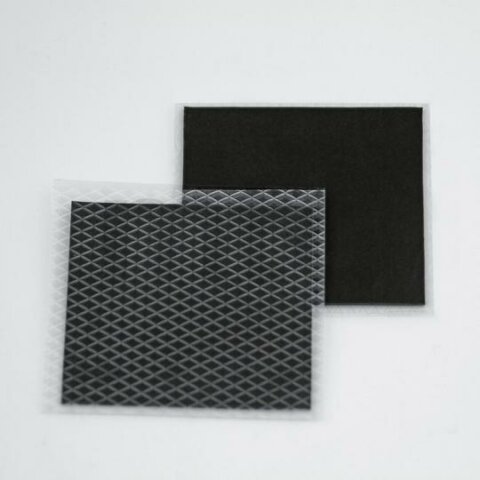
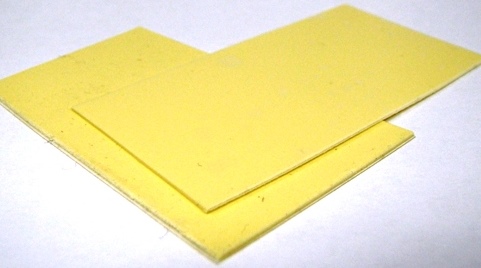
TCPC Series phase change thermal pads give engineers a clean and reliable way to improve heat transfer in electronic assemblies. These wax-based thermal interface materials remain solid and easy to position during handling and assembly. When the device heats up to around 50–60 °C, the material softens and flows into microscopic surface irregularities, reducing trapped air and lowering thermal resistance. This creates an efficient thermal path between components and heat sinks without the mess associated with grease. After cooling, the material re-solidifies in place, helping it remain stable through repeated on/off cycles. The pads are thin, conformable, and naturally tacky for simple installation. Electrically insulating variants support safe use in many power and control applications. With multiple conductivity grades, sheet formats, and custom cutting options, the TCPC range suits industrial, automotive, LED, RF, and power electronics designs.
Range features
A high level overview of what this range offers
- Phase change at 50–60 °C: Softens under heat to fill micro-voids for improved surface contact and efficient heat transfer
- Solid at room temperature: Easy to handle and position during assembly with no leakage, mess, or edge pump-out
- High thermal conductivity: Available in grades up to 5.0 W/m·K to move heat away from critical components
- Electrically insulating: Supports dielectric isolation with high volume resistivity for use between active devices and heat sinks
- Naturally tacky surface: Light surface adhesion helps keep the pad in place without extra adhesive in many applications
- Thin and conformable: Offered in 0.1–0.5 mm formats to minimize stack height while accommodating surface variation
- Custom sizes and formats: Available as sheets or pre-cut parts for easier integration into production assemblies
- Rugged thermal cycling stability: Designed for repeated heating and cooling cycles with reliable long-term performance
- RoHS & REACH compliant: Suitable for use in commercial and industrial electronics programs
Downloads
for Phase change material (PCM)
What’s in this range?
All the variants in the range and a comparison of what they offer
| Property | TCPC-PI-1.6 | TCPC-3.0 | TCPC-5.0 | Unit |
|---|---|---|---|---|
Thermal conductivity | 1.6 | 3.0 | 5.0 | W/m·K |
Phase change temperature | 50–60 | 50–60 | 50–60 | °C |
Operating temperature | –40 to +150 (max) | –40 to +130 | –40 to +130 | °C |
Thickness range | 0.2–0.5 (±10%) | 0.1–0.5 | 0.1–0.5 | mm |
Standard sheet size | 200×300 or 200×400 | 400×300 | 400×300 | mm |
Carrier / reinforcement | Polyimide film backing | EPDM base (FG, PI or AL optional) | EPDM base (FG, PI or AL optional) | – |
Volume resistivity | 10^12 | 10^14 | 10^7 | Ω·cm |
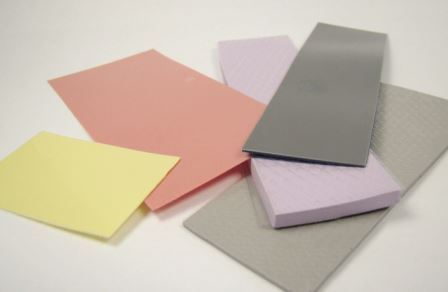
Colour | Yellow | Grey/Yellow/Pink | Black | – |
FAQs
for Phase change material (PCM)
A phase change thermal interface material (PCM) is a thermal pad that stays solid at room temperature and softens when heated during operation. Placed between a hot component and a heat sink, it begins to flow at around 50 °C and fills microscopic gaps between the two surfaces. This reduces trapped air and creates a thinner, more continuous heat-transfer path. When the system cools down, the material re-solidifies in place without dripping or requiring re-application.
PCM pads provide similar thermal benefits to grease but are much cleaner and easier to handle during assembly. Because the material is solid at room temperature, it can be placed accurately without smearing or overflow. It also offers consistent thickness and coverage across the interface, which can be harder to achieve with paste. In many designs, this gives near paste-like performance with better process control and reduced risk of pump-out over time.
The TCPC series is designed to soften in the 50–60 °C range. Below that point, the pad remains solid and dimensionally stable, which makes storage, handling, and assembly straightforward. Once the interface heats up during operation, the material becomes pliable enough to wet the surfaces and fill voids. It does not become a free-flowing liquid, so it stays contained within the interface.
These pads are typically supplied with protective release liners on both sides. After cutting the material to the required shape if needed, remove one liner and place the pad onto the component or heat sink. Then remove the second liner and assemble the mating surface under normal mounting pressure. The naturally tacky surface usually helps hold the pad in place without additional adhesive, although PSA-backed options may be available for specific requirements.
Yes. The TCPC series is intended to provide electrical insulation as well as thermal transfer. Depending on the grade, volume resistivity can be very high, supporting safe separation between live devices and grounded heat sinks. This can help eliminate the need for a separate insulating layer in many electronics applications.
The TCPC range is available in thin formats from 0.1 mm to 0.5 mm, depending on the grade. Standard sheet sizes include 400 × 300 mm formats, with some variants also offered in 200 × 300 mm or 200 × 400 mm sheets. The material can also be supplied as die-cut or kiss-cut parts for faster assembly and precise fit within the application.
Phase change pads are designed for repeated heating and cooling cycles without the drying or curing issues associated with some other interface materials. Each cycle allows the material to soften, conform, and then re-solidify while remaining in place. This supports long-term thermal stability and low interface resistance in demanding electronics applications. Reinforcement options can also improve mechanical robustness where needed.
Store the pads in a cool, dry indoor environment away from direct sunlight and ideally below their softening range. Keeping the protective liners in place until use helps prevent contamination. A typical recommended shelf life is about 12 months under normal room-condition storage, helping preserve handling characteristics and phase-change performance.
Yes. Because the material does not cure into a permanent bond, it can generally be removed during servicing or rework. After disassembly, the pad may remain on one surface and can usually be peeled away with minimal residue. For best performance after maintenance, it is normally recommended to replace the used pad with a fresh one rather than reusing the original piece.