TruePhase® 125/250 µm 1310 nm PM Optical Fibre
- Technology
- Speciality fibre
- Partner
- Lightera (formerly OFS)
The TruePhase 1310 nm polarisation-maintaining optical fibre is designed to preserve linear polarisation along a fixed axis during transmission at 1310 nm in the O-band. It supports stable signal quality in applications such as external modulators, fused fibre couplers, photonic switches, CATV systems, and sensor assemblies. Its high birefringence structure helps minimise coupling between orthogonal polarisation modes for reliable performance in polarisation-sensitive systems. Low attenuation and low bending sensitivity help maintain optical performance even in compact routing conditions. Tight dimensional tolerances support consistent splicing, coupling, and integration into precision optical assemblies. The dual UV acrylate coating with a standard 250 µm diameter provides mechanical protection and compatibility with common handling and connectorisation processes. A high proof test level further supports durability during installation and long-term use. This makes the fibre a robust solution for engineers building high-performance telecom, photonics, and sensing systems.
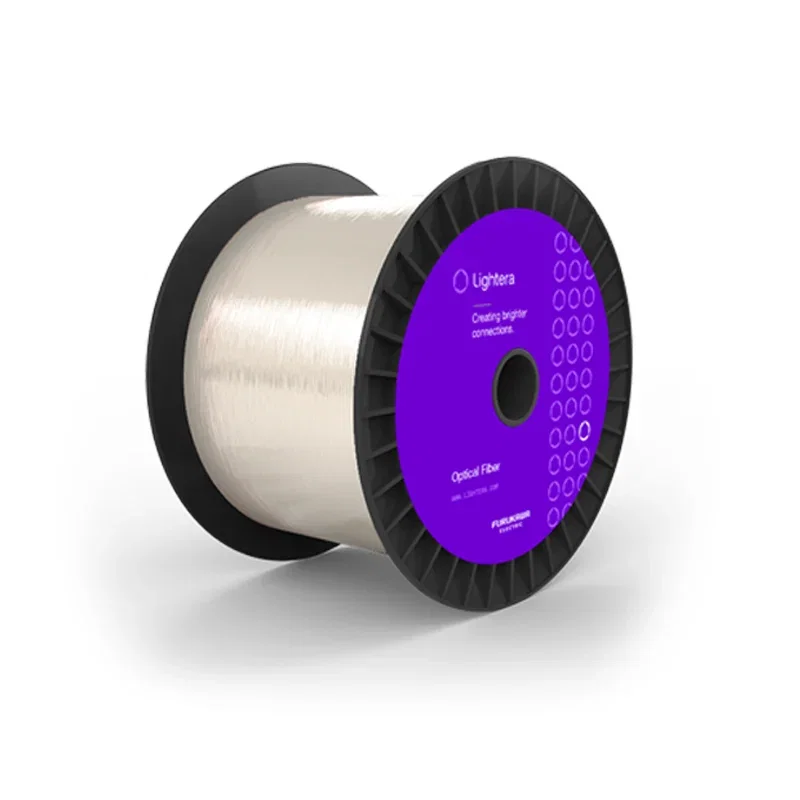
The TruePhase® 1310 nm polarisation-maintaining optical fibre is an advanced single-mode fibre engineered to keep light polarised along a fixed axis during transmission. Optimised for the 1310 nm O-band, it is well suited to telecommunications, CATV, modulators, fused couplers, photonic switches, and other polarisation-sensitive optical systems.
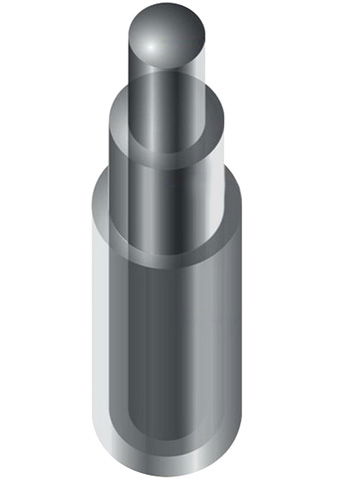
Its PANDA-type polarisation-maintaining design, high birefringence, low attenuation, and low bending sensitivity help preserve signal fidelity in demanding installations. The standard 125 µm cladding / 250 µm dual UV acrylate coating structure supports compatibility with common fibre handling, splicing, and cabling processes, while the high proof test level provides added confidence in long-term mechanical reliability.
Range features
A high level overview of what this range offers
- Low beat length (≤ 4.0 mm): Supports strong polarisation maintenance over short fibre lengths for compact optical devices.
- Low attenuation (≤ 1.2 dB/km): Helps minimise optical loss and preserve signal strength in 1310 nm systems.
- High birefringence design: Maintains separation between orthogonal polarisation modes for improved signal fidelity.
- Tight geometrical tolerances: Supports consistent splicing, coupling, and repeatable integration performance.
- Low bending sensitivity: Reduces additional loss when routed or coiled in space-constrained assemblies.
- Excellent crosstalk isolation: Typical crosstalk of about -35 dB/100 m helps maintain high polarisation purity.
- High mechanical reliability: Proof-tested to ≥ 200 kpsi for strong durability during handling and deployment.
- Dual UV acrylate coating (250 µm): Protects the fibre while maintaining flexibility and compatibility with standard cabling practices.
Downloads
for TruePhase® 125/250 µm 1310 nm PM Optical Fibre
What’s in this range?
All the variants in the range and a comparison of what they offer
Specification | Value |
Product Description | TruePhase 1310-250 Polarisation-Maintaining Optical Fibre |
Coating Material | Dual UV acrylate |
Cladding Diameter | 125 ± 1 µm |
Coating/Buffer Diameter | 250 ± 10 µm |
Clad Non-Circularity | ≤ 2.0% |
Core/Clad Offset | ≤ 0.7 µm |
Fibre Type | Polarisation-Maintaining (PANDA-type) |
Operating Wavelength | 1310 nm |
Fibre Cutoff Wavelength | ≤ 1290 nm |
Mode Field Diameter @ 1310 nm | 9.0 ± 0.5 µm |
Attenuation @ 1310 nm | ≤ 1.2 dB/km |
Beat Length @ 1310 nm | ≤ 4.0 mm |
Crosstalk @ 1310 nm (100 m) | ≤ -30 dB/100 m |
Crosstalk (Typical) @ 1310 nm | ≤ -35 dB/100 m |
Numerical Aperture (NA) | 0.13 (nominal) |
Operating Temperature | -40 °C to +85 °C |
Proof Test Level | ≥ 200 kpsi (≈ 1.38 GPa) |
Orderable Part Number | F9922-02 |
Available Options | Cabling, alternate coating materials/sizes (e.g. 400 µm), metallisation, custom optical properties, different proof test levels |
FAQs
for TruePhase® 125/250 µm 1310 nm PM Optical Fibre
A polarisation-maintaining (PM) optical fibre is a specialised single-mode fibre designed to preserve the orientation of light’s polarisation as it travels through the fibre. Unlike standard single-mode fibre, which can allow the polarisation state to drift, PM fibre uses built-in stress elements to create birefringence and keep light aligned to a defined axis.
This is important in applications such as interferometers, optical sensors, modulators, and precision photonics systems, where stable polarisation improves accuracy, repeatability, and overall device performance.
This fibre is designed for best performance at 1310 nm, a key telecom and CATV wavelength in the O-band. Its structure is optimised to deliver the specified attenuation and polarisation-maintaining performance around that wavelength.
It can still guide light at wavelengths above its cutoff, but performance characteristics such as attenuation and crosstalk may differ outside the 1310 nm design point. For the most predictable results, it is best used in systems centred on 1310 nm.
Beat length is the distance over which light in a PM fibre completes one full phase cycle between the two principal polarisation axes. A short beat length indicates high birefringence, meaning the fibre strongly separates the two polarisation modes.
That is beneficial because it reduces coupling between axes and helps preserve the launched polarisation state, especially in compact optical components where stable polarisation is essential.
With attenuation of ≤ 1.2 dB/km at 1310 nm, the fibre introduces very little optical loss. This helps preserve optical power, supports stronger signal levels, and improves system margin.
In practical assemblies using short fibre lengths, low attenuation helps ensure that modulators, sensors, couplers, and other photonic components are not limited by unnecessary fibre loss.
High birefringence means the fibre has a large refractive index difference between its two orthogonal polarisation axes. This causes the two modes to propagate differently and reduces energy transfer between them.
For the user, that means more stable polarisation, lower crosstalk, and more predictable performance in systems where polarisation purity is critical.
A typical crosstalk level of -35 dB/100 m means only a very small amount of optical power couples from one polarisation axis into the other over that length. This indicates strong polarisation isolation.
In many practical applications that use shorter fibre lengths, the effective crosstalk impact will be even lower, helping preserve the intended polarisation state for high-precision optical performance.
The fibre is engineered for low sensitivity to bending-induced attenuation, which helps reduce additional loss when routed through compact enclosures or coiled for integration.
As with any optical fibre, excessively sharp bends should still be avoided, but normal installation and handling in controlled bend radii should not significantly affect attenuation or polarisation-maintaining performance.
The dual UV acrylate coating is a two-layer protective coating system that cushions the glass fibre and provides an abrasion-resistant outer layer. It helps protect the fibre from handling stress, humidity effects, and microbending.
Its standard 250 µm diameter also supports compatibility with common fibre processing, connectorisation, and cabling workflows.
A proof test level of ≥ 200 kpsi means the fibre has been mechanically tested to a high tensile stress threshold during manufacturing. This helps identify and eliminate weak points before the product is supplied.
For users, it provides added confidence in the fibre’s mechanical robustness during installation, splicing, and long-term deployment in demanding environments.
Typical applications include CATV components, external modulators, fused fibre couplers, laser pigtails, photonic switches, integrated optics, and fibre-optic sensor systems where preserving a defined polarisation state is essential.
It is especially useful in telecom, cable TV, and precision photonics environments that depend on stable polarisation for consistent optical performance.