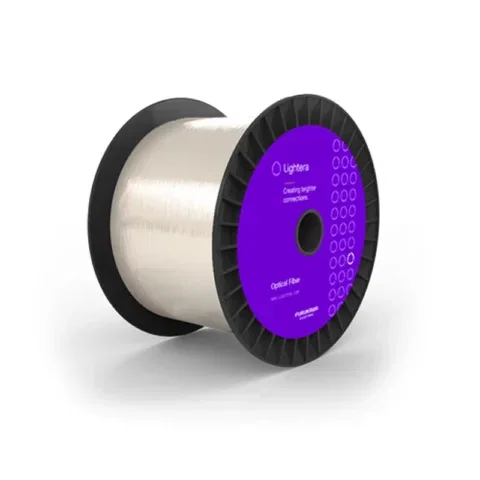
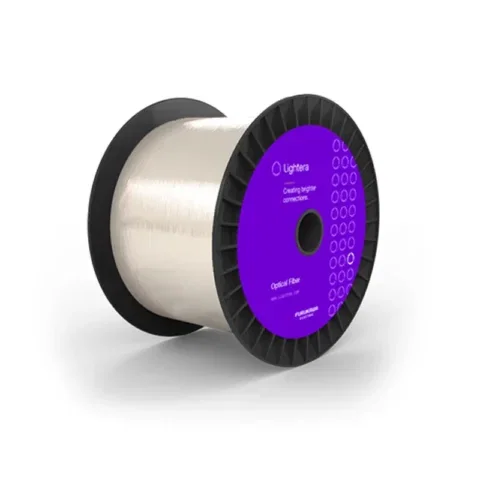
HCS® 300 µm 0.37 NA High OH Optical Fibre
- Technology
- Speciality fibre
- Partner
- Lightera (formerly OFS)
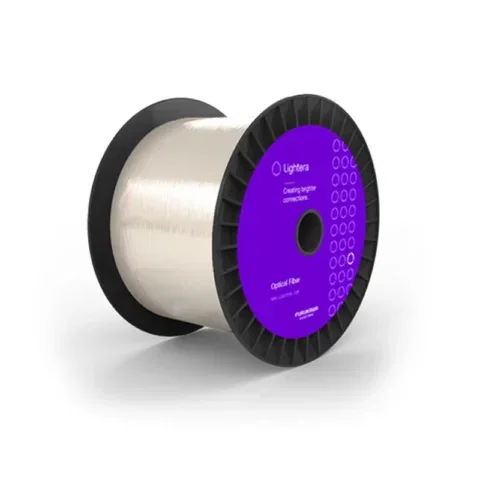
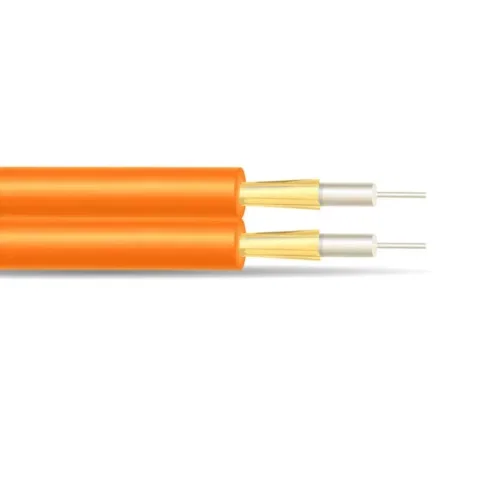
This Hard-Clad Silica (HCS) optical fibre combines a pure silica core with a proprietary polymer cladding to create a robust step-index multimode fibre for demanding environments. Its 300 µm core and 0.37 numerical aperture make light coupling simple, including from LEDs and VCSELs, which helps reduce system cost and complexity. Additional ETFE buffer layers increase the outer diameter to approximately 650 µm, improving handling, abrasion resistance, and chemical protection. The high-OH construction is optimised for visible and near-infrared wavelengths such as 650 nm and 850 nm. It is well suited to industrial communications, fibre-optic sensing, spectroscopy, illumination, and laser delivery tasks. The fibre also supports fast crimp-and-cleave field termination, making installation and maintenance more practical in harsh operating conditions.
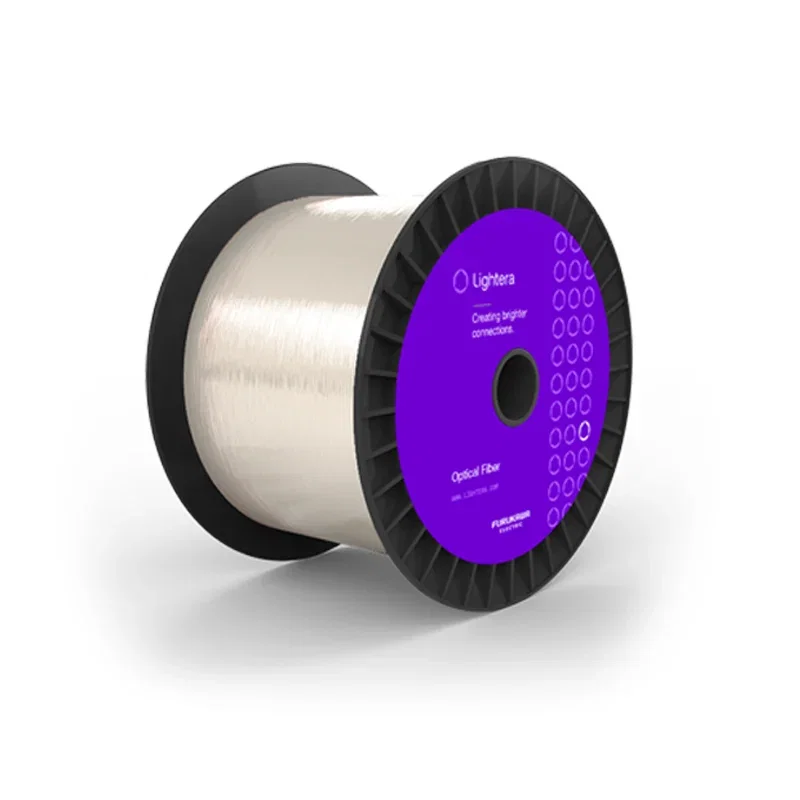
The CF01493-19 HCS® 300 µm 0.37 NA High OH Optical Fibre is designed for applications that need a combination of optical performance, ruggedness, and easy handling. It uses a pure silica core with hard polymer cladding in a step-index multimode construction, plus an ETFE buffer for added durability and chemical resistance.
Optimised for visible to near-infrared wavelengths such as 650 nm and 850 nm, this fibre is a practical choice for industrial links, sensing systems, spectroscopy equipment, and laser delivery assemblies. Its large core and moderate numerical aperture simplify coupling from common light sources while supporting dependable performance in demanding environments.
Range features
A high level overview of what this range offers
- High mechanical strength: Helps the fibre withstand pulling forces and installation tension.
- Bend-insensitive performance: Reduces signal loss when routed around tighter corners.
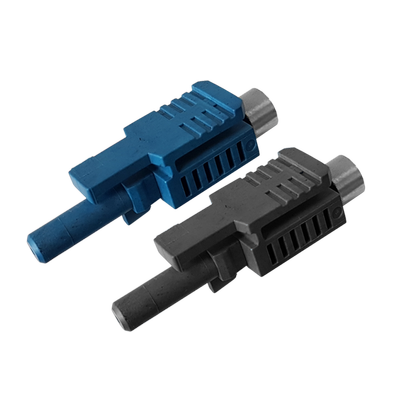
- Crimp-and-cleave termination: Supports quick field connectorisation without epoxy or polishing.
- Chemical resistance: ETFE buffering and polymer cladding help protect against oils, solvents, and harsh industrial media.
- Wide operating temperature range: Reliable use from –65 °C to +125 °C.
- Crush and twist resilience: Durable construction tolerates mechanical stress while maintaining usability.
- Long-term reliability: Built for stable performance in continuous industrial service.
- Easy handling: Approx. 650 µm buffered diameter makes stripping, gripping, and cleaving easier for technicians.
Downloads
for HCS® 300 µm 0.37 NA High OH Optical Fibre
What’s in this range?
All the variants in the range and a comparison of what they offer
Specification | Value |
Core Diameter | 300 ± 6 µm |
HCS® Cladding Diameter | 330 +5 / –10 µm |
ETFE Buffer Diameter | 650 ± 30 µm |
Core/Clad Offset | ≤ 6.0 µm |
Cladding Material | Fluoroacrylate polymer (HCS) |
Buffer Material | ETFE |
Fibre Type | Step-index multimode |
Numerical Aperture (NA) | 0.37 |
Attenuation @ 820 nm | ≤ 12 dB/km |
Water Content | High OH (for visible wavelength use) |
Operating Temperature | –65 to +125 °C |
Short-Term Bend Radius | ≥ 15 mm |
Long-Term Bend Radius | ≥ 24 mm |
Proof Test Level | ≥ 150 kpsi (1.03 GPa) |
Crimp & Cleave Compatible | Yes |
Orderable Part Number | CF01493-19 |
Product Description Code | HCN-M0300T |
Available Options | Buffer colour, buffer diameter, buffer material, cabling, connectors, custom NA |
FAQs
for HCS® 300 µm 0.37 NA High OH Optical Fibre
HCS fibre uses a hard polymer cladding around a silica glass core, unlike standard all-glass fibres that use glass cladding. This makes the fibre mechanically tougher and easier to terminate in the field. It supports practical crimp-style connector attachment without the epoxy and polishing processes usually associated with conventional glass fibre termination. The trade-off is that HCS fibre typically has higher attenuation and lower bandwidth than telecom-grade fibre, so it is best for rugged short-range links rather than long-distance transmission.
A 300 µm core captures much more light than a smaller-core fibre, which makes alignment and coupling easier. The 0.37 numerical aperture allows the fibre to accept light over a relatively wide angle, improving tolerance to source misalignment and helping maintain transmission under practical installation conditions. Together, these characteristics make the fibre well suited to LEDs, VCSELs, sensors, and industrial systems where ease of coupling and robust operation matter more than maximum bandwidth.
A high-OH fibre is generally preferred for visible to near-infrared use, especially across roughly 400 nm to 900 nm, including common wavelengths such as 650 nm and 850 nm. In this range, it offers good transmission performance. For longer infrared wavelengths such as 1300 nm or 1550 nm, a low-OH fibre is typically the better choice because it reduces attenuation in those regions. In short, high-OH is the right option for visible and 850 nm applications, while low-OH is better for deeper infrared transmission.
This fibre supports a simple crimp-and-cleave termination process. The connector ferrule can be crimped directly onto the fibre, and the protruding core is then cleaved flush. This avoids adhesive curing, ovens, and polishing steps, making installation faster and easier with handheld tools. It is especially useful for industrial and remote environments where quick field termination is important.
Yes. The fibre is designed for demanding environments and supports operation from –65 °C to +125 °C. It can tolerate short-term bends down to 15 mm and long-term bends of 24 mm or more, while the hard polymer cladding and ETFE buffer improve resistance to crush, twist, abrasion, oils, solvents, and other industrial stresses. These characteristics make it a strong fit for harsh installations requiring long service life.
Typical applications include industrial data communication, fibre-optic sensors, instrumentation, spectroscopy, illumination systems, and laser delivery in medical or industrial equipment. It is a strong choice wherever a large-core multimode fibre is needed for reliable short-to-moderate distance transmission, straightforward connectorisation, and dependable performance in rugged conditions.
Not ideally. With attenuation around 12 dB/km at 820 nm and the modal dispersion expected from a large-core step-index multimode design, this fibre is intended for short-haul to moderate-distance links rather than long-distance high-speed communication. It is well suited to applications spanning tens or hundreds of metres, but for multi-kilometre transmission, a standard graded-index multimode or single-mode fibre is typically more appropriate.