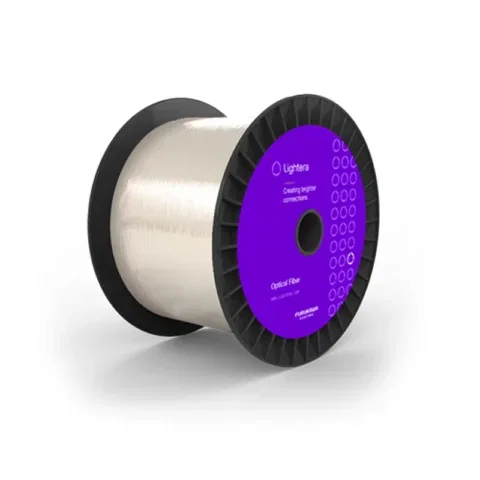
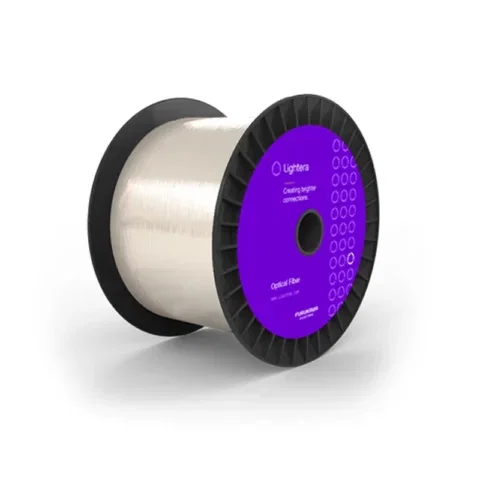
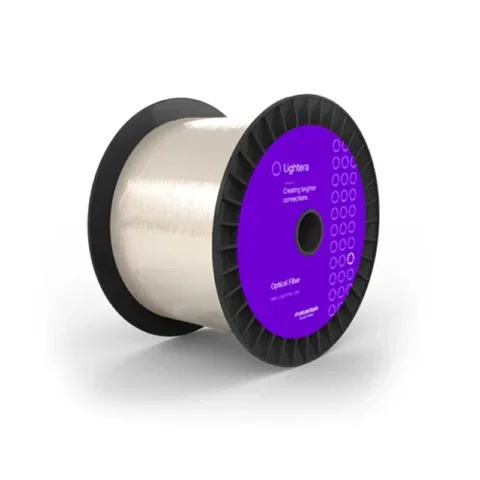
TruePhase® 400 µm 1400-1490 nm PM Optical Fibre
- Technology
- Speciality fibre
- Partner
- Lightera (formerly OFS)
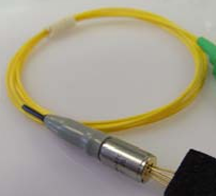
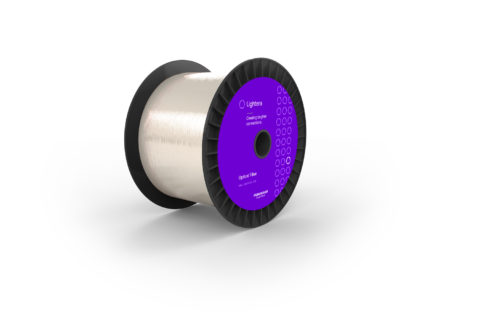
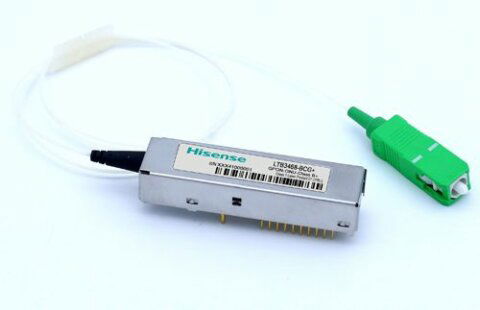
TruePhase 14xx 400 µm PM Optical Fibre is a high-performance, polarisation-maintaining single-mode fibre designed for reliable operation in the 1400–1490 nm range. It preserves the linear polarisation of light as it propagates, which is critical for sensitive optical systems. This fibre is often used as a pigtail or patch fibre for Raman pump lasers and other light sources in S-band telecom and photonic applications, helping to ensure stable output power and consistent signal coherence. The generous 400 µm dual-acrylate buffer coating gives the fibre extra mechanical robustness and easier handling during installation or splicing, compared to standard 250 µm coatings.
For design flexibility, the TruePhase 14xx fibre is available in two versions: High Beat Length and Low Beat Length, to balance birefringence characteristics and polarisation performance. It can also be supplied with either a standard 250 µm or a thicker 400 µm coating, allowing engineers to choose the format best suited to their packaging and durability needs. Overall, this fibre provides a dependable solution for engineers working on advanced optical amplifiers, laser systems, and other polarisation-sensitive devices in the 1400–1490 nm wavelength band.
Range features
A high level overview of what this range offers
- Optimised for 1400–1490 nm: Designed for reliable performance in the 14xx-nm band, including 1480 nm pump laser and Raman amplifier applications.
- Polarisation-maintaining operation: Preserves linear light polarisation over distance for stable, coherent signal transmission.
- HBL and LBL variants available: Choose between High Beat Length and Low Beat Length versions to match required birefringence and polarisation stability.
- Low attenuation: Delivers attenuation of ≤ 1.2 dB/km at 1455 nm to help minimise power loss.
- High polarisation isolation: Achieves ≤ -30 dB polarisation crosstalk over 100 m at 1550 nm for strong axis separation.
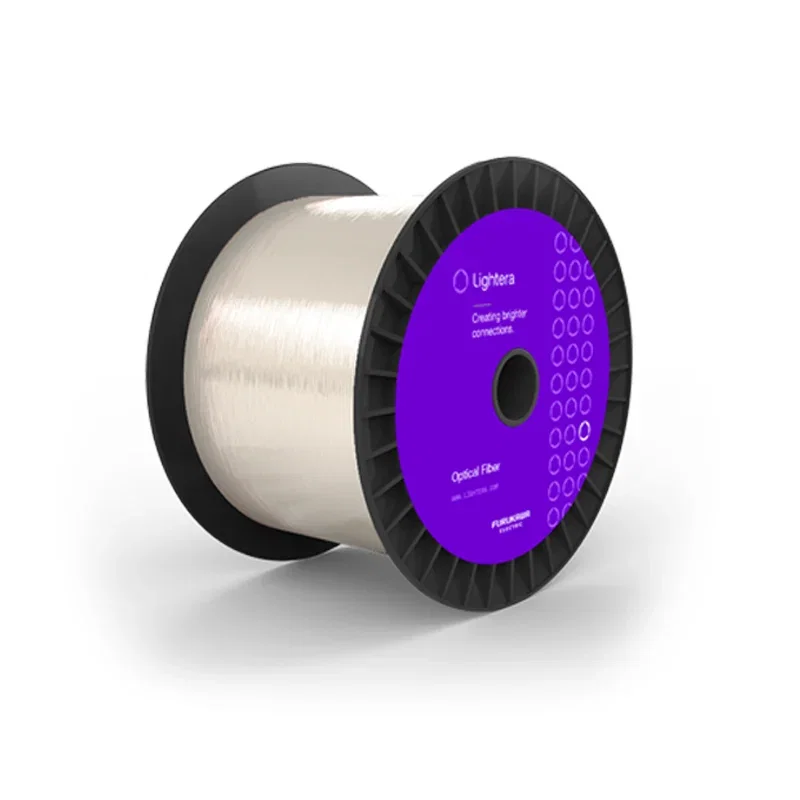
- Robust 400 µm coating: Dual-acrylate buffer improves handling, durability, and protection during installation and splicing.
- Proof-test options: Available with 100 kpsi or 200 kpsi proof testing for enhanced mechanical reliability.
Downloads
for TruePhase® 400 µm 1400-1490 nm PM Optical Fibre
What’s in this range?
All the variants in the range and a comparison of what they offer
Specification | Value |
Operating Wavelength Range | 1400 – 1490 nm |
Cut-off Wavelength | ≤ 1390 nm |
Mode Field Diameter (@ 1455 nm) | 9.8 µm |
Attenuation (@ 1455 nm) | ≤ 1.2 dB/km |
Beat Length (@ 1455 nm, HBL version) | 3.7 – 4.7 mm |
Polarisation Crosstalk (100 m) | ≤ -30 dB @ 1550 nm |
Numerical Aperture (NA) | 0.13 |
Cladding Diameter | 125 ± 1.0 µm |
Coating Diameter | 400 ± 10 µm (dual acrylate buffer) |
Proof Test Level | 100 kpsi or 200 kpsi (option) |
- Version options: The standard High Beat Length (HBL) version is available alongside a Low Beat Length (LBL) version for higher birefringence and stronger polarisation retention.
- Coating flexibility: Also available with a 250 ±10 µm coating where a standard fibre buffer size is preferred.
- Application fit: Suitable for Raman pump lasers, optical amplifiers, telecom photonics, and other polarisation-sensitive systems in the 1400–1490 nm band.
FAQs
for TruePhase® 400 µm 1400-1490 nm PM Optical Fibre
The two versions differ in birefringence and resulting polarisation stability. The High Beat Length (HBL) version is the standard option, with a beat length of around 3.7–4.7 mm at 1455 nm. The Low Beat Length (LBL) version has higher birefringence, which helps maintain polarisation even more strongly over longer distances. In practice, LBL is chosen when tighter polarisation retention is required.
The 400 µm dual-acrylate coating provides greater mechanical protection and easier handling than a standard 250 µm coating. It helps reduce the risk of damage during installation, routing, stripping, and splicing. This makes the fibre especially useful in applications where added ruggedness or repeated handling is important.
The glass cladding remains the standard 125 µm, so standard fusion splicing and connectorisation methods can still be used. However, you will need fibre stripping tools that support the thicker 400 µm coating. Once stripped, the cleaving, splicing, and termination process is essentially the same as for standard single-mode fibre.
A polarisation-maintaining fibre uses an internal stress structure that creates two principal propagation axes. This birefringence makes light polarised along one axis less likely to couple into the perpendicular axis. When light is launched correctly into one of these axes, the fibre helps preserve that polarisation state along its length.
This fibre is optimised for 1400–1490 nm operation. Below its cut-off wavelength of about 1390 nm, such as at 1310 nm, it will no longer behave as a true single-mode polarisation-maintaining fibre. At 1550 nm, it can still guide light in single mode and shows good polarisation performance over 100 m, but for continuous use at 1550 nm, a fibre specifically optimised for that wavelength band is generally the better choice.
Typical applications include Raman pump laser pigtails, Raman amplifiers, 1480 nm pump fibre for EDFAs, and other telecom or photonic systems that require stable polarisation. It is also suitable for research, industrial laser systems, sensing, and interferometric setups operating in the 1.4–1.5 µm wavelength region.
The proof test rating indicates the tensile stress that each fibre has been tested to during manufacture. A 100 kpsi proof test confirms the fibre can withstand that stress level, while 200 kpsi is a more stringent test that provides additional confidence in fibre strength and long-term reliability. The higher rating is often preferred for demanding or critical applications.