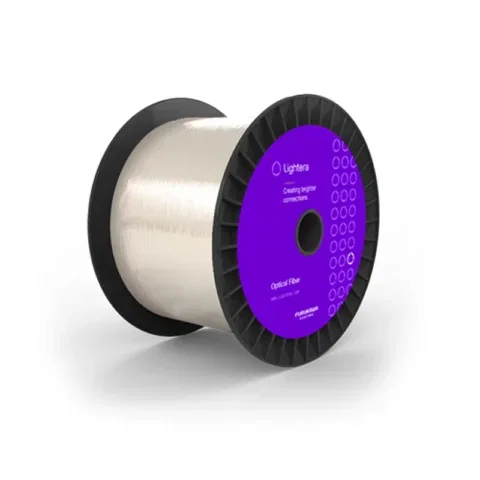
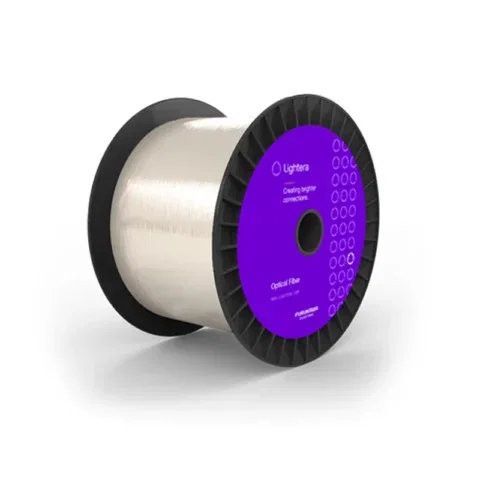
HCS® 1000 µm 0.37 NA Low OH Optical Fibre
- Technology
- Speciality fibre
- Partner
- Lightera (formerly OFS)
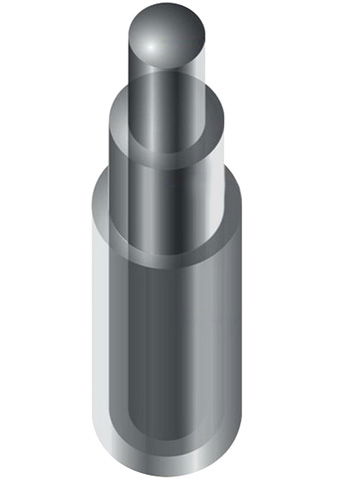
CF01493-15 is a Hard-Clad Silica (HCS®) multimode optical fibre with a 1000 µm pure silica core and rugged polymer cladding. Its 0.37 numerical aperture supports efficient light capture from LEDs and other practical optical sources. The low-OH core formulation helps reduce attenuation at common red and near-infrared wavelengths such as 650 nm and 850 nm. This large-core step-index fibre is designed for dependable use in harsh environments with resistance to chemicals, temperature extremes and mechanical stress. Typical applications include industrial automation links, avionics, medical laser delivery, spectroscopy, sensing and scientific instrumentation. The thick ETFE-buffered construction also improves handling during installation and supports reliable field integration. Overall, it is a robust large-core fibre solution for systems that require high coupling tolerance, durability and broad spectral usefulness.
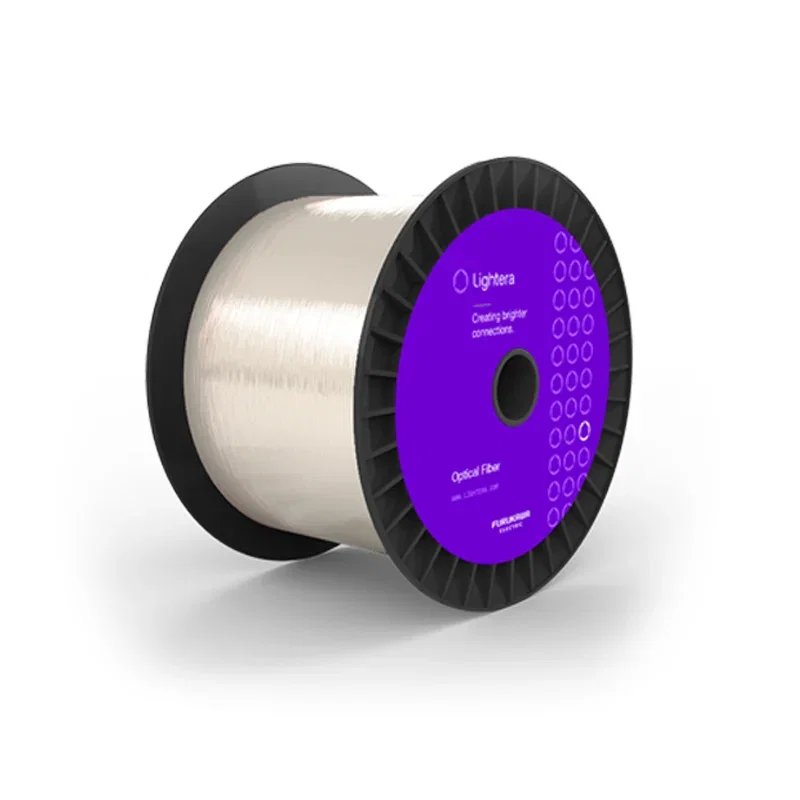
CF01493-15 is a large-core Hard-Clad Silica (HCS®) optical fibre designed for demanding optical transmission and light-delivery tasks. Its 1000 µm pure silica core and 0.37 NA make it well suited for efficient coupling from LEDs, lasers and other practical light sources, while the low-OH formulation supports strong performance across visible red and near-infrared wavelengths.
Built with HCS fluoroacrylate polymer cladding and an ETFE buffer, this fibre is engineered for reliability in industrial, medical and scientific environments. It combines robust mechanical durability, chemical resistance and a wide operating temperature range with the handling advantages of a thick buffered construction.
Range features
A high level overview of what this range offers
- Large 1000 µm core and 0.37 NA: Supports efficient light capture from LEDs, lasers and other optical sources with easier alignment.
- Low-OH pure silica core: Reduces attenuation at red and near-infrared wavelengths such as 650 nm and 850 nm.
- Multimode step-index construction: Suitable for short-to-medium distance links, sensing and optical power delivery.
- Rugged HCS® polymer cladding: Improves durability and handling compared with more delicate fibre constructions.
- ETFE buffer protection: Adds mechanical robustness and simplifies stripping, routing and installation.
- Wide operating temperature range: Designed to perform from −65 °C to +125 °C.
- Chemical and mechanical resilience: Helps withstand oils, solvents, crush, twist and demanding industrial environments.
- Reliable for industrial, medical and scientific use: Appropriate for automation links, avionics, spectroscopy, laser delivery and instrumentation.
Downloads
for HCS® 1000 µm 0.37 NA Low OH Optical Fibre
HCS 1000 µm Low OH Optical Fibre Datasheet
DownloadWhat’s in this range?
All the variants in the range and a comparison of what they offer
Specification | Value |
Product Description | 1000 µm core, 0.37 NA, Low OH |
Core Diameter | 1000 ± 15 µm |
HCS® Cladding Diameter | 1035 ± 15 µm |
ETFE Buffer Diameter | 1400 ± 50 µm |
Core/Clad Offset | ≤ 10.0 µm |
Crimp & Cleave Compatible | Yes |
Cladding Material | HCS fluoroacrylate polymer |
Buffer Material | ETFE |
Type | Multimode step-index |
Numerical Aperture (NA) | 0.37 |
Attenuation @ 850 nm | ≤ 8 dB/km |
Water Content | Low OH (infrared-optimised) |
Operating Temperature | −65 °C to +125 °C |
Short-Term Bend Radius | ≥ 73 mm |
Long-Term Bend Radius | ≥ 118 mm |
Proof Test Level | ≥ 100 kpsi (0.689 GPa) |
Order by Part Number | CF01493-15 |
FAQs
for HCS® 1000 µm 0.37 NA Low OH Optical Fibre
HCS stands for Hard-Clad Silica. In this fibre design, a silica core is combined with a hardened polymer cladding rather than a traditional all-glass cladding structure. This makes the fibre more durable, easier to handle and better suited to industrial or harsh-environment applications where bend tolerance, abrasion resistance and practical installation matter.
0.37 NA means the fibre has a numerical aperture of 0.37, which indicates how much light it can accept from a source. A higher NA allows the fibre to capture light over a wider angle, making coupling easier and reducing alignment sensitivity. In practical use, this helps the fibre work efficiently with LEDs and laser sources while also supporting good bend performance.
Low OH means the silica core has a low hydroxyl ion content. Lower OH content reduces absorption losses in the near-infrared range, so the fibre performs better at wavelengths such as 650 nm, 850 nm and into the broader near-IR region. This makes it a strong choice for infrared-oriented sensing, laser delivery and general optical transmission tasks.
A 1000 µm core offers very easy optical coupling, because the large light-guiding area tolerates less precise alignment than small-core fibres. It can also support higher optical power handling by spreading energy over a larger area. These benefits make it useful for illumination, sensing, laser delivery and short-distance multimode transmission where convenience and robustness are more important than long-haul bandwidth.
This fibre is intended for short-to-moderate distance links, typically up to a few kilometres depending on wavelength, source power, receiver sensitivity and total link budget. With attenuation around 8 dB/km at 850 nm, it can be practical for industrial, campus or equipment-level transmission over distances of roughly 2–3 km when system conditions are suitable.
Yes. The large 1000 µm core is well suited for delivering relatively high optical power in medical and industrial systems because it reduces power density compared with smaller-core fibres. This makes the fibre useful for laser therapy, industrial beam delivery and sensing applications, provided the final design stays within the source and connector power limits.
HCS fibres are valued for their practical termination options. Their robust cladding and buffer construction make them easier to handle during connectorisation than more fragile fibre types. Depending on the connector format and core size, they can be integrated using mechanical termination approaches and compatible ferrules, enabling reliable connection to transmitters, receivers and other optical components.
Yes. This fibre is designed for demanding environments thanks to its polymer cladding, ETFE buffer, chemical resistance and wide operating temperature range of −65 °C to +125 °C. These properties make it appropriate for industrial equipment, outdoor-installed systems when properly cabled, and other applications where mechanical stress or environmental exposure is a concern.