Optac drone camera
- Technology
- FPV cameras
- Partner
- Mohoc
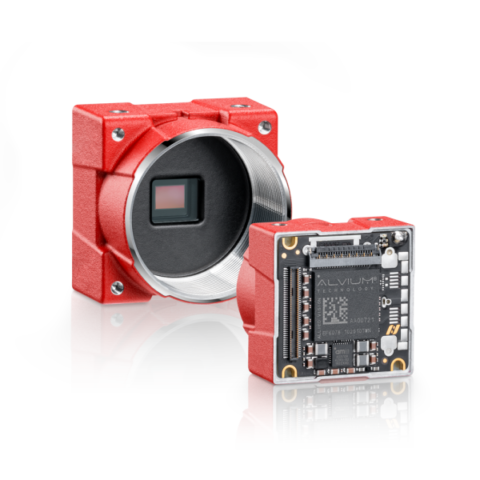
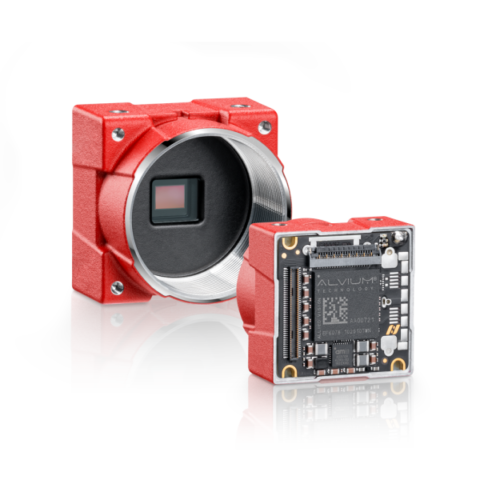
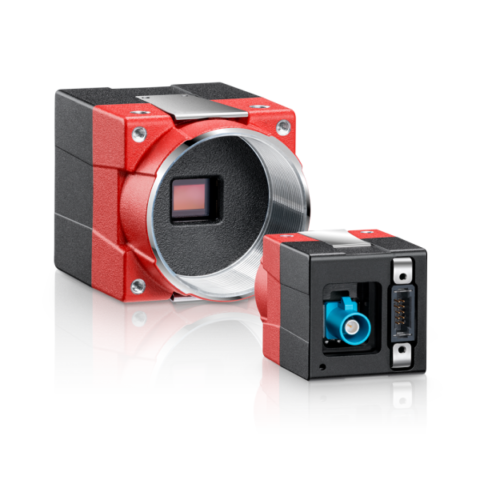
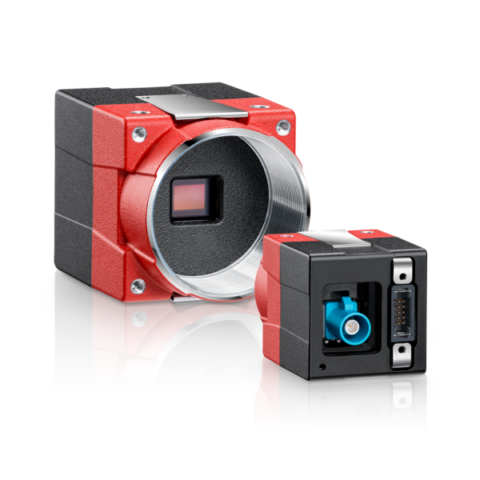
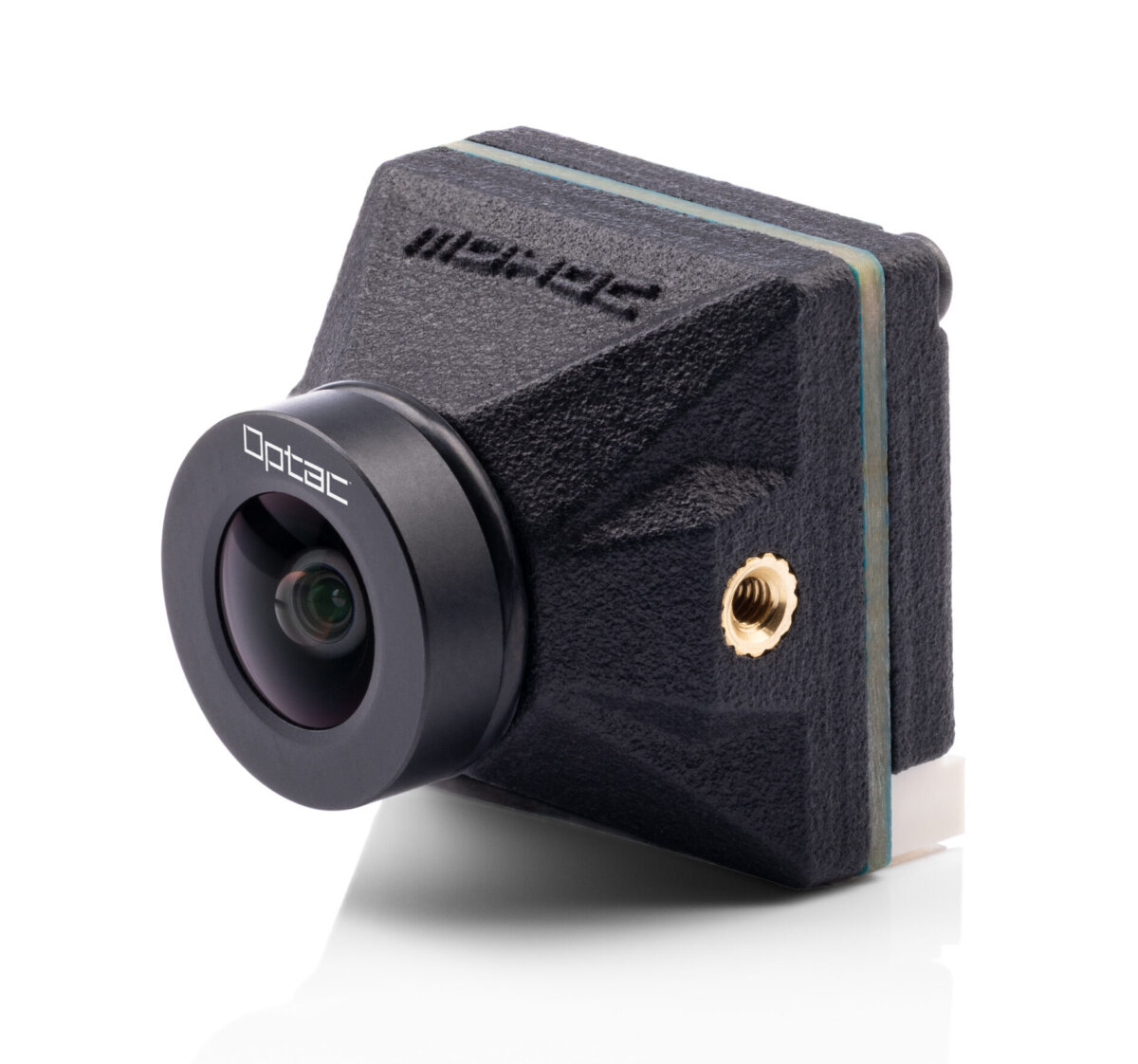
The Optac FPV drone camera range is designed for engineers integrating analogue vision into compact UAV airframes. It comprises the MD1A.VIS visible-spectrum model and the MD1A.NF visible-and-infrared model, both using the same 22 mm cube housing, 18 g weight and 5 V DC supply. The A-VIS provides colour output across 400–750 nm for daylight and low-light use. The A-NF extends light transmission to 400–950 nm and uses a removable IR filter cap to switch between colour daylight output and black-and-white night output. Both cameras feed CVBS video into analogue VTX systems, with PAL or NTSC resolution and selectable 16:9 or 4:3 presentation.
A 1/2.8-inch CMOS sensor, automatic low-light adjustment and joystick-controlled OSD support changing scene conditions and system setup. M2 mounting, a 5-pin Molex connection and the snag-reducing form factor support installation where space, mass and cable routing are constrained. The component set is NDAA compliant, which may assist programmes with defined sourcing requirements.
Range features
A high level overview of what this range offers
- Two spectral options – Match visible-only or visible-plus-infrared imaging to the operating profile.
- 0.0005 lux 1/2.8-inch CMOS sensor – Supports image capture in low-light scenes.
- Removable IR filter cap on A-NF – Enables colour daylight output and monochrome night output.
- CVBS PAL/NTSC output – Connects to established analogue FPV video and VTX chains.
- Selectable 16:9 or 4:3 format – Accommodates different display formats and scene coverage requirements.
- 22 × 22 × 22 mm enclosure at 18 g – Reduces the space and mass allocated to the camera.
- 5 V DC input with 1.4 W maximum consumption – Allows inclusion in low-voltage power budgets.
- 5-pin Molex 1.25 mm connector and M2 mounting – Supports compact electrical and mechanical integration.
- Joystick-controlled OSD – Provides access to camera configuration.
- Snag-reducing enclosure geometry – Intended for launched-effect operating environments.
- NDAA-compliant, audited components – Supports relevant sourcing and procurement checks.
Downloads
for Optac drone camera
What’s in this range?
All the variants in the range and a comparison of what they offer
Specifications
| Specification | Value |
|---|---|
Dimensions, L × W × H | 22 × 22 × 22 mm |
Weight | 18 g / 0.63 oz |
Image sensor | 1/2.8-inch CMOS with 0.0005 lux low-light sensitivity |
Output video interface | CVBS |
OSD control | Joystick |
Lens | f/2.0 |
Light transmission | A-VIS: 400–750 nm; A-NF: 400–950 nm |
Aspect ratio | Adjustable CVBS 16:9 or 4:3 |
Field of view | 4:3: 85H / 60V / 104D; 16:9: 100H / 60V / 117D |
Resolution | Analogue CVBS: 960 × 576 PAL or 960 × 480 NTSC |
Frame rate | CVBS at 30/25 fps, NTSC/PAL |
Power source | 5 V DC; maximum 280 mA at 5 V DC, 1.4 W |
Connection interface | 5-pin Molex, 1.25 mm |
Low-light function | Automatic adjustment for low-light recording |
UAV mounting | M2 screws |
Variant Comparison
| Specification | Optac A-VIS | Optac A-NF |
|---|---|---|
Model / SKU | MD1A.VIS | MD1A.NF |
Light transmission | 400–750 nm | 400–950 nm |
Operating emphasis | Daylight with low-light capability | Night operation with external IR illumination |
Daylight video | Colour | Colour with IR filter cap installed |
Night video | Visible-spectrum low-light output | Black and white with IR filter cap removed |
IR filter cap | Not included | Removable cap included |
Supplied items | 1 × camera | 1 × camera and 1 × IR filter cap |
FAQs
for Optac drone camera
The choice depends on whether the airframe needs only visible-spectrum imaging or a day-to-night operating path. The A-VIS covers 400–750 nm, outputs colour video and is intended primarily for daylight use while retaining low-light capability from the 0.0005 lux sensor. The A-NF extends transmission to 400–950 nm; with its IR filter cap fitted it provides colour daylight video, and with the cap removed it provides black-and-white night video. Night performance is intended to be used with external IR illumination, so the illuminator, scene distance and required field coverage must be considered separately. Both variants otherwise share the same 22 mm enclosure, 18 g weight, CVBS interface and 5 V supply, making the spectral requirement the main selection decision.
Yes, provided the video chain accepts standard analogue CVBS and supports the selected PAL or NTSC format. The camera outputs 960 × 576 in PAL or 960 × 480 in NTSC at 25 or 30 fps respectively, with an adjustable 4:3 or 16:9 aspect ratio. This allows integration with analogue VTX equipment and displays that already use composite video rather than a digital interface. The electrical connection uses a 5-pin Molex 1.25 mm interface, but pin assignments and mating-harness details are not published. Before committing the PCB or cable design, confirm the pinout, video termination, format selection and OSD access method for the intended VTX and ground-side display.
The power and mechanical envelope are compact enough for small UAV integration, but the complete system budget still needs engineering margin. Each camera measures 22 × 22 × 22 mm, weighs 18 g and operates from 5 V DC at up to 280 mA, equivalent to a stated maximum of 1.4 W. The regulator should therefore be sized above the maximum steady-state load and assessed for voltage drop through the harness, particularly where the video transmitter shares the same supply rail. The 5 V rail should also be checked for switching noise that could appear in the analogue CVBS image. Startup current, allowable supply tolerance and transient immunity are not published, so prototype testing on the actual airframe power system remains important.
Aspect ratio changes both the displayed format and the quoted field of view, so it should be selected with the operator display and required scene framing in mind. In 4:3 mode, the stated horizontal, vertical and diagonal field of view is 85H/60V/104D; in 16:9 mode, it becomes 100H/60V/117D. The vertical figure remains 60V, while horizontal and diagonal coverage increase in the wider format, providing more lateral scene context. The output resolution follows the chosen PAL or NTSC video standard rather than changing with aspect ratio. Engineers should verify that the VTX, receiver and display preserve the selected format without stretching, cropping or adding unwanted processing delay.
Yes, external IR illumination is intended for A-NF night operation. Low-light capability comes from the 1/2.8-inch CMOS sensor, its stated 0.0005 lux sensitivity and automatic low-light adjustment, but infrared operation depends on removing the filter cap. The A-VIS remains a visible-spectrum camera covering 400–750 nm, whereas the A-NF extends to 950 nm and provides black-and-white night imagery with the cap removed. No integrated illuminator is included. Effective range will therefore depend on illuminator wavelength and power, beam angle, atmospheric conditions, subject reflectivity and field of view, making a representative night-scene trial necessary before final selection.
Both models use a 22 mm cube form factor and M2 screw mounting, with a snag-reducing external shape intended for launched-effect environments. This provides a clear starting point for bracket design, but it does not replace structural validation in the finished airframe. Quantified shock, vibration, ingress-protection and operating-temperature ratings are not published. The mount should therefore control fastener retention, lens clearance, cable strain and vibration transmission while keeping the optical axis aligned. Environmental and launch-load tests should be carried out at system level, especially where the camera is exposed to propeller wash, debris, temperature cycling or impact loads.
The range uses NDAA-compliant, audited components, and the cameras are identified as dual-use, non-ITAR-controlled items. These statements can support an initial procurement review, but they should not be treated as a complete compliance package for the finished UAV. Programme requirements may also cover country of origin, cybersecurity, component traceability, export destination, end use and documentation specific to the prime contractor or government customer. No separate certificate or declaration of conformity is listed for the range. Procurement teams should request the evidence required by their contract and verify that the complete video chain, not only the camera, meets the applicable rules.