FPV cameras
Low-latency cameras for real-time visual applications
FPV cameras are designed for applications where seeing what is happening in real time is more important than capturing highly processed or high-resolution images. With fast signal response, low latency, and compact designs, they provide the immediate visual feedback needed to control and navigate fast-moving systems.
From drones and unmanned vehicles to robotics and remote-operated systems, FPV cameras are built to perform reliably when every millisecond matters. Their simple, efficient architecture helps minimise delay between the scene and the operator, while maintaining usable image quality across changing lighting and demanding operating conditions.
Do you want to know more about this technology? Try out our new Chatbot!
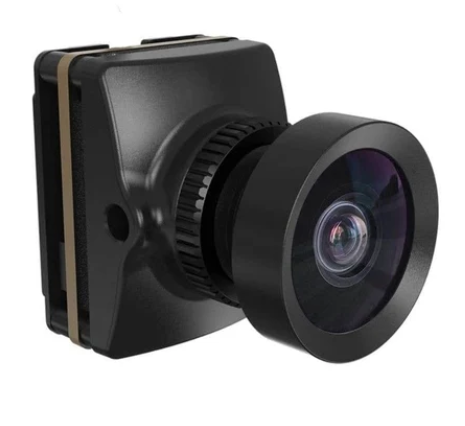
Why our portfolio is right for you
Our FPV (first-person view) camera portfolio is engineered to deliver ultra-low latency, high image clarity, and reliable performance in fast-moving and high-demand environments. Whether used in drones, robotics, remote inspection, or defence applications, our cameras provide real-time visual feedback with minimal delay – enabling precise control, improved situational awareness, and confident decision-making.
We offer a range of compact, lightweight FPV camera solutions with optimised sensors, wide dynamic range, and strong low-light performance to maintain visibility in challenging conditions. Designed for easy integration, our modules support a variety of interfaces and system architectures, helping to reduce development time and complexity. Backed by our in-house technical expertise, we can guide you in selecting the right configuration for your application, ensuring robust performance, signal stability, and consistent image quality in real-world use.
Key selection factors
- Latency performance: The primary selection factor; FPV cameras are chosen when real-time response is critical, often outperforming standard visible camera modules in delay-sensitive systems.
- Output type (analogue vs digital): Analogue outputs can offer lower latency, while digital interfaces provide better integration and image quality; choosing between them is a key trade-off.
- Dynamic range and exposure handling: Rapid lighting changes require sensors with good dynamic range; a common pitfall is selecting a sensor that struggles in high-contrast environments.
- Optical configuration: Fixed lenses are standard, providing stability compared to visible zoom blocks but limiting flexibility in field-of-view adjustment.
- System integration simplicity: FPV cameras are generally easier to integrate than more complex modules, but compatibility with control and display systems must be ensured.
- Environmental robustness: Compared with UV camera modules, FPV systems are less constrained by spectral factors but must handle vibration, motion, and varying light conditions.
Technical overview
FPV cameras are designed around one main priority: getting a live image to the operator with as little delay as possible. To achieve this, they typically use a CMOS sensor with a streamlined processing path and, in some cases, direct analogue video output. By keeping processing, buffering, and other stages to a minimum, FPV cameras can provide a faster response than camera modules designed for more advanced image processing.
This makes them particularly well suited to drones, robotics, remote-operated equipment, and machine control, where a delayed image can affect how quickly a system can respond. Most FPV cameras use fixed lenses, which keeps the optical design compact and avoids the additional complexity and response time associated with moving optics in zoom systems.
While standard visible camera modules often prioritise image enhancement and processing features, FPV cameras focus on speed and immediate visual feedback. UV camera modules, meanwhile, are designed for specific ultraviolet wavelengths rather than real-time visible-light operation.
Integration notes
FPV cameras are generally straightforward to integrate into systems that need a direct live video feed. Depending on the application, they may use analogue video or a lightweight digital interface, with the choice largely driven by the required latency, video quality, and system architecture.
Mechanical stability is particularly important when an FPV camera is used on a moving platform such as a drone or robot. The camera and lens need to remain securely aligned and protected from vibration and movement.
For analogue systems, signal integrity also deserves attention, especially where video needs to travel over longer cable runs. Poor cabling, interference, or unsuitable connections can introduce noise and reduce image quality.
The main difference when integrating an FPV camera is that the signal path needs to be kept as simple and responsive as possible. Unlike a visible zoom block, where motor control and moving optics need to be considered, the focus with FPV is on minimising processing and transmission delays while maintaining a reliable live image.
FAQ’s
They are used in applications requiring real-time visual feedback, such as drones, robotics, and remote-controlled systems. The focus is on low latency rather than high image processing. This makes them suitable for fast-response environments.
The main difference is latency and processing: • FPV cameras: low latency, minimal processing • Visible camera modules: higher processing, better image quality FPV systems prioritise speed over image refinement.
FPV cameras are preferred when speed and simplicity are critical, and variable zoom is not required. Visible zoom blocks are used when adjustable field of view is needed. The choice depends on application priorities.
Both are used. Analogue outputs often provide the lowest latency, while digital outputs offer better image quality and easier integration. The choice depends on system requirements.
Yes, especially in systems requiring real-time control or monitoring. They are used in robotics, automation, and inspection where immediate feedback is essential. However, they may not provide the highest image quality.
Typical challenges include: • Managing signal integrity • Ensuring low-latency transmission • Matching output formats with display systems These factors affect system performance.
Lighting changes can impact image clarity and exposure. Sensors with good dynamic range help maintain visibility in varying conditions. Proper tuning is important for reliable performance.
Typical issues include: • Ignoring latency requirements • Choosing incompatible output formats • Underestimating environmental conditions These can lead to suboptimal system behaviour if not addressed early.