Zoom Block Cameras
- Technology
- Imaging camera modules
- Partner
- Videology
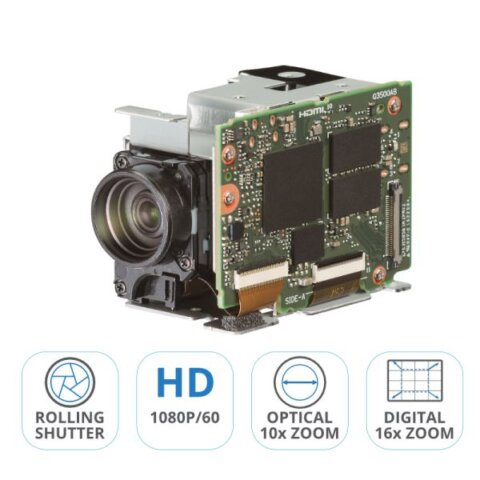
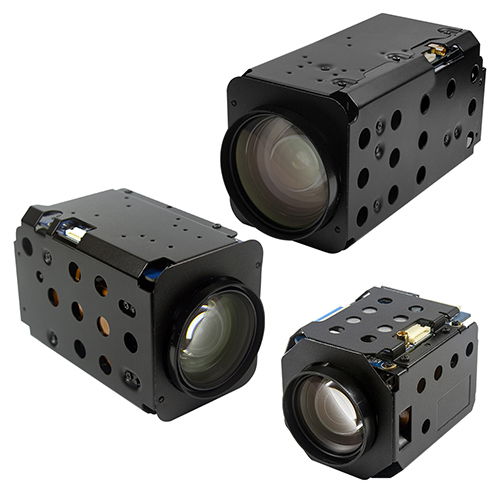
Zoom block cameras are compact, fully integrated imaging modules that combine a high-performance image sensor, motorised optical zoom lens, and onboard image processing into a single, ready-to-deploy solution. Designed to simplify integration and accelerate development, they eliminate the complexity of matching sensors, lenses, and control systems in custom camera designs.
The Videology zoom block camera range offers scalable optical zoom from 10x to 55x, with options spanning Full HD to 4K resolution, multiple video interfaces including LVDS, EX-SDI, and IP, and specialised variants such as ultra-low-light and global shutter models. This flexibility enables engineers to select the optimal solution based on system architecture, performance requirements, and environmental conditions.
These cameras provide precise autofocus, smooth zoom control, and advanced image processing features such as wide dynamic range and noise reduction, ensuring reliable performance across a wide range of applications. From embedded vision and robotics to intelligent transport systems, security, and long-range surveillance, zoom block cameras deliver high-quality imaging in a compact, integration-friendly form factor.
We are pleased to advise that this entire portfolio of optical zoom block camera modules is fully NDAA Section 889 compliant.
Range features
A high level overview of what this range offers
- Resolution: Up to 1080p60 (4K on 18x only)
- Zoom: 10x → 55x optical
- Digital zoom: up to 32x (10x models)
- Control: VISCA / Pelco-D / Pelco-P
- Key features:
- True WDR
- Digital noise reduction (DNR)
- Autofocus with presets
- Day/night operation
- Power: ~9–15V DC typical
- Autofocus zoom lens system
- Wide dynamic range (WDR)
- Digital noise reduction (2D/3D DNR)
- Image stabilisation (select models)
- Day/night operation (ICR)
- Wide zoom scalability (10x–55x)
- Multiple output options for system flexibility
- Low-light performance in higher zoom models
- Optional global shutter for motion-critical applications
What’s in this range?
All the variants in the range and a comparison of what they offer
| Model Category | Optical Zoom | Resolution | Key Variants |
|---|---|---|---|
Entry Zoom Blocks | 10x | 1080p | LVDS, EX-SDI, close focus variants |
Mid-range Zoom Blocks | 18x–20x | 1080p / 4K | LVDS output, enhanced imaging |
High Zoom Blocks | 30x–40x | 1080p | Ultra-sensitive, IP/CVBS options |
Ultra Zoom Blocks | 55x | 1080p | Long-range imaging, LVDS |
Specialised Models | 36x | 1080p | Global shutter, ultra-sensitive |
| SKU | Model | Optical Zoom | Resolution | Sensor | Output Interfaces | Shutter | Lens (mm) | Special Feature / Positioning |
|---|---|---|---|---|---|---|---|---|
24Z2.1W-10X-EXSDI-462-1 | 10x Close Focus – EXSDI | 10x | 1080p | 1/2.8" Sony STARVIS IMX462 | EX-SDI, HD-SDI, CVBS | Rolling | 5.1–51 | Macro / close focus for inspection |
24Z2.1W-10X-EXSDI-462 | 10x – autofocus EXSDI | 10x | 1080p | 1/2.8" Sony STARVIS IMX462 | EX-SDI, HD-SDI, CVBS | Rolling | 5.1–51 | Standard 10x zoom block |
24Z2.1W-10X-LVDS-462 | 10x – autofocus LVDS | 10x | 1080p | 1/2.8" Sony STARVIS IMX462 | LVDS, EX-SDI, CVBS | Rolling | 5.1–51 | LVDS integration variant |
24Z8.29-18X | 18x – autofocus 4K | 18x | 4K (2160p) | 1/1.8" Sony STARVIS IMX334 | HDMI, CVBS | Rolling | 6.8–120 | 4K high-resolution option |
24Z2.1W-20X-LVDS | 20x – autofocus LVDS | 20x | 1080p | 1/2.8" Sony STARVIS IMX290 | LVDS, EX-SDI, CVBS | Rolling | 5.2–104 | Extended zoom mid-range |
24Z2.1W-20X-LVDS | 20x – autofocus LVDS | 20x | 1080p | 1/2.8" Sony STARVIS IMX290 | LVDS, EX-SDI, CVBS | Rolling | 5.2–104 | Extended zoom mid-range |
24Z2.1WS-30X-EXSDI-385 | 30x – autofocus Ultra Sensitive (EXSDI) | 30x | 1080p | Sony CMOS (low-light optimised) | EX-SDI, CVBS | Rolling | — | Enhanced low-light sensitivity |
24Z2.1WS-30X-LVDS-385 | 30x – autofocus LVDS | 30x | 1080p | Sony CMOS | LVDS, EX-SDI | Rolling | — | LVDS integration + long zoom |
24Z2.1WS-36X | 36x – Ultra Sensitive | 36x | 1080p | Sony CMOS | Digital / LVDS variants | Rolling | — | High zoom + low-light |
25Z2.4-36X | 36x – autofocus Global Shutter | 36x | 1080p | CMOS (global shutter) | Digital | Global | — | Motion-critical imaging (no distortion) |
24Z2.1W-40X | 40x – autofocus LVDS | 40x | 1080p | CMOS | LVDS | Rolling | — | Long-range LVDS variant |
ZB40X-401-IPCV-675-AFC2 | 40x – autofocus IP & CVBS | 40x | 1080p | CMOS | IP, CVBS | Rolling | — | Network-enabled |
ZB40X-402-IPCV-347-AFC2 | 40x – autofocus IP & CVBS (Ultra Sensitive) | 40x | 1080p | CMOS (low-light) | IP, CVBS | Rolling | — | IP + enhanced low-light |
24Z2.1W-55X | 55x – autofocus LVDS | 55x | 1080p | Sony STARVIS CMOS | LVDS, CVBS | Rolling | ~4.25–234 | Ultra long-range zoom |
FAQs
for Zoom Block Cameras
It depends on your system architecture:
- LVDS → Best for embedded designs where the camera is integrated directly into a processing board (low latency, no compression).
- EX-SDI / HD-SDI → Ideal for long cable runs (up to ~500m) with minimal latency—commonly used in industrial and security systems.
- IP (Ethernet) → Suitable for networked systems requiring remote access, streaming, or distributed architectures.
Zoom block cameras integrate:
- Sensor
- Motorised zoom lens
- ISP (image signal processing)
- Control interface
This reduces:
- Optical alignment complexity
- Development time
- Integration risk
They are particularly beneficial when autofocus, zoom control, and image tuning are required out of the box.
Zoom selection depends on target distance and field of view:
- 10x–20x → Short to mid-range (inspection, robotics, medical devices)
- 30x–40x → Medium to long-range (ITS, perimeter monitoring)
- 50x+ → Long-range surveillance or tracking
Also consider sensor size and pixel density if identification (not just detection) is required.
A global shutter (e.g. 36x global shutter variant) is essential when:
- Imaging fast-moving objects
- Avoiding motion distortion (“rolling shutter skew”)
- Performing machine vision or measurement tasks
For static or slow-moving scenes, rolling shutter is typically sufficient and more cost-effective.
Ultra Sensitive variants are optimised for low-light performance, offering:
- Lower minimum illumination thresholds
- Improved signal-to-noise ratio
- Better performance in night or indoor environments
These are ideal for:
- Surveillance
- Defence
- Outdoor or variable lighting conditions
Most models support standard protocols such as:
- VISCA
- Pelco-D / Pelco-P
These allow control of:
- Zoom
- Focus
- Iris
- Presets
Control is typically via UART, RS-232, or RS-485 depending on the model.
Yes – zoom block cameras are often used in OEM designs, and can support:
- Custom firmware tuning (image processing, exposure profiles)
- Interface adaptation
- Mechanical integration into housings or gimbals
This makes them suitable for applications such as UAVs, medical imaging, and industrial automation.
Key design considerations include:
- Power supply (typically 9–15V DC)
- Thermal management (especially in enclosed systems)
- Mechanical mounting and vibration
- Cable length and signal integrity (critical for LVDS and SDI)
- EMI/EMC compliance
Early planning here avoids redesign during validation.