Laser Safety Eyewear
- Technology
- Laser safety
- Partner
- Laservision
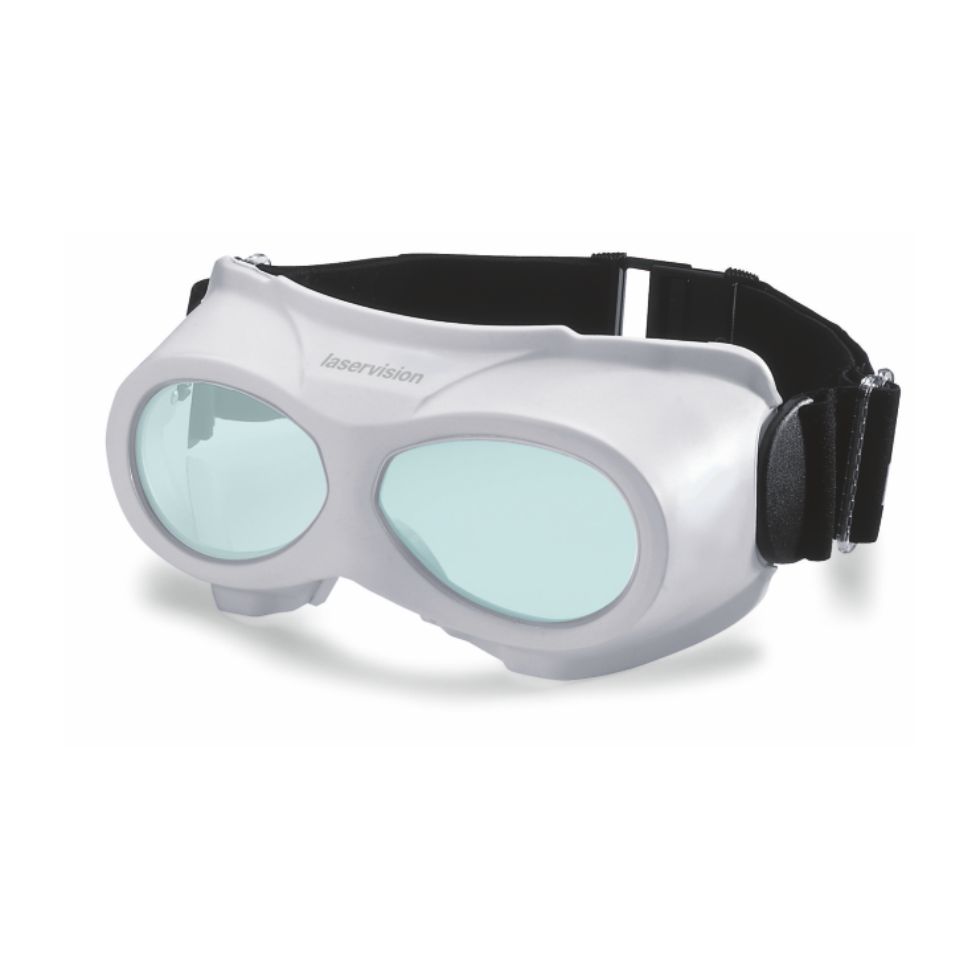
This product range includes professional laser safety eyewear designed to protect against harmful laser radiation in industrial, medical, and research environments. The models are certified to European laser safety standards including EN 207 for full protection and EN 208 for alignment applications. Multiple filter technologies are available, including absorbing mineral glass, reflective coated glass, and lightweight polycarbonate options. These solutions cover laser wavelengths from deep ultraviolet through visible light to the infrared spectrum. The range includes wraparound goggles, panoramic over-the-glasses designs, lightweight spectacles, and configurable frames for prescription users. Many models include adjustable arms, bendable tips, soft nose pads, or prescription inserts to improve fit and comfort. Reinforced and laminated designs are also available for demanding high-power laser applications. This eyewear range combines certified protection, usability, and visibility for everyday professional laser work.
Range features
A high level overview of what this range offers
- Broad filter choice: Mineral glass, coated glass, and polycarbonate filters are available to support protection across UV, visible, NIR, and IR laser applications while balancing durability, weight, and visible light transmission.
- OTG and prescription compatibility: Selected models fit over prescription glasses, while others support Rx inserts for users who need corrective lenses.
- High-power ready designs: Certain reinforced models use laminated glass filters and strengthened frame constructions for demanding laser environments.
- Ergonomic comfort: Adjustable temple arms, cold-formable tips, soft nose pads, and lightweight frame designs help provide a secure and comfortable fit during extended wear.
- Versatile F46 Clipnetic system: The magnetic F46 frame can be configured as an OTG goggle, a standard spectacle, or a prescription-ready solution.
- Certified compliance: The range is CE-marked and conforms to EN 207 and EN 208 requirements for laser safety eyewear.
- Maintenance support: An optional cleaning station helps keep lenses clean, disinfected, and free from scratches.
What’s in this range?
All the variants in the range and a comparison of what they offer
Model | OTG / Rx insert | Key features | Wavelength range |
Reinforced frames (glass filters) R10, R14 | OTG (fits over glasses) | R14 uses internally laminated glass filters for high-energy laser use and offers interchangeable cushion frames including sealing lip, foam, or vented options. R10 features a curved frame for an expanded field of view. | UV, VIS, NIR, IR |
Reinforced spectacle frames (flat R01/R17, curved R02) | Rx insert on R01/R17; R02 has no insert | R01 includes internal metal reinforcement and multi-adjustable arms. R02 is designed for curved glass filters. R17 accommodates extra-thick filters up to 12 mm. | UV, VIS, NIR, IR |
Panoramic frames F18, F42, F22 | OTG (all fit over glasses) | Wide-coverage panoramic designs with large lens areas and three temple arm configurations for improved fit. | UV, VIS, NIR, IR |
Sporty frames F20, F29, F47 | Not OTG | Lightweight spectacles with flexible or cold-formable arms and soft nose bridges. F47 also supports optional magnifier loupe or LED lamp attachments. | UV, VIS, NIR, IR |
Universal frame F46 | Rx insert with Clipnetic magnetic system | Configurable as an OTG goggle with clip-on cover, a standard laser spectacle with removable nose piece, or a prescription-ready frame with magnetic Rx insert. Includes adjustable and removable nose guard plus flexible temple tips. | UV, VIS, NIR, IR |
Cleaning station accessory | – | Bench-top cleaning station with pump spray, cleaning fluid, and lint-free tissues for safe lens cleaning and disinfection. | – |
FAQs
for Laser Safety Eyewear
All eyewear in this range is designed to comply with European laser safety standards including EN 207 for full laser protection. Many models also support EN 208 alignment applications for reduced-risk visible laser alignment tasks. The products are CE-marked, indicating tested and approved compliance for their specified protection levels.
Start by identifying your laser wavelength and power, then choose eyewear with a suitable optical density or protection level for that wavelength. You should also confirm that the certified spectral coverage matches your laser, whether it is UV, visible, NIR, or IR. Visible light transmission is also important, because the filter should protect your eyes while still allowing you to see your work clearly.
Yes. Several models are designed as OTG (over-the-glasses) solutions and fit over standard prescription eyewear. Examples include the R10, R14, and panoramic styles such as F18, F42, and F22. Other models, such as the F46, support prescription inserts for integrated corrective vision.
Mineral glass filters are typically more durable and can often tolerate higher power densities, especially in laminated constructions, but they are usually heavier. Polycarbonate filters are lighter and more impact-resistant, which improves comfort, but they may have lower damage thresholds in very high-power applications and can be more susceptible to scratching. Both options are effective when selected for the correct certified wavelength and protection level.
Yes. The range includes filter options for infrared laser applications, including wavelengths around 10.6 µm associated with CO2 lasers. Always verify the certified wavelength range of the specific filter before use to ensure that it covers your laser system.
Use a dedicated cleaning station or a suitable lens-cleaning method with soft, lint-free tissues. Remove dust gently before wiping the lenses to reduce the risk of scratches, and avoid aggressive solvents or abrasive materials. Store the eyewear in a protective case and inspect lenses and frames regularly for scratches, cracks, or damage after laser exposure.
Service life depends on usage, care, and filter material. With proper handling, the eyewear can last for several years, although polymer filters may require replacement sooner than glass filters, especially if scratched or visibly worn. Replace the eyewear immediately if lenses are damaged, the frame is cracked, or the filters may have been compromised by excessive laser exposure.
The Clipnetic system is a magnetic quick-change concept used on the F46 frame. It allows the frame to be reconfigured as an OTG goggle, a standard laser spectacle, or a prescription-ready solution using magnetic accessories and inserts. This makes the F46 especially flexible for shared use and changing workplace requirements.