Industrial infrared cameras
Industrial infrared cameras are designed for continuous operation in demanding environments, providing reliable thermal monitoring for applications such as predictive maintenance, process control, and safety. Within the broader Imaging domain, they differ from R&D infrared cameras by prioritising robustness, uptime, and integration into control systems rather than experimental flexibility. Selection often comes down to environmental conditions, measurement range, and how the camera integrates with plant systems.
These systems enable non-contact temperature measurement, helping engineers identify faults, inefficiencies, and potential failures before they occur. Key features include rugged design, real-time data output, and integration with industrial systems. Selecting the right camera involves balancing resolution, sensitivity, and environmental durability.
Do you want to know more about this technology? Try out our new Chatbot!
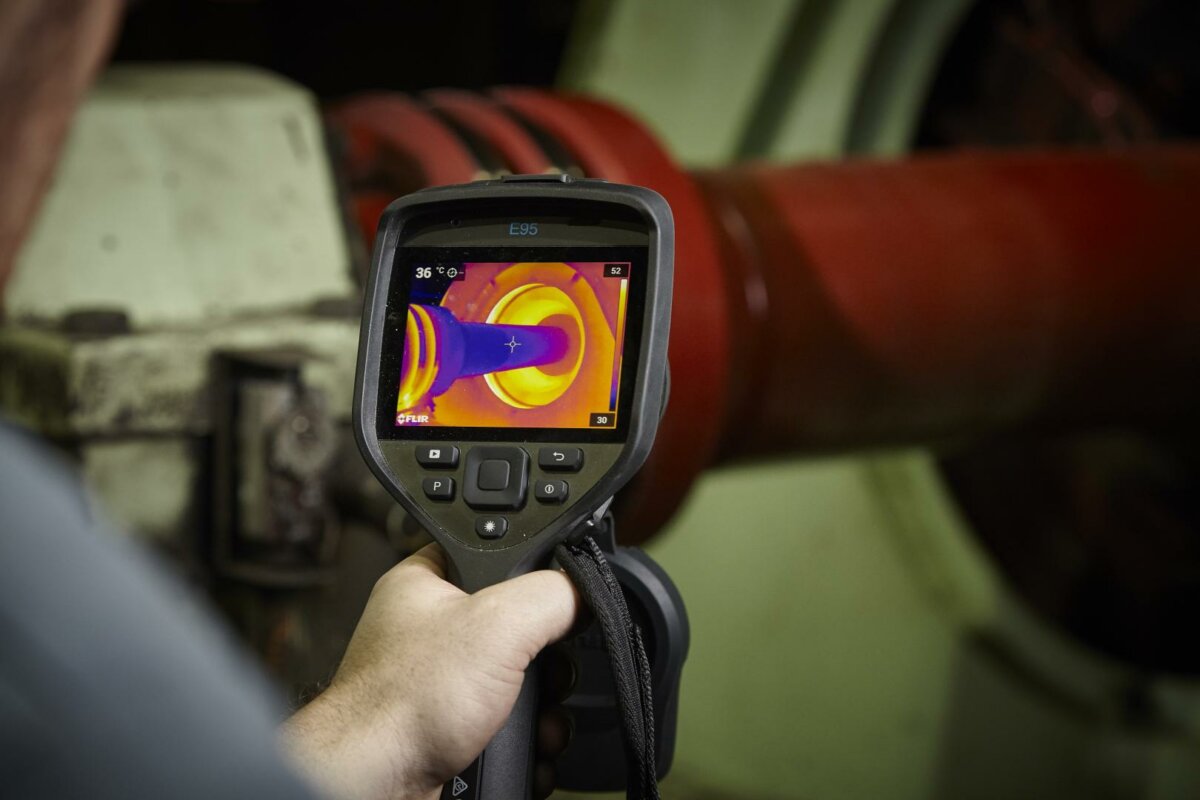
Catagory overview
Industrial infrared cameras are designed for reliable thermal monitoring in demanding, real-world environments where continuous operation is essential. Combining infrared sensors, robust protective housings, specialised optics, and, where required, cooling systems, these cameras deliver accurate thermal data even in harsh industrial conditions.
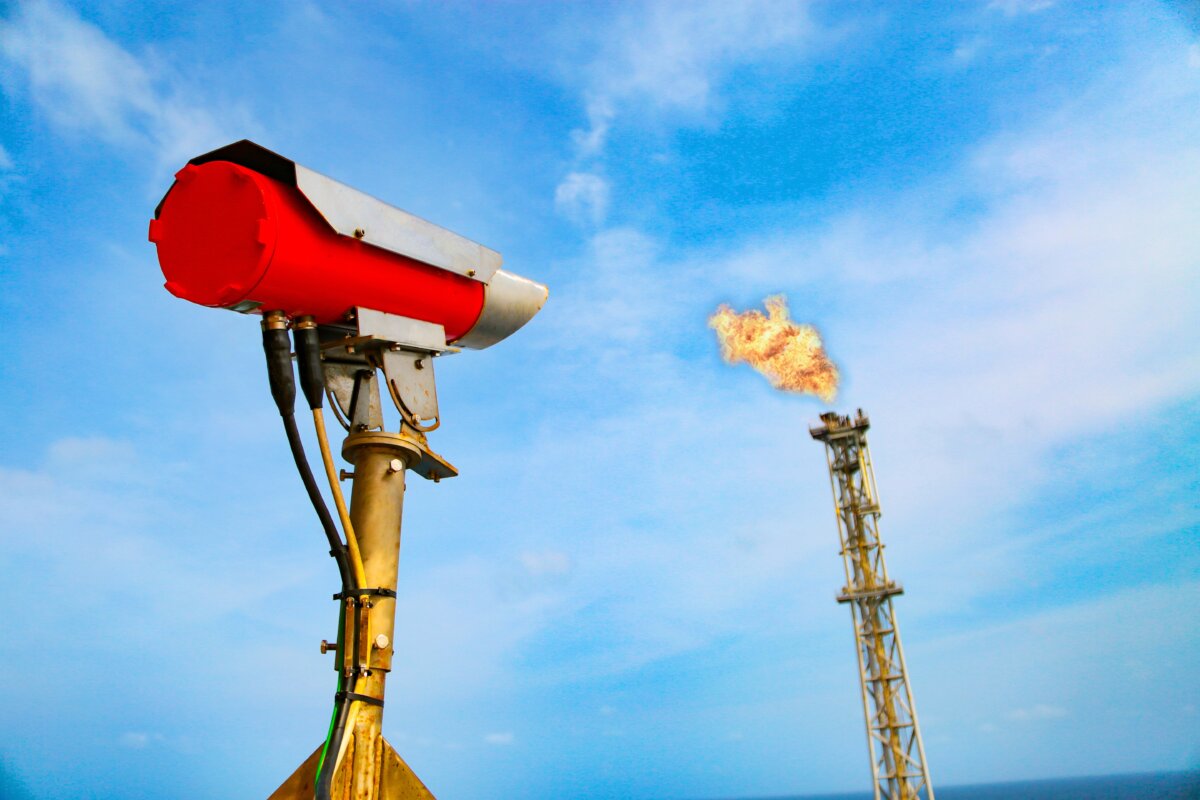
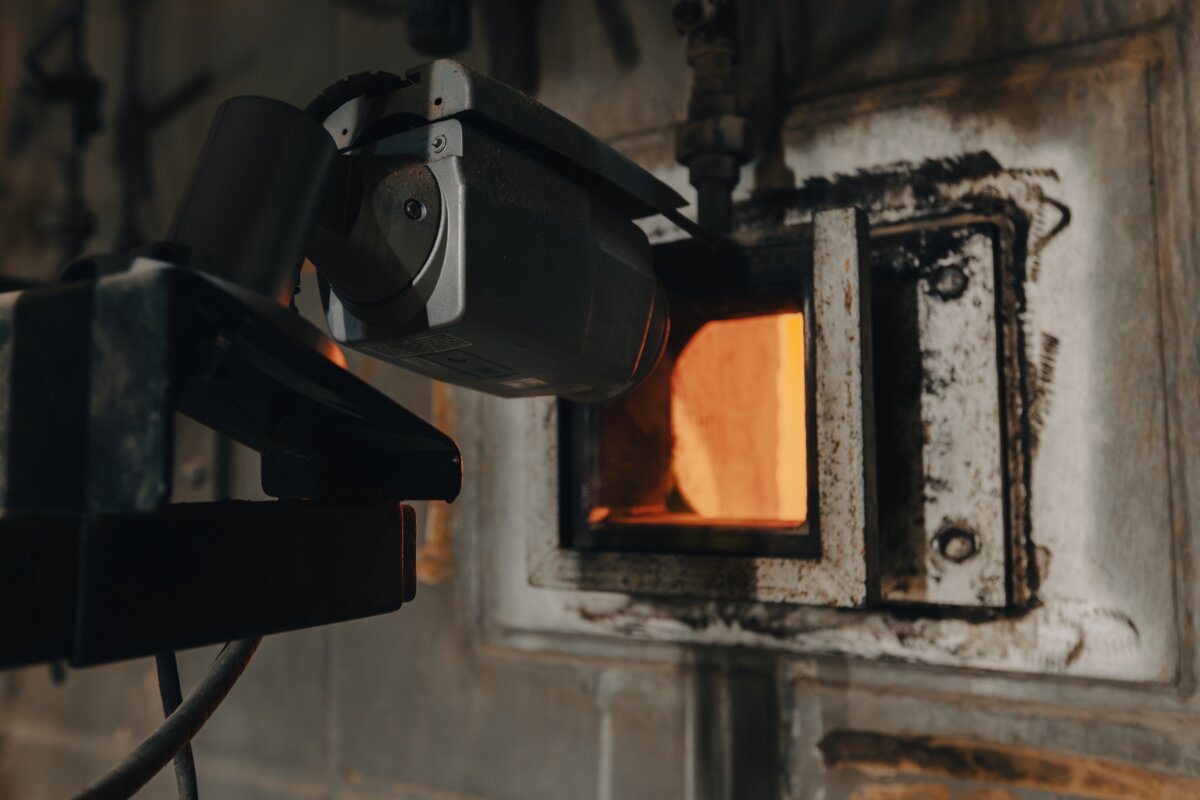
Different applications require different technologies. Furnace cameras are built to view directly into high-temperature processes, using specialised optics and active cooling to withstand extreme heat and contamination. Flare monitoring cameras, on the other hand, are designed to observe flames from a distance, where atmospheric conditions, long-range imaging, and constantly changing combustion behaviour present unique challenges.
Unlike R&D infrared cameras, industrial systems are engineered for permanent installation and are often integrated with SCADA or process control systems for continuous monitoring. Choosing the right solution depends on the operating environment, whether that’s close-range monitoring in extreme heat or long-distance observation of industrial flares.
Key selection factors
- Operating environment: Furnace cameras are built for extreme proximity to heat and contamination, while flare monitoring cameras operate at distance with exposure to weather and atmospheric effects.
- Thermal load handling: Furnace applications require active cooling and shielding; flare systems rely more on optical reach and stability.
- Installation constraints: A common trade-off is between direct line-of-sight access (furnaces) and safe remote positioning (flare stacks).
- Measurement objective: Furnace cameras focus on internal process visibility, while flare monitoring cameras are used for combustion verification and safety compliance.
- Optics and field of view: Furnace systems often use fixed, protected optics; flare monitoring requires adjustable or long-range lenses.
- System integration: If tight integration with process control is required, furnace cameras are typically more embedded, whereas flare systems often feed into monitoring and safety systems.
We support industrial infrared camera deployment with application-driven selection, combining experience in furnace and flare monitoring environments with access to specialist suppliers. If you are defining a system or replacing an existing installation, we can help match the right architecture to your process and operating conditions.
FAQ’s
Industrial infrared cameras are designed for continuous operation in harsh environments. R&D systems prioritise flexibility and measurement depth. The choice depends on whether the application is experimental or operational.
Furnace cameras are used for internal process monitoring at close range. Flare monitoring cameras are used for observing combustion at a distance. The decision is driven by proximity and application type.
They typically use active cooling and protective housings. This allows them to operate in environments where standard cameras would fail. Thermal shielding is a key part of the design.
Flare monitoring involves long distances and atmospheric interference.
Key challenges include:
- maintaining image stability
- dealing with weather conditions
- capturing dynamic flame behaviour
Yes, but accuracy depends on calibration, emissivity, and environmental conditions. In many industrial setups, relative measurement is often more important than absolute accuracy.
Choosing based on resolution alone rather than environmental suitability. Survivability and reliability are often more critical than image detail. Matching the camera to the environment is essential.
They are typically connected to control systems such as SCADA. Data is used for monitoring, alarms, and process optimisation. Integration requirements vary by application.
Yes. Furnace cameras often require periodic cleaning and inspection due to contamination. Flare systems require checks for alignment, optics cleanliness, and environmental exposure.