Furnace cameras
Infrared imaging for high-temperature furnace monitoring
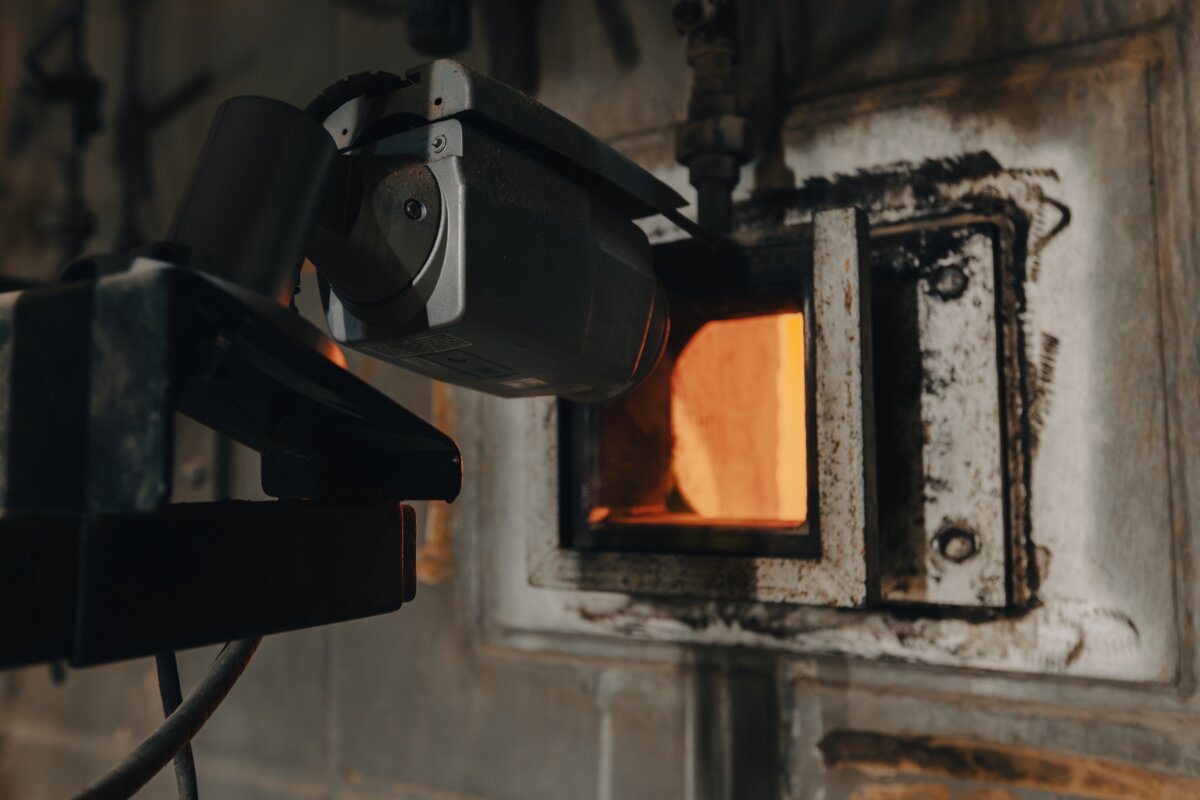
Furnace cameras are specialised industrial imaging systems designed to monitor processes inside furnaces, kilns, boilers, and other high-temperature enclosures. They are used where conventional cameras cannot operate reliably because of extreme heat, dust, combustion products, or restricted access.
The challenge is not simply getting an image from inside the furnace. The system needs to maintain a clear view and operate reliably over long periods while being exposed to a demanding environment. Compared with flare monitoring cameras, which typically observe flames from a distance, furnace cameras are positioned much closer to the heat source and therefore require more robust protection, cooling, and contamination control.
Selection typically depends on the process temperature, level of contamination, required viewing distance, cooling and purge arrangements, and available installation space.
Do you want to know more about this technology? Try out our new Chatbot!
Why our portfolio is right for you
We work with established specialist manufacturers to provide furnace camera solutions designed around the realities of high-temperature industrial processes. Our focus is not just on the camera specification, but on the complete imaging arrangement, including cooling, protective housings, purge systems, optics, mounting, and plant integration.
Whether you are specifying a new furnace monitoring installation or upgrading an existing system, our team can help you assess the operating temperature, contamination levels, viewing requirements, maintenance access, and available infrastructure to define a practical configuration.
By combining specialist furnace imaging equipment with application-focused engineering support, we help you maintain a clear and reliable view of demanding processes where conventional imaging systems cannot operate effectively.
Key selection factors
-
Temperature tolerance: Consider the radiant heat and surrounding process conditions at the actual camera installation point, rather than relying only on the nominal furnace temperature.
-
Cooling method: Air- or water-cooled systems may be required to protect the camera and maintain reliable operation. Cooling capacity should be matched to the installation environment and heat load.
-
Contamination resistance: Dust, slag, ash, and combustion by-products can quickly affect image quality, so appropriate purge arrangements and protective optics are important.
-
Installation position: The location and mounting arrangement need to provide the required field of view while allowing safe access for inspection, cleaning, and maintenance.
-
Optical clarity over time: A good initial image is not enough; the system needs to maintain a usable view as the window is exposed to the process environment.
-
Application specificity vs flare systems: Furnace cameras are designed for close-range or internal process monitoring, whereas flare monitoring cameras are generally intended for observing flames and combustion from a greater distance.
Technical overview
Furnace cameras are engineered for installation on or close to high-temperature processes, providing operators with a continuous view of conditions that would otherwise be difficult or impossible to observe directly. They combine imaging sensors with protective housings, cooling systems, and often air-purge arrangements to keep the camera and optical window within suitable operating conditions.
Unlike flare monitoring systems, which are generally designed for remote observation, furnace cameras need to cope with intense radiant heat, dust, ash, slag, combustion products, and mechanical stresses at the installation point. The optical window therefore needs to remain clean and capable of transmitting the required wavelengths throughout operation.
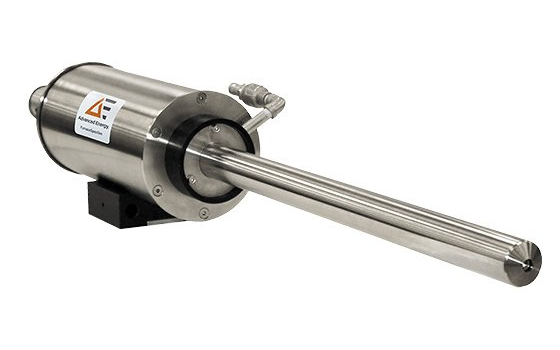
Air or water cooling can be used depending on the application and installation environment, while purge systems help prevent particles and contaminants from settling on the viewing window. The resulting video can be fed into plant monitoring or control systems, giving operators greater visibility of the process and helping with process optimisation, safety, and efficiency.
Integration notes
Integration typically involves more than simply mounting the camera. Mechanical support, cooling, purge air or water connections, protective housings, and connections to the plant’s monitoring or control infrastructure all need to be considered as part of the installation.
Maintenance access is particularly important. Furnace environments can make servicing difficult, so the camera and housing should be positioned to allow inspection, window cleaning, and replacement without creating unnecessary disruption to the process.
Continuous video can be used by operators for process monitoring and, where appropriate, integrated into wider control or alarm systems. A common pitfall is underestimating the importance of the purge system: even a high-performance camera will provide limited value if its viewing window becomes contaminated.
FAQ’s
They are used to monitor processes inside furnaces, kilns, and boilers. This includes observing combustion, material flow, and structural conditions. They provide visibility where direct observation is impossible.
Furnace cameras are typically protected from high ambient temperatures using a combination of thermal shielding, protective housings, and active cooling. Depending on the installation, air or water cooling can be used to keep the camera and optics within their specified operating temperatures.
The allowable installation distance depends on the camera’s temperature rating, housing design, cooling capacity, field of view, and furnace conditions. Engineers should assess the expected radiant heat load and ambient temperature rather than selecting the installation distance based on physical access alone.
Protective housings are commonly combined with an air-purge system to keep the viewing window clear. A continuous flow of clean air can help prevent dust, combustion products, and other contaminants from settling on the optical window.
Maintaining reliable visibility in a harsh environment is often one of the main challenges. Heat, dust, smoke, vibration, and deposits on the viewing window can degrade image quality. Housing, cooling, purge, and installation design therefore need to be considered as part of the complete imaging system.
Some furnace camera systems can provide quantitative temperature measurements, but accuracy depends on factors including calibration, emissivity, optical transmission, viewing geometry, reflected radiation, and the characteristics of the furnace environment. For demanding applications, measurement uncertainty should be evaluated alongside the camera specification.
Maintenance requirements depend on the furnace environment and the protection system used. Typical tasks can include inspecting the housing, checking cooling and purge systems, and cleaning or replacing the protective viewing window when necessary. Designing for accessible maintenance can reduce downtime.
The purge system can be critical to maintaining image quality. Insufficient or contaminated purge air can allow deposits to build up on the viewing window, reducing visibility and potentially increasing maintenance requirements. Air quality, flow rate, pressure, and system reliability should be considered during installation.
Key considerations include operating temperature, spectral range, detector type, thermal sensitivity, resolution, field of view, cooling requirements, housing construction, purge system, viewing-window material, installation distance, and maintenance access. The camera should be selected for the complete furnace environment rather than the imaging specification alone.
Furnace cameras are generally designed to provide visibility into high-temperature process equipment, often through a dedicated port or opening and with significant thermal protection. Flare monitoring cameras are typically designed to observe combustion at a greater distance and may prioritise long-range imaging, flame detection, monitoring of flare behaviour, and operation in outdoor environments. The appropriate camera architecture depends on the monitoring objective and installation conditions.