Thermal imagers for industrial temperature monitoring
Infrared imaging for reliable industrial thermal monitoring
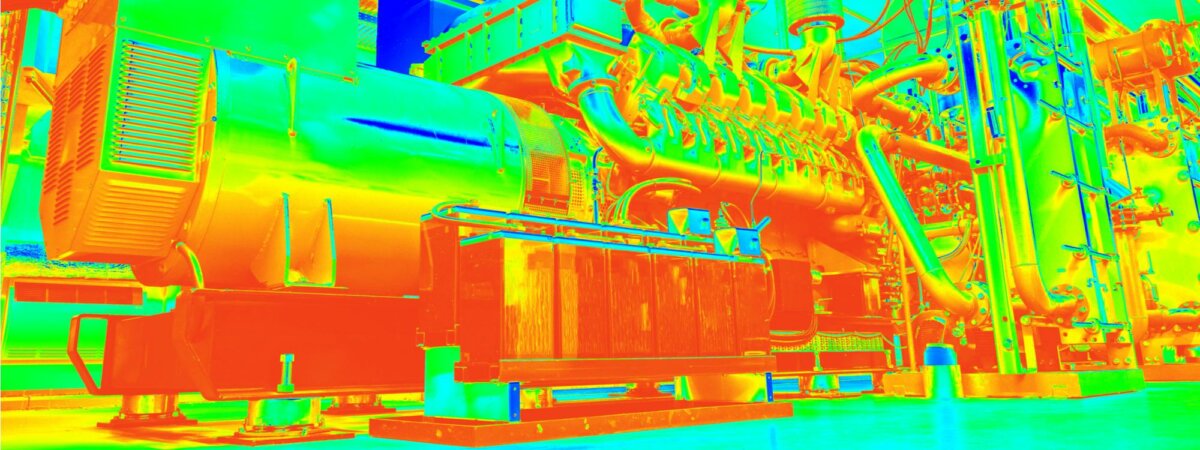
Thermal imagers are versatile industrial infrared cameras designed to detect and visualise heat without requiring direct contact with the target. They provide engineers and operators with a practical way to monitor temperature patterns, identify abnormal heat, and investigate thermal behaviour across equipment and processes.
Unlike specialised furnace or flare monitoring cameras, thermal imagers are suited to a much broader range of industrial applications. They can be used for condition monitoring, electrical and mechanical inspection, process monitoring, research, and troubleshooting, where understanding the distribution of heat is as important as measuring an individual temperature.
The right thermal imager depends on the temperature range, required measurement accuracy, spatial resolution, field of view, operating environment, and whether the system needs to provide a live image, quantitative temperature data, or both.
Do you want to know more about this technology? Try out our new Chatbot!
Why our portfolio is right for you
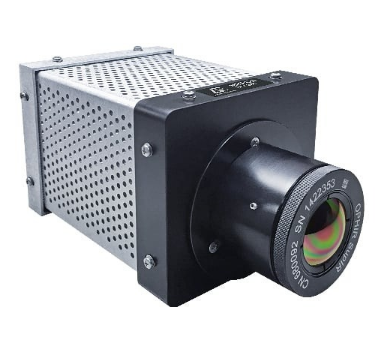
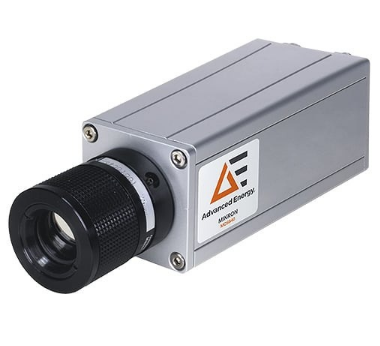
We provide thermal imaging solutions from specialist manufacturers for a wide range of industrial monitoring and measurement applications. Our portfolio includes versatile thermal imagers such as the Mikron MCL640, alongside solutions with different detector resolutions, optical configurations, measurement capabilities, and integration options.
Our team can help you select the right combination of detector, lens, temperature range, environmental protection, and interface for your application. Whether you are looking to identify developing faults, monitor equipment condition, investigate a process, or establish continuous thermal monitoring, we can help define a practical imaging solution.
Thermal imagers provide a flexible starting point for many industrial infrared applications. Where a standard thermal imager is sufficient, they offer a simpler route to useful thermal information; where conditions become more demanding, our wider industrial infrared camera portfolio provides specialist options for applications such as furnace and flare monitoring.
Key selection factors
-
Temperature range and measurement requirements: The camera should cover the temperatures expected in the application while providing the measurement accuracy and sensitivity required for the task.
-
Detector resolution and thermal sensitivity: Resolution determines how much spatial detail can be seen, while thermal sensitivity affects the camera’s ability to distinguish small temperature differences.
-
Field of view and optics: Lens selection should reflect the distance and size of the target. A wider field of view may suit general monitoring, while a narrower or longer focal-length lens can provide more detail at greater distances.
-
Measurement accuracy and emissivity: Reliable temperature measurement depends on understanding the target’s emissivity and accounting for environmental factors such as reflections and atmospheric effects.
-
Environmental protection: Industrial installations may expose the camera to dust, moisture, vibration, temperature changes, or other challenging conditions, making appropriate housing and protection important.
-
Application requirements vs specialised systems: Thermal imagers are a flexible choice for general industrial monitoring. Where the camera must operate directly inside a furnace or monitor a flare from very long range, a specialised furnace or flare monitoring system may be more appropriate.
Technical overview
Thermal imagers detect infrared radiation emitted by objects and convert it into a visual representation of temperature distribution. Depending on the camera and application, they can provide both thermal images and temperature measurements, allowing users to identify hot spots, thermal gradients, and changes in equipment or process behaviour.
Most industrial thermal imagers use uncooled LWIR detectors, making them relatively compact and straightforward to integrate. Products such as the Mikron MCL640 sit within this category, providing a practical imaging solution where reliable thermal information is required without the additional complexity associated with cooled MWIR systems.
Optics are an important part of the overall system. Field of view, focal length, detector resolution, and the distance to the target all affect the level of detail that can be resolved. For quantitative temperature measurement, factors such as emissivity, reflected radiation, atmospheric conditions, and calibration also need to be considered.
Thermal imagers can therefore range from relatively simple inspection cameras to more capable systems intended for continuous industrial monitoring and integration with wider control or data-acquisition systems.
Integration notes
Thermal imagers are generally straightforward to integrate compared with cooled infrared systems, but the installation still needs to reflect the measurement environment. Camera position, lens selection, target distance, and viewing angle all influence the information available from the thermal image.
For fixed monitoring applications, the camera may be mounted directly or incorporated into a pan-and-tilt system where multiple areas need to be inspected. Where quantitative temperature data is required, software and communications interfaces can also be used to transfer measurements into monitoring, recording, or control systems.
Environmental conditions should be considered as part of the measurement setup. Reflections from hot or cold surfaces, changing ambient temperatures, atmospheric absorption, and variations in target emissivity can all affect temperature readings.
A common pitfall is selecting a thermal imager based only on detector resolution or temperature range. The lens, target distance, measurement conditions, and required level of detail are equally important in determining whether the system will deliver useful results.
FAQ’s
Thermal imagers detect infrared radiation and convert it into images that represent temperature distribution or thermal contrast. They are used for applications including industrial inspection, predictive maintenance, R&D, process monitoring, electronics testing, building diagnostics, and security.
The main difference is the infrared wavelength range detected. LWIR is commonly used for general thermal imaging and temperature measurement, while MWIR can provide advantages for high-temperature, high-speed, or low-noise applications. SWIR is often used for material discrimination, imaging through atmospheric conditions, and applications where reflected infrared light is important.
Important specifications include detector resolution, spectral range, NETD, frame rate, integration time, temperature measurement range, accuracy, dynamic range, lens options, field of view, and interface. The application should determine which specifications matter most rather than selecting a camera based on resolution alone.
NETD (noise-equivalent temperature difference) is a measure of a thermal imager’s sensitivity to small temperature differences. A lower NETD generally indicates better thermal sensitivity, although performance should also be evaluated alongside frame rate, optics, integration time, and operating conditions.
Yes, thermal imagers can provide quantitative temperature measurements when properly calibrated and configured. Measurement accuracy can be affected by emissivity, reflections, atmospheric conditions, viewing angle, distance, optics, and the target’s surface properties. These factors should be considered when thermal imaging is being used for measurement rather than visualisation.
Uncooled thermal imagers generally use detectors that operate without active cryogenic cooling, resulting in simpler and often more compact systems. Cooled imagers use active cooling to reduce detector noise and can provide higher sensitivity, faster response, or improved performance for demanding applications. The appropriate technology depends on the required sensitivity, speed, spectral range, and operating environment.
Start with the measurement or imaging objective and define the target temperature range, required spatial and thermal resolution, frame rate, working distance, spectral requirements, environmental conditions, and integration requirements. For demanding applications, evaluating the complete camera, lens, processing, and software combination under representative operating conditions is preferable to comparing individual specifications in isolation.