EoSens series machine vision cameras
- Technology
- High-speed cameras
- Partner
- Allied Vision
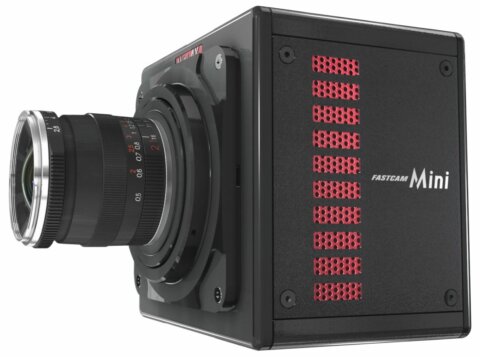
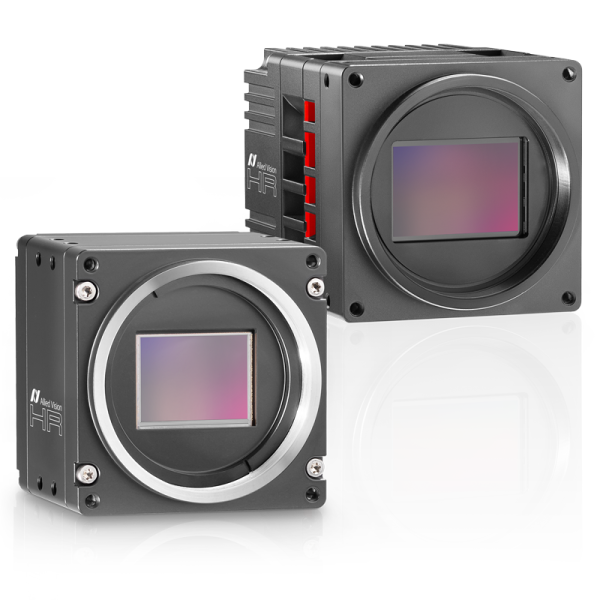
The EoSens9.5 is an industrial high-speed camera for recording rapid processes that require detailed subsequent analysis. It combines a 4096 × 2304-pixel resolution with a global-shutter sensor and 6.5 µm pixel pitch. The camera captures 509 fps at full resolution, while adjustable areas of interest enable substantially higher recording rates at lower resolutions. It reaches 4,240 fps at 1280 × 864 pixels, 71,581 fps at 128 × 128 pixels and up to 225,000 fps at 128 × 24 pixels.
Typical applications include additive manufacturing, melt-pool monitoring, grinding, milling, electronics production, laser processes and Particle Image Velocimetry. Four-channel CXP-12 connectivity transfers image data to an evaluation computer. Lens integration options include flat-front and M58 lenses, with C-mount lenses supported through an adapter. Mechanical, electrical and environmental specifications are not available in the supplied product information.
Range features
A high level overview of what this range offers
- 4096 × 2304 resolution at 509 fps – Combines 9.5-megapixel image detail with high-speed full-frame recording.
- Adjustable area of interest – Allows the image size to be reduced when a higher frame rate is required.
- Up to 225,000 fps at 128 × 24 pixels – Supports the examination of short-duration events within a tightly defined image region.
- Global-shutter sensor – Aligns exposure timing across the image when recording rapid motion.
- 6.5 µm pixel pitch – Provides a defined basis for selecting the lens, field of view and optical resolution.
- Four-channel CXP-12 interface – Provides the image-data connection between the camera and evaluation computer.
- Multiple lens connection options – Supports flat-front and M58 lenses, plus C-mount lenses through an adapter.
- Application-specific operating modes – Accommodates industrial process monitoring, laser imaging, PIV and other rapid-event analysis tasks.
What’s in this range?
All the variants in the range and a comparison of what they offer
| Specification | Value |
|---|---|
Shutter type | Global shutter |
Pixel pitch | 6.5 µm |
Full resolution | 4096 × 2304 pixels |
Resolution class | 9.5 megapixels |
Full-resolution frame rate | 509 fps at 4096 × 2304 pixels |
High-speed AOI frame rate | 4,240 fps at 1280 × 864 pixels |
Reduced AOI frame rate | 71,581 fps at 128 × 128 pixels |
Maximum stated frame rate | 225,000 fps at 128 × 24 pixels |
Camera interface | CXP-12 |
Interface channels | Four |
Lens connections | Flat-front and M58 lenses; C-mount through an adapter |
FAQs
for EoSens series machine vision cameras
Reducing the area of interest is the main way to increase the EoSens9.5 frame rate. At 4096 × 2304 pixels, the camera records 509 fps; at 1280 × 864 pixels it reaches 4,240 fps, while 128 × 128 pixels supports 71,581 fps and 128 × 24 pixels reaches 225,000 fps. The increase is possible because fewer pixels must be read and transferred in each frame. In practice, the AOI must still contain the complete event and provide sufficient margins for motion, alignment variation and measurement. Engineers should therefore define the smallest usable image region before choosing the operating frame rate.
A compatible four-channel CXP-12 acquisition path is required between the camera and evaluation computer. This normally means selecting a frame grabber and host platform that can accept all four channels and sustain the intended recording mode without dropping frames. Processing, memory and storage requirements will differ sharply between 509 fps at 4096 × 2304 pixels and 225,000 fps at 128 × 24 pixels. An exact data-rate calculation cannot be completed because the pixel format, bit depth, data packing and recording duration are not specified. These parameters should be confirmed before selecting the frame grabber, system memory and storage architecture.
The global-shutter sensor is intended for scenes in which motion occurs too quickly for row-by-row exposure to provide dependable timing across the image. Its 6.5 µm pixel pitch, combined with the 4096 × 2304-pixel active image, sets the optical sampling requirements for the lens and illumination system. For measurement applications, the lens must resolve sufficient detail at this pixel pitch across the required field of view. Exposure time and available illumination also determine whether rapid motion can be recorded with usable contrast. Because sensor format, spectral response and sensitivity data are not provided, optical performance should be validated with the intended lens, wavelength and lighting arrangement.
The EoSens9.5 accommodates flat-front and M58 lenses, while C-mount lenses can be connected through an adapter. These options give integrators several mechanical routes, but image-circle coverage, working distance, flange arrangement and optical resolution must still be checked. The 9.5-megapixel image and 6.5 µm pixels place demands on lens quality, particularly when quantitative analysis is required across the full frame. Using an adapter may also change the mechanical stack and available installation clearance. Final lens selection should therefore be verified against the chosen AOI, field of view, mounting envelope and illumination geometry.
The EoSens9.5 is intended for rapid events in additive manufacturing, melt-pool monitoring, grinding, milling, electronics production, laser work and Particle Image Velocimetry. It can also be used for sports, entertainment and defence imaging when short-duration motion must be analysed. Full resolution is appropriate when spatial detail is important, while reduced AOIs support substantially higher temporal resolution. Suitability still depends on exposure time, lighting, field of view, trigger behaviour and recording duration. These application-specific conditions should be tested before the camera is committed to a production or measurement system.
Storage should be sized from the selected resolution, frame rate, pixel format and required recording time rather than from the maximum frame rate alone. The available operating points range from 509 fps at 4096 × 2304 pixels to 225,000 fps at 128 × 24 pixels, so different AOIs can produce very different data patterns. The four-channel CXP-12 interface carries the image stream to the evaluation computer, but sustained capture also depends on host memory capacity and storage write performance. Exact capacity cannot be calculated without the bit depth, data packing and recording duration. The capture workflow should account for both the acquisition burst and the time required to transfer, process and archive each sequence.
No, the listed figures should be treated as specific to the EoSens9.5 rather than the complete EoSens camera series. No range comparison, shared-series specification or ordering matrix is included in the supplied information. Frame rate, resolution, sensor, interface and lens arrangements must therefore not be assumed to apply to other EoSens variants. This distinction matters when replacing an existing model or standardising a multi-camera installation. Before procurement, compare the exact model documentation for mechanical fit, electrical requirements, environmental limits, triggering, pixel formats and software compatibility.