High-G series high-speed cameras
- Technology
- High-speed cameras
- Partner
- AOS Technologies
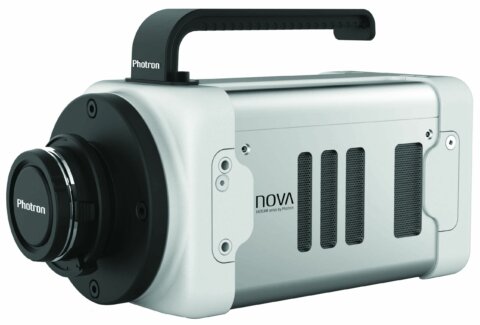
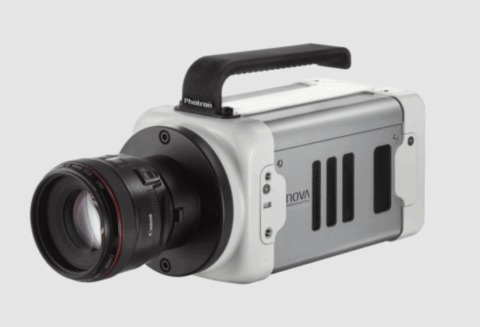
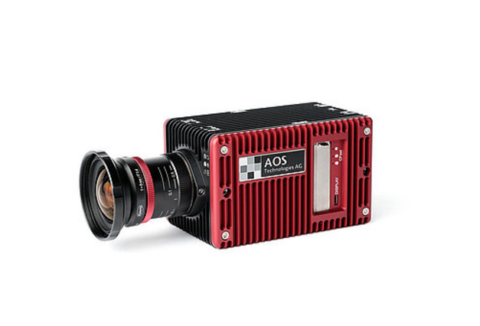
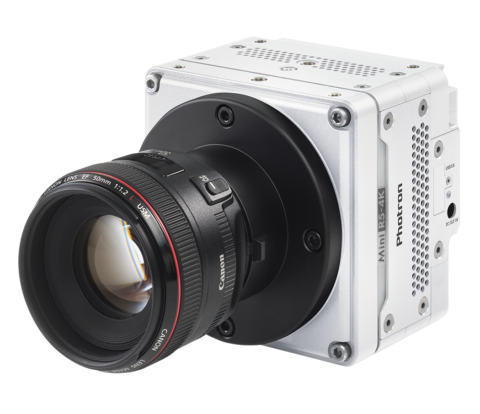
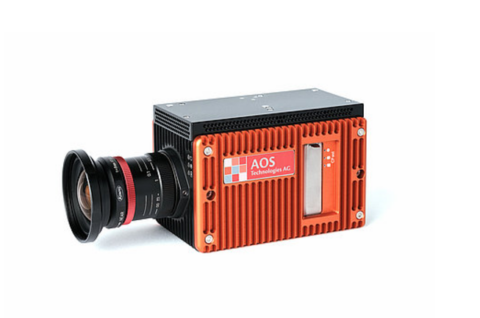
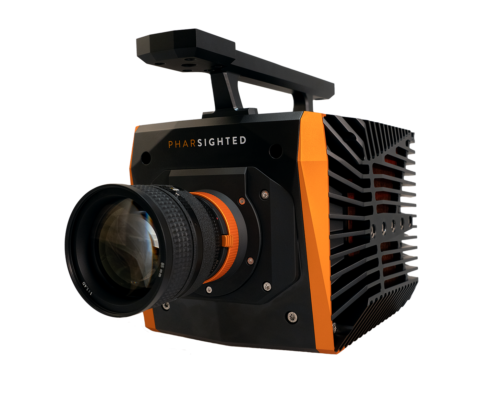
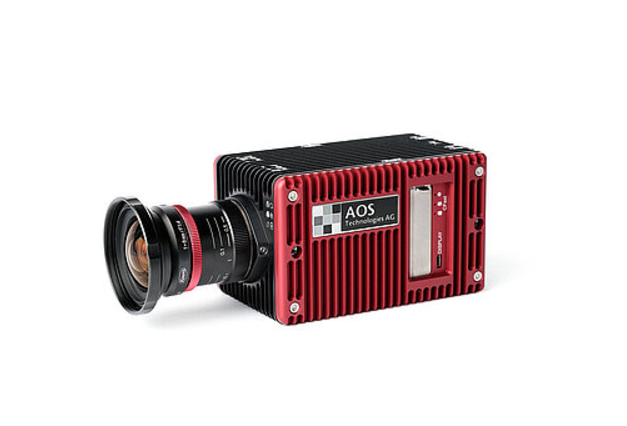
The High-G high-speed camera range is designed to record rapid events in automotive crash and impact testing. The product family comprises L-VIT, N-VIT and M-VIT variants with different resolution and frame-rate combinations. The cameras are tested for shocks up to 150 g over 11 ms and transient spikes up to 200 g. Most models include a g-sensor for impact monitoring and recording initiation.
Captured sequences are stored immediately in rescue flash to help retain data if power is interrupted during a test. Available operating points extend from 846 fps at 1920 × 1400 to 4,451 fps at 1280 × 720, allowing engineers to balance image area against temporal resolution.
Range features
A high level overview of what this range offers
- Shock resistance up to 150 g for 11 ms – Supports camera placement in high-impact test environments.
- Transient spike tolerance up to 200 g – Accommodates short-duration shock peaks within the stated limit.
- Built-in g-sensor on most models – Enables impact monitoring and can provide a recording trigger.
- Immediate rescue-flash sequence storage – Helps preserve captured data if power is lost during a test.
- Frame rates up to 4,451 fps at 1280 × 720 – Records rapid motion with shorter intervals between frames.
- Multiple resolution and frame-rate combinations – Supports selection according to the required image area and temporal resolution.
- L-VIT, N-VIT and M-VIT variants – Provides options for different image-format and recording-speed requirements.
What’s in this range?
All the variants in the range and a comparison of what they offer
Specifications
| Specification | Value |
|---|---|
Product range | High-G |
Product type | Shock-resistant high-speed camera range |
Camera families | L-VIT, N-VIT and M-VIT |
Listed models | L-VIT Platinum, L-VIT 2500, L-VIT 1000, N-VIT, M-VIT Platinum and M-VIT 4000 |
Intended application | Automotive crash and impact testing |
Shock resistance | Up to 150 g over 11 ms |
Transient shock spikes | Up to 200 g |
Integrated g-sensor | Included on most models; supports shock monitoring and recording triggering |
Data protection | Immediate sequence storage in rescue flash in the event of power loss |
Highest listed 1920 × 1080 frame rate | 2,500 fps |
Highest listed 1280 × 720 frame rate | 4,451 fps |
Largest listed image format | 1920 × 1400 at 846 fps |
Variant Frame-Rate Comparison
| Resolution | L-VIT Platinum | L-VIT 2500 | L-VIT 1000 | N-VIT | M-VIT Platinum | M-VIT 4000 |
|---|---|---|---|---|---|---|
1920 × 1400 | — | — | — | 846 fps | — | — |
1952 × 1080 | — | — | 1,000 fps | — | — | — |
1920 × 1080 | 2,500 fps | 2,500 fps | 1,000 fps | 1,096 fps | — | — |
1280 × 864 | — | — | — | — | 3,716 fps | 3,716 fps |
1280 × 720 | 3,740 fps | 3,740 fps | 1,504 fps | 2,287 fps | 4,451 fps | 4,451 fps |
FAQs
for High-G series high-speed cameras
The M-VIT Platinum and M-VIT 4000 provide the highest listed rate, reaching 4,451 fps at 1280 × 720. At 1280 × 864, both operate at 3,716 fps, providing a larger image area when the maximum frame rate is not required. This makes the M-VIT pair the direct starting point for events where short intervals between frames matter more than full-HD resolution. The final choice between the Platinum and 4000 versions cannot be made from these operating points alone because their listed resolution and frame-rate combinations are identical; project-specific integration requirements should therefore be considered separately.
L-VIT Platinum and L-VIT 2500 offer the fastest listed 1920 × 1080 rate at 2,500 fps. N-VIT provides 1,096 fps at the same resolution, while L-VIT 1000 provides 1,000 fps. For crash analysis, this difference determines the interval between captured frames and therefore how finely a rapid deformation sequence can be examined. Engineers should establish the required temporal resolution before selecting the model and operating point. A higher frame rate does not by itself guarantee usable images, so exposure time, available illumination and the required field of view must also be considered.
N-VIT is the only listed variant with a 1920 × 1400 operating point, running at 846 fps. It also offers 1,096 fps at 1920 × 1080 and 2,287 fps at 1280 × 720, creating a three-step choice between image area and recording speed. The 1400-pixel vertical format can support test scenes requiring more vertical coverage than a 1080- or 720-line mode. In practice, N-VIT is a suitable candidate where framing flexibility is central, while M-VIT provides the higher listed 720p rate and the faster L-VIT variants lead at 1920 × 1080.
The range is tested for shock resistance up to 150 g over 11 ms, with transient spikes up to 200 g, so it is intended for demanding impact-test conditions. These figures allow engineers to compare expected fixture loads and local acceleration with the stated shock capability. They should not replace a mounting assessment because bracket stiffness, fasteners, cable restraint and impact direction can alter the load transmitted to the camera. A practical installation should therefore keep predicted loads within the stated limits and minimise secondary movement that could affect image stability or hardware retention.
Most High-G models include a built-in g-sensor that can monitor shock and act as a recording trigger. This allows the camera to respond to the physical impact rather than relying solely on a separate trigger signal. Because the feature applies to most rather than every model, its inclusion should be confirmed for the selected variant before the trigger architecture is finalised. In practice, g-sensor triggering can support event correlation, but trigger thresholds, timing offsets and any external synchronisation still need to be defined as part of the complete test set-up.
Recorded sequences are stored immediately in rescue flash, a function intended to protect captured data if power is interrupted. This is particularly relevant in destructive tests, where power cables or nearby test equipment may be damaged at impact. Immediate storage reduces dependence on power remaining available after the event and helps preserve the sequence for subsequent analysis. Engineers should still plan suitable power routing and cable retention because rescue storage protects the recording but does not remove the need for a robust installation and an established data-retrieval workflow.
Select the shortest frame interval that still retains enough image area to measure the feature of interest. The range extends from 846 fps at 1920 × 1400 on N-VIT to 4,451 fps at 1280 × 720 on M-VIT Platinum and M-VIT 4000, with several 1080p options between those points. Higher frame rates provide more samples across a rapid event, while higher resolutions preserve more spatial detail for tracking edges, markers and deformation zones. Engineers should estimate the event duration, required measurement detail and available illumination, then choose the operating point that satisfies all three rather than selecting frame rate in isolation.