60/125 µm Multi-mode 0.22 NA Step-Index Launch Optical Fibre
- Technology
- Speciality fibre
- Partner
- Lightera (formerly OFS)
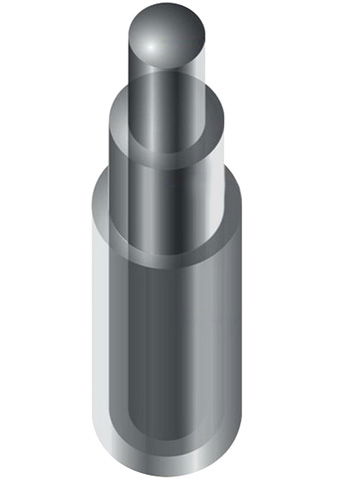
The F8950 launch optical fibre is a specialised multimode step-index fibre for high-power lasers and precision optical systems. With its 60 µm core and 125 µm cladding, it provides controlled light delivery for diode-pumped laser systems, free-space optics, medical imaging, and industrial laser transmission. Its 0.22 numerical aperture supports a narrower acceptance angle for improved beam control and reduced modal dispersion over short distances. The fibre is designed to withstand high optical power densities approaching 1 GW/cm², making it suitable for intense pulsed or continuous laser sources. A standard dual UV acrylate coating protects the fibre while allowing easier stripping for connectorisation or splicing. For harsher environments, optional carbon or polyimide coatings can improve hermetic performance and temperature resistance. The fibre also supports metallisation for hermetic package integration. Overall, F8950 is a reliable solution for scientific, medical, and industrial optical delivery tasks.
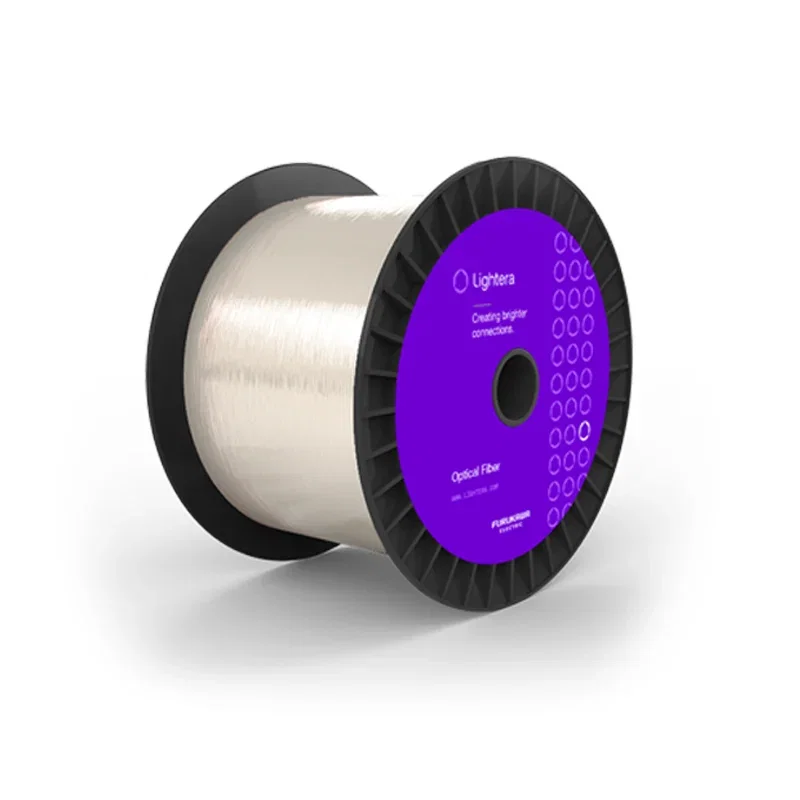
The F8950 is a launch optical fibre developed for controlled, high-power light delivery in demanding optical systems. Its 60/125 µm geometry, multimode step-index design, and 0.22 NA make it well suited to applications where stable coupling, good beam quality, and robust handling are essential. Typical use cases include laser delivery, Raman pumping, free-space optical coupling, medical instrumentation, and short-distance communications or sensing setups.
Range features
A high level overview of what this range offers
- Low numerical aperture (0.22 NA): Supports a narrow acceptance cone for precise beam control and improved beam quality
- High peak power tolerance: Designed for intense laser input up to approximately 1 GW/cm²
- 60 µm core diameter: Accommodates higher light throughput and easier coupling from broad-area or multimode sources
- Standard 125 µm cladding: Compatible with conventional splicing, ferrules, and handling tools
- Dual UV acrylate coating: Protects the fibre while allowing easier stripping during preparation
- Optional carbon or polyimide coatings: Enhances hermetic sealing and temperature resistance for harsh environments
- Metallisation capability: Supports hermetic feedthroughs and sealed integration into laser or detector packages
- Broad wavelength usability: Suitable for visible to near-infrared applications in sensing, imaging, and laser delivery
Downloads
for 60/125 µm Multi-mode 0.22 NA Step-Index Launch Optical Fibre
What’s in this range?
All the variants in the range and a comparison of what they offer
Parameter | Value |
Product Description | 60/125 Launch Optical Fibre |
Core Diameter | 60 ± 3.0 µm |
Cladding Diameter | 125 ± 2.0 µm |
Coating Diameter | 250 ± 15 µm |
Core/Clad Offset | ≤ 2 µm |
Coating Concentricity | ≥ 80% |
Clad Non-Circularity | ≤ 2.0% |
Crimp & Cleave Compatible | No |
Coating Material | Dual UV Acrylate |
Type | Multimode Step-Index |
Numerical Aperture (NA) | 0.22 |
NA Tolerance | ± 0.02 |
Attenuation @ 850 nm | ≤ 6 dB/km |
Proof Test Level | ≥ 100 kpsi (0.689 GPa) |
Part Number | F8950 |
Available Options | Buffering, Cabling, Coating Colour, Connectorisation, Core Diameter, Metallisation |
FAQs
for 60/125 µm Multi-mode 0.22 NA Step-Index Launch Optical Fibre
A launch optical fibre is a short fibre segment placed at the beginning of an optical link or test setup to condition light output and provide stable coupling. It is commonly used between a light source and the rest of the system to improve repeatability, reduce launch-related irregularities, and support reliable measurements or laser delivery.
A lower numerical aperture means the fibre accepts light within a narrower angle. This helps keep propagation more controlled, supports better beam stability, and can reduce modal dispersion over short distances. For precision optical delivery, the 0.22 NA contributes to consistent and efficient coupling with suitable sources.
The F8950 is designed for very high optical power densities, with peak intensity capability approaching 1 GW/cm². This makes it suitable for demanding pulsed laser applications as well as continuous-wave systems, provided the overall setup includes appropriate thermal management and handling practices.
The standard version uses a dual UV-cured acrylate coating for general-purpose protection and easier stripping. Optional carbon and polyimide coatings are available for applications requiring better hermetic performance, moisture resistance, or elevated temperature capability. Combined coating configurations can be used for especially harsh environments.
At 850 nm, the specified attenuation is up to 6 dB/km. In practical use, this fibre is typically deployed in short lengths for power delivery or launch conditioning, so the total insertion loss over the application distance is usually low and acceptable.
Yes. The F8950 can be supplied with metallised ends, such as nickel- or gold-coated sections, to support brazing, soldering, or integration into hermetic feedthroughs and sealed packages. This is useful in optoelectronic modules, vacuum systems, and other enclosed assemblies.
The fibre can be terminated using standard processes suited to 125 µm cladding fibres, including fusion splicing and epoxy/polish connectorisation. Although the 60 µm core is less common than 50 µm or 62.5 µm multimode fibres, it can still be handled with appropriate alignment and polishing methods. Crimp-and-cleave style connectors are not recommended for this product.