Single-Frequency Fibre Lasers
- Technology
- Fibre lasers
- Partner
- CNI
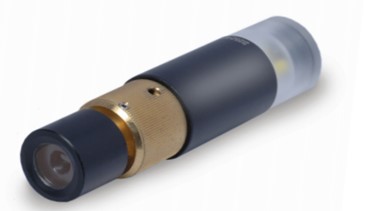
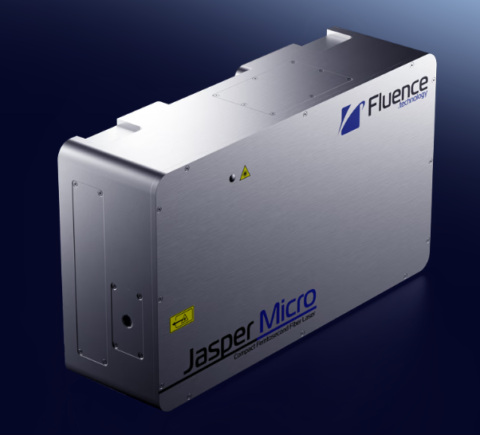
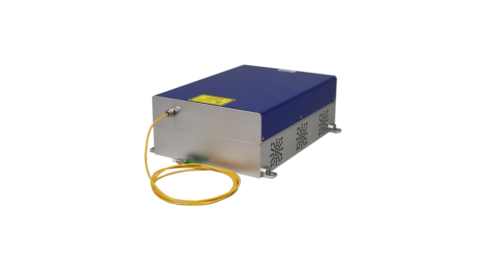
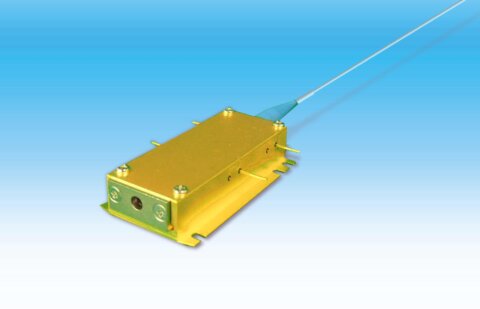
The FL-SLM single-frequency fibre laser range is designed for applications that require single-longitudinal-mode operation, stable optical frequency and controlled intensity noise. Low-power FL-SLM-Seed versions cover 1014–1120 nm, 1525–1596 nm and 1800–2000 nm, while amplified models provide visible and infrared outputs from 507 nm to 1908 nm. Depending on the wavelength and power class, the optical architecture combines a PM fibre seed with an amplifier and, in selected frequency-converted versions, a nonlinear conversion stage. Free-space, fibre-coupled and collimated output arrangements support different laboratory and instrument integration requirements.
Applications include laser cooling and trapping, optical lattices, atomic clocks, interferometry, high-resolution spectroscopy and quantum measurement. The range is also suitable for acoustic and seismic sensing, LIDAR, holographic imaging, wafer inspection, biomedical research and pumping an OPO or further frequency-conversion stage. Multiple power, linewidth, cooling and tuning options allow each source to be matched to low-power seed injection, laboratory equipment or higher-power optical systems.

Range features
A high level overview of what this range offers
- CW single-longitudinal-mode operation: Provides a controlled optical frequency for coherent measurement and manipulation.
- 507–2000 nm wavelength coverage: Supports visible, near-infrared and 2 µm application requirements.
- Output from 1 mW to 70 W: Covers low-power seed injection and higher-power optical systems.
- Linewidth options down to <5 kHz: Supports interferometry, spectroscopy and precision frequency applications.
- Relative intensity noise down to <0.03%: Selected seed models help limit amplitude-related measurement uncertainty.
- M² down to <1.05: Supports efficient focusing, coupling and beam delivery.
- PM fibre architecture: Maintains defined polarisation for polarisation-sensitive optical systems.
- PZT tuning above 3 GHz or 5 GHz: Enables controlled frequency adjustment and feedback-loop integration.
- Free-space, FC/APC and collimated outputs: Provides several options for optical and mechanical integration.
- Conduction, air or water cooling: Allows thermal management to be selected for the required power class.
Downloads
for Single-Frequency Fibre Lasers
What’s in this range?
All the variants in the range and a comparison of what they offer
Specifications
| Specification | Range or option |
|---|---|
Product series | FL-SLM and FL-SLM-Seed |
Laser technology | Single-frequency, single-longitudinal-mode PM fibre laser |
Architecture | Seed laser; seed and amplifier; selected converted models include a nonlinear module |
Operating mode | CW |
Seed wavelength ranges | 1014–1120 nm, 1525–1596 nm and 1800–2000 nm |
Amplified wavelength coverage | 507–560 nm, 618–633 nm, 775–785 nm, 852 nm, 1014–1120 nm, 1525–1596 nm and 1908 nm |
Output power | 1 mW to 70 W, model-dependent |
Power stability | Seed models: <3%, <2% or <1%; amplified models: <2%, <1% or down to <0.5%, rms over 4 hours at ±3°C |
Transverse mode | TEM₀₀ |
Longitudinal mode | SLM |
Spectral linewidth | <5 kHz to <200 kHz, model-dependent |
Relative intensity noise | Seed models: <0.1%, <0.05% or optional <0.03%; amplified models: <0.3%, <0.1% or optional <0.05% |
M² | <1.05 on selected seed models; <1.1 on most amplified models; up to <1.2 on selected 532 nm high-power versions |
Polarisation | PM fibre; generally >15 dB or >20 dB, with model-specific options |
Current adjustment range | 1–100% on amplified models |
Temperature tuning range |
|
PZT tuning range |
|
PZT tuning bandwidth |
|
Frequency shift | Less than ±200 MHz over ±2°C and 8 hours on specified amplified models |
Numerical aperture | 0.12 NA on selected converted models; 0.14 NA on seed models |
Output interface | FC/APC, optional collimator, free-space output or fibre-coupled output, model-dependent |
Standard fibre length | 1 m on most versions; 1.5–2 m on FL-852-SLM |
Fibre jacket | PVC; metal optional on applicable models |
Typical free-space beam diameter | Approximately 1 mm on grouped visible and red models |
Collimated beam diameter | 4 ±1 mm on applicable infrared models |
Warm-up time | <30 minutes; FL-532-SLM-E cold boot <2 hours |
Cooling | Conduction, air or water cooling, model-dependent |
Operating temperature | 15–30°C |
Seed electrical input | 12 VDC, 11.5 A; 12 W stated power dissipation |
Amplified-system supply | 110/220 VAC |
Expected lifetime |
|
Range Comparison
| Model | Wavelength | Output power | Spectral linewidth | M² | Relative intensity noise | Polarisation |
|---|---|---|---|---|---|---|
FL-SLM-Seed | 1014–1120 nm | 1–50 mW; 1–5 mW at 1120 nm | <10 or <5 kHz; <100 kHz at 1120 nm | <1.05 | <0.1%, <0.05%, optional <0.03% |
|
FL-SLM-Seed | 1525–1596 nm | 1–40 mW | <10 or <5 kHz | <1.05 | <0.1%, <0.05%, optional <0.03% |
|
FL-SLM-Seed | 1800–2000 nm | 1–10 mW | <50 kHz | <1.1 | <0.1%, <0.05% or <0.03% |
|
FL-507-SLM | 507 ±1 nm | 1–500 mW | <20 kHz | <1.1 | Optional <0.05% |
|
FL-509-SLM | 509 ±1 nm | 1–2000 mW | <20 kHz | <1.1 | Optional <0.05% |
|
FL-513-SLM | 513 ±1 nm | 1–1000 mW | <20 kHz | <1.1 | Optional <0.05% |
|
FL-515-SLM | 515 ±1 nm | 1–2000 mW | <20 kHz | <1.1 | Optional <0.05% |
|
FL-520-SLM | 520 ±1 nm | 1–2000 mW | <20 kHz | <1.1 | Optional <0.05% |
|
FL-525-SLM | 525 ±1 nm | 1–2000 mW | <20 kHz | <1.1 | Optional <0.05% |
|
FL-532-SLM | 532 ±1 nm | 1–3000 mW | <20 kHz | <1.1 | Optional <0.05% |
|
FL-532-SLM-H | 532 ±1 nm | 3–15 W | <50 kHz | <1.1 at 3–10 W; <1.2 at 10–15 W | <0.2% or <0.1% at 3–10 W; <0.5% at 10–15 W |
|
FL-532-SLM-E | 532 ±1 nm | 20–40 W | <50 kHz | <1.2 | <0.5%, <0.3% or <0.1% | Vertical, >100:1 |
FL-540-SLM | 540 ±1 nm | 1–2000 mW | <20 kHz | <1.1 | Optional <0.05% |
|
FL-550-SLM | 550 ±1 nm | 1–500 mW | <40 kHz | <1.1 | Optional <0.05% |
|
FL-560-SLM | 560 ±1 nm | 1–100 mW | <200 kHz | <1.1 | Optional <0.05% |
|
FL-618-SLM | 618 ±1 nm | 1–50 mW | <100 kHz | <1.1 | Optional <0.05% |
|
FL-631-SLM | 631 ±1 nm | 1 mW–1.5 W | <20 kHz | <1.1 | Optional <0.05% |
|
FL-633-SLM | 633 ±1 nm | 1 mW–1.5 W | <20 kHz | <1.1 | Optional <0.05% |
|
FL-775-SLM | 775 ±1 nm | 1–2000 mW | <20 kHz | <1.1 | Optional <0.05% |
|
FL-780-SLM | 780 ±1 nm | 1–2000 mW | <20 kHz | <1.1 | Optional <0.05% |
|
FL-785-SLM | 785 ±1 nm | 1–500 mW | <20 kHz | <1.1 | Optional <0.05% |
|
FL-852-SLM | 852 ±1 nm | 1–1000 mW | <50 kHz | <1.1 | <0.3% or <0.1% |
|
FL-1014-SLM | 1014 ±1 nm | 1–5 W | <10 kHz | <1.1 | Optional <0.05% |
|
FL-1018-SLM | 1018 ±1 nm | 1–10 W | <10 kHz | <1.1 | Optional <0.05% |
|
FL-1027-SLM | 1027 ±1 nm | 1–10 W | <10 kHz | <1.1 | Optional <0.05% |
|
FL-1030-SLM | 1030 ±1 nm | 1–10 W | <10 kHz | <1.1 | Optional <0.05% |
|
FL-1040-SLM | 1040 ±1 nm | 1–10 W | <10 kHz | <1.1 | Optional <0.05% |
|
FL-1050-SLM | 1050 ±1 nm | 1–10 W | <10 kHz | <1.1 | Optional <0.05% |
|
FL-1053-SLM | 1053 ±1 nm | 1–10 W | <10 kHz | <1.1 | Optional <0.05% |
|
FL-1064-SLM | 1064 ±1 nm | 1–10 W | <10 or <5 kHz | <1.1 | Optional <0.05% |
|
FL-1064-SLM-H | 1064 ±1 nm | 10–70 W | <10 kHz | <1.1 | <0.3%, <0.1% or optional <0.05% |
|
FL-1080-SLM | 1080 ±1 nm | 1–10 W | <10 kHz | <1.1 | Optional <0.05% |
|
FL-1100-SLM | 1100 ±1 nm | 1–5 W | <20 kHz | <1.1 | Optional <0.05% |
|
FL-1120-SLM | 1120 ±1 nm | 1–2 W | <100 kHz | <1.1 | Optional <0.05% |
|
FL-1550-SLM | 1525–1596 nm; 1550 nm typical | 1 mW–10 W | <10 or <5 kHz | <1.1 | Optional <0.05% |
|
FL-1908-SLM | 1908 ±1 nm | 1–5 W | <50 kHz | <1.1 | Optional <0.05% |
|
FAQs
for Single-Frequency Fibre Lasers
Choose an FL-SLM-Seed model when the source will drive a separate amplifier, frequency-conversion stage or low-power experiment. The seed ranges provide 1–50 mW across 1014–1120 nm, 1–40 mW across 1525–1596 nm and 1–10 mW across 1800–2000 nm, with M² down to <1.05 and linewidth options down to <5 kHz. They use single-mode PM fibre, FC/APC connectivity and conduction cooling. Amplified FL-SLM models are more suitable when the experiment requires watts of delivered optical power, reaching 70 W at 1064 nm. This distinction affects the electrical supply, cooling, enclosure size and amount of downstream optical amplification required.
Visible and red versions generally use frequency conversion and are available with free-space or fibre-coupled output, while many infrared models can use FC/APC fibre or an optional collimator. The 507–560 nm group offers up to 3 W free-space output at 532 nm, whereas its fibre-coupled options are generally limited to 500 mW or less. Near-infrared amplified models from 1014–1120 nm provide up to 10 W at most wavelengths, with the 1064 nm high-power version extending to 70 W. The 1800–2000 nm seed range provides milliwatt-level output, while FL-1908-SLM reaches 5 W. These differences determine the required beam delivery, thermal design and downstream optics.
Select the narrowest linewidth and lowest RIN grade that the measurement bandwidth and coherence requirement justify. Seed models and amplified 1064 nm or 1550 nm versions can be specified with linewidth below 5 kHz, while many visible and red models operate below 20 kHz. Wider limits apply to particular wavelengths, including <40 kHz at 550 nm, <50 kHz at 852 nm and 1908 nm, <100 kHz at 618 nm and 1120 nm, and <200 kHz at 560 nm. RIN can reach an optional <0.03% on selected seed models or <0.05% on many amplified models. Matching these values to the detector bandwidth avoids paying for tighter performance that the measurement cannot use.
The output interface should be selected according to the required beam path, power level and sensitivity to alignment. Seed models provide single-mode PM fibre through an FC/APC connector, normally with a 1 m fibre and 0.14 NA. Selected visible and red amplified models offer both free-space and fibre-coupled output, with a typical free-space beam diameter of approximately 1 mm and 0.12 NA for the fibre interface. Infrared amplified versions can use FC/APC output or an optional collimator producing a nominal 4 ±1 mm beam. Free-space output simplifies access to bulk optics, while fibre delivery can make routing easier but introduces connector-handling and power-density limits.
The range provides temperature and PZT-based tuning, although the exact travel depends on the wavelength group. Seed models specify more than 0.5 nm of temperature tuning and more than 3 GHz of PZT tuning, while the 507–785 nm amplified groups specify more than 0.2 nm and more than 5 GHz. Infrared amplified models generally provide more than 0.4 nm of temperature tuning and more than 3 GHz of PZT travel; FL-852-SLM specifies more than 0.15 nm. PZT bandwidth is above 5 kHz where stated. For control-loop design, the PZT can handle faster corrections, while temperature tuning is better suited to wider and slower wavelength positioning.
Cooling and power arrangements depend mainly on whether the selected unit is a seed source, standard amplifier or high-power converted laser. Seed models are conduction cooled, state 12 W power dissipation and use a 12 VDC, 11.5 A input, with an optional mains supply. Standard amplified versions use 110/220 VAC and may be air or water cooled. The 3–15 W and 20–40 W 532 nm versions require water cooling, while the 1064 nm high-power model can be air cooled up to 15 W or water cooled across its full power range. All listed versions require an operating environment of 15–30°C, so enclosure ventilation and coolant capacity should be planned before installation.
Yes, provided the chosen wavelength, power, linewidth and noise grade match the transition or measurement method. Available wavelengths include 780 nm for rubidium-related work, 852 nm for caesium-related systems, visible outputs for cooling and trapping, and narrow-linewidth infrared sources for interferometry and optical pumping. Seed versions provide M² below 1.05 and polarisation ratios above 20 dB across the 1014–1596 nm bands, while most amplified models specify M² below 1.1 and polarisation above 15 dB. PZT tuning above 3 GHz or 5 GHz supports frequency positioning and stabilisation. Practical selection should also account for detector bandwidth, optical-isolator requirements, beam delivery and available cooling infrastructure.