Visible zoom blocks
Motorised zoom optics for variable field-of-view imaging
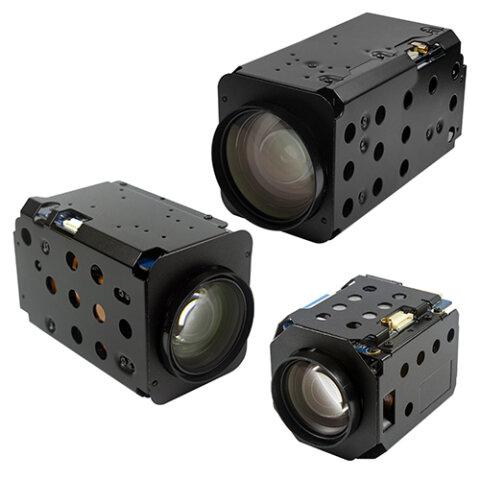
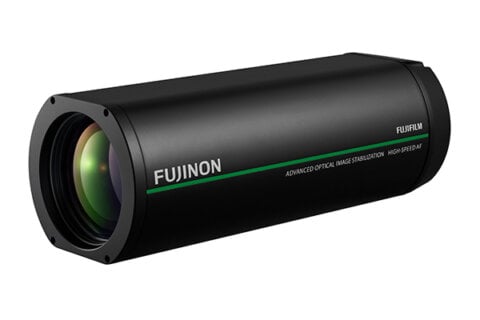
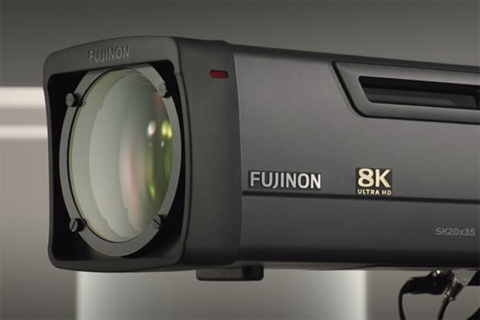
Visible zoom blocks give your camera systems integrated optical zoom, combining lenses, motor control, and often embedded interfaces into a compact assembly. They go beyond fixed lenses, allowing you to adjust the field of view dynamically while maintaining image quality. In practical terms, this means balancing zoom range, autofocus performance, and mechanical integration, while ensuring smooth coordination with the image sensor. Compared with fixed visible or UV camera modules, zoom blocks add flexibility and control, with some added complexity and power requirements.
Do you want to know more about this technology? Try out our new Chatbot!
Why our portfolio is right for you
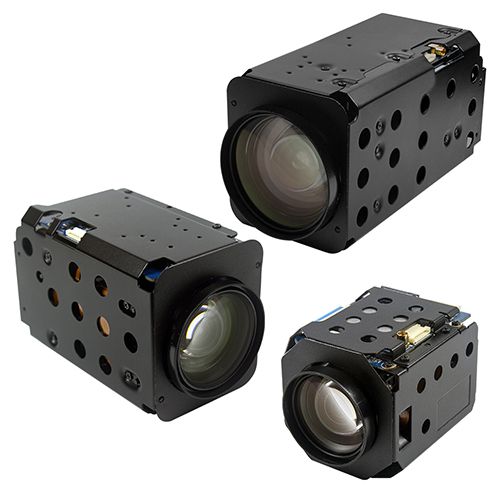
Our visible zoom block camera portfolio is designed to give you high-performance imaging with the flexibility and control required for demanding applications such as surveillance, transportation, industrial monitoring, and defence. With powerful optical zoom capabilities, excellent low-light performance, and advanced image processing, these cameras enable clear, detailed imaging over long distances – helping you capture critical visual information with confidence.
We offer a selection of integrated zoom block solutions, combining sensors, lenses, and control interfaces into compact, ready-to-deploy modules. This simplifies system integration and reduces development time, allowing you to focus on your application rather than component-level challenges. Supported by our in-house technical expertise, we help you select the right resolution, zoom range, interface, and feature set – ensuring seamless integration, reliable operation, and consistent image quality in real-world environments.

Key selection factors
- Zoom ratio and focal range: Determines how much the field of view can change; higher zoom ratios increase flexibility but also optical complexity.
- Sensor compatibility: The zoom block must match the sensor size and pixel pitch; mismatches can reduce image quality or usable resolution.
- Focus and control interfaces: Motor control for zoom and focus must integrate with system firmware; a common pitfall is underestimating control complexity.
- Optical performance across zoom range: Image quality can vary at different focal lengths; trade-offs often exist between wide-angle and telephoto performance.
- Mechanical integration and size: Zoom blocks are larger than fixed optics, which can impact enclosure design and system weight.
- Power consumption and response time: Motorised components require power and introduce latency; this becomes important in real-time or mobile systems.
Technical overview
Within Visible light & UV imaging camera modules (OEM), visible zoom blocks are designed as self-contained optical subsystems that adjust focal length dynamically while maintaining image focus and alignment. They typically include multiple moving lens groups, driven by precision motors, along with control electronics for zoom, focus, and sometimes iris adjustment. Unlike fixed-lens visible camera modules, which are optimised for a single field of view, zoom blocks support variable framing without changing hardware.
Compared with UV camera modules, which target specific spectral applications, visible zoom blocks focus on flexibility within the standard visible spectrum. Integration often involves pairing the zoom block with a separate image sensor module, requiring careful optical matching and mechanical alignment. These systems are widely used in surveillance, inspection, and long-range observation, where adaptability of field of view is essential.
Integration notes
Visible zoom blocks are typically integrated with image sensors via mechanical mounts and aligned optical paths, often requiring custom brackets or housings. Control is usually handled through serial interfaces or dedicated motor drivers, which must be synchronised with the imaging pipeline. Mechanical stability is critical to maintain alignment during zoom and focus operations.
A common pitfall is neglecting vibration or backlash in moving components, which can degrade image stability. Compared with fixed visible camera modules, zoom blocks require more complex firmware and calibration. Integration differs from UV camera modules, where spectral sensitivity is the focus rather than mechanical movement and zoom control.
FAQ’s
They are used in applications requiring adjustable field of view, such as surveillance, inspection, and remote monitoring. They allow systems to switch between wide-area observation and detailed zoomed-in views. This flexibility is key in dynamic environments.
Visible zoom blocks provide variable focal length, while fixed modules have a single field of view. • Zoom blocks: flexible framing, more complex integration • Fixed modules: simpler, optimised for one perspective
The choice depends on whether adaptability is required.
Not always. They must be matched to sensor size and optical characteristics. Incorrect pairing can lead to vignetting or reduced image quality.
Yes, they typically require motor control for zoom and focus. This involves firmware integration and sometimes closed-loop control systems. Proper synchronisation is important for smooth operation.
Typical challenges include: • Mechanical alignment and stability • Control interface integration • Managing moving components These factors affect overall system reliability.
Yes, but they require proper housing and environmental protection. Dust, moisture, and temperature changes can affect both optics and moving parts. Sealing and robust design are important.
Image quality can vary across the zoom range due to optical design limitations. High zoom ratios may introduce trade-offs in sharpness or distortion. Careful selection is required based on application needs.
Typical issues include: • Ignoring control complexity • Underestimating size and weight • Not matching optics to the sensor These can lead to integration challenges if not addressed early.