Infrared camera modules (OEM)
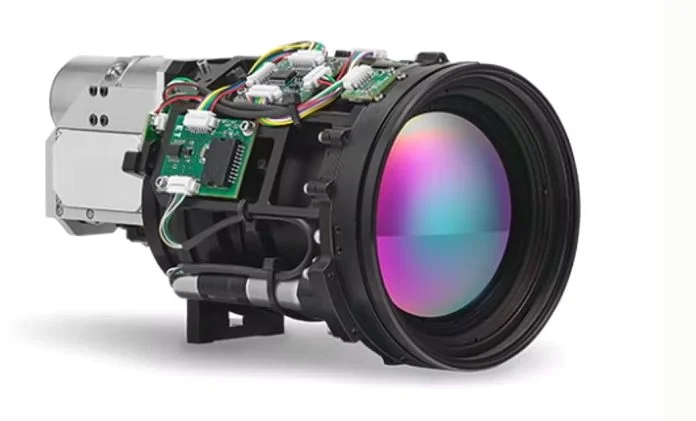
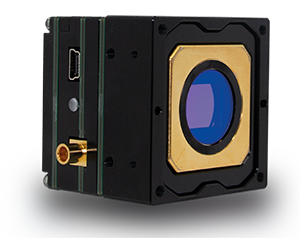
Infrared (IR) camera modules are compact, integration-ready thermal imaging cores designed for OEM applications where space, power, and performance must be carefully balanced. They detect infrared radiation across multiple spectral bands, including Long-Wave Infrared (LWIR), Mid-Wave Infrared (MWIR), and Short-Wave Infrared (SWIR), each suited to different sensing approaches. These modules follow distinct technical paths depending on whether the system relies on emitted thermal energy, reflected infrared light, or combined sensing.
Widely used across thermal monitoring, gas detection, predictive maintenance, defence, security, medical diagnostics, embedded vision, UAV and other applications, these IR camera modules are designed for challenging environments.
Engineered for seamless integration, they offer flexible interfaces, low power consumption, scalable resolution options, and advanced features such as radiometric measurement, onboard image processing, and calibration stability for reliable long-term operation. Selecting the right module involves trade-offs between sensitivity (NETD), resolution, frame rate, and environmental robustness, making access to expert support and a broad supplier ecosystem essential for successful system design.
Do you want to know more about this technology? Try out our new Chatbot!

Category overview
Infrared camera modules combine a detector, optics interface, onboard processing, and output connectivity. This category covers LWIR modules for passive thermal imaging, MWIR modules for high-sensitivity and dynamic or long-range applications, SWIR modules for reflected infrared and material-specific imaging, and EOIR (VIS/LWIR) modules for combined visible and thermal sensing.
Many modules incorporate features such as radiometric measurement, onboard image processing, and long-term calibration stability to ensure reliable performance. These directly influence system architecture, power budget, and integration complexity, making expert support essential for optimising performance.
Key selection factors
-
Spectral range vs application goal: LWIR camera modules suit passive thermal detection, while SWIR camera modules are chosen for reflected-light applications such as material inspection or imaging through haze.
-
Detector type and cooling: Uncooled LWIR modules simplify integration and reduce power, whereas MWIR camera modules require cooling but deliver higher sensitivity and faster response.
-
Single vs multi-sensor architecture: EOIR camera modules (VIS/LWIR) add visible imaging alongside thermal, increasing system complexity but enabling richer situational awareness.
-
Integration complexity: A common trade-off is between compact LWIR modules for embedded use and larger MWIR or EOIR systems that require more mechanical, thermal, and electrical design effort.
-
Environmental and operational constraints: MWIR systems are often selected for controlled or high-performance scenarios, while LWIR modules are more tolerant of continuous field deployment.
-
Data processing and output requirements: SWIR and EOIR modules may demand more advanced image processing pipelines; a common pitfall is underestimating bandwidth and processing load in multi-sensor systems.
Explore our range of infrared camera modules, browse products using our search tools, or contact our imaging experts to discuss your specific integration requirements.
FAQ’s
They are used as embedded imaging cores in systems requiring thermal or non-visible spectrum sensing. Typical applications include industrial inspection, surveillance, automation, and scientific instrumentation. They allow engineers to integrate IR capability without designing the sensor system from scratch.
The key differences are in detector technology and application focus:
- LWIR: uncooled, passive thermal imaging, easier integration
- MWIR: cooled, higher sensitivity, faster response
- LWIR suits continuous monitoring, while MWIR is often used in demanding or dynamic scenarios
SWIR camera modules are more suitable when imaging depends on reflected infrared light rather than emitted heat. This is common in material sorting, semiconductor inspection, or imaging through certain obscurants. LWIR remains the better choice for temperature-based detection.
EOIR camera modules combine visible and thermal sensors into one system. They are used when both visual context and thermal data are required, such as in surveillance or navigation systems. The trade-off is increased integration complexity and calibration effort.
Integration complexity depends heavily on the module type. LWIR modules are generally straightforward, while MWIR and EOIR modules require more attention to thermal management, alignment, and system synchronisation. Early system-level design planning helps avoid rework.
Power consumption varies significantly across module types:
- LWIR: lower power, no active cooling
- MWIR: higher power due to cooling systems
- EOIR: additional load from multiple sensors Thermal management directly affects stability and image quality.
Yes, combining LWIR, SWIR, or visible imaging is common in advanced systems. This enables complementary data capture, such as thermal detection plus material analysis. The main challenge is synchronisation and data fusion.
Each spectral range requires different lens materials and designs. LWIR commonly uses germanium optics, while SWIR and MWIR use different materials optimised for their wavelengths. Incorrect optics selection can significantly reduce system performance.