LWIR camera modules
Long-wave infrared modules for thermal sensing and OEM integration
Long-wave infrared (LWIR) camera modules enable thermal imaging without needing visible light, detecting temperature differences directly in the long-wave infrared spectrum. This makes them ideal for applications where seeing heat, rather than reflected light, is essential. In practice, they provide stable thermal contrast across changing environmental conditions and integrate predictably into embedded systems.
Key considerations when selecting an LWIR module include detector type – usually uncooled microbolometers – thermal sensitivity, and system-level constraints such as power and interface compatibility. Compared with MWIR or SWIR modules, LWIR cameras prioritise passive operation and simpler integration, offering reliable thermal imaging without the complexity of higher spectral selectivity.
Do you want to know more about this technology? Try out our new Chatbot!

Why our portfolio is right for you
Our portfolio brings together a carefully selected range of LWIR camera modules designed to make thermal imaging integration simpler, more reliable, and more efficient. Built around uncooled microbolometer technology, these modules deliver accurate thermal imaging with low power consumption and compact, integration-friendly designs.
The range supports a broad variety of applications, from industrial automation and continuous condition monitoring to embedded vision and intelligent sensing. With options covering different NETD levels, optics configurations, and performance requirements, engineers can choose the right balance of sensitivity, size, and cost for their specific application.
Alongside the hardware itself, we provide expert technical support to help with module selection, integration, and customisation, helping reduce development risk and accelerate time to market.
Key selection factors
-
Detector architecture: Uncooled microbolometers dominate LWIR modules, simplifying integration compared to cooled MWIR alternatives but with different response times and noise characteristics.
-
Thermal sensitivity (NETD): Lower NETD improves detection of small temperature differences, which becomes critical in inspection or surveillance applications.
-
Form factor and integration level: Compact OEM modules differ from EOIR combined modules, where additional visible sensors increase system size and complexity.
-
Spectral suitability vs alternatives: LWIR is preferred for passive thermal imaging, while SWIR modules are chosen when reflected IR or material inspection is required.
-
Optics compatibility: Lens material and FOV selection directly affect image quality; a common pitfall is underestimating transmission losses in IR optics.
-
Power and thermal management: Although uncooled, LWIR modules still require careful thermal design to avoid drift and calibration instability in enclosed systems.
Technical overview
LWIR camera modules operate in the long-wave infrared range, where most naturally emitted thermal energy from everyday objects can be detected. Unlike MWIR camera modules, they typically use uncooled focal plane arrays, meaning they do not require complex cryogenic cooling systems. This helps reduce power consumption, system size, and overall integration complexity.
Because of this, LWIR modules are widely used in applications that need reliable, continuous thermal monitoring, such as industrial automation, condition monitoring, security, and embedded vision systems. They are generally designed with compact integration, long-term stability, and cost-effective deployment in mind, rather than focusing purely on maximum performance.
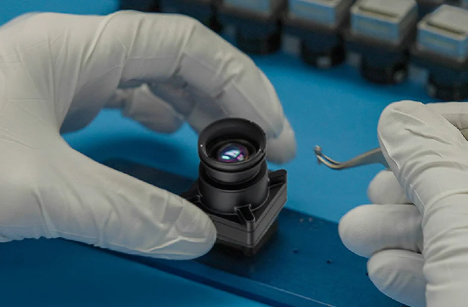
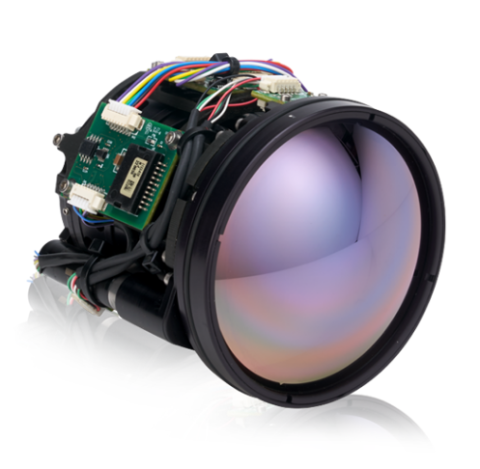
These modules are commonly paired with germanium or chalcogenide lenses, which are chosen for their ability to efficiently transmit infrared wavelengths while also providing good environmental durability for demanding operating conditions.
Integration considerations
LWIR camera modules are commonly integrated using standard digital video interfaces such as MIPI, LVDS, or USB, depending on the OEM platform and application requirements. From a mechanical perspective, successful integration depends on accurate lens alignment, effective sealing, and protecting the module from environmental factors like dust and humidity.
In most systems, EMC performance is relatively straightforward to manage, although shielding can become more important in compact embedded designs where mixed-signal electronics are tightly packed together. One integration detail that is often underestimated is thermal stabilisation time. After power-up, the sensor may need time to reach a stable operating temperature before delivering fully consistent measurements.
Compared with MWIR camera modules, LWIR systems are generally easier to integrate because they do not require complex cooling hardware. However, they can be more sensitive to thermal gradients created by the enclosure itself, which may affect image consistency or temperature accuracy if not carefully managed. In systems that combine visible and thermal imaging, such as EOIR platforms, synchronisation and calibration between the two imaging channels also become important at a system level.
FAQ’s
LWIR camera modules are commonly used for condition monitoring, thermal inspection, and safety systems where temperature differences reveal faults or anomalies. They are especially useful in environments with low or no visible light. Typical use cases include predictive maintenance and process monitoring
The main differences relate to detector technology, cooling requirements, and application focus:
-
LWIR: uncooled, simpler integration, continuous monitoring
-
MWIR: cooled, higher sensitivity, faster response
LWIR is generally preferred for cost-sensitive and embedded systems
SWIR camera modules are chosen when imaging depends on reflected infrared light rather than emitted thermal radiation. This is relevant for material sorting, moisture detection, or imaging through certain atmospheric conditions. LWIR remains the better choice for pure thermal sensing.
LWIR modules are simpler and more compact, focusing purely on thermal imaging. EOIR camera modules (VIS/LWIR) combine visible and thermal sensors, which is useful for situational awareness but increases system complexity, calibration effort, and integration overhead.
es, they are inherently suited to outdoor environments because they rely on emitted thermal radiation rather than ambient light. However, lens material, housing design, and environmental sealing must be selected carefully to ensure long-term stability.
Typical challenges include:
- Maintaining thermal stability inside the enclosure
- Selecting compatible IR optics
- Managing calibration drift over time These factors directly affect measurement reliability.
Optics define field of view, transmission efficiency, and image clarity. Germanium lenses are commonly used due to their high transmission in the LWIR range. Poor optics selection can negate the benefits of a high-quality detector.
Yes, they are often combined with visible or SWIR systems in multi-sensor platforms. This enables complementary data, such as combining thermal detection with visual context. The trade-off is increased system complexity and the need for synchronisation and calibration.