MWIR camera modules
Cooled mid-wave IR modules for dynamic and long-range detection
Medium-wave infrared (MWIR) camera modules are built for applications that demand high sensitivity, fast response, and long-range performance. Operating in the mid-wave infrared spectrum, they typically use cooled detectors, setting them apart from LWIR modules.
MWIR cameras are chosen when detecting subtle temperature differences at a distance or capturing rapid scene changes under controlled conditions is critical. Key engineering considerations include cooling architecture, power consumption, and optical system design. Compared with LWIR or SWIR modules, MWIR modules prioritise peak performance and temporal precision, trading off some simplicity and compactness to achieve superior imaging capabilities.
Do you want to know more about this technology? Try out our new Chatbot!
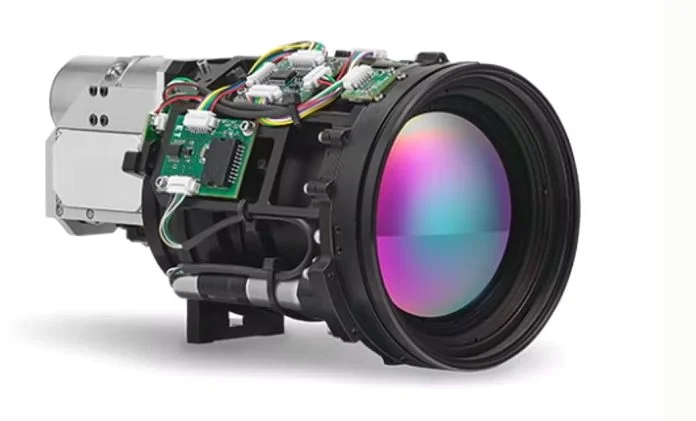
Why our portfolio is right for you
Our MWIR camera module portfolio delivers high-sensitivity thermal imaging for applications requiring rapid response, long-range detection, or high-temperature measurement. Designed for OEM integration, with attention to system cooling, power management, and interface flexibility, ensuring reliable operation in demanding environments. They are ideal for industrial monitoring, scientific instrumentation, and defence or aerospace applications where performance is critical. Backed by our expert support, the portfolio allows engineers to select, integrate, and customise MWIR solutions for challenging thermal imaging requirements.
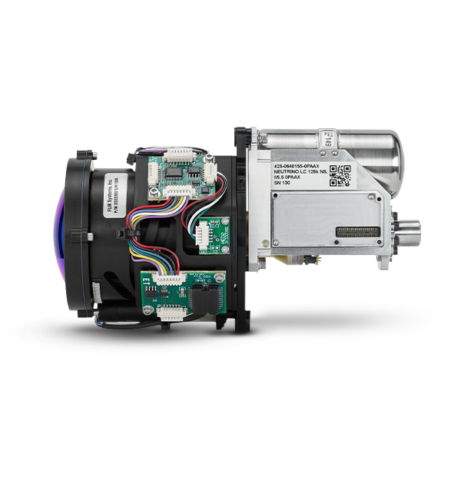
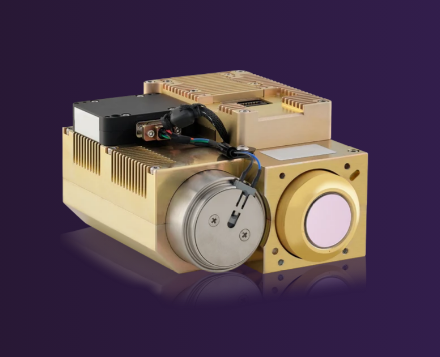
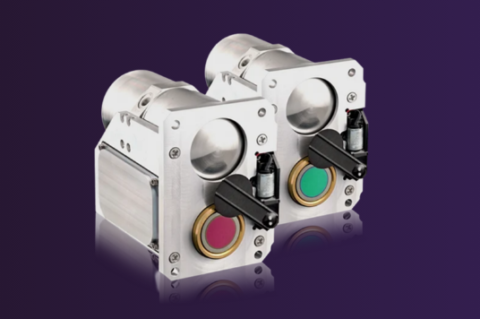
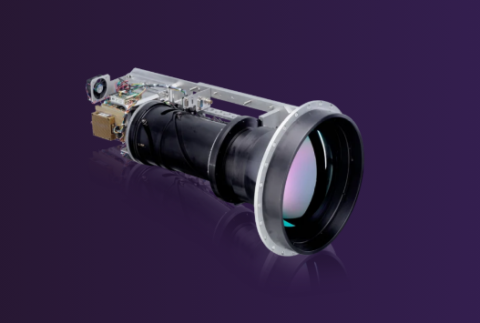
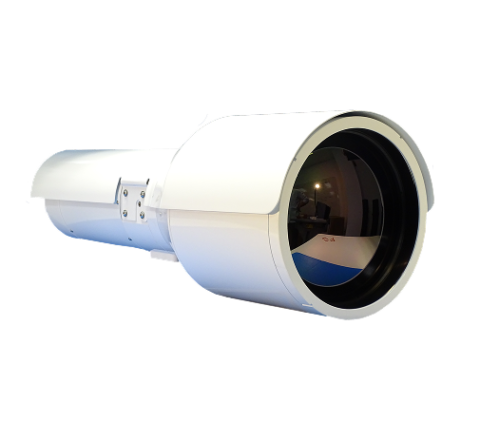
Key Selection factors
- Cooling requirements: MWIR camera modules require integrated cooling systems, increasing power consumption and mechanical complexity compared to uncooled LWIR modules.
- Sensitivity and detection range: Higher sensitivity enables detection of smaller temperature differences at longer distances, which is a key advantage over LWIR systems in demanding scenarios.
- Temporal response: MWIR detectors offer faster response times, making them suitable for tracking fast-moving targets or dynamic thermal events.
- System complexity vs alternatives: A common trade-off is choosing MWIR over LWIR camera modules when performance outweighs simplicity and cost constraints.
- Optical design constraints: MWIR optics differ from LWIR and SWIR systems; incorrect material or coating selection can reduce transmission efficiency.
- Application alignment: MWIR modules are typically selected for controlled, high-performance environments, while LWIR modules are more common in continuous industrial monitoring.
Technical overview
MWIR (Mid-Wave Infrared) camera modules operate in the 3–5 µm wavelength range, delivering exceptional thermal sensitivity and image quality for demanding imaging applications. Unlike LWIR camera modules, which typically use uncooled microbolometer sensors, MWIR modules incorporate cooled photon detectors. This significantly improves sensitivity, response speed, and image clarity, making them ideal for detecting subtle temperature differences and capturing fast-moving targets.
These performance advantages make MWIR camera modules well suited to applications such as long-range surveillance, target tracking, scientific research, defence, and precision thermal measurement. While SWIR camera modules capture reflected infrared light, MWIR technology detects emitted thermal radiation, enabling accurate imaging in low-light and no-light conditions. Compared with EOIR camera modules that combine visible and infrared sensors, MWIR modules are designed to maximise thermal imaging performance within a single spectral band.
A typical MWIR camera module integrates a cooled detector, cryogenic cooling system, precision optics, and advanced image processing electronics into a compact OEM package. This allows manufacturers and system integrators to embed high-performance thermal imaging into custom platforms while optimising size, weight, power, and overall system performance.
Integration considerations
Integrating an MWIR camera module requires more planning than an uncooled infrared system because of its built-in cryogenic cooling technology. The cooling system influences power consumption, thermal management, and mechanical design, so these factors should be considered early in the development process.
MWIR modules use many of the same interfaces as other OEM infrared camera modules, but their higher performance can place greater demands on data bandwidth and image processing. Mechanical stability is also important to maintain precise alignment between the detector and optics, particularly in applications exposed to vibration or shock.
One factor that’s often overlooked is the camera’s warm-up time. Cooled detectors require time to reach their operating temperature before delivering optimum image quality and measurement accuracy, so this should be factored into system start-up and operational planning.
Although integrating an MWIR module is typically more complex than an LWIR solution, the improved sensitivity, faster response, and longer-range performance often justify the additional design effort. By considering power, cooling, mechanical integration, and data handling from the outset, engineers can maximise the performance and reliability of their thermal imaging system.