SWIR camera modules
Short-wave infrared modules for material and spectral inspection
SWIR (Short-Wave Infrared) camera modules are designed for applications where image contrast comes from reflected infrared light rather than emitted heat. Operating in the short-wave infrared spectrum, they reveal material characteristics, moisture content, and surface features that are often invisible to both visible-light and thermal cameras.
This makes SWIR technology ideal for applications such as material inspection, semiconductor manufacturing, quality control, agricultural imaging, and scientific research, where identifying subtle differences in composition or reflectivity is more important than measuring temperature.
When selecting a SWIR camera module, key considerations include detector technology – typically InGaAs sensors – illumination requirements, optical compatibility, and integration with existing machine vision or imaging systems. Unlike LWIR and MWIR camera modules, which are designed for thermal imaging, SWIR systems focus on spectral information and reflected light, enabling engineers to inspect materials, detect defects, and capture details that cannot be seen using conventional imaging technologies.
Do you want to know more about this technology? Try out our new Chatbot!
Why our portfolio is right for you
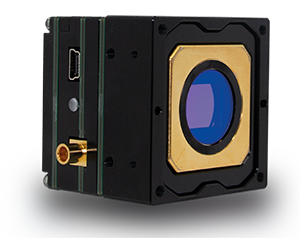
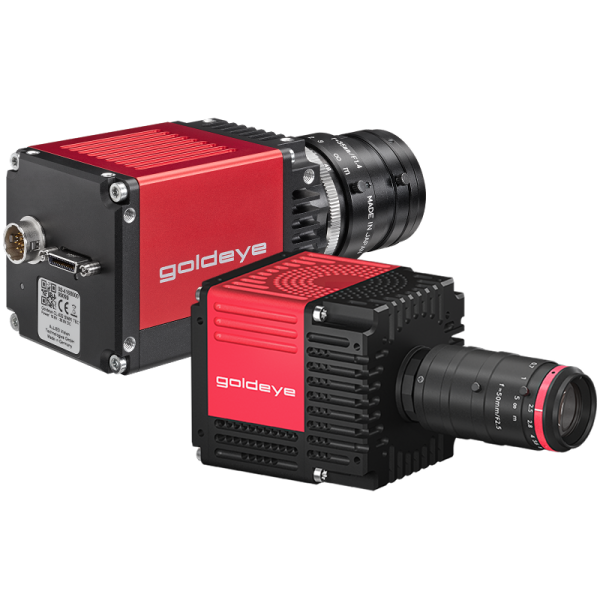
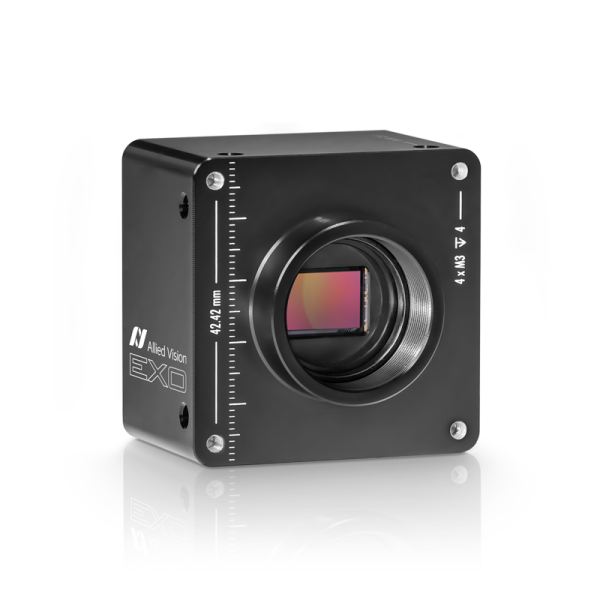
Our portfolio of SWIR camera modules is designed to help engineers capture image data that isn’t possible with visible-light or thermal cameras alone. By operating in the short-wave infrared spectrum, these OEM modules reveal material characteristics, moisture content, and surface features that are otherwise hidden, making them ideal for industrial inspection, semiconductor manufacturing, scientific imaging, surveillance, and machine vision applications.
Available in compact, OEM-ready formats, our SWIR modules offer flexible integration, high-performance InGaAs sensor technology, and compatibility with a wide range of optics and embedded platforms. Whether you’re developing a new imaging system or integrating SWIR technology into an existing design, our imaging specialists can help you select the right module, optimise system performance, and support you throughout the integration process.
Key selection factors
- Imaging principle (reflective vs thermal): SWIR camera modules are chosen for reflected IR imaging, while LWIR and MWIR modules are used for thermal emission-based detection.
- Illumination requirements: SWIR systems often require controlled illumination; a common pitfall is assuming passive operation similar to LWIR modules.
- Material and application suitability: SWIR is effective for moisture detection, semiconductor inspection, and imaging through certain obscurants, where thermal imaging is insufficient.
- Detector type and integration: InGaAs sensors dominate SWIR modules, offering different noise and sensitivity characteristics compared to LWIR microbolometers or MWIR cooled detectors.
- System complexity vs alternatives: Compared with EOIR camera modules (VIS/LWIR), SWIR modules remain single-channel but require careful optical and lighting design.
- Optics compatibility: SWIR optics differ from LWIR systems; a common trade-off is balancing transmission efficiency with cost and mechanical constraints.
Technical overview
SWIR (Short-Wave Infrared) camera modules typically operate in the 0.9–1.7 µm wavelength range, with some models extending beyond this to support more specialised applications. Unlike LWIR and MWIR camera modules, which detect heat emitted by an object, SWIR technology captures reflected infrared light. This makes SWIR imaging behave more like visible-light imaging while revealing details and material characteristics that standard cameras cannot detect.
Because SWIR relies on reflected light, many applications use controlled infrared illumination to achieve consistent, repeatable results. Most SWIR camera modules are built around highly sensitive InGaAs detectors and, unlike MWIR systems, generally do not require cryogenic cooling. This simplifies system integration while reducing power consumption, size, and maintenance requirements.
SWIR camera modules are particularly effective for material inspection, semiconductor analysis, machine vision, and scientific imaging, where differences in reflectivity or spectral response provide valuable information. Compared with EOIR camera modules, which combine visible and thermal sensors, SWIR modules offer a dedicated imaging channel optimised for spectral inspection rather than temperature measurement. A typical OEM module combines an InGaAs sensor, precision optics, and image processing designed to maximise contrast and reveal features that are invisible in both the visible and thermal infrared spectrum.
Integration considerations
SWIR camera modules are designed for straightforward integration into machine vision, inspection, and embedded imaging systems. Most support industry-standard interfaces such as GigE, USB, or Camera Link, making them easy to incorporate into existing hardware and software environments.
Successful integration depends on selecting the right optics and illumination. Because SWIR imaging relies on reflected infrared light rather than thermal emissions, lenses must be compatible with SWIR wavelengths, and the lighting solution should be carefully matched to the application to deliver consistent, high-contrast images. While EMC considerations are similar to those of conventional machine vision systems, engineers should also pay close attention to sensor noise, signal integrity, and illumination uniformity, as uneven lighting can significantly affect image quality and inspection accuracy.
Compared with LWIR camera modules, SWIR systems place greater emphasis on optical design and lighting rather than thermal management. They are also generally simpler to integrate than cooled MWIR systems, as they do not require cryogenic cooling. Taking these factors into account early in the design process helps ensure reliable performance and optimal image quality.