Pharsighted E9 series ultra high-speed cameras
- Technology
- High-speed cameras
- Partner
- Photron
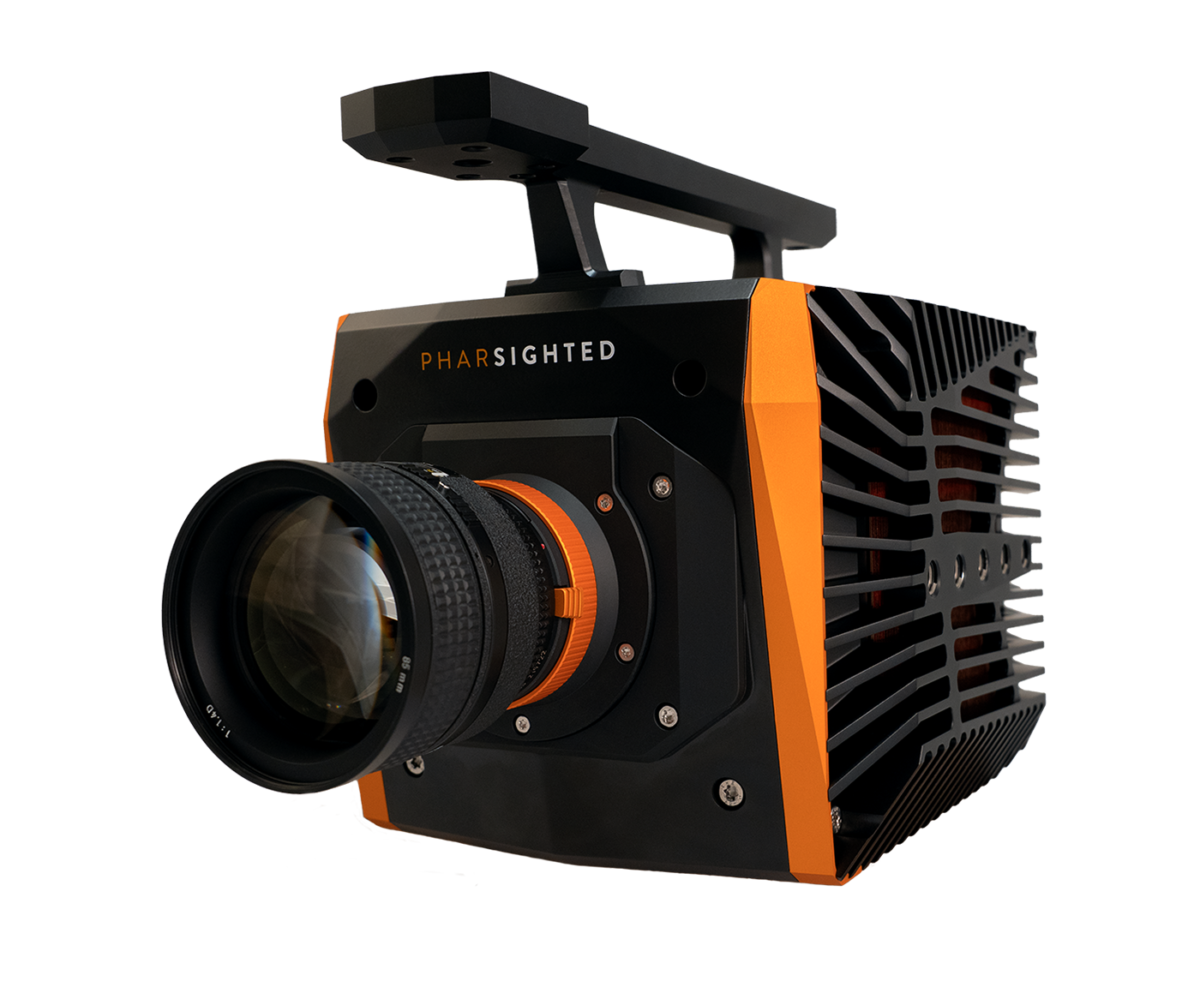
The Pharsighted E9 Series is a four-model range of full-frame BSI CMOS ultra-high-speed cameras for recording transient events at 640 × 480 pixels. Engineers can choose full-frame rates from 164,000 to 489,000 fps, with reduced-height operation extending the range to 2.72 million fps. The 33.28 × 24.96 mm sensor uses 52 µm pixels and a global shutter, supporting short exposures in demanding lighting conditions. Typical uses include combustion, propulsion, ballistics, impact, shock-wave visualisation, plasma studies, material testing, PIV, DIC, Schlieren and microscopy.
Internal memory capacities extend from 54 GB to 648 GB and may be divided into as many as 1,024 recording partitions. A removable U.2 NVMe SSD, multi-rate 10 Gigabit Ethernet, configurable BNC I/O and PTPv2 or IRIG timing support integration into laboratory and field test systems. SLOW software provides cross-platform camera control, playback, image adjustment, metadata handling and conversion into common engineering file formats.
Range features
A high level overview of what this range offers
- Full-frame BSI CMOS sensor with 52 µm pixels – Supports photon collection during very short exposures.
- Four performance grades – Allows frame rate, exposure time and memory capacity to be matched to the test.
- Up to 489,000 fps at 640 × 480 pixels – Records rapid events without reducing the active image resolution.
- Up to 2.72 million fps at reduced height – Supports analysis of highly localised, short-duration phenomena.
- Global shutter with exposure down to 34 ns – Limits motion blur during ballistics, shock and discharge events.
- ISO 200,000 monochrome and ISO 80,000 colour ratings – Supports short-exposure imaging where illumination is constrained.
- Up to 648 GB internal memory – Extends recording duration for tests that cannot be repeated easily.
- Up to 1,024 memory partitions – Enables repeated event capture without saving after every trigger.
- Removable U.2 NVMe SSD – Supports buffer backup, direct storage and off-camera file transfer.
- PTPv2, IRIG-B and external frame synchronisation – Allows integration with cameras, sensors and timing systems.
- Six configurable user BNCs plus dedicated trigger and analogue input – Supports flexible test-rig signalling and event tagging.
- Nikon F/G, Canon EF and 1-inch C-mount options – Accommodates different optical arrangements and active lens control.
- Windows, macOS and Linux software support – Allows deployment across common laboratory computing platforms.
What’s in this range?
All the variants in the range and a comparison of what they offer
Core specifications
| Specification | Value |
|---|---|
Product range | E9·150S, E9·100S, E9·80S and E9·50S |
Product type | Ultra-high-speed camera series |
Sensor architecture | Full-frame backside-illuminated CMOS |
Active resolution | 640 × 480 pixels |
Pixel pitch | 52 µm × 52 µm |
Active sensor area | 33.28 × 24.96 mm |
Digitisation | 9-bit ADC |
Light sensitivity | ISO 200,000 monochrome; ISO 80,000 colour under ISO 12232 daylight conditions |
Electronic shutter | Global shutter |
Mechanical shutter | Internal shutter for black referencing and sensor protection; opens or closes in under 1 s |
Recording architecture | Circular frame buffer with configurable pre-trigger and post-trigger recording |
Memory partitions | Up to 1,024 |
Internal storage | Removable U.2 NVMe SSD |
Included SSD equipment | Approximately 1.6 TB SSD, mounting tray and USB dock |
SSD file system | exFAT; 4 KB block size used for in-camera formatting |
Maximum SSD height | 15 mm |
SSD dock interface | USB 3.2 Gen 2, up to 10 Gbps; USB-A and USB-C connectivity |
Camera control interface | 1, 2.5, 5 or 10 Gigabit Ethernet via RJ45 |
Network addressing | DHCP or link-local address in the 169.254.x.x range |
Network ports | UDP 8890 for discovery; TCP 80 for control commands |
Time synchronisation | PTPv2 IEEE 1588 with accuracy below 10 ns; IRIG-B with source-dependent accuracy below 1 µs; software time setting |
Frame synchronisation | Internal or external frame sync through a configurable user I/O |
Dedicated trigger | 50-ohm BNC; input supports 5 V TTL, 5 V CMOS, 3.3 V LVTTL and signals up to 28 V; output supports 5 V TTL and CMOS |
Configurable user I/O | Six 50-ohm BNCs; inputs support 5 V TTL/CMOS, 3.3 V LVTTL and 2.5 V CMOS; maximum input 5 VDC |
I/O functions | Event, frame sync, IRIG, ready, record, shutter and trigger |
I/O timing control | Configurable polarity, delay, minimum width, maximum width and frequency filtering |
Analogue input | 16-bit ADC, 1 MHz maximum sample rate, ±12.0 V maximum input |
Video output | HD-SDI |
720p SDI formats | 23.98, 24, 25, 29.97, 30, 50, 59.94 and 60 fps |
1080p SDI formats | 23.98, 24, 25, 29.97 and 30 fps |
Lens mounts | Nikon F/G manual mount supplied as standard; Canon EF active mount and 1-inch C-mount available |
Internal filter | 58 mm threaded filter position; unavailable with the C-mount |
Minimum flange distance | 8.0 mm |
Camera dimensions | 240 mm H × 212 mm W × 175 mm D, excluding protrusions |
Camera weight | 10.88 kg |
Mounting interfaces | 3/8-16″ mounting patterns on the top, bottom and left side; ¼-20″ accessory mounting points |
DC power input | Primary and backup 24–28 VDC inputs |
General camera power | 200 W; installed SSD adds up to 30 W |
AC/DC power supply | 100–240 VAC, 50/60 Hz input; 24 VDC, 280 W output for defined configurations |
Cooling | Separate active cooling paths for the sensor and electronics and for the installed SSD |
Operating temperature | 0 to 40 °C |
Control software | SLOW for Windows, macOS and Linux |
Native recording format | .SLOW raw image data with metadata |
Export formats | AVI, MP4, TIFF and CSV frame metadata |
Model comparison
| Specification | E9·150S | E9·100S | E9·80S | E9·50S |
|---|---|---|---|---|
Full-frame performance | 640 × 480 at 489,000 fps | 640 × 480 at 326,000 fps | 640 × 480 at 272,000 fps | 640 × 480 at 164,000 fps |
Maximum frame rate | 2,720,000 fps at 640 × 48 | 2,720,000 fps at 640 × 32 | 2,457,000 fps at 640 × 32 | 1,980,000 fps at 640 × 16 |
Minimum exposure | 34 ns | 59 ns | 98 ns | 98 ns |
Straddle time | 350 ns | 343 ns | 343 ns | 490 ns |
Internal memory options | 162, 324 or 648 GB | 108, 216 or 432 GB | 108, 216 or 432 GB | 54, 108 or 216 GB |
Power without SSD | TBD | Up to 200 W | Up to 200 W | Up to 135 W |
Power with SSD | TBD | Up to 230 W | Up to 230 W | Up to 165 W |
Sample frame-rate and recording-time comparison
| Resolution | E9·150S fps | E9·150S time, 162 GB | E9·150S frames | E9·100S fps | E9·100S time, 108 GB | E9·100S frames | E9·80S fps | E9·80S time, 108 GB | E9·80S frames | E9·50S fps | E9·50S time, 54 GB | E9·50S frames |
|---|---|---|---|---|---|---|---|---|---|---|---|---|
640 × 480 | 489,000 | 1.15 s | 562,000 | 326,000 | 1.15 s | 375,000 | 272,000 | 1.38 s | 375,000 | 164,000 | 1.14 s | 187,000 |
640 × 384 | 601,000 | 1.17 s | 705,000 | 404,000 | 1.16 s | 469,000 | 336,000 | 1.39 s | 469,000 | 203,000 | 1.15 s | 234,000 |
640 × 320 | 710,000 | 1.18 s | 842,000 | 481,000 | 1.17 s | 562,000 | 400,000 | 1.41 s | 562,000 | 242,000 | 1.16 s | 281,000 |
640 × 240 | 918,000 | 1.22 s | 1,125,000 | 629,000 | 1.19 s | 751,000 | 523,000 | 1.44 s | 751,000 | 318,000 | 1.18 s | 374,000 |
640 × 160 | 1,299,000 | 1.29 s | 1,674,000 | 910,000 | 1.23 s | 1,124,000 | 755,000 | 1.49 s | 1,124,000 | 462,000 | 1.21 s | 560,000 |
640 × 128 | 1,557,000 | 1.34 s | 2,093,000 | 1,108,000 | 1.27 s | 1,408,000 | 918,000 | 1.53 s | 1,408,000 | 565,000 | 1.24 s | 702,000 |
640 × 64 | 2,582,000 | 1.62 s | 4,186,000 | 1,961,000 | 1.42 s | 2,788,000 | 1,619,000 | 1.72 s | 2,788,000 | 1,014,000 | 1.38 s | 1,405,000 |
640 × 48 | 2,720,000 | 2.05 s | 5,582,000 | 2,428,000 | 1.53 s | 3,718,000 | 2,000,000 | 1.86 s | 3,718,000 | 1,267,000 | 1.46 s | 1,854,000 |
640 × 32 | 2,720,000 | 2.90 s | 7,880,000 | 2,720,000 | 2.05 s | 5,577,000 | 2,457,000 | 2.27 s | 5,577,000 | 1,685,000 | 1.65 s | 2,781,000 |
640 × 16 | 2,720,000 | 5.47 s | 14,886,000 | 2,720,000 | 4.10 s | 11,154,000 | 2,457,000 | 4.54 s | 11,154,000 | 1,980,000 | 2.81 s | 5,562,000 |
Recording time and frame count scale by factors of two and four for the second and third memory options respectively. Frame rate remains unchanged when a larger memory capacity is selected.
Reference conditions for the monochrome sensor measurements are an E9·100S operating at 640 × 480 pixels, 100,000 fps and 0.539 µs exposure with 630 nm illumination. These figures apply to monochrome sensor characterisation and should not be treated as colour-camera performance values.
EMVA 1288 monochrome sensor characterisation
| Metric | Value |
|---|---|
Quantum efficiency | 68.2% |
Overall system gain | 0.07306 DN/e⁻ |
Conversion factor | 13.69 e⁻/DN |
Temporal dark noise | 21.1 e⁻ / 1.57 DN |
Maximum signal-to-noise ratio | 83.0 / 38.4 dB |
Inverse maximum signal-to-noise ratio | 1.205% |
Absolute sensitivity threshold | 21.9 e⁻ / 0.00811 e⁻/µm² |
Saturation capacity | 6,888 e⁻ / 3 e⁻/µm² |
Dynamic range | 314 / 49.94 dB / 8.3 stops |
Total dark-signal non-uniformity | 2.20 e⁻ |
Column dark-signal non-uniformity | 0.39 e⁻ |
Row dark-signal non-uniformity | 0.57 e⁻ |
Pixel dark-signal non-uniformity | 2.09 e⁻ |
Total photo-response non-uniformity | 0.198% |
Column photo-response non-uniformity | 0.027% |
Row photo-response non-uniformity | 0.020% |
Pixel photo-response non-uniformity | 0.195% |
Linearity error | 0.93% |
Mean dark current | 0.116 e⁻/µs |
Dark-current variance | 7.51 e⁻/µs |
FAQs
for Pharsighted E9 series ultra high-speed cameras
Selection should begin with the required full-frame rate, minimum exposure and recording duration. The E9·150S provides 489,000 fps at 640 × 480 and a 34 ns minimum exposure, while the E9·100S provides 326,000 fps and 59 ns; the E9·80S and E9·50S provide 272,000 and 164,000 fps respectively, both with 98 ns minimum exposure. Reduced-height rates extend to 2.72 million fps on the E9·150S and E9·100S, 2.457 million fps on the E9·80S and 1.98 million fps on the E9·50S. Internal memory also scales from a maximum of 216 GB on the E9·50S to 648 GB on the E9·150S. Applications requiring shorter exposure or more full-frame temporal resolution will normally point towards the E9·150S or E9·100S, whereas lower-rate events may not require their additional capacity.
The large backside-illuminated pixels can reduce the illumination burden, but they do not remove the need for suitable lighting and optics. The sensitivity ratings are ISO 200,000 for monochrome and ISO 80,000 for colour, while monochrome EMVA characterisation at 630 nm measured 68.2% quantum efficiency, 49.94 dB dynamic range and 21.1 e⁻ temporal dark noise. Because the output is digitised at 9 bits, highlight clipping and exposure placement still require attention, particularly with flames, arcs or bright reflections. Lens aperture, spectral transmission, illumination wavelength and the selected exposure time will all affect the usable signal level. Quantitative techniques such as PIV, DIC and spectroscopy should therefore be validated using the actual optical path and acquisition settings.
At 640 × 480, the smallest memory option for each model provides approximately 1.14 to 1.38 seconds of recording. The corresponding base values are 1.15 seconds for the E9·150S and E9·100S, 1.38 seconds for the E9·80S and 1.14 seconds for the E9·50S. Selecting the second or third memory option doubles or quadruples the recording time and frame count, while reducing image height also increases duration; at 640 × 16, base-memory figures range from 2.81 to 5.47 seconds. The circular buffer allows the event to be positioned before or after the trigger, with a minimum trigger offset of two frames. For repeated tests, the memory can be divided into as many as 1,024 partitions and combined with automatic saving to the SSD.
The cameras support PTPv2, IRIG-B, external frame sync and hardware triggering. PTPv2 operates through Ethernet with specified accuracy below 10 ns and allows an E9 camera to function as either a grandmaster or an ordinary clock, while IRIG-B accuracy is below 1 µs when used with a suitable time source. External frame-sync edges can be received through one of the six configurable user I/O ports, and those ports may also carry event, ready, record, shutter or trigger signals. The dedicated trigger input accepts compatible logic signals and voltages up to 28 V, whereas the general user inputs must not exceed 5 VDC. Electrical levels and port assignments must therefore be checked separately when designing the interface to a test controller or data-acquisition system.
The manual Nikon F/G mount is the standard configuration, with active Canon EF and 1-inch C-mount alternatives available. Full-frame Nikon or Canon EF lenses are required to cover the complete 33.28 × 24.96 mm sensor area; APS-C lenses may not provide full coverage. The active EF option enables electronic aperture and focus control through SLOW, while the Nikon F/G mount provides mechanical iris control where the lens supports it. A standard sub-1-inch C-mount lens has an image circle of roughly 16 mm, so vignetting may occur at larger image heights, and the internal 58 mm filter position cannot be used with this mount. Lens weight must be supported independently, and back-focus should be checked whenever a new mount or internal filter is installed.
The camera weighs 10.88 kg and measures 240 × 212 × 175 mm, so its support structure should be designed before the optical layout is finalised. Tripod installation requires at least two 3/8-16″ studs and a tripod rated for no less than 14 kg, with additional allowance for lenses and accessories; monopods and bipods are unsuitable. Active cooling draws air through the left side and exhausts it through the right, so neither path may be obstructed, and side mounting should place the left side down. Primary and backup inputs accept 24–28 VDC, with the backup input able to maintain the volatile recording buffer if primary power is lost. Model power requirements extend to 230 W with an SSD on the E9·80S and E9·100S, while final model-specific E9·150S figures require confirmation.
The .SLOW format should be retained when raw sensor values, camera settings and frame metadata are required for later processing. SLOW can convert recordings to AVI, MP4 or TIFF and can generate CSV files containing frame numbers, timestamps, timing-lock indicators and event states. Image and colour adjustments remain metadata when working in .SLOW, but they are applied permanently to pixel data when exporting to another image or video format. Each camera includes an approximately 1.6 TB U.2 NVMe SSD, and recorded takes may be saved automatically after capture or transferred through the USB 3.2 Gen 2 dock. A practical workflow is to preserve .SLOW files as the engineering record and create separate converted copies for analysis, reporting or presentation.
The camera supports 1, 2.5, 5 and 10 Gigabit Ethernet through an RJ45 connection, with Cat 6A cabling suitable for normal installations. It obtains an address through DHCP when a server is available or assigns a link-local address in the 169.254.x.x range when connected directly. Camera discovery uses UDP port 8890, while control commands use TCP port 80, which matters when routing or firewall rules are applied. The Ethernet cable should be connected before power-up, and the camera requires approximately two to two and a half minutes to boot; connecting the cable afterwards can require a restart before detection succeeds. The host network interface, storage subsystem and cabling should all support the selected link speed, as the interface rating alone does not define end-to-end download throughput.