PYROCOAT® Polyimide Coated Optical Fibres
- Technology
- Speciality fibre
- Partner
- Lightera (formerly OFS)
PYROCOAT® polyimide coated optical fibres are designed for applications where conventional acrylate-coated fibres would fail. The thin, durable polyimide coating supports continuous use in harsh environments up to around 250–300°C, while brief excursions to higher temperatures may also be tolerated. These fibres are well suited to downhole oil and gas systems, industrial process monitoring, aerospace platforms, distributed sensing, and specialist medical devices. The coating combines a compact outside diameter with strong resistance to moisture, oils, solvents, and other aggressive media. The range includes both single-mode and multimode variants to support sensing, communications, imaging, and OCT applications. PYROCOAT fibres are also valued for long operational life in elevated-temperature deployments and for medical use where biocompatibility and sterilisation resistance are important.
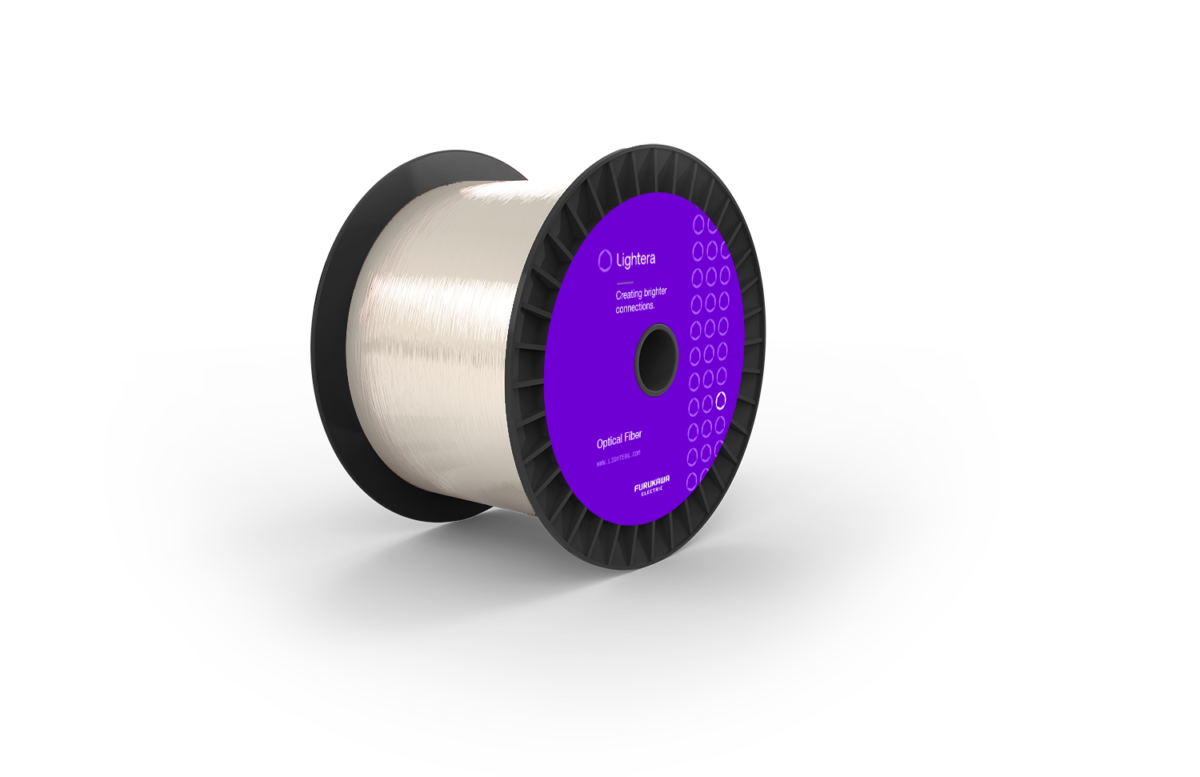
PYROCOAT® fibres are purpose-built for harsh-environment optical systems that must continue performing where standard coated fibres degrade. Typical use cases include distributed temperature sensing, acoustic sensing, industrial data links, aerospace systems, optical imaging, and medical probes.
The polyimide coating helps preserve a small fibre diameter while delivering strong thermal, chemical, and mechanical resilience. This makes the range suitable for engineers who need dependable fibre performance in hot, wet, pressurised, or chemically aggressive operating conditions.
Range features
A high level overview of what this range offers
- Thin polyimide coating: Maintains a compact outside diameter, typically around 155µm on 125µm cladding, while still providing robust protection
- High-temperature capability: Supports continuous operation up to around 300°C and short-term exposure near 450°C in critical environments
- Chemical durability: Resists water, saltwater, oils, and solvents, making it suitable for harsh industrial and downhole conditions
- Long service life: Designed for extended deployment in elevated-temperature applications where standard coatings would fail quickly
- Single-mode and multimode options: Available in multiple fibre formats for communications, distributed sensing, imaging, and OCT
- Biocompatible and sterilisation-ready: Suitable for medical and biomedical applications requiring sterilisation resistance
- Configurable for demanding installations: Available with options such as carbon layers, rugged cabling, metal buffering, and connector termination
What’s in this range?
All the variants in the range and a comparison of what they offer
Name / Type | Coating | Core (MFD) / Cladding / Coating diameter (µm) | Typical Applications | Part Number |
Multi-mode Graded-Index (GEO50) | Carbon/PYROCOAT | 50 / 125 / 155 | DTS; LAN/Datacom in harsh environments | F13469 |
GEO 1310 11 NA Single Mode | Carbon/PYROCOAT | 9 / 125 / 155 | Downhole data links; above-ground well networking | BF05717 |
Multi-mode Graded-Index | PYROCOAT K | 50 / 125 / 155 | DTS; high-temperature networks | F79696 |
AllWave® FLEX Zero Water Peak Single Mode | PYROCOAT K | 9 / 125 / 155 | DAS; DSS; DTS; DSTS | F81255 |
100/140 Graded-Index | PYROCOAT | 100 / 140 / 170 | High-temperature, harsh environments | BF04436 |
50/125 “PYRO” Graded-Index | PYROCOAT | 50 / 125 / 155 | Industrial data communications; LAN | BF04433 |
62.5/125 Graded-Index | PYROCOAT | 62.5 / 125 / 155 | Optical imaging; spectroscopy | F19230-01 |
62.5 “PYRO” Graded-Index | PYROCOAT | 62.5 / 125 / 155 | DTS; extreme-temperature environments | BF04434 |
820/880 Single Mode | PYROCOAT | 6 / 125 / 155 | Optical coherence tomography (OCT); sensing | BF04701 |
ClearLite® POLY P2 1310 11 NA Single Mode | PYROCOAT | 9 / 125 / 155 | Medical sensing & imaging; oil and gas; high temp | BF05717-01 |
OCT Single Mode | PYROCOAT | 9 / 125 / 155 | Optical coherence tomography | BF05717-06 |
980 nm Single Mode | PYROCOAT | 5 / 125 / 155 | Imaging; sensing; harsh environments | F9022 |
1310 nm Single Mode | PYROCOAT | 9 / 80 / 100 | OCT; sensing | BF04441-06 |
FAQs
for PYROCOAT® Polyimide Coated Optical Fibres
PYROCOAT is a polyimide coating designed for much higher temperature and chemical resistance than standard acrylate coatings. It remains stable in environments up to around 300°C, resists many aggressive chemicals, and adds minimal bulk because the coating is thin and mechanically robust.
These fibres are intended for continuous operation in the 250°C to 300°C range. They can also tolerate short-term excursions to significantly higher temperatures, around 450°C, depending on the exposure duration and application conditions. They are used where long operational life at elevated temperature is critical.
Common applications include distributed temperature sensing, acoustic sensing, downhole oil and gas monitoring, industrial process control, aerospace systems, optical imaging, spectroscopy, and medical devices. They are selected wherever fibre must operate reliably in heat, pressure, moisture, chemicals, or other demanding conditions.
Yes. PYROCOAT fibres are used in medical and biomedical applications because the coating is biocompatible and can withstand sterilisation processes. This makes them suitable for imaging probes, surgical tools, and in-body sensing assemblies.
Yes. The range includes both single-mode and multimode designs, including common formats such as 9/125µm single-mode and 50/125µm or 62.5/125µm multimode. This supports communications, sensing, imaging, and OCT applications with the same harsh-environment coating benefits.
They are designed to perform well in harsh environments involving moisture, saltwater, oils, solvents, elevated pressure, and high temperature. The polyimide coating helps protect the fibre from degradation, making it suitable for long-term deployment in challenging field conditions.
Yes. Depending on the application, they can be supplied with additional layers such as carbon coatings, integrated into rugged cable constructions, placed inside metal buffers, or terminated with connectors. This allows adaptation for installation, protection, and lifetime requirements.
Because polyimide is tough and heat resistant, stripping typically requires specialised methods such as thermal stripping or controlled chemical removal. Once prepared correctly, the fibre can be cleaved, spliced, and connectorised in much the same way as other optical fibres.
No. The coating is applied outside the glass cladding, so it does not change the fibre’s core optical properties. A PYROCOAT version of a given fibre is intended to deliver the same fundamental optical behaviour while improving environmental durability.
Yes. Polyimide coatings are known for low outgassing, which supports use in vacuum environments, and they are also used in applications exposed to radiation. Final suitability still depends on the full system design and the radiation response of the glass fibre itself.