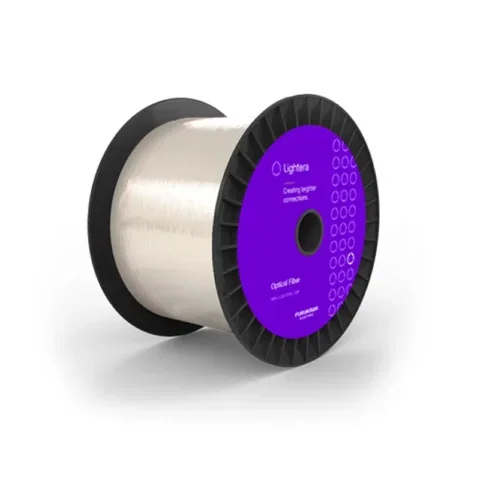
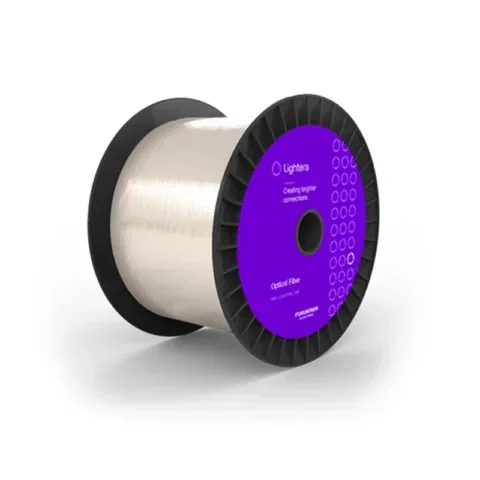
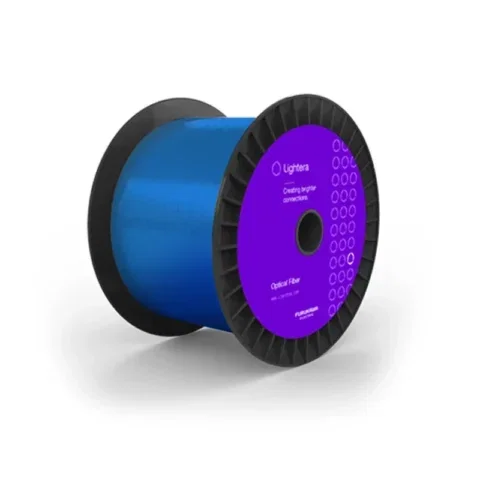
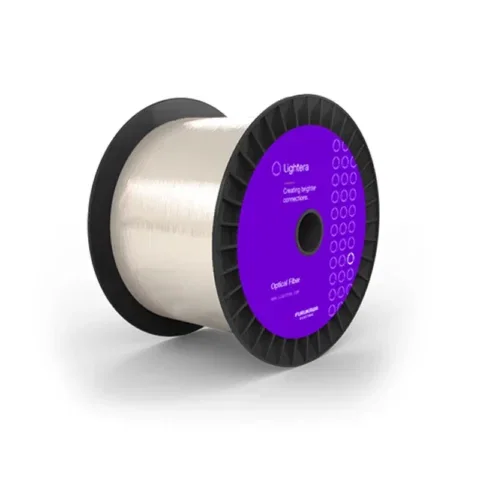
105/125 µm Multi-mode Step-Index Launch Optical Fibre
- Technology
- Speciality fibre
- Partner
- Lightera (formerly OFS)
This 105/125 µm step-index multimode launch optical fibre is engineered for high-power laser delivery applications. With a 105 µm core and 125 µm cladding, it is designed to capture and transport intense light from diode laser sources efficiently. Its step-index structure supports reliable light propagation for pumping and optical power transfer where bandwidth is not the primary concern. Multiple NA variants are available to help match different diode laser emission profiles and improve coupling efficiency. The pure silica core provides a high optical damage threshold for demanding laser environments. High geometric precision supports easier alignment in fibre-coupled systems. Standard and high-temperature acrylate coating options enable integration into a range of thermal and industrial conditions. Buffered and unbuffered variants are available to support different handling and packaging requirements. Typical uses include fibre amplifiers, pump combiners, laser delivery cables, and other high-power optical systems.
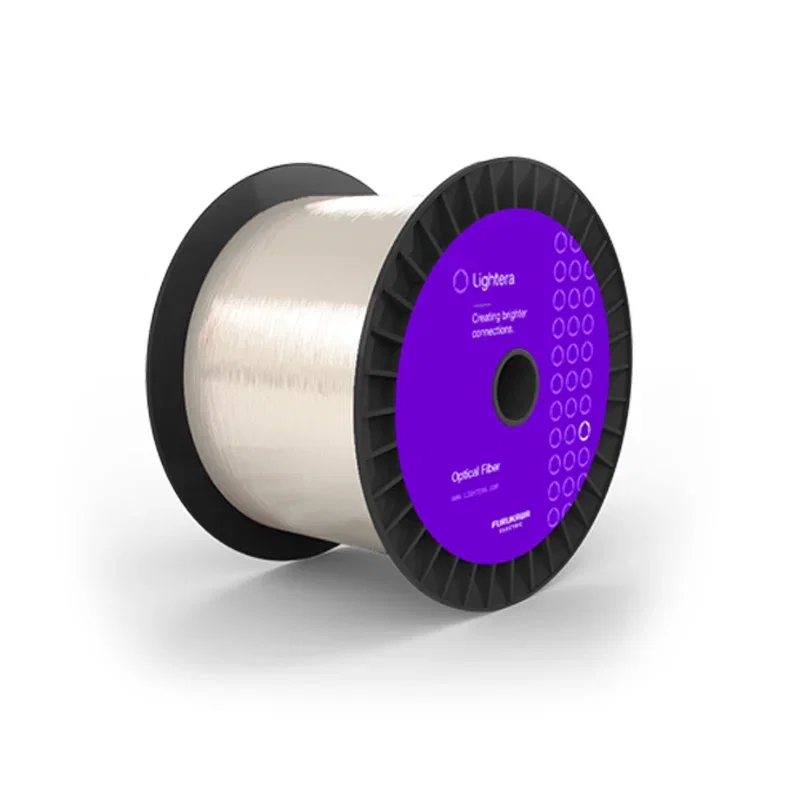
This launch fibre is intended for efficient coupling and delivery of high-power diode laser light in specialised optical systems. It combines a large multimode core, flexible NA choices, and strong thermal and mechanical options to support integration into pump modules, fibre lasers, and industrial beam delivery assemblies.
Range features
A high level overview of what this range offers
- Multiple NA options (0.12, 0.15, 0.22): Supports efficient coupling with a wide range of fibre-coupled diode lasers
- Exceptional core/cladding concentricity: High geometric uniformity helps make alignment easier and more tolerant
- Pure silica core construction: Provides a high optical damage threshold for elevated laser power levels
- High-temperature acrylate coating available: Selected variants support operating temperatures up to +125 °C
- RoHS compliant design: Supports environmental compliance and easier global deployment
Downloads
for 105/125 µm Multi-mode Step-Index Launch Optical Fibre
105/125 µm Step-Index Multimode Launch Optical Fibre Datasheet
DownloadWhat’s in this range?
All the variants in the range and a comparison of what they offer
Parameter | 0.15 NA Variant (HTA Coating) | 0.22 NA Variant (900 µm Buffer) |
Operating Wavelength | 800–1600 nm | 800–1600 nm |
Numerical Aperture (NA) | 0.13–0.17 | 0.20–0.24 |
Cladding Diameter | 123–127 µm | 123–127 µm |
Core Diameter | 102–108 µm | 102–108 µm |
Primary Coating Diameter | 230–260 µm | 230–260 µm |
Secondary Buffer Diameter | N/A (unbuffered fibre) | 900 µm |
Core/Clad Offset | 0–3 µm | 0–3 µm |
Proof Test Level | 100–120 kpsi | 100–120 kpsi |
Operating Temperature | –55 °C to +125 °C | –40 °C to +85 °C |
Short-Term Bend Radius | 12 mm | 12 mm |
Long-Term Bend Radius | 25 mm | 25 mm |
FAQs
for 105/125 µm Multi-mode Step-Index Launch Optical Fibre
A step-index multimode fibre has a core with a uniform refractive index and a sharp index change at the cladding boundary. This structure supports a large core diameter and high numerical aperture, helping the fibre capture and carry more light from a laser source. For high-power laser delivery, it is preferred because it maximises coupled optical power and is easier to align, while bandwidth over long distances is usually not important.
This fibre range is available in approximately 0.12 NA, 0.15 NA, and 0.22 NA versions. In general, the fibre NA should match or slightly exceed the output NA of the laser source. A closer NA match helps improve coupling efficiency and reduces optical loss, especially with fibre-coupled diode lasers.
A specific maximum power is not stated in the provided product data. The fibre is designed for high-power diode laser delivery and uses a pure silica core for strong optical power handling. Actual performance depends on launch conditions, beam quality, end-face quality, cooling, and bend management, so applications operating at high power should be engineered carefully.
Yes. Standard acrylate versions are suited to typical operating temperatures up to about +85 °C, while high-temperature acrylate variants can operate from –55 °C to +125 °C. Buffered versions also provide added handling robustness for laboratory and industrial use.
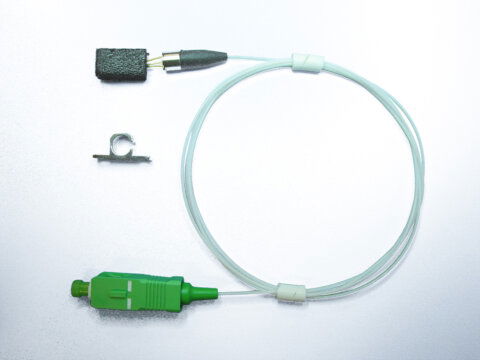
The 125 µm cladding diameter supports compatibility with standard connector ferrules and fibre handling processes. Depending on the application, the fibre can be connectorised, spliced, or directly integrated into optical assemblies. For high-power use, careful end-face preparation, alignment, and thermal design are important to protect the fibre ends and maintain performance.
Typical uses include fibre-coupled diode lasers, pump combiners, fibre laser pumping, laser delivery cables, and other systems that require flexible transport of high-power multimode laser light. It is especially suitable where optical power transfer is more important than signal bandwidth.
The recommended minimum bend radius is 12 mm for short-term handling and 25 mm for long-term installation. Short-term bending refers to temporary routing or handling, while long-term bending should remain more relaxed to minimise stress, added loss, and long-term reliability issues.
Available options include standard acrylate coating, high-temperature acrylate coating, and selected variants with a 900 µm tight buffer. The buffered version improves handling robustness and can simplify integration into cable and connector assemblies.
This fibre is primarily intended for optical power delivery rather than high-speed data transmission. Its large-core step-index multimode design supports many modes, which increases modal dispersion and limits bandwidth over distance. It is therefore best suited to short-length power transfer and laser delivery applications.
Yes. The product information indicates that related fibre configurations and custom options may be available on request. If your application needs a different core size, NA, coating, or related specification, it may be possible to source a suitable variant through the supplier.