Simplex 3.0 mm Cable 1000 µm HCS® Step-Index
- Technology
- Fibre optic cables, connectors and assemblies
- Partner
- Lightera (formerly OFS)
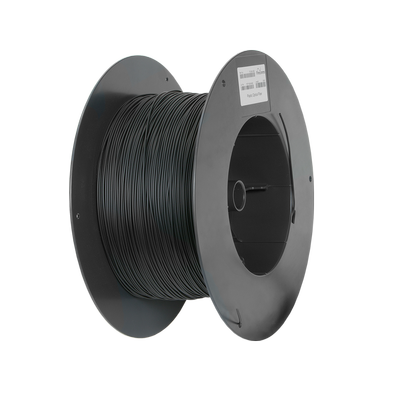
This simplex 3.0 mm fibre optic cable uses an exceptionally large 1000 µm Hard-Clad Silica (HCS) step-index multimode fibre for industrial optical links. It is designed for short-range data communication in factories, plants, and other demanding environments. The cable combines a tightly buffered fibre, aramid yarn reinforcement, and a rugged polyurethane outer jacket for strong mechanical protection.
This construction helps it resist bending stress, abrasion, and exposure to oils and chemicals common in industrial settings. Its wide operating temperature range of -40 °C to +80 °C supports reliable use in both cold and hot conditions. The large-core design also makes optical coupling easier with simple LED-based transmitters and other industrial optical devices. As a result, it is well suited for factory automation, machinery interconnects, and optical sensor networks. Overall, it offers a dependable and easy-to-install fibre solution for rugged applications.
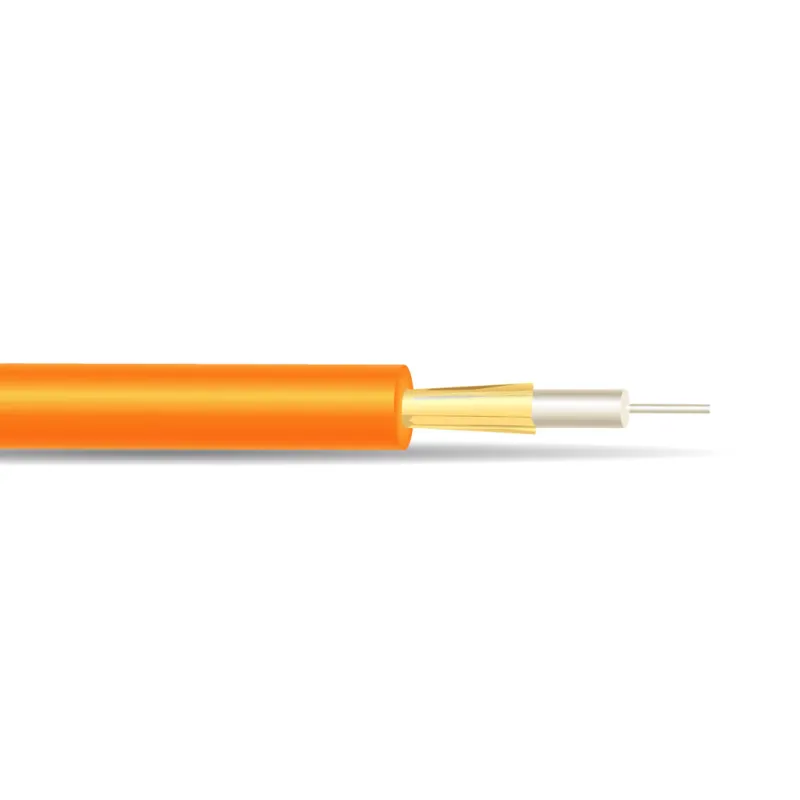
The AC01287-15 is a rugged simplex fibre optic cable engineered for harsh industrial environments. Built around a 1000 µm Hard-Clad Silica (HCS) step-index multimode fibre, it offers a practical solution for short-range optical communication where durability and easy handling matter most.
Its tough 3.0 mm polyurethane jacket, reinforced with aramid yarn strength members, helps protect the fibre against pulling forces, abrasion, and chemical exposure. The large-core design also simplifies coupling with LED-based transmitters and other large-core optical devices, making it a strong choice for factory automation, machinery links, and sensor systems.
Range features
A high level overview of what this range offers
- 1000 µm large-core fibre – Enables efficient light coupling from low-cost optical transmitters and allows greater installation tolerance
- Hard-Clad Silica (HCS) construction – Combines a silica core with durable cladding for strong mechanical performance in industrial environments
- Tight-buffered 3.0 mm design – Improves handling and helps protect the fibre against abrasion and physical impact
- Aramid yarn reinforcement – Provides high tensile strength to support cable pulling and installation
- Rugged polyurethane jacket – Resists cuts, oils, and chemicals for long-term durability in harsh conditions
- Wide operating temperature range – Supports reliable use from -40 °C to +80 °C
- Simplex single-fibre format – Ideal for straightforward point-to-point industrial optical links
Downloads
for Simplex 3.0 mm Cable 1000 µm HCS® Step-Index
What’s in this range?
All the variants in the range and a comparison of what they offer
Specification | Value |
Attenuation @ 850 nm | ≤ 10 dB/km |
Fibre Core | 1000 µm Hard-Clad Silica (HCS) multimode, 0.37 NA, Low OH (part no. CF01493-15) |
Installation Load (maximum) | 125 lb (555 N) |
Operating Load (maximum) | 65 lb (290 N) |
Minimum Bend Radius (install) | 170 mm |
Minimum Bend Radius (operating) | 120 mm |
Operating Temperature | -40 to +80 °C |
Storage Temperature | -40 to +80 °C |
Order by Part Number | AC01287-15 |
Product Description Code | HCP-M1000T-C01US |
Note: Operating temperature ranges are general guidelines. For extreme environments, specific fibre coating and jacket material combinations may be recommended to maintain optimal long-term performance.
FAQs
for Simplex 3.0 mm Cable 1000 µm HCS® Step-Index
HCS fibre uses a pure silica core protected by a hard polymer cladding. Compared with standard glass fibres, this construction provides greater mechanical durability and improved resistance to handling stress and tighter bends. It combines the optical advantages of a glass core with the toughness needed for demanding industrial environments.
This type of cable is well suited to short-distance industrial data communication. Typical uses include factory automation links, industrial Ethernet or serial connections through optical converters, machinery interconnects, and optical sensor systems operating in harsh, vibration-prone, or chemically exposed environments.
A 1000 µm core typically requires connectors and transmitters designed for large-core fibre. Common options include SMA or ST connector styles intended for 1 mm fibre, along with LED-based optical modules operating at visible red or near-infrared wavelengths such as 650 nm or 850 nm. Matching the connector and transceiver to the fibre size is important for correct alignment and signal transfer.
The large multimode step-index core makes light coupling simple and robust, but it also increases modal dispersion compared with smaller-core fibres. In practice, this makes the cable ideal for short to moderate distances, typically from tens to a few hundred metres depending on the application and data rate. It prioritises ruggedness and ease of use over long-distance high-bandwidth transmission.
The cable supports a maximum installation load of 125 lb (555 N) and a maximum operating load of 65 lb (290 N). Its minimum bend radius is 170 mm during installation and 120 mm during operation. These values help protect the fibre from damage during pulling and in-service use.
Yes. The cable is designed for demanding environments and operates from -40 °C to +80 °C. Its HCS fibre construction and polyurethane outer jacket help resist abrasion, oils, and many industrial chemicals, making it suitable for factory floors, machinery areas, and other rugged installations.
Large-core HCS fibre is generally easier to terminate than conventional small-core glass fibre. It is commonly fitted with mechanical connectors using tools made for large-core fibre, and field termination is often more straightforward because alignment is less critical. Fusion splicing is possible with specialised equipment, but mechanical termination is more typical in industrial applications.