FC-500-0DB 500 m Reel POF Duplex Cable
- Technology
- Fibre optic cables, connectors and assemblies
- Partner
- Firecomms
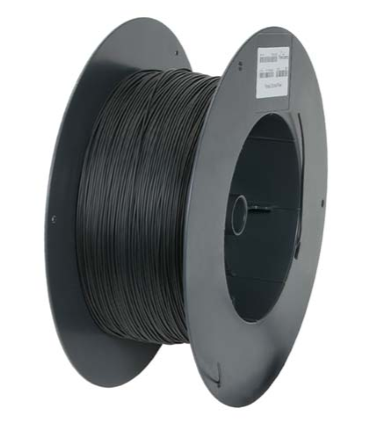
The FC-500-0DB POF duplex cable is a bulk 500 m reel of plastic optical fibre designed for engineers who need reliable optical links in noisy or sensitive environments. Each fibre has a 1 mm PMMA core with a transparent polymer cladding, all protected by a robust 2.2 mm polyethylene jacket. This duplex cable comes as two parallel fibres (zip-cord style), making it easy to separate and terminate as needed. It’s typically used to create custom cable harnesses and patch cords on-site – ideal for industrial automation networks, automotive communication, medical devices, or other fields where electromagnetic interference (EMI) is a concern.
The cable’s flexible polymer construction and broad temperature tolerance (-55 °C to +85 °C) allow it to perform reliably in both factory floor conditions and harsh outdoor climates. Supplied on a 500 m spool, it gives developers and installers the freedom to cut and fit exact lengths, enabling quick deployment of cost-effective, rugged optical links in a wide range of applications without the complexity of glass fibre.
Range features
A high level overview of what this range offers
Features & Benefits
- UL VW-1 flame-rated jacket – Meets stringent fire safety standards for use in industrial equipment and building wiring.
- IEC 60793-2-40 A4a compliant fibre – Standardised step-index POF ensures consistent optical performance and compatibility.
- Optimised for RedLink®, LC and OptoLock® transceivers – Seamlessly integrates with common POF connector systems for easy installation and commissioning.
- Wide operating temperature (-55 °C to +85 °C) – Reliable performance from freezing conditions to high-heat environments.
- 500 m reel packaging – Convenient bulk supply allows continuous runs and custom cable lengths without mid-span splices.
- High flexibility and bend endurance – Durable polymer fibre construction tolerates repeated bending and movement without signal loss.
- Cost-effective polymer link – Provides an affordable, lightweight alternative to glass fibre for short-range data links with inherent EMI immunity.
- Duplex twin-cable with marked fibres – Two parallel 2.2 mm cables joined together, with one fibre jacket uniquely marked for quick identification of channels during termination.
Downloads
for FC-500-0DB 500 m Reel POF Duplex Cable
What’s in this range?
All the variants in the range and a comparison of what they offer
| Specification | Value |
|---|---|
Part number | FC-500-0DB |
Fibre type | Duplex plastic optical fibre (step-index POF), 2 fibres (zip-cord) |
Core diameter | 1.0 mm PMMA core (per fibre) |
Numerical aperture | 0.50 (typical) |
Attenuation @ 650 nm | ~0.2 dB/m (typical, depends on operating conditions) |
Outer jacket diameter | 2.2 mm per fibre (approx. 4.4 mm total width for duplex pair) |
Jacket material & rating | Flame-retardant PE (UL VW-1 compliant; chlorinated PE jacket) |
Operating temperature | -55 °C to +85 °C |
Reel length | 500 m |
Standards compliance | IEC 60793-2-40 Class A4a (SI-POF optical fibre standard); RoHS compliant |
FAQs
for FC-500-0DB 500 m Reel POF Duplex Cable
POF is an optical fibre made from polymer (plastic) rather than glass. It has a larger core (1 mm) and is more flexible and durable than glass fibre, though it’s suited for shorter distance data transmission. Engineers often choose POF for short links (tens of metres) where electrical isolation or EMI immunity is needed, because it’s easy to handle, doesn’t require special polishing, and is more rugged against bending or vibration compared to delicate glass fibres.
The maximum transmission distance depends on the data rate and the transceivers used. In general, POF cables like this are effective for lengths up to around 50–70 metres for high-speed data (e.g. 100 Mbps) using suitable LED or laser transceivers at 650 nm. For lower data rates or more sensitive receivers, you may achieve longer distances. However, POF is intended for short-range links; for example, many industrial systems use 10–50 m runs of this cable to connect sensors, controllers, or devices without issues. Always consult the transceiver specifications – they will specify the supported distance at a given bit rate when used with 1 mm POF.
Yes. This duplex POF cable is designed for rugged environments. It has a thick 2.2 mm polyethylene jacket that is flame-retardant (UL VW-1 rated) and resistant to common industrial hazards. It can operate across a wide temperature range from -55 °C to +85 °C, so it handles factory floor conditions, outdoor cabinets, or even automotive interiors. Additionally, the cable’s immunity to electromagnetic interference means it can be run alongside electrical equipment or power cables in a plant without incurring signal noise, which is a big advantage in industrial automation.
This cable is compatible with a variety of standard POF connectors and transceiver interfaces. For instance, you can terminate it with RedLink® connectors, use it with OptoLock® transceivers, or fit standard LC optical connectors designed for 1 mm polymer fibre. Many industrial POF transmitter/receiver pairs (including Firecomms’ own RedLink series and Versatile Link interfaces from other manufacturers) are built to accommodate 1 mm plastic optical fibre. The cable’s 1 mm core slides into these connector systems, usually secured by simple crimp or latch mechanisms. In short, you have a wide choice of connector solutions – from plug-and-play snap connectors to more ruggedised industrial POF transceivers – that work with this duplex cable.
Yes. One of the benefits of plastic optical fibre is its ease of termination. You don’t need expensive fusion splicers or precision cleavers as you would for glass fibre. Typically, you use a simple POF cutting tool (a handheld cutter with a razor blade) to get a clean, straight cut on the 1 mm fibre. The duplex cable can then be inserted into compatible connector housings or transceivers. For example, with OptoLock® you simply cut the fibre and slot it into the transceiver’s socket. With other connectors like RedLink® or LC, you might use a basic crimp or screw mechanism. The process is quick and can be done on-site, making it convenient to create custom cable lengths and terminate them during installation.
Plastic optical fibre cables are very flexible compared to glass fibre cables. The FC-500-0DB’s duplex construction and polymer materials give it a high repeat-bending endurance. It can tolerate tight bends (a few centimetres radius) and frequent flexing without breaking. This makes it suitable for applications where the cable may move or vibrate, such as on moving machine parts, robot arms, or vehicle harnesses. While continuous sharp kinks should be avoided (as with any cable), the POF’s large core and resilient jacket mean it handles flexing stress far better than glass fibres. In practice, you can route it around corners and through cable trays easily – just follow general guidelines like not bending it sharper than about 20–30 mm radius to minimise any slight increase in optical loss over the bend.
Yes, there are other versions available in the same product family. The “0DB” in the part code denotes duplex black cable on a reel. If your application only requires a single fibre, a simplex version exists (for example, part FC-500-0SB is a 500 m reel of simplex POF cable with a single 1 mm fiber in a 2.2 mm jacket). Some suppliers also offer smaller spool lengths or will cut shorter lengths from the 500 m reel if you don’t need the full amount. For instance, 100 m sample rolls of the simplex POF cable are commonly available. The duplex cable is typically sold in the full 500 m reel to ensure you have matching lengths for both fibres, but you can always cut it down as needed. Always check with the distributor or manufacturer if you need a different length or format – POF cables can often be tailored to specific project requirements.