4:1 Input Range DC/DC converters
- Technology
- DC-DC power supplies
- Partner
- P-DUKE
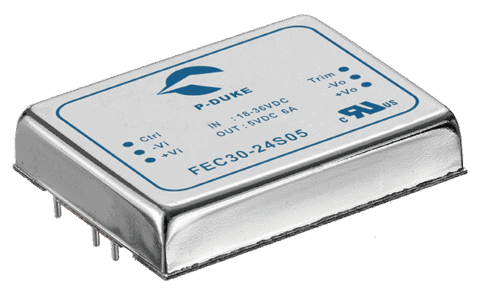
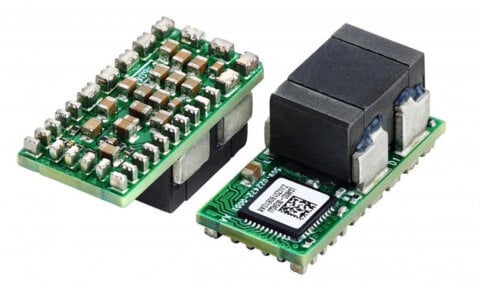
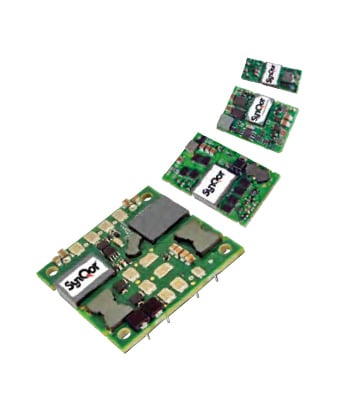
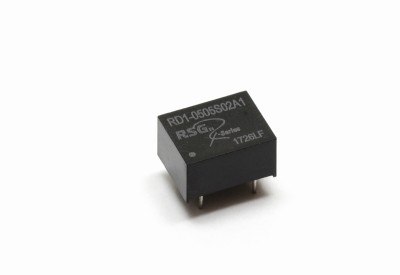
The 4:1 input range DC/DC converter range is a portfolio of active converter series rather than a single product with one fixed electrical specification. It covers rated outputs from 3W to 300W, supporting both low-power control electronics and higher-power distributed DC systems. Available input ranges include options for nominal 24V, 48V and 110V buses, with individual operating windows extending from 8.5VDC to 160VDC depending on the selected series. Single outputs span 3.3VDC to 54VDC, while selected series provide dual outputs from ±5VDC to ±24VDC. Package choices include SIP-8, DIP-24, SMD-24, 1 × 1 inch, 2 × 1 inch, quarter-brick, half-brick and larger board-mounted formats. Engineers should select the required series by considering the full input-voltage envelope, power demand, output configuration, isolation rating, thermal conditions and available PCB area.
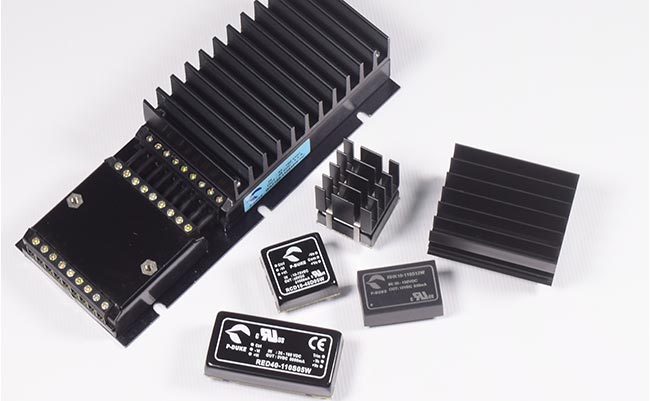
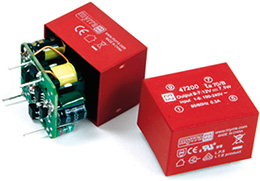
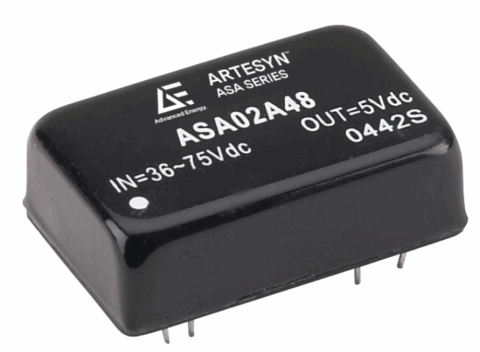
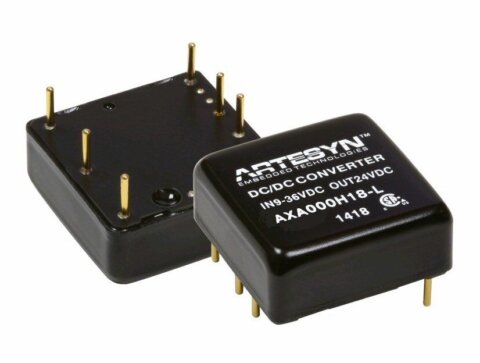
This product range brings together isolated DC/DC converter series with wide 4:1 input windows for demanding distributed-power designs. It spans low-power SIP and DIP modules through quarter-brick, half-brick and larger board-mount formats, allowing selection by bus range, output rail, insulation level and thermal concept rather than by wattage alone. Typical application areas include railway electronics, industrial automation, communications equipment and other systems that must tolerate normal bus variation within nominal 24V, 48V or 110V infrastructures.
Range features
A high level overview of what this range offers
- 4:1 input-voltage ranges – Accommodate the normal variation of a selected DC bus without requiring multiple narrow-range converters.
- 3W to 300W power coverage – Supports auxiliary circuits, control systems, communications equipment and distributed power architectures.
- 24V, 48V and 110V nominal input options – Provides alternatives for several commonly used industrial and railway DC bus classes.
- Single and dual outputs – Allows power-system designers to choose standard single rails or bipolar supply rails.
- 3.3VDC to 54VDC output selection – Covers low-voltage logic, control, communications and intermediate bus requirements.
- Isolation ratings up to 3000VAC or 3000VDC – Provides galvanic separation, subject to the insulation specification of the selected series.
- Multiple board-mount package formats – Supports different power-density, PCB-layout and cooling requirements.
- Series-dependent remote-control and adjustment functions – Available options include remote on/off, output trimming, remote sense and heat-sink configurations.
- Series-specific railway qualification data – Enables standards, EMC, shock, vibration and fire-behaviour requirements to be assessed at part-number level.
- Active series status – All listed converter series are shown as active products.
Downloads
for 4:1 Input Range DC/DC converters
What’s in this range?
All the variants in the range and a comparison of what they offer
| Series | Power (W) | Vin (V) | Vout (VDC) | Isolation | Package | Status |
|---|---|---|---|---|---|---|
RDL03W | 3 | 9-36, 18-75, 43-160 | 3.3, 5, 9, 12, 15, 24, ±5, ±12, ±15 | 3000 VDC | SIP-8 | Active |
RHK03W | 3 | 36-160 | 3.3, 5, 12, 15, 24, ±5, ±12, ±15 | 3000 VAC | DIP-24 | Active |
RDL06W | 6 | 9-36, 18-75, 43-160 | 3.3, 5, 9, 12, 15, 24, ±5, ±12, ±15 | 3000 VDC | SIP-8 | Active |
RHK06W | 6 | 36-160 | 3.3, 5, 12, 15, 24, ±5, ±12, ±15 | 3000 VAC | DIP-24 | Active |
FKC08W | 8 | 9-36, 18-75, 43-160 | 3.3, 5, 12, 15, ±5, ±12, ±15 | 1600 VDC | DIP-24, SMD-24 | Active |
RCD10W | 10 | 9-36, 18-75, 36-160 | 3.3, 5, 12, 15, 24, ±5, ±12, ±15, ±24 | 3000 VDC | 1×1 inch | Active |
RDL10W | 10 | 9-36, 18-75, 40-160 | 3.3, 5, 12, 15, 24, ±5, ±12, ±15 | 3000 VDC | SIP-8 | Active |
RHK10W | 10 | 36-160 | 3.3, 5, 5.1, 12, 15, 24, ±5, ±12, ±15 | 3000 VAC | DIP-24 | Active |
RCD15W | 15 | 9-36, 18-75, 36-160 | 3.3, 5, 12, 15, 24, ±5, ±12, ±15, ±24 | 3000 VDC | 1×1 inch | Active |
RCD20W | 20 | 9-36, 18-75, 36-160 | 3.3, 5, 5.1, 12, 15, 24, ±12, ±15, ±24 | 2250 VDC/ 3000 VDC | 1×1 inch | Active |
URED20W | 20 | 9-36, 18-75, 43-160 | 3.3, 5, 12, 15, ±12, ±15 | 2250 VDC | 4×2.25 inch | Active |
RHM20W | 20 | 36-160 | 5, 5.1, 12, 15, 24, ±5, ±12, ±15 | 3000 VAC | 1.6×1 inch | Active |
RED20W | 20 | 9-36, 18-75, 43-160 | 3.3, 5, 12, 15, ±12, ±15 | 2250 VDC | 2×1 inch | Active |
RCD30W | 30 | 9-36, 18-75, 36-160 | 3.3, 5, 5.1, 12, 15, 24, 54, ±12, ±15, ±24 | 2250 VDC/ 3000 VDC | 1×1 inch | Active |
FED40W | 40 | 9-36, 18-75, 43-160 | 3.3, 5, 12, 15, 24, ±12, ±15, ±24 | 1600 VDC/ 3000 VDC | 2×1 inch | Active |
UFED40W | 40 | 9.5-36, 18-75, 43-160 | 3.3, 5, 12, 15, 24, ±12, ±15, ±24 | 3000 VDC/ 1600 VDC | 4×2.25 inch | Active |
RED40W | 40 | 9-36, 18-75, 36-160 | 3.3, 5, 12, 15, 24, 48, 53, ±12, ±15, ±24 | 3000 VDC | 2×1 inch | Active |
RHD40W | 40 | 36-160 | 5, 5.1, 12, 15, 24, ±12, ±15 | 3000 VAC | 2×1 inch | Active |
LCD50W | 50 | 9-36, 18-75 | 5, 12, 15, 24, ±12, ±15, ±24 | 2250 VDC | 1×1 inch | Active |
RED60W | 60 | 9-36, 18-75, 36-160 | 3.3, 5, 5.1, 12, 15, 24, 48, 53, ±12, ±15, ±24 | 3000 VDC | 2×1 inch | Active |
QBE75W | 75 | 9-36, 18-75, 40-160 | 3.3, 5, 12, 15, 24, 28, 48, 54 | 3000 VAC/ 3000 VDC | 1/4 Brick | Active |
HAE75W | 75 | 9-36, 18-75, 43-160 | 3.3, 5, 12, 15, 24, 28, 48 | 3000 VAC/ 3000 VDC | 1/2 Brick | Active |
QAE100W | 90 | 8.5-36, 16.5-75, 40-160 | 3.3, 5, 12, 15, 24, 30, 48 | 3000 VAC/ 2250 VDC | 1/4 Brick | Active |
FED100W | 100 | 9-36, 18-75 | 5, 12, 15, 24, 28, 48, 54 | 2250 VDC | 2×1 inch | Active |
QBE100W | 100 | 9-36, 18-75, 40-160 | 3.3, 5, 12, 15, 24, 28, 48, 54 | 3000 VAC/ 3000 VDC | 1/4 Brick | Active |
HAE100W | 100 | 8.5-36, 16.5-75, 43-160 | 3.3, 5, 12, 15, 24, 28, 48 | 3000 VAC/ 3000 VDC | 1/2 Brick | Active |
QAE150W | 132 | 8.5-36, 16.5-75, 40-160 | 3.3, 5, 12, 15, 24, 30, 48 | 3000 VAC/ 2250 VDC | 1/4 Brick | Active |
WAF150W/ WAD150W | 150 | 9-36, 18-75, 43-160 | 12, 15, 24, 28, 48 | 3000 VDC/ 2250 VDC | 3.86×2.56 inch | Active |
HAE150W | 182 | 8.5-36, 16.5-75, 43-160 | 3.3, 5, 12, 15, 24, 28, 48 | 3000 VAC/ 3000 VDC | 1/2 Brick | Active |
HAE200W | 240 | 8.5-36, 16.5-75, 43-160 | 3.3, 5, 12, 15, 24, 28, 48 | 3000 VAC/ 3000 VDC | 1/2 Brick | Active |
WAF300W | 300 | 18-75, 43-160 | 12, 15, 24, 28, 48 | 3000 VAC | 6×4 inch | Active |
HAE300W | 300 | 9-36, 18-75, 40-160 | 5, 12, 15, 24, 28, 48, 54 | 3000 VAC/ 3000 VDC | 1/2 Brick | Active |
FAQs
for 4:1 Input Range DC/DC converters
Select the converter from the measured minimum and maximum bus voltages, including normal tolerances, start-up behaviour and expected transients, rather than from the nominal voltage alone. Options for nominal 24V systems begin at 8.5V, 9V or 9.5V and extend to 36V, while nominal 48V versions typically cover 16.5V or 18V to 75V. Higher-voltage versions begin at 36V, 40V or 43V and extend to 160V. The exact limits differ between series, so two converters with the same nominal input designation are not necessarily interchangeable. A 4:1 input range normally covers one broad bus class; it should not be assumed that a single part will span 24V, 48V and 110V systems.
The required output power should be calculated from the continuous load, peak demand, conversion losses and a suitable design margin. Compact SIP-8 and DIP-24 products cover the lower-power portion of the range, while 1 × 1 inch and 2 × 1 inch modules extend through medium-power applications. Quarter-brick options provide ratings from 75W to 132W, and half-brick versions extend from 75W to 300W. Larger 4 × 2.25 inch, 3.86 × 2.56 inch and 6 × 4 inch formats are also available for particular series. Package selection must therefore consider pin compatibility, PCB area, heat removal, mechanical retention and airflow as well as the headline wattage.
No, a 3000VAC isolation rating should not be treated as identical to a 3000VDC test rating. The range includes series rated at 1600VDC, 2250VDC, 3000VDC and 3000VAC, with some products offering different ratings according to input version or insulation configuration. The relevant test duration, insulation category, input-to-output barrier and case or baseplate separation must be checked for the exact part number. A higher numerical value does not by itself establish suitability for reinforced insulation or a particular system standard. Engineers should coordinate the selected converter with creepage, clearance, earthing, accessible-circuit and dielectric-test requirements at equipment level.
Single-output versions are appropriate when the load requires one regulated rail, with available nominal voltages ranging from 3.3VDC to 54VDC across the portfolio. Dual-output models provide bipolar rails such as ±5VDC, ±12VDC, ±15VDC or ±24VDC and can suit analogue interfaces, amplifiers and isolated measurement circuits. The available dual-output voltages narrow as power rating increases, so the required combination must be checked before choosing a series. Designers should also examine cross-regulation because an unequal load between positive and negative rails can move one output away from its nominal value. If the loads are strongly unbalanced, separate single-output converters or post-regulation may provide a more predictable result.
Full rated power is only available within the thermal conditions defined for the selected model and installation. Part-level limits include operating case or baseplate temperatures around −40°C to +100°C or +105°C, while selected low-temperature options extend operation to −55°C. Higher-power brick modules may depend on baseplate conduction, airflow or an optional heat sink to remain below the maximum case temperature. For example, a 75W quarter-brick configuration lists different thermal impedances for a bare module, an iron mounting plate and several heat-sink heights. The final design should be verified against the relevant derating curve using the actual input voltage, output load, airflow, PCB orientation and measured case temperature.
Control functions vary considerably between the individual series, so they should be treated as selection parameters rather than universal range features. Available functions include remote on/off, positive or negative control logic, output-voltage adjustment, remote sense, overvoltage protection, overload protection and continuous short-circuit recovery. One 75W quarter-brick series, for example, permits trimming from 20% below to 10% above nominal output and provides remote-sense compensation of up to 10% of nominal output. Other series use different adjustment windows or omit remote sense entirely. The interface thresholds, permitted control-pin voltage and behaviour during a fault must be reviewed before connecting the converter to supervisory or sequencing circuitry.
No, qualification and approval status must be confirmed for the exact series, input version and ordered option. Detailed documentation for several series identifies standards such as EN 50155, EN 45545-2 and EN 50121-3-2, but some newer product documents label particular approvals as pending. EMC performance may also depend on specified external capacitors, suppression devices, filters, shielding or baseplate grounding. Several converter series are not internally fused and therefore require an external input fuse selected for the model and bus voltage. Equipment approval should consequently be based on the complete installed circuit, including protection, filtering, PCB layout, cooling and mechanical mounting, rather than on the range classification alone.