Picosecond Fibre Lasers
- Technology
- Fibre lasers
- Partner
- CNI
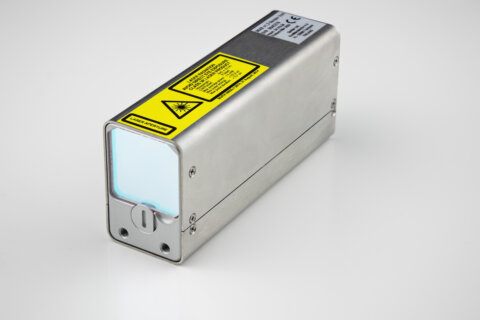
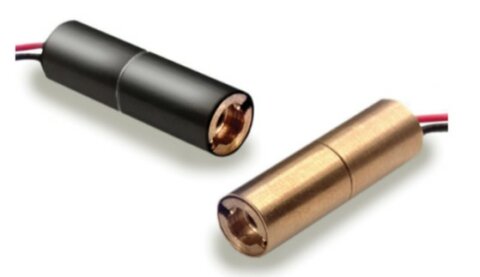
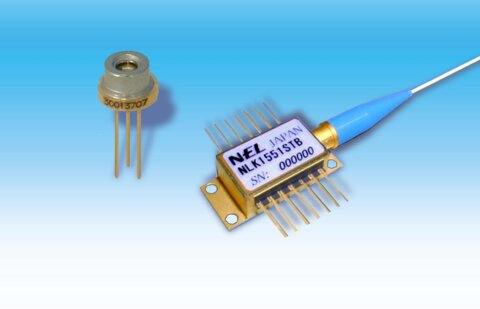
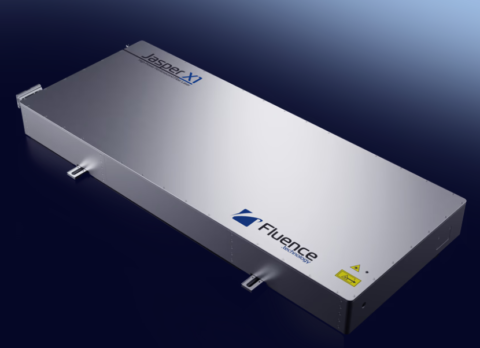
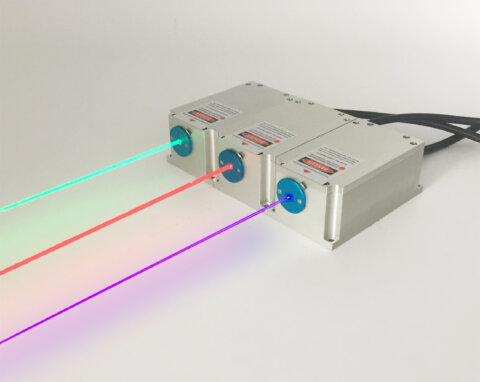
The FL-PS and FL-Pico series combines driver-integrated, all-fibre pulsed laser heads for laboratory experiments, instrument integration and precision processing systems. Discrete wavelengths cover ultraviolet, visible and near-infrared bands from 266 to 1550 nm. Seed versions at 1030 and 1064 nm provide 0.5–1 mW outputs for systems requiring a mode-locked input signal. FL-PS models operate with pulse durations below 10 ps and a fixed repetition rate selected within 20–50 or 20–60 MHz, depending on wavelength. FL-Pico models provide longer 50–900 ps or 100–900 ps pulses and repetition rates from 100 kHz to 20 MHz.
Average output powers extend to 5 W on selected near-infrared configurations, while the FL-SC-OEM option provides supercontinuum output from 470 to 2400 nm. The available operating ranges let engineers balance pulse energy, processing speed and thermal interaction for precision marking, drilling, etching, TCSPC, biological imaging, LiDAR, semiconductor processing, microelectronics and scientific research.
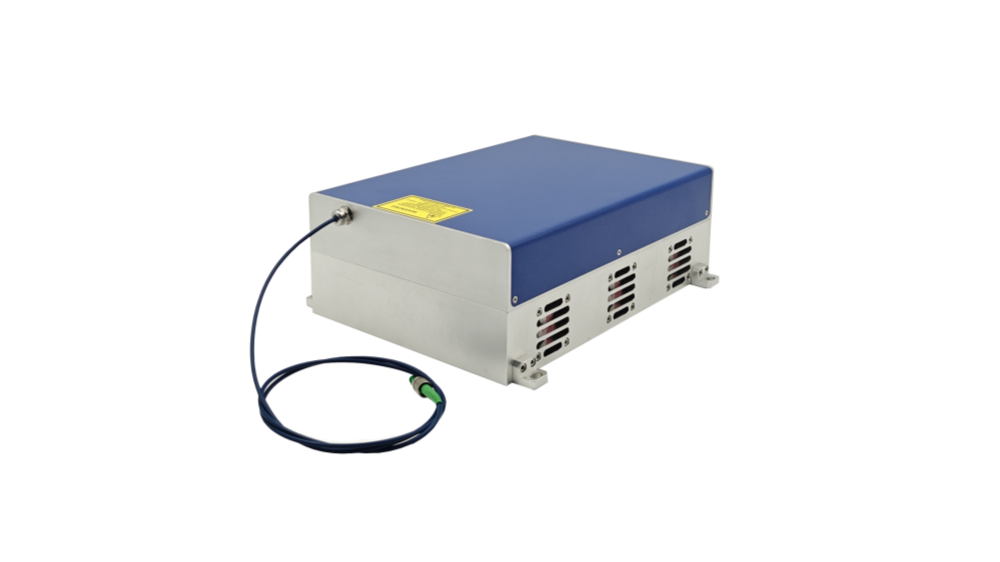
Range features
A high level overview of what this range offers
- Pulse durations below 10 ps: Can help limit heat spread during precision material processing.
- 50–900 ps and 100–900 ps Pico configurations: Provide a broader pulse-duration window for process development.
- Repetition rates from 100 kHz to 60 MHz: Support both higher pulse-energy and high-pulse-count operating strategies.
- Wavelengths from 266 to 1550 nm: Allow the output to be matched to material absorption, detector response and optical-system requirements.
- Average output powers up to 5 W: Cover low-power research work and higher-power near-infrared processing applications.
- FC/APC and optional collimated outputs: Can simplify integration into fibre-based or free-space optical assemblies.
- Selectable polarisation configurations: Support systems requiring random or linearly polarised output.
- Air- and water-cooling options: Provide different routes for laboratory and equipment-level thermal integration.
- Multiple RMS power-stability grades: Allow the required stability level to be specified for measurement or processing tasks.
- FL-SC-OEM supercontinuum option: Extends spectral coverage from 470 to 2400 nm for spectroscopy and fibre characterisation.
Downloads
for Picosecond Fibre Lasers
What’s in this range?
All the variants in the range and a comparison of what they offer
Core specification table
| Parameter | Range or configuration |
|---|---|
Product families | FL-PS-Seed, FL-PS, FL-Pico and FL-SC-OEM |
Laser architecture | Passively mode-locked all-fibre laser for PS and seed models; pulsed all-fibre laser for Pico models |
Discrete wavelengths | 266, 343, 355, 515, 532, 535, 540, 775, 1030, 1064, 1070, 1080 and 1550 nm |
Supercontinuum wavelength range | 470–2400 nm |
Seed output power | 0.5–1 mW |
FL-PS average output power | 1 mW–2 W, depending on wavelength |
FL-Pico average output power | 1 mW–5 W, depending on wavelength and power class |
FL-SC-OEM average output power | 1–1000 mW |
FL-PS pulse duration | <10 ps; 5–30 ps custom options available |
FL-Pico pulse duration | 50–900 ps at 266 nm; 100–900 ps for the other listed Pico wavelengths |
FL-PS repetition rate | Fixed value within 20–50 or 20–60 MHz; typical frequency accuracy ±1 MHz |
FL-Pico repetition rate | 100 kHz–20 MHz; selected higher-power visible models are limited to 100 kHz–1 MHz |
FL-SC-OEM repetition rate | 50 kHz–4 MHz, depending on version |
Power adjustment | 10–100% on selected FL-Pico configurations |
RMS power stability | Available limits from <0.5% to <5%, depending on wavelength, output level and configuration |
Beam quality | M² limits from <1.1 to <2, depending on model and power class |
Polarisation | Random or >15 dB for near-infrared models; >15 dB horizontal for converted wavelengths, with vertical available on selected variants |
Fibre output | FC/APC on selected near-infrared models; collimator optional |
Standard fibre length | 1 m on selected near-infrared models; other lengths available |
Fibre jacket | PVC; metal jacket optional on selected models |
Collimated beam diameter | 4 ±1 mm on selected FL-Pico near-infrared configurations |
Beam height | 30 mm for selected visible models; 40 mm for selected ultraviolet models |
Warm-up time | <15 minutes |
Cooling | Air-cooled variants across the range; water cooling available for selected configurations |
Operating temperature | 15–35 °C |
DC supply | 12 V DC at 11.5 A for most configurations; 24 V DC for FL-1070-Pico |
AC supply option | External 100–240 V AC supply available for many configurations |
Expected operating life |
|
Variant and range comparison
| Model | Wavelength | Output power | Pulse duration | Repetition rate | Polarisation |
|---|---|---|---|---|---|
FL-1030-PS-Seed | 1030 nm | 0.5–1 mW | <10 ps | 20–50 MHz | Random or >15 dB |
FL-1064-PS-Seed | 1064 nm | 0.5–1 mW | <10 ps | 20–60 MHz | Random or >15 dB |
FL-266-PS | 266 nm | 1–10 mW | <10 ps | 20–50 MHz |
|
FL-343-PS | 343 nm | 1–50 mW | <10 ps | 20–50 MHz |
|
FL-355-PS | 355 nm | 1–50 mW | <10 ps | 20–50 MHz |
|
FL-515-PS | 515 nm | 1–200 mW | <10 ps | 20–50 MHz |
|
FL-532-PS | 532 nm | 1–150 mW | <10 ps | 20–60 MHz |
|
FL-1030-PS | 1030 nm | 1–2000 mW | <10 ps | 20–50 MHz | Random or >15 dB |
FL-1064-PS | 1064 nm | 1–2000 mW | <10 ps | 20–60 MHz | Random or >15 dB |
FL-1550-PS | 1550 nm | 1–2000 mW | <10 ps | 20–60 MHz | Random or >15 dB |
FL-266-Pico | 266 nm | 1–50 mW | 50–900 ps | 0.1–20 MHz |
|
FL-343-Pico | 343 nm | 1–50 mW | 100–900 ps | 0.1–20 MHz |
|
FL-355-Pico | 355 nm | 1–50 mW | 100–900 ps | 0.1–20 MHz |
|
FL-515-Pico | 515 nm | 1–1000 mW | 100–900 ps | 0.1–20 MHz |
|
FL-532-Pico | 532 nm | 1–1000 mW | 100–900 ps | 0.1–20 MHz |
|
FL-535-Pico | 535 nm | 1–1000 mW | 100–900 ps | 0.1–20 MHz |
|
FL-540-Pico | 540 nm | 1–1000 mW | 100–900 ps | 0.1–20 MHz |
|
FL-775-Pico | 775 nm | 50–200 mW | 100–900 ps | 0.1–20 MHz |
|
FL-1030-Pico | 1030 nm | 10–5000 mW | 100–900 ps | 0.1–20 MHz | Random or >15 dB |
FL-1064-Pico | 1064 nm | 10–5000 mW | 100–900 ps | 0.1–20 MHz | Random or >15 dB |
FL-1070-Pico | 1070 nm | 10–5000 mW | 100–900 ps | 0.1–20 MHz | Random or >15 dB |
FL-1080-Pico | 1080 nm | 10–5000 mW | 100–900 ps | 0.1–20 MHz | Random or >15 dB |
FL-1550-Pico | 1550 nm | 100–1000 mW | 100–900 ps | 0.1–20 MHz | Random or >15 dB |
FL-SC-OEM | 470–2400 nm | 1–1000 mW | Approximately 350 ps; nanosecond options by version | 50 kHz–4 MHz | Random |
For the FL-PS and FL-PS-Seed families, one fixed repetition rate is normally selected within the stated band. FL-Pico repetition-rate and pulse-duration adjustment depend on the selected wavelength, output level and control configuration.
FAQs
for Picosecond Fibre Lasers
The choice is driven by the required interaction time, pulse energy and pulse cadence. FL-PS and seed models provide pulses below 10 ps at a fixed repetition rate selected within 20–50 or 20–60 MHz, making them suitable when a short pulse duration and high pulse count are central to the process. FL-Pico models provide 50–900 ps pulses at 266 nm and 100–900 ps pulses at most other wavelengths, with repetition rates from 100 kHz to 20 MHz. The longer pulse window gives more freedom to balance pulse energy, throughput and process stability. Engineers should define the acceptable thermal loading and required pulse energy before choosing the family rather than selecting on average power alone.
Wavelength selection should start with the absorption characteristics of the target material or sample, followed by detector response and optical-component compatibility. The 266, 343 and 355 nm variants cover ultraviolet applications, while 515–540 nm models provide visible green output for imaging, TCSPC and selected processing tasks. The 775 nm model addresses near-infrared requirements, and the 1030–1080 nm group provides output powers up to 5 W for LiDAR and precision processing. A 1550 nm option is available where that detection band or system architecture is required. The complete optical path, including coatings, beam delivery and safety measures, must be specified for the chosen wavelength.
Average power alone does not define how strongly each pulse interacts with the workpiece or sample. Pulse energy is calculated by dividing average power by repetition rate, while approximate peak power is obtained by dividing pulse energy by pulse duration. Lower repetition rates can therefore provide more energy per pulse at the same average power, but the available output may vary with frequency and peak-power class. Several ultraviolet and visible variants define output power at a particular measurement frequency, such as 1 or 5 MHz. Process trials should consequently use the intended repetition rate, pulse duration and power together rather than treating them as independent maximum values.
Selected 1030, 1064 and 1550 nm configurations use an FC/APC fibre connection with a standard 1 m fibre, while a collimated output can be specified for free-space integration. A 4 ±1 mm collimated beam is available on selected FL-Pico near-infrared models, and PVC or optional metal fibre jackets can be chosen where listed. Converted ultraviolet and visible configurations use separate harmonic sections and commonly specify 30 or 40 mm beam heights. Beam-quality limits range from M² <1.1 to <2 according to wavelength and power class. Polarisation must also be defined because near-infrared models can be random or >15 dB, while converted wavelengths normally use >15 dB horizontal output with vertical polarisation available on selected variants.
Plan thermal and electrical integration around the chosen wavelength and power class. Most variants operate over 15–35 °C and use air cooling, while water cooling is available within the wider series; the enclosure therefore needs clear airflow or the specified liquid-cooling provision. Most configurations use 12 V DC at 11.5 A, FL-1070-Pico is rated for 24 V DC, and many models can be paired with an optional 100–240 V AC supply. Warm-up time is below 15 minutes, so performance checks should be made after thermal stabilisation. In practice, reserve electrical headroom, manage exhaust heat and confirm the exact cooling interface before finalising the equipment cabinet.
Power stability should be selected as a guaranteed configuration parameter rather than inferred from the model family alone. Available RMS limits range from below 0.5% to below 5%, with the achievable grade depending on wavelength, power level and laser configuration. Stability is generally defined over four hours, with many variants using an ambient condition of ±3 °C. This makes environmental control, warm-up and mechanical isolation relevant to achieving repeatable results after installation. Engineers should place the required stability grade, measurement duration, operating power and ambient-temperature limits in the procurement specification so that the supplied configuration can be assessed against the actual application conditions.
Define the wavelength, average power, pulse duration, repetition rate, output interface and polarisation before selecting a final part number. FL-PS models normally use one fixed repetition rate within the stated MHz band, with typical accuracy of ±1 MHz, while FL-Pico models may support fixed or variable operation depending on the version. Selected PS and seed models can be configured for 5–30 ps pulses, and the 266 nm Pico model can be supplied below 50 ps as a custom option. Fibre length, fibre jacket, collimated output, vertical polarisation and control interfaces are also configurable on selected models. Recording the full operating point prevents a nominally compatible laser from being supplied with an unsuitable frequency, beam format or control arrangement.