Nanosecond Fibre Lasers
- Technology
- Fibre lasers
- Partner
- CNI
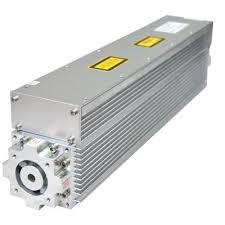
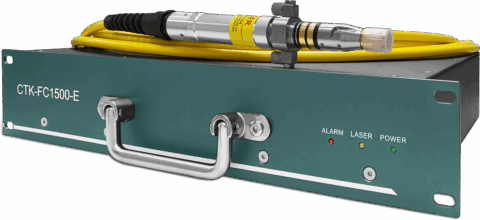
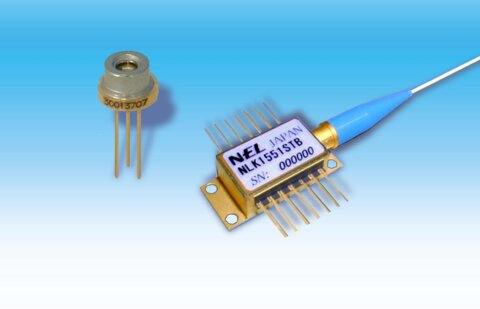
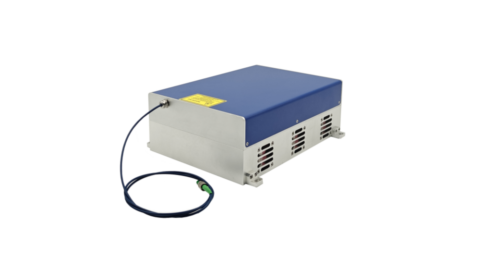
This nanosecond fibre laser range brings together pulsed sources for UV, green and near-infrared applications. Engineers can select nominal wavelengths from 266 to 1550 nm to match material absorption, detector response and the surrounding optical system. FL-Nano models cover average output powers from milliwatt levels to 30 W, with repetition rates extending to 1 MHz. FL-S variants provide adjustable 5 to 100 ns pulses and repetition rates reaching 10 MHz for applications requiring a wider timing range at lower stated output levels.
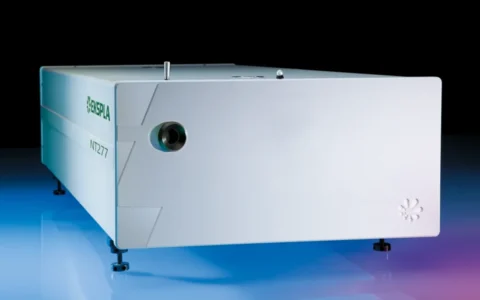
FL-AO models specify their output by pulse energy, with options from 10 to 100 nJ or nominally 1 to 20 µJ. Fixed and adjustable pulse-width configurations are available, depending on the wavelength and model. Compact OEM arrangements and selected laboratory or industrial enclosures support integration into processing equipment, optical instruments and experimental systems.
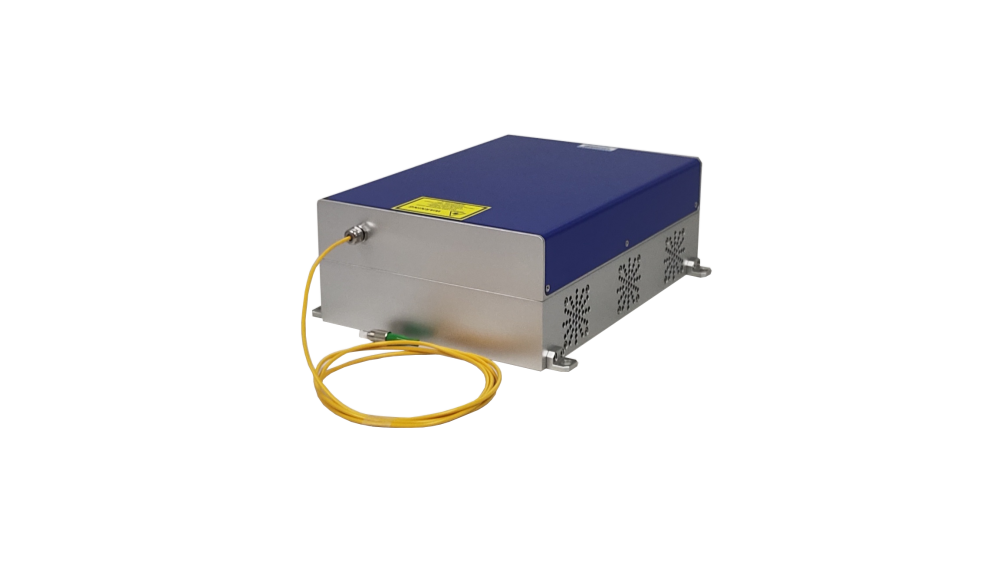
The range includes three complementary series selected according to the parameter that governs the application. FL-Nano models are specified primarily by average output power, FL-S models by stated peak power and a broad repetition-rate range, and FL-AO models by single-pulse energy. Available wavelengths span UV, green and near-infrared regions, while OEM, laboratory and industrial arrangements support integration into equipment or use in experimental systems.
Range features
A high level overview of what this range offers
- 266 to 1550 nm wavelength options – Support UV, green and near-infrared optical configurations.
- 0.5 to 250 ns pulse-width range – Allows pulse duration to be matched to the required light–material interaction.
- Fixed or adjustable pulse timing – Provides repeatable set points or process tuning, depending on the selected model.
- Repetition rates from 1 Hz to 10 MHz – Cover low-frequency energy delivery and high-frequency pulse trains.
- Average output power up to 30 W – Provides higher-power options for processing and system integration.
- Energy-based AO configurations – Support applications where the required energy per pulse is the main selection parameter.
- Compact OEM modules – Facilitate installation in instruments and integrated laser systems.
- Air, conduction and listed water-cooling options – Allow thermal management to be matched to the configuration.
- RS-232, touchscreen or adjustment-knob control options – Support remote integration or local operation on selected variants.
- Short nanosecond pulses – Can reduce heat diffusion during processing when wavelength, spot size, pulse energy and scan parameters are correctly controlled.
Downloads
for Nanosecond Fibre Lasers
What’s in this range?
All the variants in the range and a comparison of what they offer
Range specifications
| Specification | Value |
|---|---|
Laser technology | All-fibre pulsed laser |
Operating mode | Pulsed |
Nominal wavelength options | 266, 343, 355, 515, 532, 540, 1030, 1064, 1080 and 1550 nm |
Wavelength tolerance | Typically ±1 nm |
Overall pulse-duration range | 0.5 to 250 ns, model-dependent |
Overall repetition-rate range | 1 Hz to 10 MHz, model-dependent |
Nano-series average output power | 1 mW to 30 W across the range |
S-series stated output | 1 µW to 500 mW for 1030 and 1064 nm; 1 µW to 10 mW for 1550 nm |
AO-series single-pulse energy | 10 to 100 nJ at 532 nm; nominally 1 to 20 µJ at 1064 and 1550 nm |
Beam quality | M² <1.1 to <2, depending on model |
Power stability | <1%, <2%, <3% or <5% RMS, depending on model and option |
AO energy stability | <2% or <3% RMS |
Polarisation | Random or >15 dB; horizontal with vertical optional on selected models |
Beam delivery | FC/APC or collimator options on specified models |
Collimated beam diameter | Typically 4 ±1 mm; 6 ±1 mm on the higher-power FL-1064-Nano configuration |
Fibre or delivery length | 0.6, 1 or 4 m depending on model; alternative lengths available for selected configurations |
Fibre jacket | PVC, with metal jacket optional on specified models |
Cooling | Air cooling, conduction cooling or listed water-cooling options, depending on configuration |
Operating temperature | 15 to 35 °C |
Warm-up time | <5 or <15 minutes, depending on series |
Electrical options | 12 VDC/11.5 A, 24 VDC/21 A or 110/220 VAC; optional 100–240 VAC supply on selected models |
Control options | RS-232, touchscreen or adjustment knob on selected OEM, laboratory and industrial variants |
Expected lifetime | 10,000 or >10,000 hours, depending on model |
Model and variant comparison
| Model | Wavelength | Output rating | Pulse width | Repetition rate | Beam specification | Polarisation |
|---|---|---|---|---|---|---|
FL-266-Nano | 266 ±1 nm | 1–50 mW average power | 0.5–50 ns | 100 kHz–1 MHz | Multi-mode; M² <1.8 |
|
FL-343-Nano | 343 ±1 nm | 10–300 mW average power | 0.5–50 ns | 0.1–1 MHz | Multi-mode; M² <2 |
|
FL-355-Nano | 355 ±1 nm | 10–300 mW average power | 0.5–50 ns | 100 kHz–1 MHz | Multi-mode; M² <2 |
|
FL-515-Nano | 515 ±1 nm | 1–1000 mW average power | 0.5–50 ns | 100 kHz–1 MHz | Multi-mode; M² <1.8 |
|
FL-532-Nano-I | 532 ±1 nm | 1–1000 mW average power | 0.5–50 ns | 100 kHz–1 MHz | Multi-mode; M² <1.8 |
|
FL-532-Nano-II | 532 ±1 nm | 1–20 W average power | 4, 8, 14, 20 or 30 ns | 20 kHz–1 MHz | Multi-mode; M² <1.3 |
|
FL-540-Nano | 540 ±1 nm | 1–1000 mW average power | 0.5–50 ns | 100 kHz–1 MHz | Multi-mode; M² <1.8 |
|
FL-1030-Nano | 1030 ±1 nm | 0.5–10 W average power | 0.5–250 ns adjustable | 100 kHz–1 MHz adjustable | M² <1.8 | Random or >15 dB |
FL-1064-Nano-I | 1064 ±1 nm | 0.5–10 W average power | 0.5–250 ns | 100 kHz–1 MHz adjustable | M² <1.8 | Random or >15 dB |
FL-1064-Nano-II | 1064 ±1 nm | 10–30 W average power | 4, 8, 14, 20 or 30 ns | 20 kHz–1 MHz | M² <1.3 | Random or >15 dB |
FL-1080-Nano | 1080 ±1 nm | 0.5–10 W average power | 0.5–250 ns adjustable | 100 kHz–1 MHz adjustable | M² <1.8 | Random or >15 dB |
FL-1550-Nano | 1550 ±1 nm | 50 mW–1 W average power | 0.5–50 ns adjustable | 50 kHz–1 MHz | TEM00; M² <1.5 | Random or >15 dB |
FL-1030-S | 1030 ±1 nm | 1 µW–500 mW stated peak power | 5–100 ns adjustable | 1 Hz–100 kHz or 1 Hz–10 MHz | M² <1.2 | Random or >15 dB |
FL-1064-S | 1064 ±1 nm | 1 µW–500 mW stated peak power | 5–100 ns adjustable | 1 Hz–100 kHz or 1 Hz–10 MHz | M² <1.2 | Random or >15 dB |
FL-1550-S | 1550 ±1 nm | 1 µW–10 mW fixed stated peak power | 5–100 ns adjustable | 1 Hz–100 kHz or 1 Hz–10 MHz | M² <1.2 | Random or >15 dB |
FL-532-AO | 532 ±1 nm | 10–100 nJ single-pulse energy | 0.5–50 ns | 1–1000 Hz adjustable | TEM00; M² <1.2 |
|
FL-1064-AO | 1064 ±1 nm | Nominally 1–20 µJ single-pulse energy | 0.5–50 ns | Listed inconsistently as 1–1000 Hz and 1–1000 kHz; confirmation required | TEM00; M² <1.1 | Random or >15 dB |
FL-1550-AO | 1550 ±1 nm | Nominally 1–20 µJ single-pulse energy | 0.5–50 ns | 1–200 Hz adjustable | TEM00; M² <1.1 | Random or >15 dB |
FAQs
for Nanosecond Fibre Lasers
The wavelength should be chosen around the target material’s absorption, the response of the detector and the compatibility of the complete optical path. The range covers 266, 343 and 355 nm in the UV; 515, 532 and 540 nm in the green region; and 1030, 1064, 1080 and 1550 nm in the near-infrared. UV wavelengths can support fine-feature processing where shorter wavelengths and potentially smaller focused spots are useful, while 1030 to 1080 nm models suit many processing, imaging and LiDAR arrangements. The 1550 nm models are intended for applications including ranging, fibre sensing and optical instrumentation. Wavelength should be fixed before finalising power, coatings, scanners, detectors and laser-safety components.
FL-Nano models are the main choice when average output power and nanosecond timing flexibility are the primary selection criteria. They cover 0.5 to 250 ns pulses, repetition rates generally reaching 1 MHz and average powers up to 30 W. FL-S models use stated peak-power ratings, provide adjustable 5 to 100 ns pulses and extend the repetition-rate range from 1 Hz to 10 MHz. FL-AO models are specified by energy per pulse, with 10 to 100 nJ at 532 nm and nominal 1 to 20 µJ options at 1064 and 1550 nm. The appropriate series therefore depends on whether the design is governed mainly by average power, timing range or pulse energy.
They can support processing where reduced heat diffusion is required, but pulse duration alone does not determine the thermal result. The range provides pulse widths from 0.5 to 250 ns, while available average power extends from milliwatt levels to 30 W. At a fixed average power, reducing repetition rate raises the energy delivered by each pulse, while shortening pulse width raises the approximate peak power for the same pulse energy. Material absorption, focal spot, scanning speed, overlap and heat removal must therefore be considered together. Process trials should be completed using representative materials before defining a production window or claiming cold-processing behaviour.
Many of the 1030, 1064, 1080 and 1550 nm models provide an FC/APC connector or an optional collimated output. A nominal 4 ±1 mm collimated beam is specified for several models, while the higher-power FL-1064-Nano configuration uses a 6 ±1 mm output. Typical fibre lengths are 0.6, 1 or 4 m, depending on the selected version, with PVC jackets and optional metal jackets available for specified configurations. UV and green harmonic models use integrated conversion arrangements and should be treated as complete optical assemblies. Integration planning should also address bend radius, connector cleanliness, back-reflection, beam alignment and the mechanical protection of the delivery path.
Thermal and electrical requirements vary considerably between models, so they should be defined at configuration level rather than for the range as a whole. The specified operating temperature is generally 15 to 35 °C, with air cooling used by many Nano and AO models and conduction cooling used by the compact S series. Water cooling is listed as a range option, although its model allocation is not defined. Electrical versions include 12 VDC/11.5 A, 24 VDC/21 A and 110/220 VAC, with optional 100–240 VAC supplies on selected models. OEM, laboratory and industrial variants may use RS-232, touchscreen or adjustment-knob control, so the enclosure and interface must be selected alongside the optical rating.
Stability depends on the wavelength, output class and selected option. Nano models generally specify RMS power-stability options between <2% and <5%, commonly measured over four hours with an ambient variation of ±3 °C. The S-series options extend to <1% RMS, while AO models state energy-stability options of <2% or <3% RMS. Warm-up time is typically under 15 minutes for Nano and AO configurations and under five minutes for the S series. These figures describe the laser source rather than the complete optical system, so additional drift from mounts, conversion stages, scanners and ambient temperature should be included in the system error budget.
Both fixed and adjustable configurations are available, and the exact behaviour depends on the model. Several UV and green Nano models can be ordered with one fixed pulse width between 0.5 and 50 ns, while adjustable ranges of 0.5 to 5 ns or 5 to 50 ns are also offered. Their repetition rate may similarly be supplied as a fixed value within 0.1 to 1 MHz or as an adjustable range. The 1030 and 1080 nm Nano models cover adjustable pulse widths up to 250 ns, while selected higher-power 532 and 1064 nm versions use defined widths of 4, 8, 14, 20 or 30 ns. The required fixed points and adjustment ranges should be written into the purchase specification.
The exact model suffix, wavelength, output class, pulse width, repetition rate, polarisation, beam delivery, cooling method and control interface should all be confirmed. The FL-1064-AO repetition rate is listed inconsistently as 1–1000 Hz and 1–1000 kHz, so the correct unit and adjustment range require written confirmation. The 1064 and 1550 nm AO configurations also combine a nominal 1–20 µJ range designation with configuration entries of >2 and >20 µJ, making the required pulse-energy class important to document. For UV and green harmonic models, confirm whether pulse width and repetition rate will be fixed at order or user-adjustable. Final acceptance criteria should also cover supply voltage, interlocks, connector type, fibre length and output-beam parameters.