Diode-pumped solid-state (DPSS) laser systems
- Technology
- DPSS lasers
- Partner
- Cutting Edge Optronics (CEO)
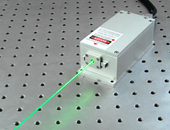
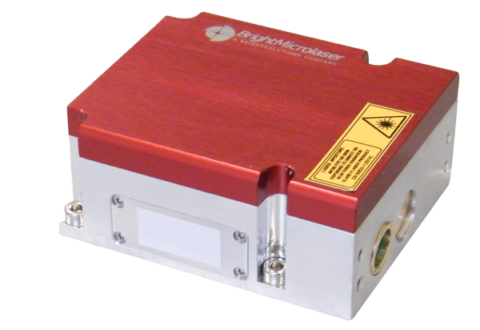
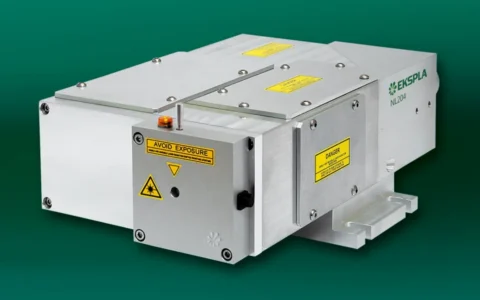
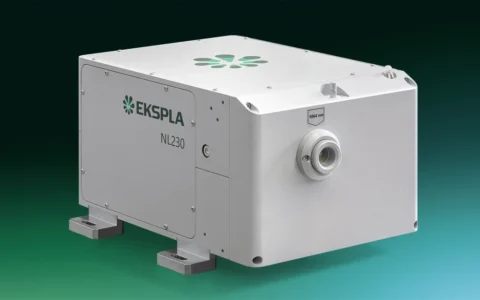
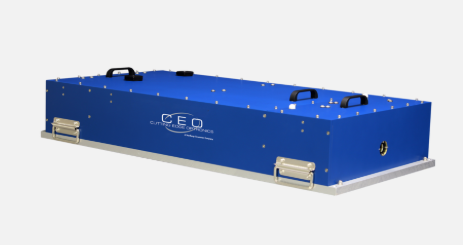
This range brings together several water-cooled DPSS laser platforms rather than representing one fixed product configuration. It includes Gigashot HE high-energy systems, Patara dual-oscillator PIV lasers, Gigashot L models for LIDAR and the enclosed IKLWA green laser. Nd:YAG and Nd:YLF gain media support different combinations of wavelength, pulse energy, average power and repetition rate. Listed outputs cover ultraviolet, green and infrared wavelengths at 355, 527, 532, 1053 and 1064 nm.
Applications include particle image velocimetry, airborne or remote LIDAR, ultrafast amplifier pumping, diamond processing, laser peening, cleaning, LCD repair and micromachining. Model selection should account for beam profile, pulse stability, timing control, electrical supply and cooling capacity. Relevant platforms can support optional injection seeding, customised oscillator-amplifier arrangements or independently triggered twin oscillators.
Range features
A high level overview of what this range offers
- Diode-pumped Nd:YAG and Nd:YLF architectures: Provide wavelength, pulse-energy and average-power options for different processes.
- 355 to 1064 nm output choices: Support ultraviolet, visible-green and infrared optical systems.
- Single-shot to 50 kHz operation: Covers high-energy experiments and higher-rate imaging or processing tasks.
- MOPA configurations: Produce amplified nanosecond output, including flat-top beam options on Gigashot systems.
- Independent dual oscillators: Allow adjustable pulse-pair timing for particle image velocimetry.
- Specified pulse stability: Supports repeatable illumination, measurement and material interaction.
- TEM00, multimode and flat-top outputs: Allow the beam format to be selected around the application.
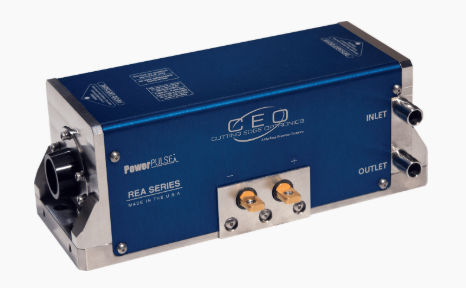
- Water-cooled laser heads: Provide thermal management for high-energy and high-average-power operation.
- Remote and external control options: Support integration with timing equipment and supervisory controls on relevant platforms.
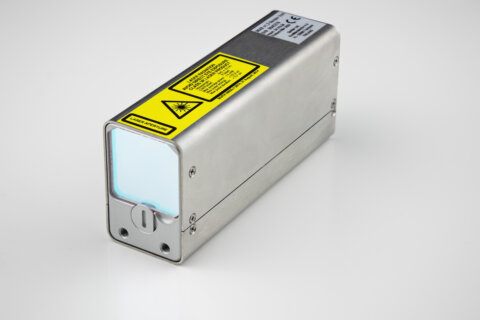
- Enclosed IKLWA laser head: Reduces the need for routine access to internal optical components during normal installation.
What’s in this range?
All the variants in the range and a comparison of what they offer
DPSS laser systems range specifications
| Parameter | Range or options |
|---|---|
Technology | Water-cooled diode-pumped solid-state laser systems |
Gain media | Nd:YAG and Nd:YLF |
Listed wavelengths | 355, 527, 532, 1053 and 1064 nm |
Pulse energy | 1.8 mJ to 10 J across featured configurations |
Average or rated output power | 12 to 200 W across featured model summaries; Patara figures are per oscillator |
Repetition rate | Single shot to 50 kHz across documented variants |
Pulse-width limits | From < 10 ns to < 150 ns, depending on model |
Beam formats | TEM00, multimode and near-field flat top |
Beam-quality options | M² < 1.3 to M² < 25 where specified |
Pulse-to-pulse stability | < 0.5% to < 1.5% rms, depending on model |
Eight-hour output stability | < 1% to < 3% rms, depending on model |
Operating temperature | 18 to 30 °C, non-condensing |
Cooling | Water cooling; selected systems include a rack-mounted chiller |
Electrical options | 85–264 VAC; 190–250 VAC; or 120/220 VAC three-phase at 30 A, depending on platform |
Laser safety classification | Class IV |
Featured configuration comparison
| Specification | GS-10000-QMI | PA-050-QMGF-PIV | GSL-012-QTU | IK-016-QTG |
|---|---|---|---|---|
Laser type | DPSS Nd:YLF | DPSS Nd:YLF | DPSS Nd:YAG | DPSS Nd:YAG |
Architecture | MOPA | Dual oscillator | MOPA | Q-switched TEM00 oscillator |
Wavelength | 1053 nm | 527 nm | 355 nm | 532 nm |
Rated power | 200 W | 50 W per oscillator | 12 W | 16 W |
Pulse energy | 10 J | 50 mJ per oscillator |
| 1.8 mJ |
Specified repetition rate | 20 Hz | 1 kHz | 100 Hz | 9 kHz |
Pulse width, FWHM | < 25 ns | < 150 ns | < 10 ns | < 80 ns |
Pulse-to-pulse stability | < 0.5% rms | < 0.5% rms | < 1.5% rms | < 1.5% rms |
Eight-hour output stability | < 1% rms | < 1% rms | < 2% rms | < 3% rms |
Polarisation | Horizontal | Circular | Linear | Horizontal |
Operating temperature | 18–30 °C | 18–30 °C | 18–30 °C | 18–30 °C |
Cooling | Water cooled | Water cooled | Rack-mounted chiller | Water cooled |
Gigashot HE variant comparison
| Specification | GS-10000-QMI | GS-5000-QMG |
|---|---|---|
Laser type | DPSS Nd:YLF | DPSS Nd:YLF |
Wavelength | 1053 nm | 527 nm |
Repetition rate | 20 Hz | 20 Hz |
Pulse energy | 10 J | 5 J |
Spatial mode | Flat top | Flat top |
Beam diameter at output window | 22 mm | 22 mm |
Pulse width, FWHM | < 25 ns | < 25 ns |
Pulse-to-pulse energy stability | < 0.5% rms | < 0.5% rms |
Jitter relative to Q-switch trigger | < 1.0 ns rms | < 1.0 ns rms |
Eight-hour output stability | < 1% rms | < 1% rms |
Polarisation | Horizontal | Vertical |
Electrical input at 50/60 Hz | 85–264 VAC | 85–264 VAC |
Operating temperature | 18–30 °C | 18–30 °C |
Laser dimensions | 77.63 × 48.00 × 13.27 in | 77.63 × 48.00 × 13.27 in |
The flat-top spatial-mode specification applies at the image relay plane.
Patara dual-oscillator PIV variant comparison
| Specification | PA-100-QMG-PIV | PA-200-QMG-PIV | PA-030-QMGF-PIV | PA-040-QMGF-PIV | PA-050-QMGF-PIV |
|---|---|---|---|---|---|
Single-oscillator reference | PAD-100-QMG | PAD-200-QMG | PAD-030-QMF | PAD-040-QMF | PAD-050-QMF |
Laser type | DPSS Nd:YAG | DPSS Nd:YAG | DPSS Nd:YLF | DPSS Nd:YLF | DPSS Nd:YLF |
Wavelength | 532 nm | 532 nm | 527 nm | 527 nm | 527 nm |
Output and pump mode | 100 W / CW | 200 W / CW | 30 mJ / CW | 40 mJ / CW | 50 mJ / QCW |
Reference repetition rate | 10 kHz | 10 kHz | 1 kHz | 1 kHz | 1 kHz |
Repetition-rate range | 1–50 kHz | 1–30 kHz | Single shot to 5 kHz | Single shot to 5 kHz | Single shot to 5 kHz |
Output power per oscillator | 100 W | 200 W | 30 W | 40 W | 50 W |
Pulse energy per oscillator | 10 mJ | 20 mJ | 30 mJ | 40 mJ | 50 mJ |
Spatial mode | Multimode | Multimode | Multimode | Multimode | Multimode |
Beam diameter at output window | < 3.5 mm | < 4 mm | < 3.5 mm | < 3.5 mm | < 3.5 mm |
Beam quality | M² < 20 | M² < 25 | M² < 25 | M² < 25 | M² < 25 |
Full-angle beam divergence | < 5.0 mrad | < 8.0 mrad | < 8.0 mrad | < 8.0 mrad | < 8.0 mrad |
Beam-pointing stability | < 50 µrad | < 50 µrad | < 50 µrad | < 50 µrad | < 50 µrad |
Pulse width, FWHM | < 150 ns | < 120 ns | < 150 ns | < 150 ns | < 150 ns |
Pulse-to-pulse stability | < 1.5% rms | < 1.5% rms | < 0.5% rms | < 0.5% rms | < 0.5% rms |
Eight-hour output stability | < 2% rms | < 2% rms | < 1% rms | < 1% rms | < 1% rms |
Polarisation | Circular | Circular | Circular | Circular | Circular |
Electrical input at 50/60 Hz | 190–250 VAC | 190–250 VAC | 190–250 VAC | 190–250 VAC | 190–250 VAC |
Operating temperature | 18–30 °C | 18–30 °C | 18–30 °C | 18–30 °C | 18–30 °C |
Combined-head cooling at 20 °C | 4,000 W at 4.0 GPM | 5,000 W at 4.0 GPM | 3,000 W at 3.5 GPM | 3,000 W at 3.5 GPM | 3,000 W at 3.5 GPM |
The listed values apply to one oscillator. A complete Patara PIV laser contains two independently controlled oscillators and produces twin pulses, providing twice the listed single-oscillator average power during combined operation.
Gigashot L variant comparison
| Specification | GSL-025-QTI | GSL-018-QTG | GSL-012-QTU |
|---|---|---|---|
Laser type | DPSS Nd:YAG | DPSS Nd:YAG | DPSS Nd:YAG |
Wavelength | 1064 nm | 532 nm | 355 nm |
Repetition rate | 100 Hz | 100 Hz | 100 Hz |
Energy per pulse |
|
|
|
Average-power value¹ | 25 | 18 | 12 |
Pulse width, FWHM | < 10 ns | < 10 ns | < 10 ns |
Beam diameter at output window | 6 ± 1 mm | 5.5 ± 1 mm | 5.5 ± 1 mm |
Full-angle beam divergence | < 1.8 mrad | < 1.0 mrad | < 1.0 mrad |
Beam quality | M² < 3 | M² < 4 | M² < 5 |
Pulse-to-pulse energy stability | < 1.5% rms | < 1.5% rms | < 1.5% rms |
Jitter relative to external trigger | < 2 ns | < 2 ns | < 2 ns |
Eight-hour stability | < 2% rms | < 2% rms | < 2% rms |
Polarisation | Linear | Linear | Linear |
Operating temperature | 18–30 °C | 18–30 °C | 18–30 °C |
Cooling | Rack-mounted chiller | Rack-mounted chiller | Rack-mounted chiller |
Electrical input at 50/60 Hz | 120/220 VAC, three-phase, 30 A | 120/220 VAC, three-phase, 30 A | 120/220 VAC, three-phase, 30 A |
Laser dimensions | 34.2 × 11.3 × 6.21 in | 34.2 × 11.3 × 6.21 in | 34.2 × 11.3 × 6.21 in |
Control-electronics dimensions | 30.75 × 22.0 × 47.31 in | 30.75 × 22.0 × 47.31 in | 30.75 × 22.0 × 47.31 in |
Cable length | Approximately 10 ft | Approximately 10 ft | Approximately 10 ft |
¹ The source identifies this row as average power, but its associated units field contains % rms. GSL-012-QTU is specified at 12 W; the intended units for the other configurations should be confirmed during model selection.
FAQs
for Diode-pumped solid-state (DPSS) laser systems
The gain medium should follow the required wavelength, pulse-energy regime and repetition rate. The Patara PIV family uses Nd:YAG at 532 nm for 100 or 200 W per oscillator, with 10 or 20 mJ pulses at a 10 kHz reference point. Its Nd:YLF options operate at 527 nm and provide 30, 40 or 50 mJ per oscillator at a 1 kHz reference point. Gigashot HE uses Nd:YLF for 10 J at 1053 nm or 5 J at 527 nm, while Gigashot L uses Nd:YAG at 1064, 532 or 355 nm. In practice, choose the output wavelength first and then confirm the required energy, repetition rate and compatibility of downstream optical coatings.
Select pulse energy from the interaction threshold or illumination requirement, then set the repetition rate according to process speed and the available thermal budget. GS-10000-QMI provides 10 J at 20 Hz, whereas GSL-012-QTU provides more than 125 mJ at 100 Hz and IK-016-QTG provides 1.8 mJ at 9 kHz. The PIV family spans 10 to 50 mJ per oscillator and can operate from single shot up to 50 kHz, depending on the model, although pulse energy falls as the rate is increased. Higher average power raises cooling and facility requirements even when individual pulses are smaller. The final choice therefore requires simultaneous checks of peak energy, average power, target heating, detector timing and available coolant capacity.
The PA dual-oscillator platform is the dedicated PIV option because it produces two independently controlled pulses through a common beam-combination assembly. The PA-050-QMGF-PIV configuration provides 50 mJ per oscillator at 527 nm and a 1 kHz reference rate, with operation available from single shot to 5 kHz. Its per-oscillator pulse-to-pulse stability is specified below 0.5% rms and its eight-hour output stability below 1% rms, supporting consistent light-sheet illumination. Each oscillator can be triggered internally or externally, allowing pulse separation to be matched to particle velocity and camera timing. The integration design should also verify trigger levels, latency, jitter, optical overlap and the required delay range with the final controller configuration.
Beam-quality figures should be compared only after identifying the required beam shape. IK-016-QTG is a TEM00 system with M² below 1.3, a beam diameter below 0.9 mm and 1.7 mrad divergence, which suits focused micromachining. GSL-012-QTU is specified with M² below 5, divergence below 1.0 mrad and a 5.5 ± 1 mm output beam, while Gigashot HE uses a 22 mm near-field flat-top profile rather than a TEM00 specification. The Nd:YLF PIV variants are multimode with M² below 25 and full-angle divergence below 8 mrad, but they provide pulse-to-pulse stability below 0.5% rms. These figures reflect different application priorities, so a lower M² value should not be treated as universally preferable.
All featured laser heads are water cooled and specify a non-condensing operating range of 18 to 30 °C, but their facility requirements differ considerably. Gigashot HE accepts 85 to 264 VAC, the Patara dual-oscillator head requires 190 to 250 VAC, and Gigashot L calls for 120/220 VAC three-phase power at 30 A with a rack-mounted chiller. For PA-050, the combined-head cooling requirement is 3,000 W at 3.5 GPM. The IKLWA installation requirements call for at least 1.5 GPM, or 5.7 litres per minute, about 800 W heat capacity, approximately 49 psi inlet pressure and temperature regulation to ±0.1 °C. Engineers should size the chiller, plumbing, filtration, interlocks and electrical distribution before fixing the mechanical layout.
External timing and supervisory control are supported, but the available interface depends on the platform. Patara allows each oscillator to be triggered independently from internal or external sources, which is central to controlling PIV pulse-pair timing. Gigashot HE uses a MOPA architecture, can be supplied with optional oscillator injection seeding and has control electronics that support digital remote operation. IKLWA is supplied as an enclosed laser head, so the integrator must confirm the included drive electronics, Q-switch control, temperature control and interlock interfaces for the ordered system. Before production release, define trigger voltage, active edge, latency, allowable jitter, fault states, cable length and safe shutdown behaviour in the interface specification.
These are Class IV laser systems and should be integrated within an engineered safety enclosure wherever practicable. Available wavelengths include ultraviolet at 355 nm, visible green at 527 and 532 nm, and infrared at 1053 and 1064 nm, so eyewear, viewing cards, sensors and beam dumps must be selected for the actual configuration. Direct exposure and specular reflections must be prevented through interlocked access, a controlled shutter, emission indication and suitable warning systems. Cooling and flow interlocks are also important because loss of coolant can damage pump diodes and Q-switch components. The final machine risk assessment must cover normal operation, alignment, maintenance and foreseeable single-fault conditions.
A single service-life figure should not be applied to every DPSS laser system in the range. The pump technology is described as supporting more than one billion shots before degradation requires an operating adjustment, while selected Gigashot systems carry a two-year or 10,000-operating-hour pump-diode warranty. For IKLWA, ageing may require a gradual increase in drive current to maintain output, with replacement or upgrade considered when the 30 A permitted-current limit is reached. Coolant quality, operating temperature, duty cycle and optical cleanliness will strongly affect practical maintenance intervals. Record power, pulse stability, current, coolant condition and operating hours so degradation can be identified before it affects process capability.