QTT Tactical Tripod
- Technology
- Tripods
- Partner
- Quickset Defense Technologies, LLC
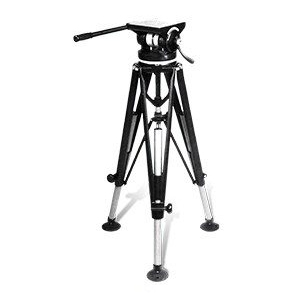
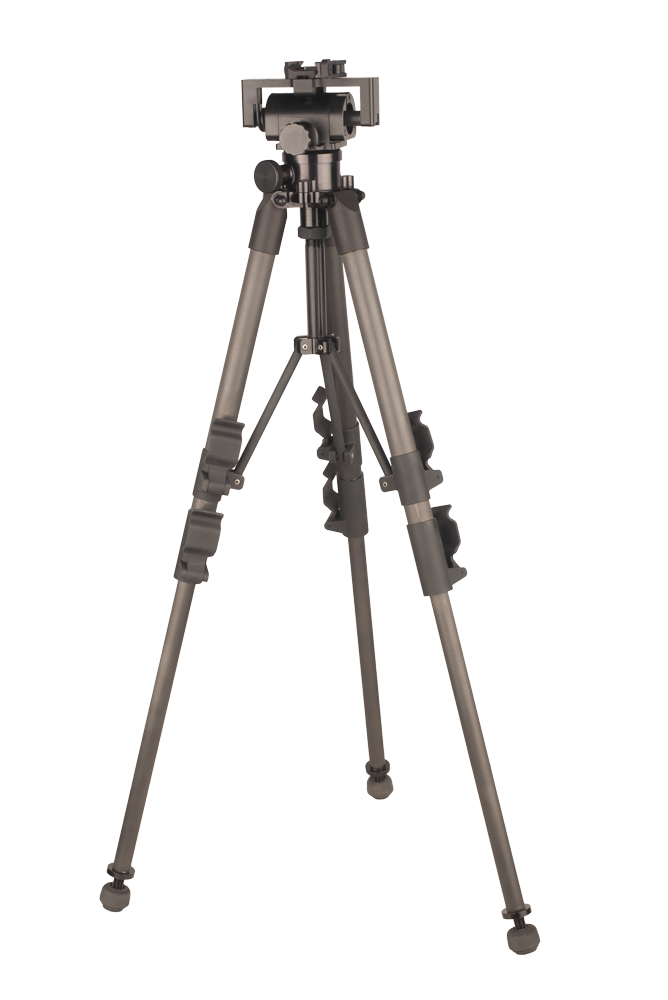
The QTT-4-44001 tactical tripod combines a field-deployable support structure with an integrated pan-and-tilt head for positioning sensors, optics and surveillance payloads. It is rated for loads up to 30 lb and provides 50 in-lb of tilt holding torque. The head allows continuous 360° pan and a ±30° working tilt range, with mechanical hard limits at ±31°. A single control knob on each axis combines adjustable drag with axis locking, allowing resistance to be matched to different payload configurations.
Built-in counterbalancing supports controlled repositioning and helps the head retain its position when released. Its zero-backlash design limits unwanted play on both axes after positioning. Oversized legs and strut lock levers are intended for operation with gloves or reduced hand dexterity. Aluminium-alloy and carbon-fibre construction limits the complete assembly weight to 2.63 lb. Sealed mechanisms require no routine maintenance and support operation in condensing humidity. With the head fitted, the tripod provides an adjustable height range of 9.4 to 24.9 inches for mobile field applications.
Range features
A high level overview of what this range offers
- 30 lb payload capacity: Accommodates compact sensor, optical and surveillance payloads within the rated load.
- Continuous 360° pan: Allows unrestricted horizontal positioning and tracking.
- ±30° tilt range with ±31° hard limits: Provides controlled vertical travel with mechanical end stops.
- 50 in-lb tilt holding torque: Supports stable positioning when the payload moment remains within the rated capability.
- 1.25 in-lb per degree tilt compensation: Helps balance the payload throughout the tilt range.
- Single control knob per axis: Combines adjustable drag and axis locking in one control.
- Zero-backlash design on both axes: Limits unwanted play after the payload has been positioned.
- Oversized legs and strut lock levers: Support operation with gloves or reduced hand dexterity.
- Aluminium-alloy and carbon-fibre construction: Limits the tripod’s own mass to 2.63 lb for transport.
- Sealed mechanisms: Remove the requirement for routine mechanism maintenance.
- Condensing humidity capability: Supports operation across 0–100% RH condensing conditions.
Downloads
for QTT Tactical Tripod
What’s in this range?
All the variants in the range and a comparison of what they offer
| Category | Specification | Value |
|---|---|---|
Performance | Payload capacity | 30 lb |
Performance | Pan range of motion | 360° continuous rotation |
Performance | Tilt holding torque | 50 in-lb |
Performance | Tilt range of motion | ±30° |
Performance | Tilt torque compensation | 1.25 in-lb per degree |
Performance | Adjustable drag and axis locks | Single knob per axis for adjustable drag and axis locking |
Performance | Hard limits | ±31°, tilt axis only |
Performance | Height range with head | 9.4–24.9 in |
Performance | Height range, tripod only | 5.6–21.2 in |
Performance | Leg sections | One telescoping section and one fixed section |
Performance | Stow size | 17.33–17.8 in |
Performance | Tripod-only stow size | 14.1 in long × 4.0 in diameter |
Performance | Payload attachment | Multiple threaded and through holes on the tripod and head |
Performance | Backlash | Zero-backlash design on both axes |
Physical properties | Weight | 2.63 lb |
Physical properties | Materials | Aluminium alloy and carbon fibre |
Physical properties | Exterior finish | Matte black as standard; customer-specified colour available |
Environmental | Operational temperature | −32 to +55 °C at 100% RH |
Environmental | Storage temperature | −40 to +70 °C |
Environmental | Humidity | 0–100% RH, condensing |
Environmental | Maintenance | None required; sealed mechanisms |
FAQs
for QTT Tactical Tripod
The first check is total mounted mass, which must remain at or below 30 lb, but mass alone does not determine whether a payload will balance correctly. The head provides 50 in-lb of tilt holding torque and tilt compensation of 1.25 in-lb per degree across a ±30° working range, with mechanical hard limits at ±31°. Payload height, centre of gravity and offset from the tilt axis can increase the applied moment even when the total mass is within the rating. A centre-of-gravity envelope and maximum permissible offset are not defined. In practice, assess the complete payload moment and mounting geometry before confirming compatibility.
The head supports continuous 360° pan and ±30° tilt, so horizontal tracking is unrestricted while vertical travel remains mechanically bounded. Each axis uses a single control knob for both adjustable drag and axis locking, allowing resistance to be tuned for the mounted payload. Built-in counterbalancing is intended to reduce the input needed to reposition the load and to hold it when the operator releases the head. The zero-backlash design on both axes helps limit unwanted play after positioning. This arrangement can support one-handed operation, provided the payload is correctly balanced and mounted within the rated limits.
With the head fitted, the working height ranges from 9.4 to 24.9 inches; the tripod alone ranges from 5.6 to 21.2 inches. The leg arrangement uses one telescoping section and one fixed section, which keeps adjustment straightforward. The stated stow length is 17.33 to 17.8 inches, while the tripod-only transport envelope is 14.1 inches long by 4.0 inches in diameter. Payload plates, adapters and sensors will add to both the operational height and packed envelope. Allow separate clearance for cables, connectors and payload overhang when defining the final transport case or deployment area.
Operational use is defined from −32 °C to +55 °C at 100% RH, with storage from −40 °C to +70 °C. The humidity range is 0–100% RH condensing, and the mechanisms are sealed with no routine maintenance requirement. The aluminium-alloy and carbon-fibre structure is intended to resist damage associated with field handling, including drops and impacts. No IP rating or formal shock and vibration qualification is defined, so those requirements should be checked at system level. For exposed or mission-critical installations, additional protection and qualification may be needed around the complete payload assembly.
The tripod and head provide multiple threaded holes and through holes for payload attachment, allowing different mounting arrangements to be developed. However, the thread sizes, hole spacing and approved fastener details are not defined in the technical specifications. Interface design should therefore consider the complete 30 lb payload limit, the 50 in-lb tilt holding torque and any moment created by an offset centre of gravity. An adapter plate may be needed when the payload does not match the attachment pattern directly. Confirm the mechanical interface before finalising machining, fastener selection or cable routing.
No routine maintenance is required for the sealed mechanisms, but this should not be interpreted as eliminating inspection after demanding use. Following a drop, impact or condensing exposure, check the leg sections, strut locks, drag controls, axis locks and payload fasteners for damage or altered operation. Confirm that pan remains continuous, tilt travel stays within the ±30° working range and the head holds position without unwanted play. No lubrication schedule or field-service interval is defined, so sealed mechanisms should not be dismantled without an approved service procedure. A system-level inspection schedule can still support consistent deployment and equipment traceability.