Tripods
Adjustable support systems for fixed-position cameras
Industrial camera tripods provide a simple, stable foundation for cameras, sensors and other imaging equipment. They allow you to position your equipment accurately by hand and hold it securely in place, without the added complexity of motors, controls or active positioning.
For applications where the camera needs to stay in a fixed position, a well-designed tripod can provide everything you need: reliable load support, rigidity and easy adjustment. They are particularly useful in laboratory environments, industrial inspection and field applications where equipment needs to be deployed, positioned and moved with minimal setup.
Key engineering considerations include load capacity, stability, rigidity, vibration resistance and mounting compatibility. Compared with pan and tilt positioners, tripods prioritise simplicity and fixed positioning. Unlike servo drive gears, they are passive mechanical supports rather than components within an active motion system.
Do you want to know more about this technology? Try out our new Chatbot!
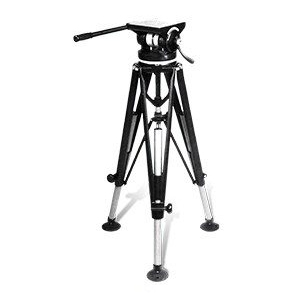
Why our portfolio is right for you
Our industrial camera tripods provide reliable, adjustable support for cameras, sensors and other imaging equipment across field, laboratory and industrial applications. They are designed to make installation straightforward while providing the stability needed for consistent imaging performance.
We offer a range of configurations with different height ranges, load capacities and mounting options, allowing you to select the right level of support for your equipment and operating environment.
Whether you need a lightweight solution for mobile field deployment or a more robust platform for stable, fixed-position imaging, our team can help you select the right configuration. With practical engineering expertise across imaging and positioning systems, we can help ensure your equipment is securely mounted, correctly positioned and ready to deliver reliable results.
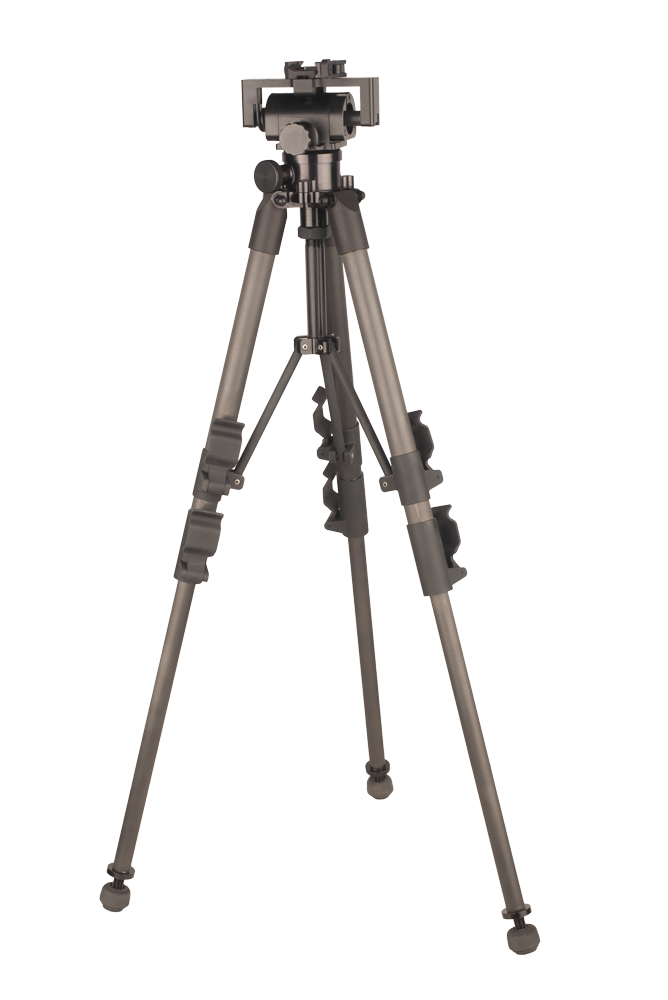
Key selection factors
-
Load capacity and stability: The tripod needs to support the complete imaging payload, including cameras, lenses and accessories. The way the load is distributed is just as important as the overall weight when assessing stability.
-
Height and adjustment range: Consider the working height and the flexibility you need to position the camera. A suitable adjustment range makes it easier to adapt the system to different applications and installation environments.
-
Rigidity and vibration resistance: A rigid support helps minimise unwanted movement and maintain image quality. This becomes particularly important with high-resolution, high-magnification or long-range imaging systems.
-
Mounting compatibility: The mounting interface needs to suit the camera or positioning head being used. Getting this right from the outset makes installation simpler and helps ensure a secure connection.
-
Portability vs robustness: Lightweight tripods are easier to transport and deploy, while heavier and more rigid designs can provide greater stability. The right balance depends on whether the priority is mobility, stability or a combination of both.
-
Fixed support vs active positioning: If your camera needs to remain in a set position, a tripod can provide a simple and effective solution. If you need automated scanning, tracking or repeatable motorised movement, a pan and tilt positioner may be more appropriate.
Technical overview
Industrial camera tripods are adjustable mechanical support systems designed to securely hold imaging equipment at the required height and orientation. Depending on the design, they can include extendable legs, adjustable sections, locking mechanisms and standard mounting interfaces for cameras and positioning equipment.
Once positioned, the tripod provides a stable platform for the imaging system without requiring motors or control electronics. This makes them straightforward to deploy and particularly useful where the camera only needs to be repositioned manually rather than continuously moved or automated.
The overall design focuses on rigidity, load distribution and resistance to unwanted movement. These factors can have a direct effect on image quality, particularly when using high-magnification or long-range optics where even small amounts of vibration can become noticeable.
Tripods can be used across a range of environments, from laboratory and production settings to temporary field installations. The right configuration will depend on the payload, required height and adjustment range, operating environment and how frequently the system needs to be moved.
Integration notes
Tripods are among the simplest products to integrate into an imaging system. Installation generally involves mounting the camera or sensor, adjusting the height and orientation, and securing the tripod in its operating position.
A stable mounting surface and correct load distribution are important for maintaining consistent performance. In field applications, factors such as wind, uneven ground and vibration should also be considered, as these can affect stability and image quality.
Because tripods are passive mechanical systems, they do not require power, control electronics or software integration. This makes them a useful option where simplicity, portability and straightforward deployment are priorities.
For applications requiring automated or continuously controlled movement, a motorised pan and tilt positioner provides a more suitable alternative. Where the system needs a custom motion solution, servo drive gears can form part of the underlying positioning mechanism.
FAQ’s
They are used to provide stable support for cameras in applications such as inspection, research, and temporary field setups. They allow adjustable positioning without complex systems. This makes them suitable for straightforward imaging tasks.
The main difference is functionality: • Tripods: manual adjustment, fixed positioning • Pan tilt positioners: motorised, programmable movement The choice depends on whether automation is required.
Yes, but only if the load capacity is sufficient. Tripods are available in different sizes and strengths. Proper selection is essential to ensure stability.
Yes, they are often used in field applications. However, environmental factors such as wind and uneven surfaces must be considered. Additional stabilisation may be required.
Typical challenges include: • Ensuring stable placement • Matching mounting interfaces • Managing environmental conditions These factors affect performance.
Yes, most tripods support a range of camera types through standard mounting interfaces. Adapters may be used if needed. Load capacity must always be considered.
Typical issues include: • Underestimating load requirements • Ignoring environmental factors • Choosing insufficient rigidity These can lead to unstable imaging if not addressed early.