TruePhase® 125/250 µm 1550 nm PM Optical Fibre
- Technology
- Speciality fibre
- Partner
- Lightera (formerly OFS)
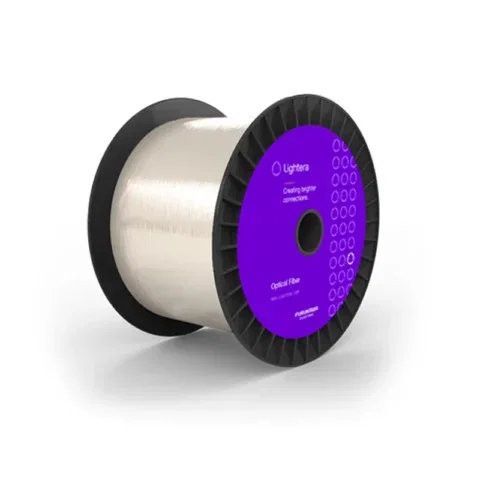
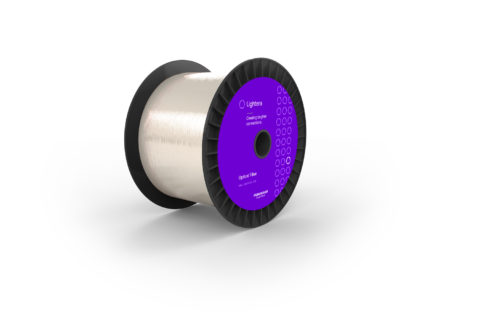
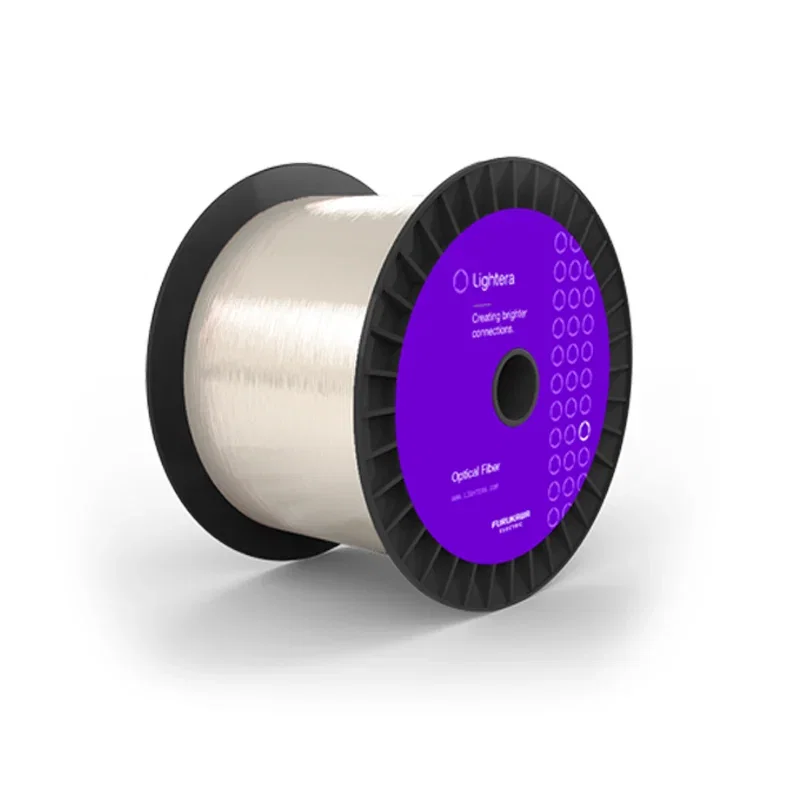
The TruePhase 125/250 µm 1550 nm polarisation-maintaining optical fibre is a high-performance single-mode fibre designed for applications that require a stable state of polarisation. It maintains the polarisation of light across its length, which is crucial for interferometers, fibre-optic gyroscopes, and other precision optical systems. With a standard 125 µm cladding and 250 µm coated diameter, this PM fibre integrates seamlessly with conventional fibre connectors and splicing tools. It exhibits low attenuation at the 1550 nm telecom window, ensuring minimal signal loss even over extended runs. Engineers choose this fibre for its high polarisation extinction ratio and consistency, which translates to reliable and accurate performance in polarisation-sensitive setups. Common uses include telecommunications, fibre-optic sensing, and scientific research, where maintaining light polarisation is essential for system stability and measurement accuracy.
Range features
A high level overview of what this range offers
- Polarisation-maintaining design: Keeps light polarised along a fixed axis for consistent performance in polarisation-sensitive systems.
- Optimised for 1550 nm: Designed for low loss and stable operation in the C-band for telecom and precision sensing applications.
- Standard 125 µm cladding: Supports compatibility with common connectors, patch cords, and fusion splicing equipment.
- 250 µm protective coating: Adds durability and handling protection while maintaining routing flexibility.
- Low optical attenuation: Typically offers attenuation of ≤ 0.5 dB/km at 1550 nm for efficient long-distance or coiled-fibre use.
- High extinction ratio: Helps preserve the desired polarisation state for accurate sensing and interferometric measurements.
- Proof-tested reliability: Strength-tested to support robust installation and dependable long-term use.
- Single-mode operation: Eliminates multimode distortion for stable, coherent optical transmission.
Downloads
for TruePhase® 125/250 µm 1550 nm PM Optical Fibre
TruePhase® 125/250 µm 1550 nm PM Optical Fibre – Datasheet
DownloadWhat’s in this range?
All the variants in the range and a comparison of what they offer
Specification | Value |
Fibre type | Polarisation-maintaining single-mode fibre |
Operating wavelength | 1550 nm (C-band) |
Cladding diameter | 125 µm |
Coating (outer) diameter | 250 µm (acrylate coating) |
Numerical aperture (NA) | ~0.12 |
Mode field diameter (at 1550 nm) | ~10 µm |
Attenuation @ 1550 nm | ≤ 0.5 dB/km (typical) |
Polarisation extinction ratio | ≥ 20 dB (typical, short length) |
Beat length @ 1550 nm | ~3 mm (approximate) |
Proof test level | 100 kpsi (standard tensile proof test) |
Operating temperature range | –40 °C to +85 °C (typical for acrylate) |
FAQs
for TruePhase® 125/250 µm 1550 nm PM Optical Fibre
A polarisation-maintaining (PM) fibre is a specialised single-mode optical fibre that preserves the polarisation state of light as it travels through the fibre. In a standard single-mode fibre, external stress or small irregularities can cause the polarisation to drift or rotate. A PM fibre uses built-in birefringent structures so light launched into one principal axis stays aligned to that axis. This makes PM fibre essential in interferometers, sensors, and other systems where polarisation stability directly affects performance.
1550 nm is widely used in fibre optics because it lies in a low-loss transmission window of silica fibre. This allows light to travel with very little attenuation, making it highly suitable for telecommunications, sensing, and precision photonics. The TruePhase PM fibre is optimised for this wavelength so its attenuation and birefringent performance are well matched to 1550 nm systems.
The 125 µm value refers to the diameter of the glass cladding, which is the standard size used across many optical fibre handling systems. The 250 µm value refers to the outer diameter after the protective coating is applied. This means the fibre combines standard mechanical compatibility with an added coating layer that protects against scratches, moisture, and handling damage.
PM fibres have defined fast and slow axes that must be aligned correctly to preserve the launched polarisation. During splicing, specialised PM fusion splicers are used to align the fibre axes before joining. During connectorisation, keyed PM connectors help maintain the correct axis orientation. Proper alignment minimises crosstalk and ensures the fibre maintains polarisation effectively.
Yes, this fibre is single-mode at 1550 nm. Single-mode operation means only the fundamental mode propagates through the fibre, eliminating multimode dispersion and preserving signal clarity. In PM applications, this is especially important because it ensures stable, coherent transmission while allowing the fibre to preserve the intended polarisation state.
Polarisation extinction ratio (PER) indicates how well the fibre keeps optical power aligned with the intended polarisation axis instead of leaking into the orthogonal axis. A high PER means the launched polarisation is preserved very effectively. This is valuable in interferometry, sensing, and research applications where even small polarisation errors can reduce accuracy or signal quality.
This fibre typically offers attenuation of ≤ 0.5 dB/km at 1550 nm, which is very low. In many laboratory, instrumentation, and sensing setups, this means fibre loss is negligible over practical lengths. Low attenuation gives designers more flexibility for routing, coiling, or extending fibre runs while maintaining strong signal levels and good signal-to-noise performance.
Yes, the fibre can generally be bent or coiled under normal handling conditions while maintaining its performance. However, excessively tight bends or kinks can introduce additional stress, loss, or some degradation in polarisation preservation. Following the recommended minimum bend radius from the datasheet is the best way to maintain reliable attenuation and PM performance.
This fibre is well suited to applications where a fixed polarisation state must be preserved. Typical uses include fibre-optic gyroscopes, interferometric sensors, telecommunications components using polarised light, and quantum optics or photonics research. It is a strong choice wherever system stability, measurement accuracy, and polarisation fidelity are critical.