R-Pack™ Rollable Ribbon LSZH Dual Rated Backbone Cable
- Technology
- Fibre optic cables, connectors and assemblies
- Partner
- Lightera (formerly OFS)
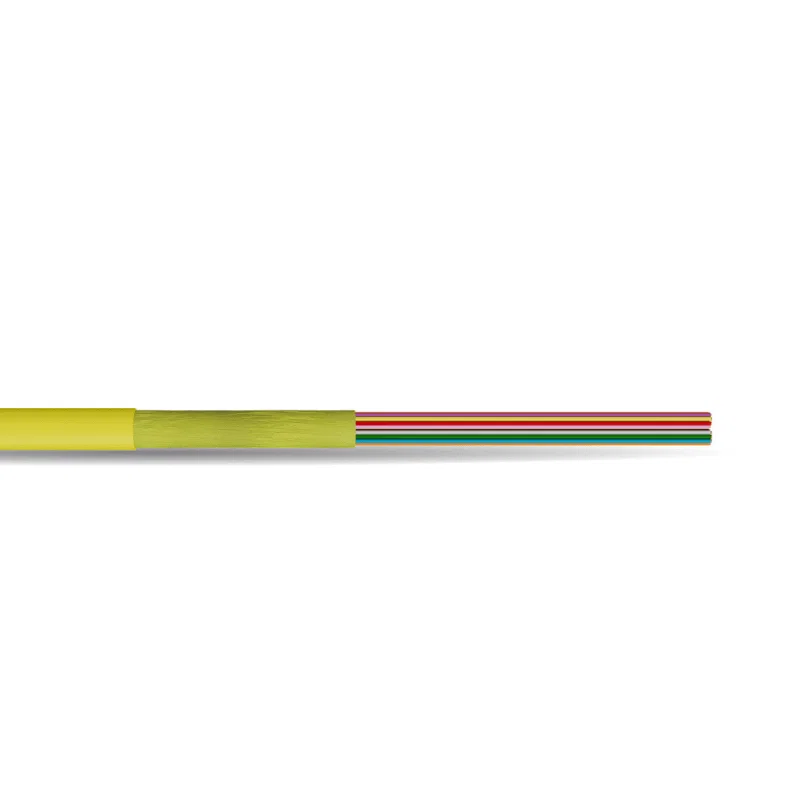
Designed for modern data centres and telecom facilities, the R-Pack rollable ribbon LSZH backbone cable offers a high fibre count in a remarkably compact form. Its rollable ribbon architecture neatly bundles fibres to double density compared to conventional flat ribbon cables, saving valuable space in trays and conduits. The cable’s LSZH (Low Smoke Zero Halogen) dual rating means it meets stringent fire standards in both Europe and North America, allowing deployment in diverse regions and building types without changing cable types.
Built with water-blocking elements and a UV-resistant outer jacket, it can even handle short outdoor runs between structures, eliminating extra splice points. By supporting efficient mass fusion splicing as well as easy single-fibre breakout, this backbone cable streamlines installation and termination in high-bandwidth backbones for data centres, central offices, and campus networks.
Range features
A high level overview of what this range offers
- Broad fibre count range – Available with 12 up to 144 fibres, covering diverse backbone capacity needs
- Ladder rack friendly – Robust, small-diameter and flexible design ideal for tight trays and ladder racks
- Dual fire standard compliant – Carries global fire ratings (UL OFNR & CPR Cca) for use across different regions with one cable type
- Indoor/outdoor versatility – UV-stable, water-blocked construction supports short outdoor runs (e.g. between buildings) without additional splices
- Mass fusion ready – Rollable ribbons enable fast ribbon splicing for quick installations, yet individual fibres can be separated for single-fibre work
- Fast multifibre termination – Simplifies and speeds up attaching multifibre connectors (like MPO) for high-count terminations
- Riser shaft rated – Vertical backbone installations supported (cables with ≥48 fibres meet riser rating for use in shaft ways)
- Multiple fibre options – Can be ordered with bend-optimised single-mode or OM4 multimode fibres to suit different network links
Downloads
for R-Pack™ Rollable Ribbon LSZH Dual Rated Backbone Cable
R-Pack Rollable Ribbon LSZH Dual Rated Backbone Cable – Datasheet (PDF, English)
DownloadWhat’s in this range?
All the variants in the range and a comparison of what they offer
| Specification | RB58 | RB62 | RB66 | RB72 | RB78 | RB92 |
|---|---|---|---|---|---|---|
Fibre count | 12 or 24 | 36 | 48 | 72 | 96 | 144 |
Outer diameter (in (mm)) | 0.23″ (5.8) | 0.24″ (6.2) | 0.26″ (6.6) | 0.28″ (7.2) | 0.31″ (7.8) | 0.36″ (9.2) |
Rollable ribbon count | 1 or 2 | 3 | 4 | 6 | 8 | 12 |
Weight (lb/kft (kg/km)) | 23.2 (34.6) | 27.3 (40.6) | 30.1 (44.9) | 35.8 (53.3) | 42.6 (63.4) | 60.8 (90.6) |
Compressive load | 10 N/mm | 10 N/mm | 10 N/mm | 10 N/mm | 10 N/mm | 10 N/mm |
Tensile rating (lbf (N)) | 150 (660) | 150 (660) | 150 (660) | 300 (1320) | 300 (1320) | 300 (1320) |
Fire test (CPR) | Cca-s1a, d1, a1 | Cca-s1a, d1, a1 | Cca-s1a, d1, a1 | Cca-s1a, d1, a1 | Cca-s1a, d1, a1 | Cca-s1a, d1, a1 |
Fire test (UL) | UL 1666 (OFNR), FT-4 | UL 1666 (OFNR), FT-4 | UL 1666 (OFNR), FT-4 | UL 1666 (OFNR), FT-4 | UL 1666 (OFNR), FT-4 | UL 1666 (OFNR), FT-4 |
Handling temperature | Install: –30 °C to +60 °C; Operate: –40 °C to +70 °C; Store: –40 °C to +70 °C | Same for all variants | Same for all variants | Same for all variants | Same for all variants | Same for all variants |
Standards compliance | Meets Telcordia GR-409 (backbone cable standard) and ICEA S-104-696 mechanical/environmental criteria | All variants | All variants | All variants | All variants | All variants |
FAQs
for R-Pack™ Rollable Ribbon LSZH Dual Rated Backbone Cable
Rollable ribbon technology loosely binds fibres in a cylindrical bundle instead of a fixed flat strip. This allows the ribbon to be “rolled” or collapsed, effectively doubling the fibre density compared to standard flat ribbons of the same size. In practice, a rollable ribbon cable can pack far more fibres into a smaller diameter, which saves space in conduits and trays. Moreover, the flexible ribbon structure means the cable can bend and route more easily like loose fibres, while still allowing mass fusion splicing of all 12 fibres at once when needed. In short, it combines the high density of ribbon fibres with the bendability of loose fibres, simplifying installation in congested pathways.
“LSZH” stands for Low Smoke Zero Halogen, indicating the cable’s jacket material will produce minimal smoke and no toxic halogen gases if it catches fire. This is important for safety in enclosed spaces, as it helps protect people and equipment from corrosive smoke. “Dual-rated” means the cable meets two sets of fire safety standards: it complies with the UL 1666 (OFNR) fire test (a U.S. standard for riser cables) and also meets the European CPR Cca-s1a,d1,a1 classification for low-smoke, flame-retardant performance. Thanks to this dual rating, the same cable can be used in international projects, serving both North American and European code requirements for flame safety and smoke emissions.
This cable series is offered in multiple fibre counts ranging from 12 up to 144 fibres in a single cable. Smaller variants (like 12 or 24 fibres) have a very slim profile, while the largest version contains 144 fibres in still a relatively compact cable (about 9.2 mm in diameter). These options allow you to choose a cable size that fits your network’s capacity needs – from modest backbone links up to ultra high-density inter-building trunks – without changing the cable family. All versions share the same design principles, ensuring consistent performance across the range.
Yes. The R-Pack LSZH rollable ribbon cable can be ordered with either single-mode fibres or multimode fibres, depending on your application. For single-mode, it uses a bend-optimised G.657.A2 fibre which is engineered to tolerate tight bends (ideal for data centre routing) while maintaining low loss. For multimode, it’s typically offered with OM4 laser-optimised fibre (50 µm core) for high-bandwidth short-reach links. These multimode fibres support 10 Gb/s and higher speeds over typical building backbone distances. Both fibre types are accommodated within the same cable design, giving you flexibility to deploy single-mode for long distances or multimode for shorter intra-campus runs as needed.
Yes, within certain limits. The cable is rated for indoor/outdoor use – it has water-blocking elements and a UV-resistant jacket so it can handle short outdoor runs (for example, connecting between nearby buildings or to an outdoor equipment enclosure). However, it’s not an armoured cable, so for direct burial or extended outdoor spans it should be installed in a conduit or innerduct for protection. For vertical installations, cables with 48 fibres or more are certified for use in riser shafts (they pass UL 1666 vertical flame tests). This means higher-count versions can safely run between floors in a building’s vertical riser system. Smaller fibre count versions have the same LSZH jacket but typically horizontal/backbone use is recommended for those. In summary, the cable can go outdoors for campus-style links and can run vertically in-building (when using ≥48 fibre models), making it quite versatile for various installation scenarios.
The R-Pack cable is designed to make high-count fibre terminations faster and easier. Firstly, the 12-fibre rollable ribbons can be mass fusion spliced using standard ribbon splicers – you can splice 12 fibres in one go, greatly speeding up joining large fibre bundles. At the same time, the ribbon matrix isn’t permanently bonded, so you can separate individual fibres easily from the bundle. This means if you need to do a single-fibre splice or connector termination, you can treat it like a loose fibre without extra difficulty. The cable also supports direct multifibre connector terminations (such as MPO/MTP connectors): installers can quickly attach a multifibre connector to each 12-fibre ribbon, eliminating the need to splice every fibre to pigtails. Overall, the structure reduces the labour and time required for both splicing many fibres and terminating to high-density connectors.
The exact outer diameter depends on the fibre count, but even the largest 144-fibre version is only about 9.2 mm in diameter. Smaller variants range down to roughly 5.8 mm (for a 12-fibre cable). This slim profile is a major advantage in dense cabling environments. A thinner cable takes up less space in overhead trays, conduits, and patch panels, allowing more cables (and therefore more fibres) to coexist in a given space. In data centre racks and raised floor systems, using a compact high-fibre-count cable like R-Pack means you can maintain tidy cable management and avoid overfilling pathways. The lightweight, flexible construction further eases pulling the cable through bends and tight routes. In short, the small diameter helps improve airflow and organisation in racks and enables higher density fibre deployments without cable congestion.
Absolutely. The cable’s rollable ribbon format was designed with multifibre connectivity in mind. Each 12-fibre ribbon unit in the cable can be quickly terminated with an MPO/MTP connector or similar multifibre connector, creating a high-density pre-terminated link. This is simpler than terminating 12 individual fibres one by one. Many data centre installations use MPO connectors for trunk cables, and the R-Pack backbone cable supports this seamlessly. You can also splice the ribbons onto MPO fanout pigtails if needed. In essence, the cable works well with both mass splicing and multifibre connectorisation, so it fits right into typical high-fibre-count cabling systems used in modern networks.