Temperature Probes
- Technology
- Custom temperature sensor probes
- Partner
- Advanced Energy
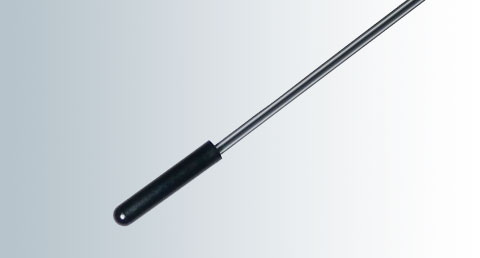
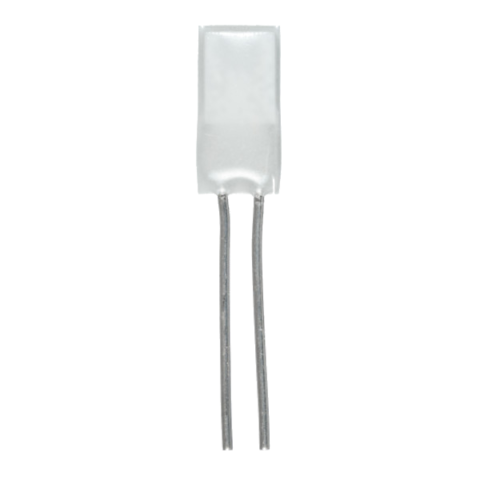
Thermistor and thermocouple temperature probes are specialised sensors used for direct temperature monitoring in a variety of settings. This product range includes thermistor probes for high precision at moderate temperatures and thermocouple probes for fast response and extreme temperature ranges. Probe formats are tailored to the application, including immersion, penetration, surface, air/gas, and wire styles. These probes are widely used in life sciences, food safety, laboratory work, and industrial manufacturing.
Thermocouple models can respond in about a second, while thermistor models can achieve excellent accuracy of around ±0.2 °C within their operating range. Many probes feature durable stainless-steel sensing sections, robust plastic T-handles, and coiled cables for easier handling in confined or awkward spaces. Intrinsically safe versions are also available for hazardous environments. Custom probe configurations can be produced for specialised temperature sensing requirements.
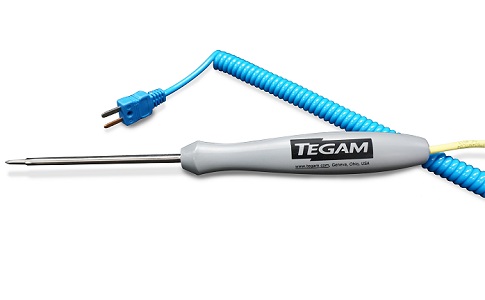
This probe range combines two established sensing technologies to cover a wide variety of temperature measurement tasks. Thermistor probes are ideal where high accuracy is required in moderate temperature applications, while thermocouple probes are better suited to fast-changing processes and higher-temperature environments.
Available probe styles include immersion probes for liquids, penetration probes for semi-solids, surface probes for contact measurements, and air/gas probes for ambient or flow-based monitoring. The result is a versatile selection of temperature sensor probes for laboratories, food processing, industrial plants, maintenance teams, and safety-critical environments.
Range features
A high level overview of what this range offers
- High measurement accuracy (±0.2 °C): Supports precise readings for laboratory work, food testing, and other critical mid-range applications.
- Extended temperature capability up to +760 °C: Suitable for high-heat industrial processes and demanding measurement points.
- Rapid response time: Thermocouple models can respond in about 1 second for fast-changing systems and process control.
- Multiple probe tip styles: Choose from immersion, penetration, surface, air/gas, wire, and other configurations to suit the measurement medium.
- Flexible coiled cables: Extended reach of approximately 0.3 to 1.5 m helps access awkward or confined locations more easily.
- Rugged stainless-steel construction: Durable materials help protect the sensing element in harsh environments.
- Intrinsically safe options available: Suitable versions are available for hazardous or explosive atmospheres.
- Built in the USA: Manufactured to consistent quality standards for dependable long-term performance.
What’s in this range?
All the variants in the range and a comparison of what they offer
| Specification | Thermistor Temperature Probes | Thermocouple Temperature Probes |
|---|---|---|
Sensor Type | Thermistor | Thermocouple (Type J, K, T) |
Temperature Range | –40 °C to +150 °C | Up to +760 °C (max.) |
Time Constant | ~6 s (typical) | ~1 s (typical) |
Connector Type | Phono (audio jack) | Mini-TC (mini thermocouple) |
Handle Type | Plastic, T-handle | Plastic, T-handle |
Probe Tip Styles | Air/Gas, Immersion, Penetration, Surface, Wire | Gas, Griddle, Hypodermic, Immersion, Penetration, Surface, Wire |
FAQs
for Temperature Probes
Thermistor probes are generally best for moderate temperature ranges when you need very high accuracy. In the 0 to 150 °C range, they can deliver precise readings of around ±0.2 °C, which makes them well suited to laboratory work, biological research, and food quality testing.
Thermocouple probes are the better choice when you need to measure higher temperatures or want faster response. They can handle temperatures up to around 760 °C in this range and are often preferred for furnaces, engines, and fast-changing industrial processes.
In short, choose a thermistor probe for lower-temperature applications requiring precision, and a thermocouple probe for high-temperature or fast-response applications.
Different probe tip styles are designed for different measurement tasks. Immersion probes are used in liquids, penetration probes are intended for soft solids or semi-solid materials, surface probes are made for contact readings on flat or curved surfaces, and air/gas probes are designed for measuring ambient air or moving gases.
The correct choice depends on the medium being measured. Use immersion probes for water, oils, or other fluids, penetration probes for foods or other internal measurements, surface probes for machinery or plates, and air/gas probes for ducts, airflow, or ambient monitoring. Choosing the right tip style helps ensure stable contact and accurate results.
Yes, provided the probe sensor type and connector match the instrument. Thermocouple probes typically use a mini-TC connector and should be paired with equipment that supports the corresponding thermocouple type such as J, K, or T. Thermistor probes commonly use a phono jack connector and are intended for compatible thermistor-based meters or monitors.
Before use, confirm that your thermometer, data logger, or controller supports both the sensing technology and the connector style. Adapters may sometimes be available, but direct compatibility is the best way to ensure accurate readings.
Thermistor probes offer excellent accuracy within their operating range. In the 0 to 70 °C span, a quality thermistor probe can achieve around ±0.2 °C, making it suitable for demanding applications where precision matters.
Thermocouple probes generally offer wider temperature coverage and faster response, but their accuracy at moderate temperatures is typically less precise than a thermistor. A common expectation is around ±1 °C, although this can vary depending on thermocouple type, build quality, and calibration status.
For best performance, regular calibration and use with a compatible instrument are recommended.
Yes, periodic calibration is recommended to maintain confidence in the readings. Over time, both thermistors and thermocouples can drift slightly, especially after heavy use or exposure to demanding conditions. Annual calibration, or calibration based on internal quality procedures, is a common approach.
Maintenance is generally straightforward. Keep the probe clean, avoid sharp bends in cables or wired sections, and inspect connectors for signs of wear or damage. With sensible handling and occasional calibration checks, these probes can provide reliable long-term performance.
Yes. Many models are designed specifically for these conditions. Immersion probes are intended for use in liquids, and stainless-steel sensing sections help provide durability in industrial, wet, or demanding environments.
These probes can withstand normal temperature cycling, moisture exposure, and general field use, but they should always be used within their specified limits. For corrosive liquids or chemically aggressive conditions, material compatibility should be checked before use. Proper probe selection helps ensure safe operation and long service life.
Yes. Intrinsically safe versions of thermocouple temperature probes are available for hazardous locations. These are designed to operate with very low energy levels so they do not create an ignition source in areas where flammable gases or dust may be present.
They are suitable for applications such as petrochemical plants, refineries, mines, and other explosive atmospheres. In these cases, the connected measuring device should also be intrinsically safe so that the complete measurement system meets the required safety standard.
Absolutely. Custom probe designs can be produced when standard models do not fit the application. Common customisation options include sensor type, probe length, diameter, tip design, cable length, and connector format.
This is useful for applications that require special mounting arrangements, longer reach into vessels or machinery, or unique environmental requirements. A custom solution allows you to match the probe design more closely to the installation and performance needs of your process.