Impac series petrochemical pyrometers
- Technology
- Pyrometers
- Partner
- Advanced Energy
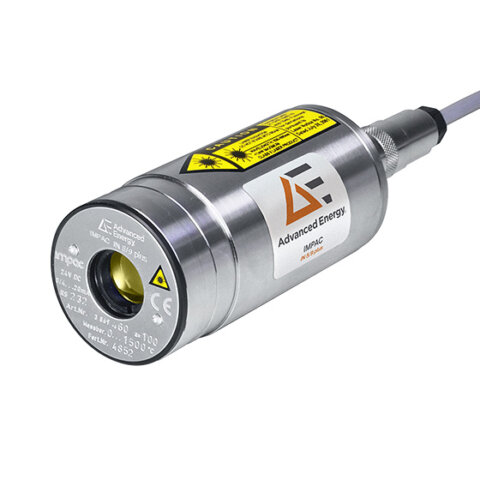
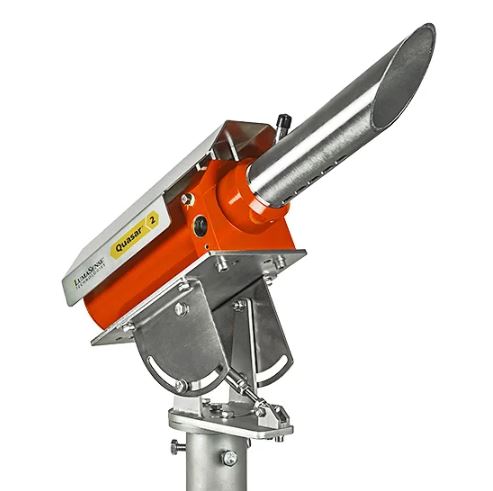
The Impac petrochemical pyrometer series delivers precise infrared measurement solutions for demanding oil, gas, and chemical applications. This range includes the Quasar 2 flame monitor for continuous flare stack supervision and the Pulsar 4 pyrometer for real-time furnace temperature measurement in sulphur recovery units. Both models are engineered for use in harsh, hazardous environments – featuring robust explosion-proof enclosures and high-grade optics that operate at extreme temperatures. These instruments help refineries and petrochemical plants maintain safety and compliance by ensuring pilot flames are lit and furnace refractories are protected from overheating. Advanced signal processing algorithms (like the Pulsar’s Smart FMA flame compensation) and optical designs enable accurate readings even through smoke, rain, or flame interference. With flexible outputs (4–20 mA analog and digital communications) and SIL-rated reliability, the Impac pyrometer series integrates seamlessly into plant control systems. Decades of field use and hundreds of installations worldwide attest to the proven performance of these sensors in keeping critical petrochemical processes running safely and efficiently.
Range features
A high level overview of what this range offers
In harsh petrochemical environments, the Impac pyrometer series delivers advanced features that ensure safe and efficient operation.
- Long-range flame detection – High-resolution optics (up to 300:1) reliably detect small pilot flames from distances up to 400 m, allowing safe flare stack monitoring far from the heat source.
- Dual-channel temperature measurement – The Pulsar 4 Advanced uses two infrared detectors to measure gas and refractory temperatures simultaneously, providing a complete view of furnace conditions with one device.
- Smart FMA algorithm – An intelligent flame measurement algorithm (in the Pulsar 4 Advanced) automatically compensates for flame transparency, improving temperature accuracy when direct flame is present in the line of sight.
- Flexible power & outputs – Built-in power supply supports 24 V DC or 115/230 V AC operation. Configurable 4–20 mA analog outputs and optional digital interfaces (HART protocol, RS485) enable easy integration with DCS/PLC control systems.
- Safety-certified enclosure – Explosion-proof housing (IECEx, ATEX Zone 1 and Class I Div 1 certified) permits safe operation in hazardous petrochemical zones with flammable gases. A SIL 1 rating on the Quasar 2 model further ensures dependable performance in safety-critical applications.
- Rugged, low-maintenance design – Constructed from 316L stainless steel with heavy-duty mounting hardware, the sensors withstand harsh weather, corrosive environments, and high vibration. The optical system is engineered to resist fouling, resulting in minimal maintenance requirements over long service intervals.
Downloads
for Impac series petrochemical pyrometers
What’s in this range?
All the variants in the range and a comparison of what they offer
| Specification | Quasar 2 Flare Monitor | Pulsar 4 Advanced Pyrometer |
|---|---|---|
Primary function | Pilot flame & flare gas detection | Furnace temperature measurement (gas & refractory) |
Measurement range | Not applicable (flame presence sensor) | 350 °C to 2000 °C (temperature) |
Flame detection range | Up to 400 m (with selectable optics) | Not applicable |
Optical resolution | 37.5:1, 60:1, 75:1, 150:1, 300:1 options (distance:spot) | ~160:1 (standard lens) |
Focus range | 0 to 400 m distance (fixed focus) | 500 mm to ∞ (focusable) |
Ambient operating temp | –40 °C to +60 °C | –40 °C to +60 °C |
Output signals | 4–20 mA switched (flame/no-flame); plus 4–20 mA analog & relay contacts on adv. model | Dual 4–20 mA outputs (assignable to RT, GT, or FF); RS485 + HART 7 (digital comms) |
Explosion-proof rating | IECEx / ATEX Ex db IIB T4 (Zone 1); Class I Div 1 (Groups C,D) & Div 2 (A–D) | IECEx / ATEX Ex db IIB+H₂ T4 (Zone 1); FM/CSA Class I Div 1 (Groups B,C,D) |
Housing material | Stainless steel 316L (IP66, NEMA 4X) | Stainless steel 316L |
Safety integrity rating | SIL 1 (functional safety) | Not stated |
FAQs
for Impac series petrochemical pyrometers
The Quasar 2 can reliably detect pilot flames and flaring events at distances of up to about 400 m (approximately a quarter mile). By selecting one of five high-resolution optical lenses, users can optimise the field of view and spot size for their specific flare stack height, ensuring flame detection even from very far away.
The Quasar 2 is designed to filter out false alarms caused by momentary flame loss or environmental factors. It incorporates an adjustable alarm delay circuit – this means the sensor won’t trigger a "flame out" alarm unless the flame signal is lost for a sustained period that you define. In addition, the Quasar’s electronics automatically adjust for rain, fog, or snow and for target movement (such as a flickering flame), preventing nuisance alarms due to brief disturbances.
Yes. The Quasar 2’s infrared sensing technology can detect hydrocarbon flames as well as hydrogen flames, even though hydrogen fires are not visible to the naked eye. It operates in spectral bands where the hot water vapour and combustion by-products of a hydrogen flame emit infrared radiation. This allows the Quasar 2 to monitor for the presence of a hydrogen flame on a flare stack pilot, enhancing safety for processes that may burn hydrogen or hydrogen-rich gases.
"Smart FMA" stands for Smart Flame Measurement Algorithm, and it’s a feature unique to the Pulsar 4 Advanced pyrometer. This algorithm continuously compensates for the optical interference of an open flame when measuring furnace temperatures. In practice, flames (the burning gas) can cause false high readings of gas temperature (GT). Smart FMA corrects for this by transparently calculating and removing the flame’s effect on the measurement. The result is a more accurate true gas temperature and refractory temperature (RT) reading, even when an active flame is present between the sensor and the furnace interior.
The Pulsar 4 Advanced is equipped with two separate infrared detectors, each tuned to a different wavelength band. One detector is configured to measure the temperature of the furnace refractory lining (the wall), while the other measures the combustion gas or flame temperature. By using a dual-wavelength approach, the instrument can provide two readings at once (RT and GT) in real time. This simultaneous measurement helps operators quickly see the furnace’s thermal state – ensuring the refractory isn’t overheating while also monitoring the flame/gas temperature – all with a single, integrated pyrometer device.
Yes – both the Quasar 2 and Pulsar 4 are built for hazardous locations and carry multiple explosion-proof certifications. They are housed in flameproof Ex d enclosures certified under international standards like ATEX and IECEx (Zone 1, gas group IIB + H₂, T4). They also meet North American standards (CSA/FM) for Class I Division 1 areas (including gas groups B, C, D). In short, they can be safely installed in petrochemical zones where flammable gases or vapours are present, without risking ignition. The Quasar 2 is additionally rated SIL 1, indicating it meets a certain safety integrity level for reliable performance in critical safety systems.
Each device offers standard industrial output signals for easy integration. The Quasar 2 provides a 4–20 mA analog output that is typically used in a "switched" mode (e.g. 20 mA = flame on, 4 mA = flame off). The Quasar 2 Advanced version adds a proportional 4–20 mA output representing flame intensity and also a relay contact output. The Pulsar 4 Advanced provides two continuous 4–20 mA analog outputs (which can be assigned to the refractory and gas temperature readings). In addition, the Pulsar 4 Advanced supports digital communication: it has an RS485 interface, and in the advanced model it also supports HART 7 protocol over the 4–20 mA channel. These options allow direct connection to PLC/DCS systems and asset management software for remote monitoring and configuration.
Very little. Both the Quasar 2 and Pulsar 4 are engineered to be nearly maintenance-free during operation. Their stainless steel housings and optics are built to resist environmental fouling. There are no moving parts inside the sensors, and calibration is stable over long periods. In practice, maintenance is limited to occasional cleaning of the optical window/lens if it becomes dirty (for example, due to soot or dust accumulation) and periodic verification of the alignment. The modular design (especially of Quasar 2’s opto-electronics) makes it easy to service or replace components if necessary. Overall, routine checks and perhaps annual calibration verification are sufficient – there is no frequent maintenance needed, which minimises downtime in continuous processes.
The standard Pulsar 4 is a single-channel infrared pyrometer – it can be configured to measure either the gas temperature or the refractory temperature in a furnace, one at a time. In contrast, the Pulsar 4 Advanced is a dual-channel unit that measures both simultaneously (one channel for gas, one for refractory). The advanced model also includes the Smart FMA algorithm (for flame interference correction) which the standard model lacks. Additionally, the advanced version provides more output options (such as HART digital communication) whereas the standard Pulsar 4 primarily offers a basic analog output. In summary, if you need dual temperature readings and the highest accuracy under flame conditions, the Pulsar 4 Advanced is the better choice, whereas the standard model is suited for simpler or direct replacement applications where only one temperature point is needed.
Yes. The Pulsar 4 was designed as a drop-in replacement for the legacy Pulsar II units. It has a similar mechanical form factor and mounting interface, so it can fit into the existing port or sight-tube on the furnace. The electrical connections and power requirements are also compatible – the Pulsar 4 has an integrated power supply that can accept the same voltage inputs (24 V DC or standard AC mains) used by older models. This means you can swap in a Pulsar 4 in place of a Pulsar II without major changes to wiring or infrastructure. Once installed, the new unit offers improved performance and additional features (especially if using the Advanced version), all while maintaining continuity with the previous system’s setup.