Wi-Fi 6e technology explained: Performance, benefits & comparison with Wi-Fi 6 and Wi-Fi 7
Understanding Wi-Fi 6e performance, benefits, and its role in next-generation industrial wireless connectivity
Wi-Fi 6e represents a significant evolution in wireless communication, extending the capabilities of Wi-Fi 6 (IEEE 802.11ax) into the newly opened 6 GHz frequency band. This expansion opens up to 1,200 MHz of additional spectrum (region-dependent: around 480 MHz in the EU) for wireless networks, providing cleaner and wider channels that can dramatically improve throughput, reduced interference, and lower latency.
Contents
- What is Wi-Fi 6e?
- Why Wi-Fi 6e?
- Wi-Fi 6 vs Wi-Fi 6e vs Wi-Fi 7 – Key differences and performance comparison
- Key technologies behind Wi-Fi 6e performance
- Wi-Fi 6e benefits and real-world industrial performance
- Wi-Fi 6e routers and compatibility with Wi-Fi 6 and legacy networks
- Our product ranges
- Which industrial IoT use cases benefit from Wi-Fi 6e?
- What are the hardware and integration considerations?
- What are the strategic benefits of Wi-Fi 6e for industrial IoT and business networks?
- Wi-Fi 6e security features for industrial wireless networks
- Conclusion

For engineers designing industrial IoT, embedded systems, smart factories, and other high-density wireless environments, understanding these advances is critical for choosing the right Wi-Fi technology to meet performance, reliability, and security requirements.
Wi-Fi 6e technology extends Wi-Fi 6 into the 6 GHz spectrum, providing faster and more reliable wireless connectivity for industrial, embedded, and IoT systems. For industrial and IoT environments that rely on stable, low-latency communication, Wi-Fi 6E bridges today’s dense wireless networks and tomorrow’s Wi-Fi 7 infrastructure.
This article provides an in-depth technical comparison of Wi-Fi 6E with Wi-Fi 6 and the emerging Wi-Fi 7 (IEEE 802.11be) standard. It covers the technologies underpinning these standards, their performance benefits, and real-world industrial applications, along with practical guidance on hardware integration and certification.
What is Wi-Fi 6e?
Wi-Fi 6e technology is based on IEEE 802.11ax and expands Wi-Fi 6 into the 6 GHz band (roughly 5.9 to 7.1 GHz, depending on regional regulation), in addition to the traditional 2.4 GHz and 5 GHz bands.
Wi-Fi 6e uses all the features of Wi-Fi 6 – such as OFDMA, MU-MIMO, and 1024-QAM [DF3.1]- but benefits from the large, clean, and newly allocated 6 GHz spectrum. This additional band offers up to 1200 MHz of new wireless bandwidth (around 480 MHz in the EU), which means Wi-Fi 6e can use wide channels (up to 160 MHz) without interference from legacy Wi-Fi devices or other technologies common in the 2.4 GHz and 5 GHz bands.
By moving time-sensitive communications into the less crowded 6 GHz range, Wi-Fi 6e offers predictable performance in RF-dense environments such as smart factories and embedded systems.
Why Wi-Fi 6e technology matters for design engineers
-
More spectrum = higher capacity & less congestion: The 6 GHz band is free from legacy Wi-Fi and other crowded devices (2.4/5 GHz standards), so your system can achieve higher speeds with fewer retransmissions or interference issues.
-
Wider channels for higher data rates: By supporting 160 MHz-wide channels also on 6 GHz, Wi-Fi 6e enables peak throughputs up to 9.6 Gbps under ideal conditions (in 802.11ax at the PHY layer), which is critical for data-intensive applications like high-definition video streaming, AR/VR, or industrial sensors requiring high data rates.
-
Lower latency:The cleaner 6 GHz band means less competition and fewer collisions, translating to reduced latency – potentially under 2ms – key for time-sensitive applications such as automation and real-time control.
-
Better security: Wi-Fi 6e devices must support WPA3 security, which strengthens encryption and protection against attacks, vital in connected industrial or medical environments.
-
Backwards compatibility: Wi-Fi 6e devices also work on 2.4 and 5 GHz bands, allowing seamless integration into existing multi-band networks while taking advantage of the 6 GHz band where available.
-
Hardware design considerations: Incorporating Wi-Fi 6e means your product design needs RF components capable of operating at 6 GHz frequencies, including antennas , filters , and power amplifiers , which can affect PCB layout and RF performance.

If your product demands high-throughput wireless connectivity with minimal interference – such as in dense office environments, factories, or smart buildings – Wi-Fi 6e allows you to utilise the less congested 6 GHz spectrum, which can translate into improved user experiences.
For applications requiring low latency and time-critical responsiveness, the cleaner 6 GHz band enhances reliability compared to legacy frequencies. However, your design must accommodate new regulatory requirements specific to 6 GHz operation, including dynamic frequency selection and power limits, ensuring both hardware and firmware compliance. Selecting Wi-Fi 6e capable chipsets also future-proofs your device, enabling it to leverage expanding spectrum availability as global regulations continue to evolve.
Wi-Fi 6 vs Wi-Fi 6e vs Wi-Fi 7 – Key differences and performance comparison
Wi-Fi 6, Wi-Fi 6e, and Wi-Fi 7 represent successive generations of Wi-Fi technology, each building on the previous standard by enhancing speed, capacity, latency, and spectrum utilisation to meet the growing demands of modern wireless networks. Understanding their differences is crucial for selecting the right technology for industrial, embedded, and high-performance applications.
Wi‑Fi 7 (IEEE 802.11be) also uses 6 GHz and adds features such as Multi‑Link Operation (MLO), 320‑MHz channels and 4096‑QAM. Wi‑Fi 6e acts as an intermediate step: devices continue to operate in mixed networks; however, real Wi‑Fi 7 benefits require Wi‑Fi 7 hardware.



Wi-Fi 6 vs 6E vs 7 – Choosing the right technology
When comparing Wi-Fi 6 vs 6E vs 7, each generation improves in spectrum use, latency, and efficiency. The table below summarises key technical differences.
| Feature | Wi-Fi 6 | Wi-Fi 6e | Wi-Fi 7 |
|---|---|---|---|
Frequency bands | 2.4 GHz & 5 GHz | 2.4 GHz, 5 GHz & 6 GHz | 2.4 GHz, 5 GHz & 6 GHz |
Maximum channel width | Up to 160 MHz | Up to 160 MHz | Up to 320 MHz |
Modulation | 1024-QAM | 1024-QAM | 4096-QAM |
Multi-link operation | No | No | Yes |
Latency | ~10–20 ms | < 2 ms | < 1 ms |
Security | Optional WPA3 | Mandatory WPA3 | WPA3 or higher |
Backward compatibility | With Wi-Fi 5 and earlier | With Wi-Fi 6 and earlier | With Wi-Fi 6e and earlier. |
Typical use cases | Dense environments, IoT, gaming | Low-interference high throughput | Ultra-high throughput, AR/VR, industrial automation |
Key technologies behind Wi-Fi 6e performance
Wi-Fi 6e builds upon the powerful features introduced in Wi-Fi 6, enhanced by the additional spectrum in 6 GHz and combines it with mechanisms that increase cell capacity, save energy and reduce latency. Wi-Fi 6e advantages include:
-
Additional spectrum: 5.945 to 6.425 MHz corresponds to 480 MHz of extra spectrum. This enables up to three 160‑MHz or six 80‑MHz non‑overlapping channels. A 2×2 client at 160 MHz reaches a gross PHY rate of roughly 2.4 Gbit/s at close range, which typically translates to about 1.0 to 1.4 Gbit/s net. Latency is typically about 2 to 10 milliseconds under low load and about 10 to 30 milliseconds under high load, depending on signal quality, cell planning and QoS settings.
-
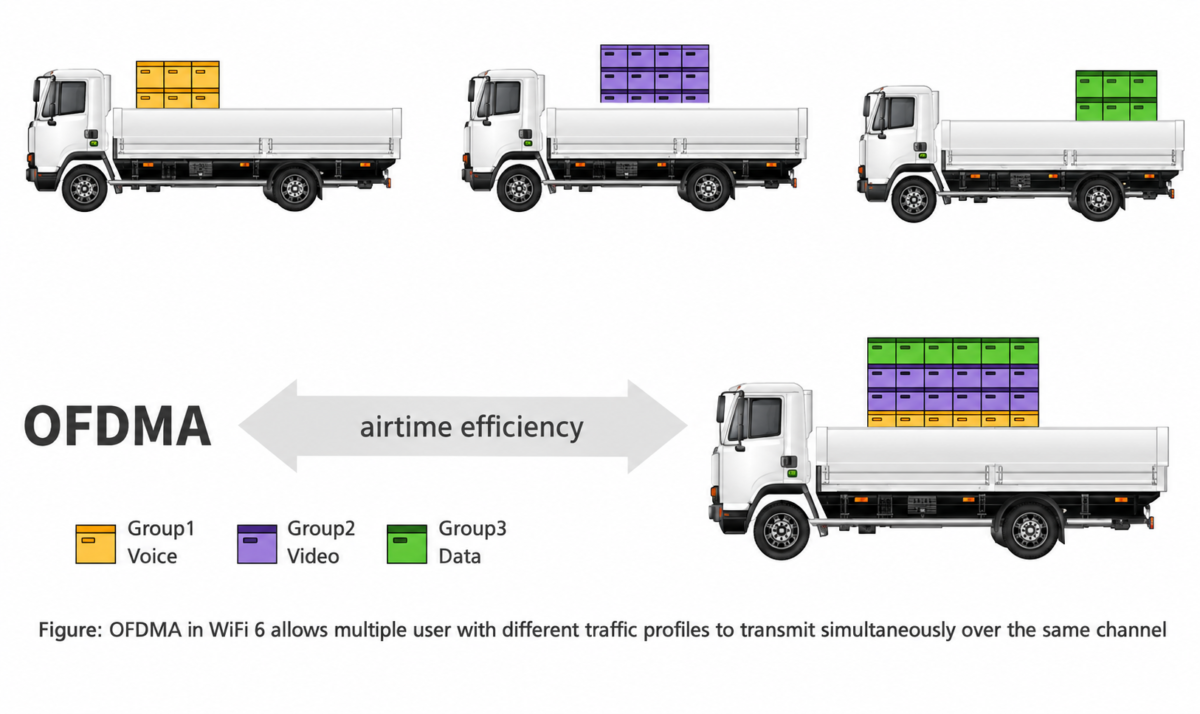
OFDMA (Orthogonal Frequency-Division Multiple Access): This subdivides channels into smaller Resource Units (RUs), enabling simultaneous transmissions to multiple clients. Instead of serving devices sequentially, the access point multiplexes multiple IoT or embedded devices within the same transmission frame. This reduces wait times and protocol overhead, especially when many devices send small packets, for example IoT telemetry.
-
MU-MIMO (Multi-User Multiple-Input Multiple-Output): By using multiple spatial streams on multiple antennas, MU-MIMO allows parallel uplink and downlink transmissions to multiple devices, improving overall cell capacity and throughput. Cell capacity increases when channel quality and spatial separation are sufficient.
-
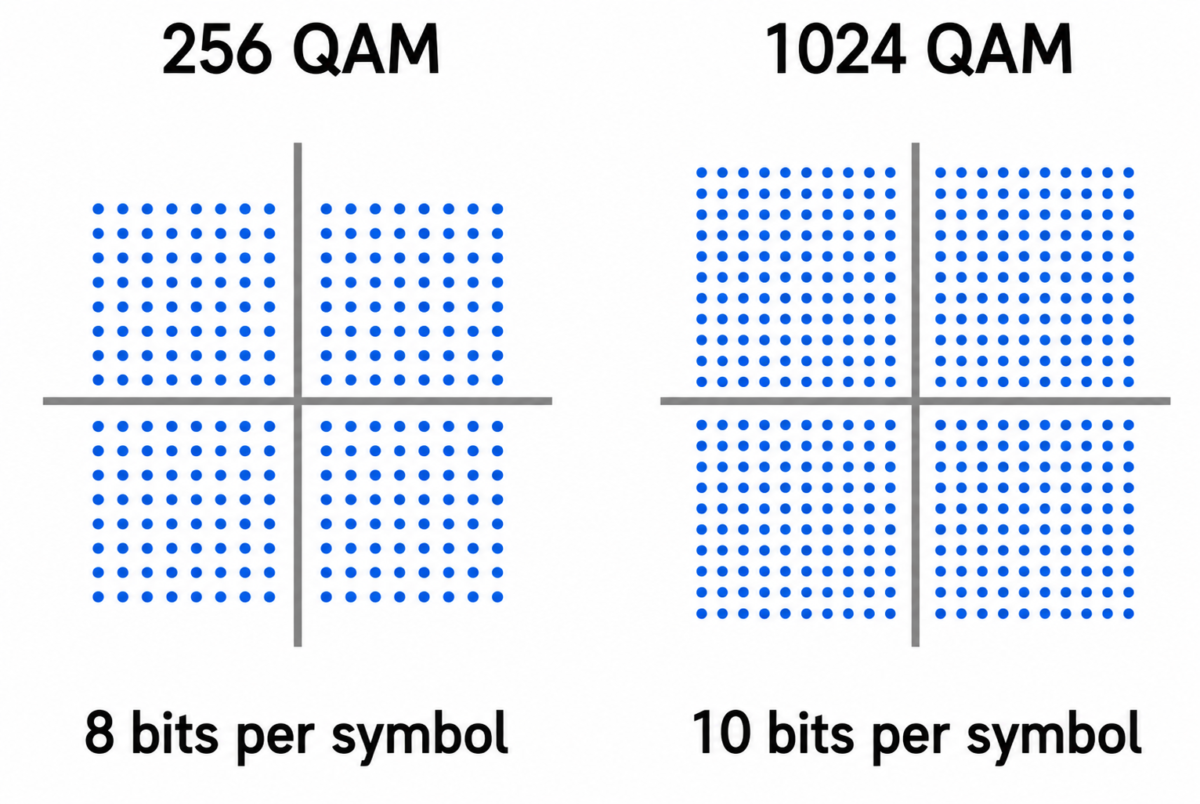
1024-QAM (Quadrature Amplitude Modulation): With 10 bits per symbol (versus 8 bits in 256-QAM), giving roughly 25 percent more bits per symbol and increases peak data rate at high signal quality, typically at short distance to the access point. 1024-QAM increases data density, boosting peak data rates at good signal quality.
-
160 MHz channels: The larger channel widths enabled in the 6 GHz band allow up to 1.2 Gbps PHY rate per spatial stream (around 2.4 Gbps for a 2×2 configuration), approximately doubling throughput compared to 80 MHz channels.
-
WPA3 security: The latest security standard provides SAE authentication and improved encryption, mandatory for all Wi-Fi 6e devices, and optional 192‑bit enterprise suites ensuring robust security in industrial deployments.
-
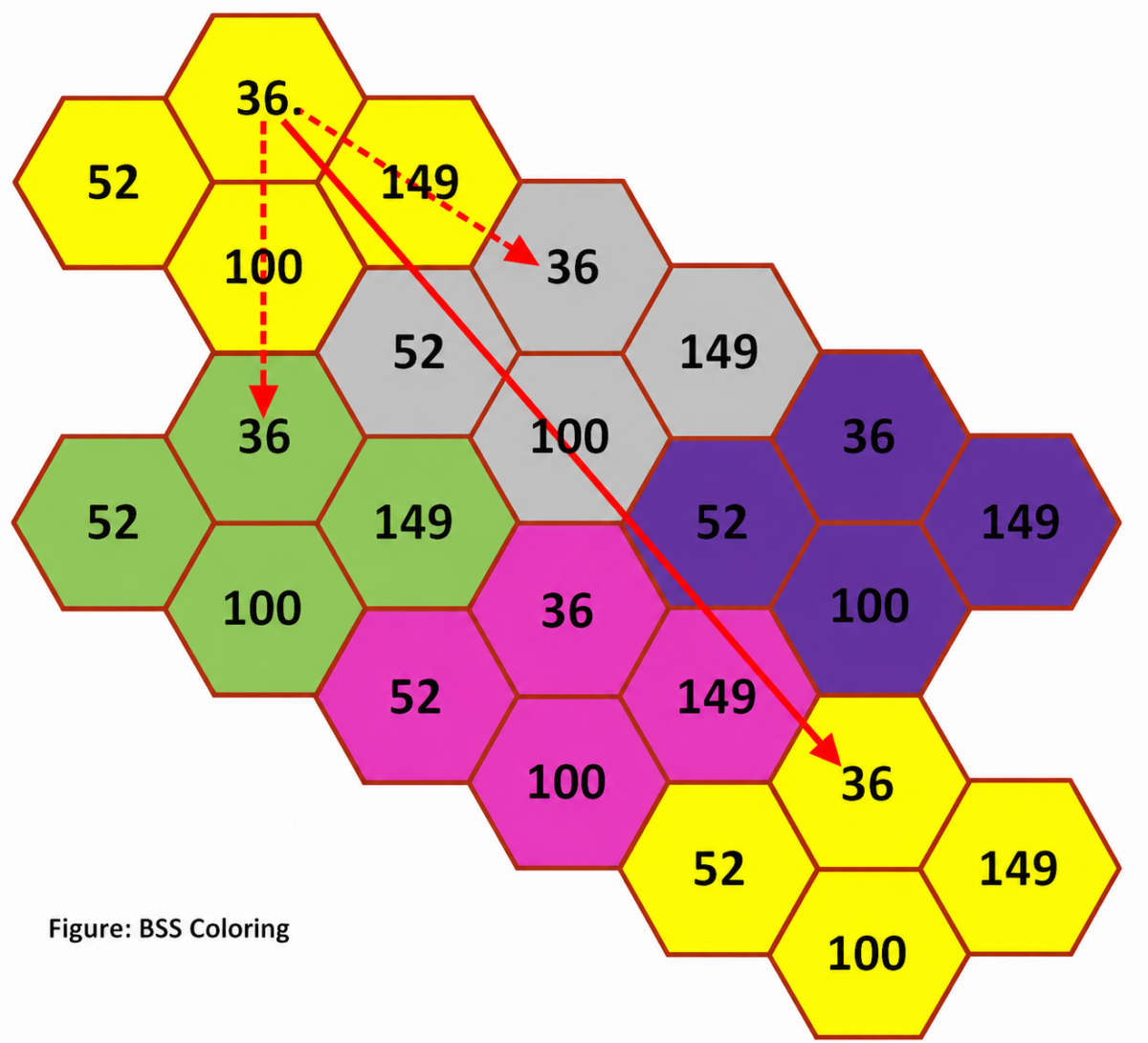
BSS (Basic Service Set) colouring: Spatial reuse mechanisms enable overlapping cells to use the same channel more efficiently by “colouring” transmissions and ignoring distant weaker signals, reducing contention in dense networks. Each WLAN cell receives a colour identifier. Clients can ignore traffic from neighbouring cells with a different colour when the signal is below a defined threshold. This allows parallel transmissions despite neighbouring cells more often; wait times drop, especially in dense designs.
-
Target Wake Time (TWT): End devices and access points agree on fixed wake‑up and transmit windows. This saves energy for IoT devices and reduces collisions because transmissions are coordinated. These scheduled wake and sleep periods reduce power consumption by coordinating transmission windows between AP and client devices – critical for battery-powered IoT sensors.
Together, these features deliver up to 2.4 Gbps per stream, up to 40 % higher throughput than Wi-Fi 6, and deterministic latency below 2 ms in optimised deployments.
If your network supports multiple high-density clients – such as wireless sensors, cameras, or handheld terminals – OFDMA and MU-MIMO optimise airtime, reducing congestion and improving responsiveness. The wider 160 MHz channels in 6 GHz enable throughput-intensive applications like video surveillance or real-time analytics, while TWT helps extend battery life in wireless IoT devices. Additionally, robust WPA3 security protects sensitive data and device authentication, addressing growing cybersecurity concerns in industrial and embedded networks.
Wi-Fi 6e benefits and real-world industrial performance
Wi-Fi 6e enhances predictability, capacity, and scalability by extending Wi-Fi 6 into the 6 GHz spectrum. In Europe, this provides up to 480 MHz of additional bandwidth, enabling more non-overlapping channels (up to three 160 MHz), which is critical for high-density environments.
The cleaner 6 GHz band eliminates interference from legacy Wi-Fi and other devices, delivering more reliable and deterministic performance. This is especially important for time-sensitive applications such as industrial automation, real-time telemetry, and video transmission.
In practice, Wi-Fi 6e allows more devices to operate concurrently with the same number of access points. With 160 MHz channels and OFDMA, well-optimised 2×2 clients can achieve around 1.0–1.4 Gbit/s (TCP) at short range, with latency typically in the single- to low double-digit millisecond range – remaining more consistent under load than legacy bands.
For design engineers, understanding the practical implications of these improvements is crucial when evaluating Wi-Fi 6e benefits for your products or systems.
-
Capacity: Wi-Fi 6e enables more devices to operate simultaneously with reduced performance degradation in well-designed networks. Ideal for high-density industrial and commercial deployments. If your application involves environments with high device density, Wi-Fi 6e can help maintain throughput and responsiveness even as more devices connect and transmit simultaneously. This is critical for industrial automation, real-time monitoring, or smart building applications.
-
Throughput: Supports high-bandwidth applications with wide 160 MHz channels and efficient modulation, ideal for real-time video and data-heavy systems. Design your system to support wide channels and multiple spatial streams if you require high-speed wireless links, ensuring that your device’s Wi-Fi 6e chipset and antenna design maximise throughput capabilities.
-
Latency: Delivers more predictable and typically lower-latency connections for critical for time-sensitive control and monitoring systems. For time-sensitive applications like robotics control, process automation, or telemedicine, Wi-Fi 6e’s low and consistent latency supports real-time data exchange and control, improving system stability and responsiveness.
-
Scalability: Maintains performance even as network load grows, within the limits of planning and spectrum availability, future-proofing your design against increasing device counts. Your designs can rely on Wi-Fi 6e to provide stable connectivity in multi-user environments, reducing the need for overprovisioning access points or complex network segmentation.
-
Efficiency: OFDMA and BSS colouring maximise spectrum utilisation, supporting both high and low data rate devices efficiently. In dense environments with multiple overlapping Wi-Fi cells, such as multi-floor factories or office buildings, BSS colouring helps maximise throughput and minimise cross-network interference, when properly configured. Wi-Fi 6e is especially suitable for applications with many low-data-rate devices transmitting frequently, such as sensor networks or industrial monitoring, helping extend battery life and reduce network congestion.
-
Compatibility: Allows phased rollouts alongside legacy Wi-Fi systems, minimising infrastructure overhaul. You can integrate Wi-Fi 6e into existing network infrastructure gradually, reducing upgrade costs and minimising disruption during transition periods.
-
Compliance: Requires attention to regulatory mandates and certification for seamless deployment. Choosing Wi-Fi 6e chipsets with certified firmware and robust RF front-ends ensures regulatory compliance, system reliability, and reduces time to market.
What this means for your design
Wi-Fi 6e allows you to deliver high-performance, scalable wireless connectivity without increasing network complexity or hardware density. It enables robust performance in IoT-heavy environments, simplifies RF planning, and ensures your designs are ready for future high-bandwidth, low-latency requirements.
For engineers and organisations alike, Wi-Fi 6e represents a critical step toward more deterministic, efficient, and scalable wireless systems—unlocking new possibilities across industrial IoT and enterprise applications.
Business advantages beyond performance
Wi-Fi 6e also delivers tangible strategic value for organisations:
- Future-proof infrastructure: Supports growing device density and data demands while preparing networks for the transition to Wi-Fi 7.
- Enhanced productivity: More reliable, low-latency connectivity improves operational efficiency across manufacturing, logistics, and field applications.
- Cost efficiency: Reduced interference and better spectrum utilisation can lower maintenance, minimise downtime, and reduce the need for additional access points.
- Improved security: Support for WPA3 enhances encryption and authentication, strengthening protection for sensitive data.
Wi-Fi 6e routers and compatibility with Wi-Fi 6 and legacy networks
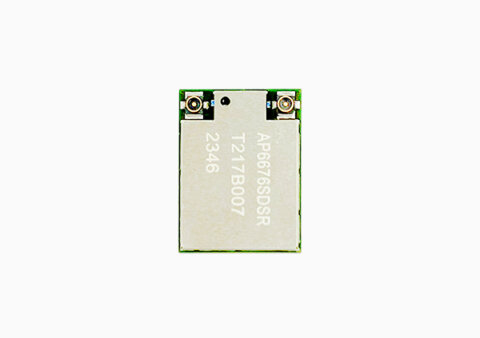
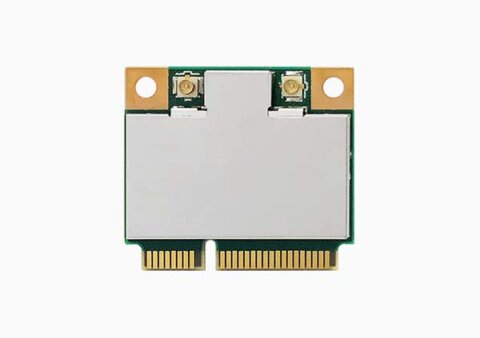
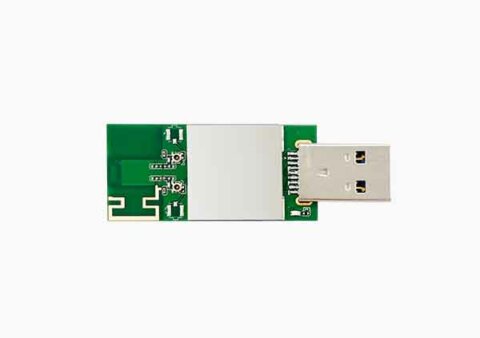
Wi‑Fi 6e modules, antennas, development kits and Wi‑Fi 6E routers are available. The standards are backward compatible: compatible devices based on Wi‑Fi 6 or Wi‑Fi 5 operate in mixed deployments, while Wi‑Fi 6E enabled devices use 6‑GHz channels up to 160 MHz.
Industrial wireless networking demands robust, reliable hardware designed to withstand challenging environments such as factories, warehouses, and outdoor sites. For Wi-Fi 6e deployments, design engineers should consider the following categories of industrial-grade routers and modules that support the extended 6 GHz band:
-
Rugged industrial Wi-Fi 6e access points: Built with durable casings and enhanced temperature and vibration resistance, these devices provide seamless wireless coverage with extended range and stable throughput, suitable for manufacturing floors and logistics hubs.
-
Embedded Wi-Fi 6e modules: Compact, low-power modules designed for integration into IoT sensors, medical devices, or industrial equipment. These modules support 6 GHz frequencies and maintain compatibility with existing 2.4 GHz and 5 GHz networks.
-
Industrial gateways with multi-band support: Gateways that aggregate data from wired and wireless sensors, offering dual or tri-band Wi-Fi 6e connectivity to ensure high throughput and low latency for time-sensitive control systems.
-
Mesh network nodes for Wi-Fi 6e: Scalable mesh routers enable flexible deployment in complex industrial layouts, using the clean 6 GHz spectrum to reduce interference and improve network resiliency.
Wi-Fi 6e compatibility ensures smooth operation alongside Wi-Fi 6 networks, allowing legacy devices to coexist without performance degradation. Selecting hardware certified for Wi-Fi 6e compliance helps guarantee regulatory adherence and interoperability, simplifying network design and deployment.
Our product ranges for Wi-Fi 6e

Which industrial IoT use cases benefit from Wi-Fi 6e?
Wi-Fi 6e technology’s technical advantages – expanded 6 GHz spectrum, high throughput, more predictable (not strictly deterministic) latency, and robust WPA3 security – make it exceptionally well-suited to industrial IoT (IIoT), embedded, and edge applications. In environments where reliable wireless connectivity is essential for automation, analytics, and device management, Wi-Fi 6e’s advantage is that it can help bridge the gap between wired-network performance and wireless flexibility.
Below are key industrial and embedded use cases that directly benefit from Wi-Fi 6e adoption:







Enabling industry 4.0 connectivity
Across all of these use cases, Wi-Fi 6e empowers engineers to design and deploy Industry 4.0-ready systems that combine high reliability, scalability, and flexibility. Its combination of wide channels, low latency, and secure communication brings deterministic performance to environments previously limited by wired or congested wireless solutions.
In summary:
- Performance: Comparable to wired Ethernet, but with the flexibility of wireless.
- Reliability: Predictable behaviour under load, even in dense RF environments.
- Security: Mandatory WPA3 ensures robust encryption and authentication.
- Scalability: Supports more devices, more data, and more diverse use cases without significant degradation.
Wi-Fi 6e delivers a powerful foundation for future industrial, embedded, and IoT designs – enabling real-time connectivity, efficiency, and innovation across manufacturing, healthcare, energy, and logistics sectors.
When integrating Wi-Fi 6e into embedded systems, careful consideration of antenna design, power consumption, and coexistence with other wireless protocols is essential. Wi-Fi 6e certification and compliance with regional regulations, such as the UK’s Ofcom guidelines and the EU’s CE marking requirements, ensure legal deployment and consistent performance.
Ready to take advantage of Wi-Fi 6E in your next design? Partner with our experts to optimise your RF architecture, ensure compliance, and accelerate time to market with high-performance, future-ready connectivity. We can support you at every stage, with specialists across our technology network ready to assist with antenna design, power optimisation, coexistence, and regulatory requirements – whenever you need it.
What are the hardware and integration considerations?
A wide range of Wi-Fi 6e-enabled modules, antennas, and routers are now available. You can integrate these into existing systems with backward compatibility to Wi-Fi 6 and 5 networks.
When integrating Wi-Fi 6e into your system:
- Verify backward compatibility with Wi-Fi 6 and Wi-Fi 5 networks to support mixed-device environments.
- Ensure module certification with CE, FCC, and Wi-Fi Alliance certification for interoperability.
- Evaluate antenna design for optimal 6 GHz performance, considering propagation characteristics.
- Consider environmental factors such as industrial noise, physical obstructions, and multi-path interference during site planning.
- Engage with specialists for prototyping, testing, and validation.
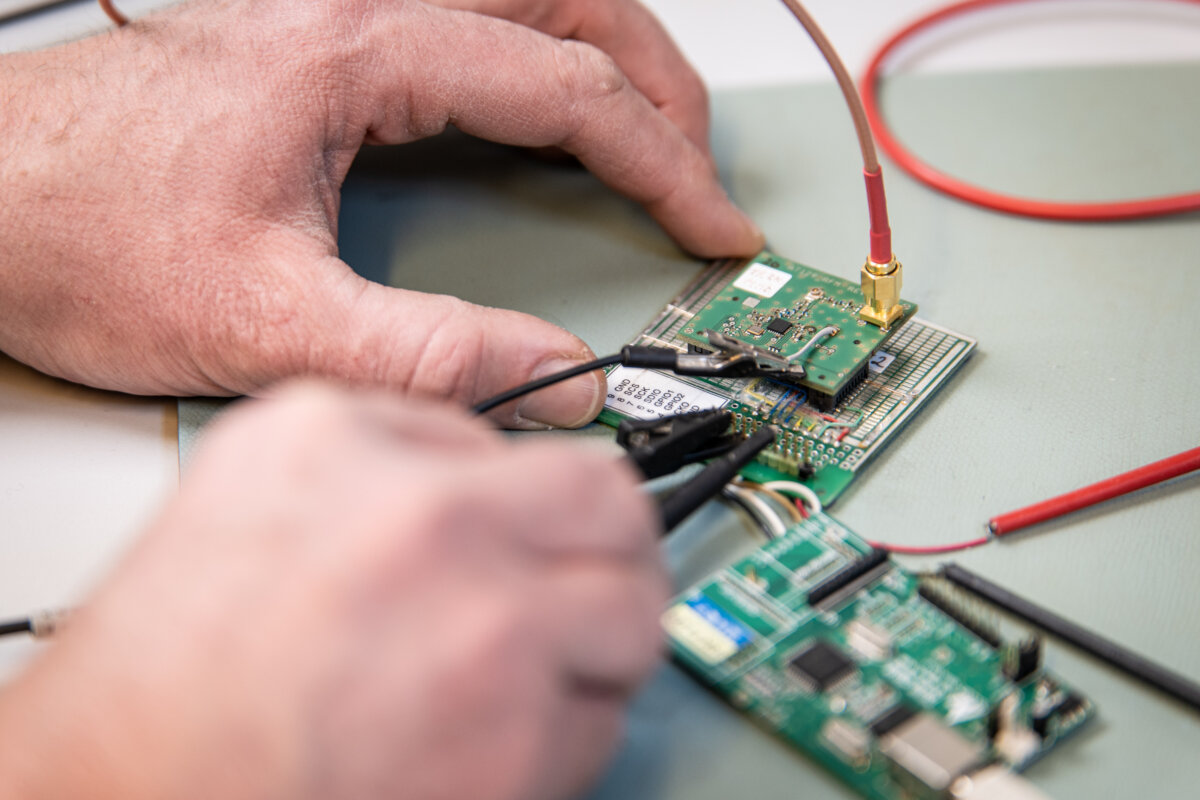
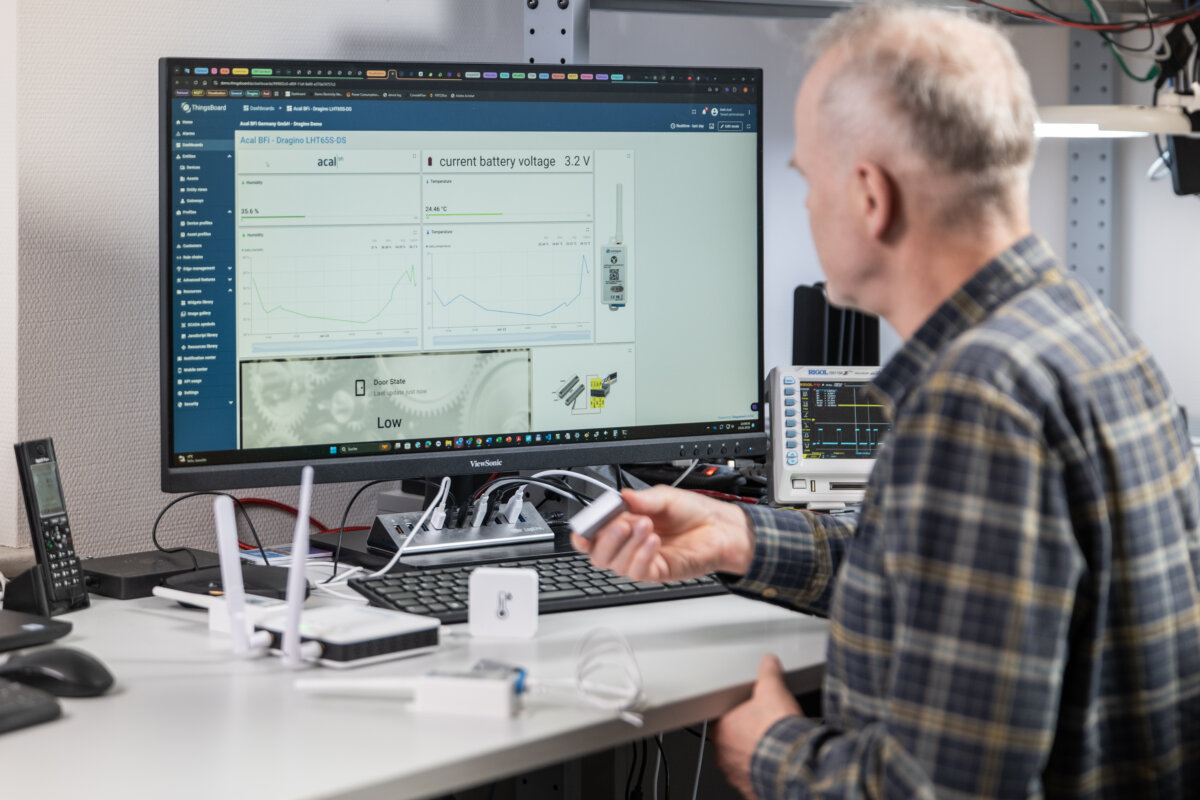
We provide consultation, component sourcing, and prototyping support to ensure compliance with CE, FCC, and Wi-Fi Alliance standards.
Leveraging proven Wi-Fi 6e modules and compliant hardware simplifies design cycles and accelerates time-to-market. Certification ensures interoperability and regulatory compliance, reducing deployment risk.
Our IoT & Wireless Technology Centre can provide tailored support, from design consultation to sourcing and validation, helping your projects meet demanding industrial standards.
Contact our IoT & Wireless Technology Centre to discuss custom Wi-Fi 6e designs, integration roadmaps, and performance validation.
Wi-Fi 6e security features for industrial wireless networks
Security is critical in industrial wireless deployments, and Wi-Fi 6e delivers robust protections designed to meet stringent modern cybersecurity demands. Operating exclusively with WPA3 security or Enhanced Open (for open networks), Wi-Fi 6e disallows the older WPA2 protocol in the 6 GHz band, ensuring enhanced default security.
Key WPA3 improvements include:
- Simultaneous Authentication of Equals (SAE): Replaces traditional pre-shared keys (PSK), preventing offline password cracking and strengthening device authentication.
- Forward secrecy: Generates unique session keys for each connection, protecting data even if long-term keys are compromised.
- 192-bit encryption (Enterprise mode): Meets commercial and government-grade security standards essential for industrial, medical, and critical infrastructure applications.
These advanced security features support compliance with key frameworks such as IEC 62443 and ISO 27001, making Wi-Fi 6e a trusted choice for sensitive environments handling confidential or safety-critical information.
In addition to strong encryption, Wi-Fi 6e benefits from the cleaner 6 GHz spectrum, which provides more non-overlapping channels to reduce congestion and interference. Features like Automatic Frequency Selection (AFS), Automated Frequency Coordination (AFC) and Transmit Power Control (TPC) dynamically optimise frequency use and power levels, enhancing network reliability by reducing latency, retransmissions, and connection instability.
Wi-Fi 6e hardware certified under Wi-Fi Certified 6E ensures seamless interoperability and consistent performance across vendors. Compliance with regional regulatory standards, including CE (Europe) and FCC (USA), guarantees legal RF emissions and safety for 6 GHz operation.
By combining cutting-edge WPA3 security, rigorous certification, and a cleaner spectrum environment, Wi-Fi 6e delivers reliable, resilient, and standards-compliant wireless connectivity. This reduces risks of unauthorised access, data breaches, and network downtime – critical factors for industrial, medical, and mission-critical deployments.
Conclusion
What is the outlook – and how best to transition to Wi-Fi 7?
Wi-Fi 6e unlocks the 6 GHz spectrum today, laying the groundwork for the next generation: Wi-Fi 7 (IEEE 802.11be). Transitioning from Wi-Fi 6e to Wi-Fi 7 is less a complete overhaul and more an incremental performance evolution – one that can be achieved using much of the same physical infrastructure, including cabling, switches, and antenna locations.
Wi-Fi 7 introduces several key technologies designed to push performance boundaries even further. From a deployment perspective, transitioning to Wi-Fi 7 means replacing access points and client devices, as existing Wi-Fi 6e hardware cannot support features like MLO or 4096-QAM through software alone. However, infrastructure elements such as Ethernet cabling, backhaul, and power distribution (PoE+) typically remain reusable, making the upgrade relatively straightforward.
Strategically, early adoption of Wi-Fi 6e now ensures a smoother migration path. Devices and networks designed for 6 GHz operation already meet many of the RF and regulatory conditions that Wi-Fi 7 builds upon. For enterprises, this means a phased, low-risk upgrade strategy rather than a disruptive overhaul. Looking further ahead, Wi-Fi 7 is expected to power next-generation applications such as real-time digital twins, collaborative robotics, and 8K video streaming – scenarios that demand multi-gigabit throughput and potentially sub-millisecond latency. For engineers, investing in 6E designs today ensures compatibility with tomorrow’s infrastructure and reduces redesign cycles when Wi-Fi 7 becomes mainstream.
To find out more about Wi-fi 7 read our article here
The strategic advantage of Wi-Fi 6e
Wi-Fi 6e strikes a balanced compromise between advanced performance and market maturity. It offers immediate gains in throughput, latency, and capacity over Wi-Fi 6, backed by a growing ecosystem of certified hardware and deployments. For industrial and embedded engineers, it represents a robust upgrade path toward future Wi-Fi 7 networks.
By deploying Wi-Fi 6e, you position your projects to meet today’s demanding IoT and wireless requirements with more predictable, secure, and scalable connectivity – without waiting for Wi-Fi 7 hardware to mature.
Explore Acal BFi’s Wi-Fi 6e solutions
Our engineers help you navigate standards, hardware selection, and certification to ensure your next wireless system excels. Contact us today to discuss your Wi-Fi 6e project requirements.
Sources
Regulation and standards
- CEPT / ECC Decision (20)01 – EU allocation of 5.945–6.425 MHz to WAS/RLAN (Wi‑Fi 6E). Link: https://docdb.cept.org/download/4577
- ETSI EN 303 687 – Harmonised European Standard for 6‑GHz WLAN (LPI/VLP/SP/AFC; test and conformity framework). Link: https://www.etsi.org/deliver/etsi_en/303600_303699/303687/01.01.01_60/en_303687v010101p.pdf
- Wi‑Fi Alliance – Wi‑Fi 6E: Expanding Wi‑Fi into 6 GHz (white paper). Link: https://ces.vporoom.com/Wi-Fi/download/Wi-Fi_6E_Highlights_202112.pdf
- IEEE 802.11 Working Group and 802.11be (Wi‑Fi 7) – overview and TGbe. Link: https://grouper.ieee.org/groups/802/11/
Vendors from the Acal BFi portfolio and references
- Lantronix G520 – product brief with optional Wi‑Fi 6/6E (2T2R) option. Link: https://cdn.lantronix.com/media/pdf/G520-PB.pdf
- Fibocom SC151 – smart module with Wi‑Fi 6E capability. Link: https://www.fibocom.com/en/Products/5GSmartModule-SC151-GL.html
- Sparklan WNFQ‑268AXI(BT) – Wi‑Fi 6E tri‑band module with up to 160‑MHz channels. Link: https://www.sparklan.com/product/wnfq-268axibt-wifi6-wifi6e-11ax-triband-combo-m-2-dbdc-industrial-module-sparklan/
- Sparklan WPEQ‑276AX – Wi‑Fi 6E AP module (QCN9072), 2×2 MU‑MIMO, up to 160‑MHz channels. Link: https://www.sparklan.com/product/wpeq-276ax-wifi6e-11ax-mumimo-pcie-module-sparklan/
- Semtech (Sierra Wireless) AirLink XR80/XR90 – router specifications (Wi‑Fi 6). Links: https://www.sierrawireless.com/router-solutions/xr80/ https://www.sierrawireless.com/router-solutions/xr90/