RF Power Sensing
- Technology
- Laser power and energy meters
- Partner
- Advanced Energy
RF power sensing instruments and calibration systems help engineers and technicians measure and control RF power with high accuracy across demanding applications. The range includes RF power sensors, benchtop RF power meters, RF power standards, and automated calibration systems for both routine measurement and reference-grade calibration. These solutions support frequencies from the kilohertz range into the gigahertz range and power levels from low-level signals up to multi-kilowatt RF sources. Integrated and modular options are available to simplify setup while maintaining measurement precision.
High-power measurement capability makes the range suitable for industrial RF generators, plasma processes, and transmitter testing. Traceable calibration supports compliance with quality systems and national measurement standards. Stable thermal measurement technologies help reduce drift and improve confidence over longer calibration intervals. Optional software support enables automated workflows, data logging, visualization, and report generation. The portfolio is well suited to semiconductor manufacturing, communications, aerospace, research, and metrology laboratories.
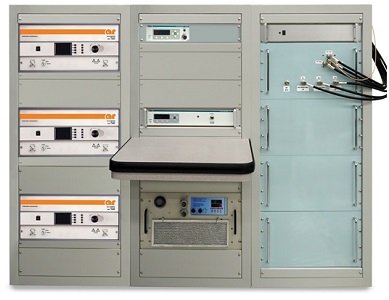
RF power sensing instruments and calibration systems provide the tools needed to measure, verify, and control RF energy with confidence. The portfolio spans compact RF power sensors, portable and benchtop RF power meters, precision RF power standards, and complete calibration systems for traceable RF power measurements.
These solutions are designed for environments where measurement certainty matters, including semiconductor processing, communications, aerospace, industrial RF heating, and metrology laboratories. With coverage from low kHz into GHz frequencies and from low-level signals up to multi-kilowatt sources, the range supports both everyday RF testing and high-accuracy calibration workflows.
Range features
A high level overview of what this range offers
- Wide frequency coverage: Supports measurement applications from low kHz into tens of GHz for communications, semiconductor, industrial, and laboratory use.
- Low- to high-power capability: Covers signals from very low power levels up to multi-kilowatt RF sources, including high power RF measurement and calibration tasks.
- Integrated sensor-meter options: All-in-one instruments such as integrated RF power meters simplify installation, reduce cabling, and improve ease of use.
- Automated RF power calibration: Calibration systems streamline workflows, reduce manual error, and improve repeatability for RF power sensors and wattmeters.
- Traceable RF power measurements: Reference standards and sensors support documented traceability to national metrology standards for reliable compliance.
- Stable thermal measurement technologies: Thermistor standards and calorimeter-based solutions deliver dependable long-term performance with low drift.
- Software-supported workflows: Optional software enables instrument control, automated data collection, analysis, and report generation.
Typical measurement scope
- Frequency coverage from low kHz into GHz ranges
- Power coverage from very low-level RF signals up to multi-kilowatt sources
- Solutions available for both laboratory calibration and in-process industrial monitoring
- Product types include RF power sensors, RF power meters, RF power standards, and RF power calibration systems
Application focus
- Traceable RF power measurements for metrology and quality systems
- High power RF measurement for generators, transmitters, and plasma systems
- Calibration of sensors and wattmeters using automated systems
- Forward and reflected power monitoring in transmission and matching applications
FAQs
for RF Power Sensing
The range includes RF power sensors, RF power meters, dedicated RF power standards, and complete RF power calibration systems. Together, these products support direct RF power measurement, reference-grade calibration, and automated verification workflows for a wide variety of RF applications.
Accuracy is achieved through stable sensor technologies such as thermistor-based and calorimetric measurement methods, combined with documented calibration procedures. Traceability is supported through reference standards linked to national metrology practices, helping users maintain compliance, control uncertainty, and document measurement performance.
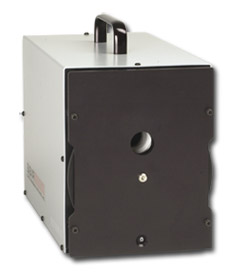
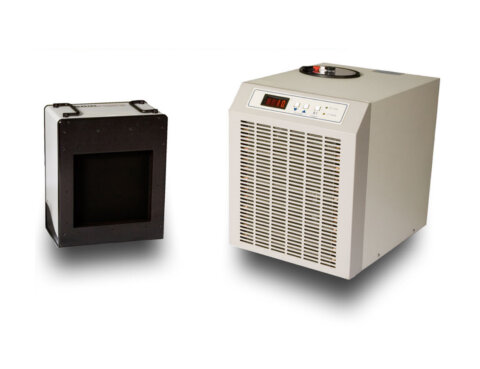
An RF power calorimeter measures RF power by converting energy into heat and determining power from the resulting thermal change. It is especially useful for high power RF measurement where conventional low-power sensors are unsuitable. Calorimeters are commonly used in calibration labs and high-power test environments because they offer strong accuracy for reference measurements.
Yes, some instruments in the range are designed to measure both forward and reflected power simultaneously. This is valuable for tuning RF generators, checking mismatch conditions, monitoring VSWR-related behavior, and confirming efficient power delivery to the load.
The portfolio spans a broad operating envelope, from low kHz to GHz frequencies and from very low-level RF signals up to multi-kilowatt power levels. This makes it suitable for everything from low-power sensor calibration to industrial and laboratory high-power RF applications.
A 12-month calibration interval is commonly used for RF power sensing instruments, although the appropriate interval depends on usage intensity, quality requirements, and the criticality of the measurement. In demanding environments, users may perform interim checks or more frequent verification to maintain confidence in performance.