Plate Beam Splitters
- Technology
- Polarisation optics
- Partner
- Wavelength Opto-Electronic
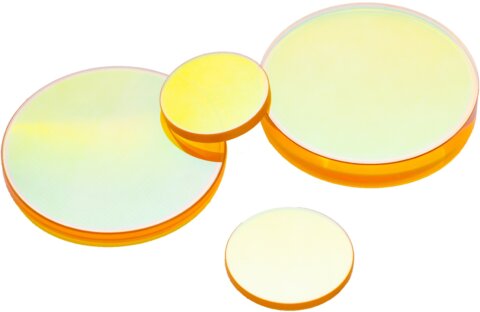
Plate beam splitters are thin, precision optical plates designed to split an incoming light beam into two paths. They are commonly used in laser systems, optical instruments, and imaging setups to direct or sample beams without significantly affecting beam quality. Unlike bulky cube beam splitters, plate versions consist of a single glass substrate with a dielectric coating, which helps reduce optical path length and avoid additional material in the beam path. Polarising beam splitter plates reflect one polarisation while transmitting the other, allowing efficient separation of polarised light. Non-polarising beam splitter plates split intensity approximately equally regardless of polarisation, making them ideal for unpolarised or randomly polarised sources. Both types feature anti-reflection coatings on the unused surfaces to minimise stray reflections and maximise throughput. These thin-film beam splitting optics are built from high-quality optical glass such as BK7 or fused silica, helping preserve the wavefront of the transmitted and reflected beams. Plate beam splitters are a versatile solution across research, medical imaging, metrology, and industrial laser applications where dependable beam division is required.
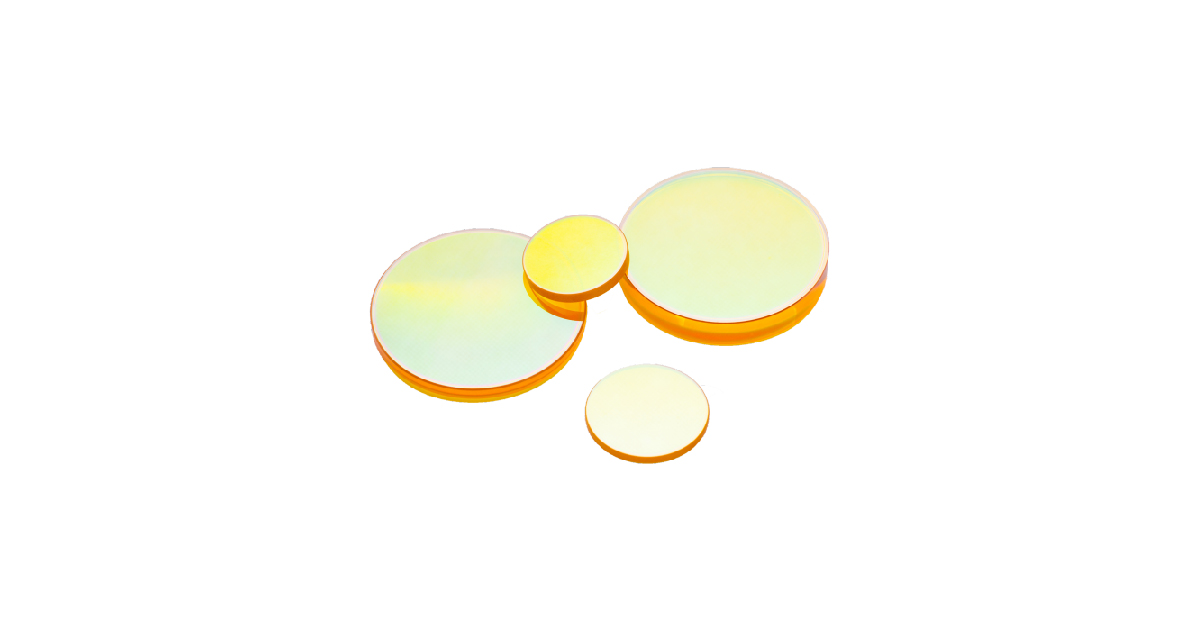
Plate beam splitters provide a compact and efficient way to divide light in optical systems. Compared with bulkier alternatives, their thin plate construction reduces added path length and helps maintain beam quality, making them well suited to precision laser, metrology, and imaging applications.
Available as both polarising beam splitter and non-polarising beam splitter designs, they can separate light either by polarisation state or by intensity ratio. With dielectric coatings, AR-treated back surfaces, and high-quality optical substrates, these optical beam splitter components support reliable performance across a wide range of wavelengths and integration requirements.
Range features
A high level overview of what this range offers
- Polarising or non-polarising options – Select a splitter for polarisation separation or for approximately uniform intensity splitting across the beam.
- Thin optical plate design – Minimal thickness and high flatness help reduce beam distortion and optical path difference.
- Dielectric partial coating – Precision thin-film coatings provide stable reflectance and transmittance performance at the design wavelength or band.
- Anti-reflection back coating – Suppresses ghost reflections and improves transmitted beam contrast and throughput.
- High optical quality substrate – Optical glass such as BK7 or fused silica helps preserve wavefront integrity in demanding systems.
- Flexible configurations – Available in different sizes, wavelength ranges, and splitting ratios to match application needs.
- Easy integration – Flat plate geometry fits standard mounts and is commonly used at 45° incidence for straightforward alignment.
What’s in this range?
All the variants in the range and a comparison of what they offer
| Specification | Polarising Plate Beam Splitter | Non-Polarising Plate Beam Splitter |
|---|---|---|
Function | Splits beam by polarisation (S vs P) | Splits beam by intensity with minimal polarisation dependence |
Typical split ratio | Reflects > 95% of S-polarised light and transmits > 95% of P-polarised light at the design wavelength | Commonly 50:50 (±5%) at the design wavelength for both polarisations |
Wavelength range | Wavelength-specific coatings such as VIS 400–700 nm, NIR 1000–1600 nm, or laser-line options | Broadband or wavelength-specific coatings such as 400–700 nm broadband |
Substrate material | Optical glass such as BK7 or fused silica | Optical glass such as BK7 or fused silica |
Incident angle | Designed for 45° incidence | Designed for 45° incidence |
Surface flatness | λ/4 or better over clear aperture | λ/4 or better over clear aperture |
Surface quality | 40-20 scratch-dig | 40-20 scratch-dig |
Back surface coating | Anti-reflection coated to suppress ghost beam | Anti-reflection coated to suppress ghost beam |
Extinction ratio |
| Not applicable |
Laser damage threshold | Suitable for standard lab laser powers; contact for specifics | Suitable for standard lab laser powers; contact for specifics |
Available sizes | Common 1 inch (25.4 mm) diameter or custom sizes on request | Common 1 inch (25.4 mm) diameter or custom sizes on request |
FAQs
for Plate Beam Splitters
A polarising plate beam splitter uses a specialised coating to reflect one polarisation state while transmitting the orthogonal one, allowing separation of light based on polarisation. A non-polarising plate beam splitter is designed to divide light by intensity at a defined ratio, such as 50:50, with minimal dependence on the input polarisation. This makes polarising versions ideal for polarisation control and non-polarising versions better suited to unpolarised or randomly polarised sources.
Plate beam splitters are single flat optics with a partial reflective coating, while cube beam splitters are formed from two prisms joined together with a coating at the interface. Plate designs are thinner, lighter, and often introduce less optical path length, which can help reduce aberrations and simplify mounting in compact systems. However, they can introduce lateral beam offset in the transmitted beam, whereas cube beam splitters maintain a more co-linear beam geometry.
Ghosting refers to unwanted secondary reflections caused by light reflecting from the second surface of the plate. In plate beam splitters, this can create a faint extra beam or reduce contrast in the system. To minimise this effect, the back surface is typically treated with an anti-reflection coating that greatly reduces unintended reflections and improves overall optical clarity.
Yes. Because the transmitted beam passes through a glass plate at an angle, it experiences a small lateral displacement and a slight increase in optical path length compared with the reflected beam. The amount depends on the substrate thickness, refractive index, and angle of incidence. In many applications this is manageable, but it should be considered in high-precision optical alignment.
Plate beam splitters are typically designed for use at 45° incidence, where the coating delivers its intended reflectance, transmittance, and polarisation behaviour. They will still interact with light at other angles, but the split ratio and optical performance may change significantly. For best results, they should be used at the specified design angle unless a custom coating has been made for another geometry.
Many plate beam splitters are suitable for standard laboratory laser powers and moderate pulsed applications, especially when dielectric coatings are used. However, power handling depends on the coating design, substrate material, beam size, and pulse energy or continuous-wave intensity. For high-power or high-energy laser use, the damage threshold should always be confirmed against the application requirements.
Yes. Plate beam splitters are available with coatings tailored to visible, near-infrared, ultraviolet, and specific laser-line wavelengths. Standard broadband options are common, and custom coatings can often be produced for a particular wavelength or splitting ratio. This flexibility makes them suitable for a broad range of scientific, medical, and industrial optical systems.
Plate beam splitters are typically mounted in an optical holder that sets the optic at the required angle, often 45°. In most cases, the partially reflective coated surface should face the incoming beam, while the anti-reflection coated side should be on the transmitted side. The optic should be secured without mechanical stress, kept clean, and aligned carefully so both reflected and transmitted beams follow the intended paths.