74000 Series Current Transformers
- Technology
- Current transformers
- Partner
- Myrra
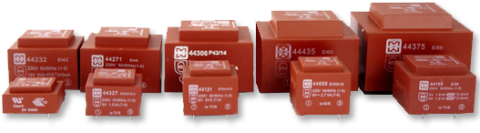
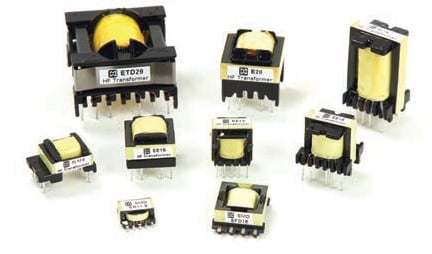
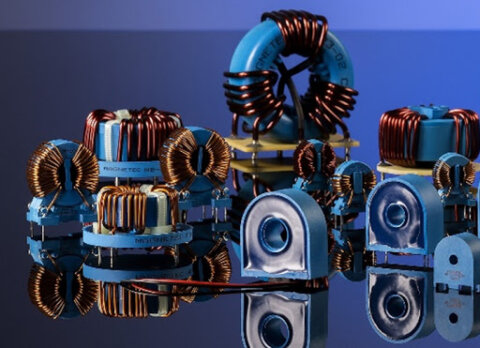
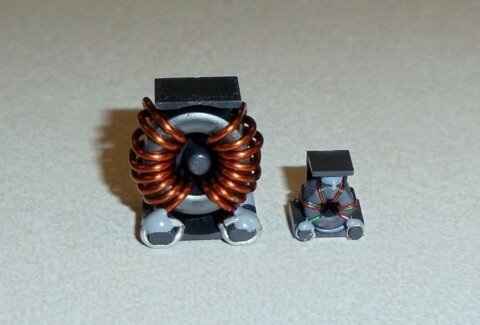
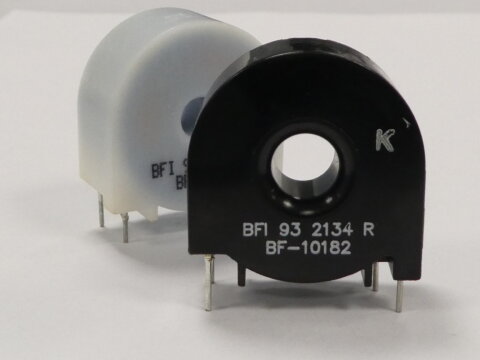
The 74000 Series is a family of ferrite-core current transformers designed for reliable current measurement in industrial and power electronics applications. These transformers cover two distinct frequency domains: conventional mains power from 50 Hz to 400 Hz and high-frequency switching circuits from 20 kHz to 150 kHz. The range includes pin-primary models for direct PCB mounting up to 25 A and through-hole toroidal models for external conductors up to 250 A. Ferrite cores are optimized for low loss and support typical accuracy around 1% across the intended operating range. Multiple core formats, including E-core, U-core, and toroidal versions, help designers match the sensor to mechanical and electrical constraints. Turn ratios from 1:25 to 1:2000 provide flexibility for different current levels and signal sensitivities. UL-recognised insulation materials and models with basic or reinforced isolation support use in mains-connected equipment. The series is suitable for applications such as energy metering, grid monitoring, SMPS current sensing, motor drives, solar inverters, laboratory instruments, and induction heating systems.
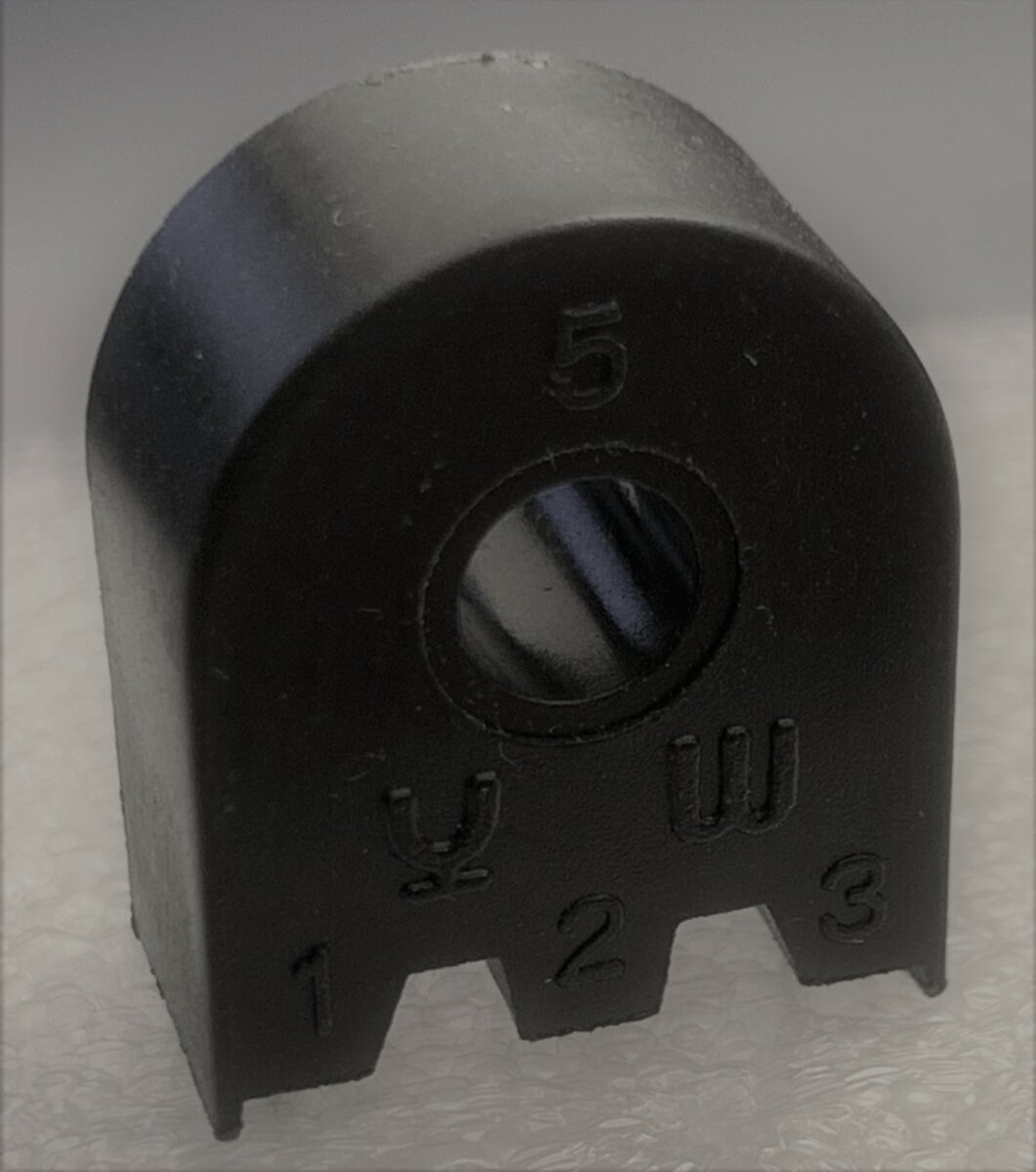
The 74000 Series Current Transformers are designed for precise AC current measurement across both low-frequency mains systems and high-frequency power electronics. The range combines PCB-mount pin-primary designs with through-hole toroidal formats, allowing easy integration into compact boards or higher-current cable-fed systems. With current capability from a few amps up to 250 A, turn ratios from 1:25 to 1:2000, and typical accuracy around 1%, these current sense transformers support applications such as AC current measurement, SMPS current sensing, industrial controls, solar inverters, and laboratory instrumentation.
Range features
A high level overview of what this range offers
- Wide frequency coverage: Supports 50 Hz to 400 Hz mains sensing and 20 kHz to 150 kHz SMPS current measurement within one product family.
- Flexible primary styles: Choose pin-primary PCB mount current transformers for direct board integration or through-hole current transformers for external conductor sensing in higher-power systems.
- Broad current range: Measures from low current levels up to 250 A, covering compact control electronics through to demanding industrial power circuits.
- Multiple core constructions: Available in E-core, U-core, and toroidal ferrite formats to suit different mechanical layouts and installation methods.
- Wide turn-ratio selection: Ratios from 1:25 to 1:2000 help optimise output level, sensitivity, and operating range for the application.
- High measurement accuracy: Designed for typical performance around ±1% accuracy at rated current with an appropriate burden resistor.
- Safety-focused insulation: Uses UL94-V0 materials, with selected models offering basic or reinforced insulation, creepage up to 8 mm, and isolation test voltages up to 4 kV.
- Cost-effective sensing solution: Ferrite-core construction provides robust, low-maintenance AC current sensing for industrial, energy, and power-conversion equipment.
What’s in this range?
All the variants in the range and a comparison of what they offer
| Pin Primary Models (50–400 Hz AC Mains) | 74521 | 74523 | 74531 | 74533 | 74534 | 74561 |
|---|---|---|---|---|---|---|
Turns Ratio | 1:750 | 1:500 | 1:1000 | 1:1000 | 1:350 | 1:2000 |
Max Primary Current (A) | 20 | 15 | 25 | 8 | 4 | 8 |
Secondary Resistance (Ω) | 57 | 155 | 90 | 360 | 380 | 400 |
Secondary Inductance (mH) | 300 | 670 | 4000 | 17000 | 19000 | 4500 |
Isolation Test Voltage | 2500 V | 1500 V | 2500 V | 2500 V | 2500 V | 4000 V |
| Pin Primary Models (20–150 kHz SMPS) | 74520 | 74530 | 74550 | 74560 | 74562 | 74570 |
|---|---|---|---|---|---|---|
Turns Ratio | 1:100 | 1:100 | 1:100 | 1:100 | 1:100 | 1:50 |
Max Primary Current (A) | 20 | 25 | 10 | 10 | 25 | 20 |
Secondary Resistance (Ω) | 1.5 | 1.0 | 2.3 | 1.1 | 1.1 | 0.32 |
Secondary Inductance (mH) | 8 | 10 | 6 | 12 | 12 | 9 |
Isolation Test Voltage | 2500 V | 2500 V | 1500 V | 4000 V | 4000 V | 4000 V |
| Through-Hole Models (20–150 kHz SMPS) | 74500 | 74501 | 74502 | 74510 | 74540 |
|---|---|---|---|---|---|
Turns Ratio | 1:50 | 1:100 | 1:200 | 1:100 | 1:100 |
Max Primary Current (A) | 15 | 25 | 25 | 150 | 200 |
Secondary Resistance (Ω) | 0.6 | 1.5 | 5 | 0.25 | 0.35 |
Secondary Inductance (mH) | 5 | 20 | 80 | 40 | 50 |
Isolation Test Voltage | Open frame | Open frame | Open frame | Open frame | Open frame |
| Through-Hole Models (50–400 Hz AC Mains) | 74503 | 74504 | 74511 | 74543 | 74546 |
|---|---|---|---|---|---|
Turns Ratio | 1:1000 | 1:750 | 1:1000 | 1:500 | 1:1000 |
Max Primary Current (A) | 12 | 10 | 60 | 100 | 250 |
Secondary Resistance (Ω) | 45 | 35 | 32 | 6.5 | 22 |
Secondary Inductance (mH) | 2000 | 1100 | 4000 | 1250 | 8000 |
Isolation Test Voltage | Open frame | Open frame | Open frame | Open frame | Open frame |
Specification notes
- Through-hole models do not include a built-in primary winding; the primary conductor is passed through the aperture during installation.
- For open-frame toroidal versions, insulation performance depends on the conductor insulation and end-use assembly.
- Some part numbers indicate termination style rather than a different magnetic design. Variants ending in 1/2 typically use PCB pins, 3/4/5 use FASTON tabs, and 6/7/8 use wire leads.
FAQs
for 74000 Series Current Transformers
Pin-primary models include an integrated primary turn within the package and are intended for direct PCB mounting. They are typically used for on-board current sensing up to about 25 A. Through-hole models are toroidal devices without a fixed primary winding, so an insulated cable or conductor is passed through the centre of the core. These versions are better suited to higher-current installations, reaching up to 250 A, and are commonly used where the sensor is mounted around an external conductor rather than directly on the PCB.
No. The 74000 Series is designed for AC and pulsed current measurement only. Like other current transformers, it relies on a changing magnetic field in the ferrite core, so it will not generate a usable output for steady DC current. For DC sensing, technologies such as Hall-effect sensors or shunt-based isolated measurement circuits are more appropriate.
The correct turn ratio depends on the maximum primary current, the required output signal level, and the burden resistor used in the measurement circuit. Lower ratios such as 1:50 or 1:100 are better for higher currents because they reduce the risk of saturation, while higher ratios such as 1:500 or 1:1000 provide greater output sensitivity for smaller currents. In practice, choose a model that keeps your expected operating current within the specified range and produces a secondary signal large enough for your sensing electronics without overdriving the core.
Typical accuracy is around ±1% at rated current when the transformer is operated with the recommended burden and within its intended frequency range. Accuracy can be influenced by burden resistor selection, operating frequency, current level, and how close the application comes to core saturation. Best results are achieved when the transformer is used within its specified current range and the burden is selected to match the desired measurement voltage without exceeding the core’s operating limits.
Yes. A burden resistor is required across the secondary winding to convert the secondary current into a measurable voltage and to ensure correct transformer loading. Without it, the secondary voltage can rise excessively and measurement accuracy will degrade. Select the resistor value so the secondary current produces an appropriate full-scale voltage for your circuit while remaining within the transformer’s recommended operating conditions. A higher burden increases voltage output, but too much resistance can push the core toward saturation.
The 74000 Series uses UL-approved insulation materials and is designed for applications requiring safe isolation between primary and secondary circuits. Depending on the model, the range supports basic or reinforced insulation, with creepage distances up to 8 mm and isolation test voltages up to 4 kV AC. These characteristics make selected parts suitable for mains-connected equipment, provided the final system design also meets the relevant safety requirements.