UV camera modules
See what visible cameras can’t
UV camera modules are designed for applications where important details sit outside the visible spectrum. By detecting ultraviolet wavelengths, they can reveal features such as surface contamination, fluorescence, corona discharge, or flames that may be difficult or impossible to see with a conventional visible-light camera.
Our UV camera portfolio provides compact, high-performance imaging solutions for engineers developing inspection, monitoring, scientific, and safety systems. Different modules are suited to different parts of the UV spectrum and different system requirements, so choosing the right combination of sensor, optics, filtering, and illumination is key to getting the results you need.
UV imaging is particularly useful when a visible camera cannot provide enough information. Applications include:
Flame detection and monitoring, Corona and arc detection, Semiconductor and electronics inspection, Surface and contamination inspection, Fluorescence imaging, Scientific and laboratory analysis, Specialist industrial monitoring
The right UV camera can help identify faults earlier, improve inspection processes, and provide visibility into phenomena that would otherwise go undetected.
Do you want to know more about this technology? Try out our new Chatbot!
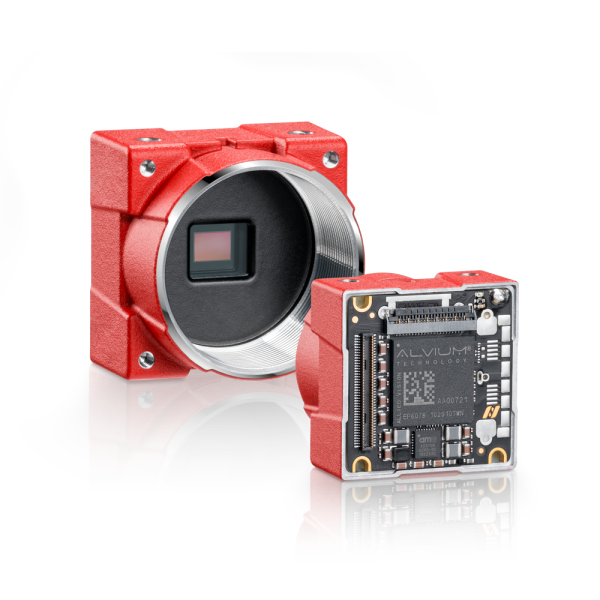
Why our UV portfolio is right for you
We offer a range of compact UV camera modules for engineers who need reliable imaging beyond the visible spectrum. Our portfolio covers different UV sensitivities, resolutions, interfaces, and system configurations, giving you flexibility to choose the right starting point for your design.
Rather than simply supplying a camera, we can help you build the imaging solution around it. Our in-house imaging specialists can advise on sensor selection, spectral requirements, optics, filtering, illumination, and integration to help you achieve the performance you need.
Whether you are developing an inspection system, monitoring high-voltage equipment, detecting flames, or working on a specialist scientific application, we can help you find the right UV imaging technology – and, where a standard module isn’t suitable, work with our camera partners to develop a solution tailored to your requirements.
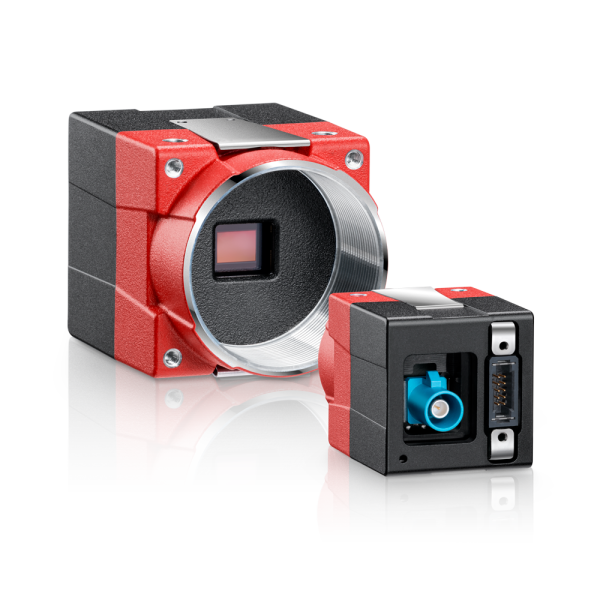
Key considerations
-
Spectral range Start with the wavelengths you need to detect. UVA, UVB, and UVC behave differently and are suited to different applications, so selecting the right spectral range is fundamental.
-
Sensor sensitivity UV performance depends heavily on the sensor and its construction. A standard visible-light sensor may not provide the sensitivity or response you need without appropriate modification or optimisation.
-
Optics and filtering The lens and filters need to be compatible with the wavelengths being captured. Standard visible-light optics are not always suitable for UV imaging.
-
Illumination Consider how the UV signal will be generated. Controlled illumination may be essential for inspection or fluorescence applications, while other systems may rely on naturally occurring UV sources.
-
Signal-to-noise performance UV signals can be relatively weak, making sensor sensitivity, noise, gain, and the overall signal path important when designing a reliable imaging system.
-
Environmental requirements Temperature, vibration, enclosure materials, ambient light, and UV exposure can all affect system performance and should be considered early in the design.
Technical overview
UV camera modules are designed to detect specific bands of ultraviolet radiation, typically covering UVA, UVB, or UVC depending on the application. Because conventional image sensors and optical components are generally designed for visible light, UV imaging often requires specially selected sensors, coatings, filters, and optics.
The sensor is only one part of the imaging system. UV-compatible optics are important because many standard lens materials transmit UV poorly, while the choice of filters can determine which wavelengths reach the sensor. Illumination also needs careful consideration. Some applications rely on controlled UV illumination, while others capture naturally occurring UV radiation or fluorescence.
Unlike FPV cameras, where minimising latency is usually the priority, UV systems are more concerned with spectral response, sensitivity, signal-to-noise performance, and controlling the imaging environment. Fixed optical configurations are common, helping to keep the system compact and stable while simplifying the optical design.
Integration notes
Integrating a UV camera is similar in many respects to integrating a conventional digital camera, with standard interfaces available depending on the module. The main difference is the greater attention needed around the optical and illumination system.
Lens and sensor alignment should be carefully controlled, and the camera should be protected from unwanted ambient light where this could affect measurements. Filters, illumination sources, and other optical components should also be selected as part of the complete imaging system rather than considered separately from the camera.
Our team can help you work through these requirements and identify the combination of camera, optics, filtering, and illumination that best fits your application.
They are used in applications such as surface inspection, fluorescence analysis, leak detection, and material identification. UV imaging can reveal features not visible in standard visible-light systems. This makes them valuable in industrial and scientific applications.
The main difference is spectral sensitivity: • UV modules: detect ultraviolet wavelengths • Visible modules: detect visible light UV imaging reveals different material properties and surface conditions.
UV modules are used when spectral information is required, not variable field of view. Visible zoom blocks are chosen for flexible framing in visible imaging. The decision depends on whether spectral analysis or optical flexibility is needed.
Yes, UV imaging requires optics that transmit ultraviolet wavelengths. Standard visible lenses often block UV light. Proper lens selection is critical for system performance.
In many cases, yes. Controlled UV illumination is often needed to achieve consistent results or to trigger fluorescence effects. Passive UV imaging is less common.
Typical challenges include: • Selecting compatible optics and filters • Managing illumination conditions • Handling low signal levels These factors affect image quality and reliability.
UV systems must be designed with safety in mind, particularly for UVB and UVC ranges. Proper shielding and compliance with safety standards are important. Exposure risks must be managed carefully.
Typical issues include: • Using incorrect optics • Underestimating illumination needs • Ignoring safety requirements These can lead to ineffective or unsafe system operation.