EOIR pan-tilt-zoom (PTZ) cameras
Positionable EOIR systems for wide-area monitoring and tracking
Electro-optical infrared (EO/IR) pan-tilt-zoom (PTZ) cameras are designed for fixed and semi-fixed installations where precise, repeatable positioning matters. They provide wide-area coverage, accurate pointing and long-range observation without the added complexity of a fully stabilised platform.
For engineers, PTZ systems offer a practical way to combine multiple sensors with controlled pan, tilt and zoom functionality. Key considerations include positioning accuracy, zoom performance, sensor alignment and environmental robustness. Compared with EOIR gimbals, PTZ cameras are designed around a stable mounting platform, prioritising precise movement and repeatability rather than active stabilisation.
Do you want to know more about this technology? Try out our new Chatbot!
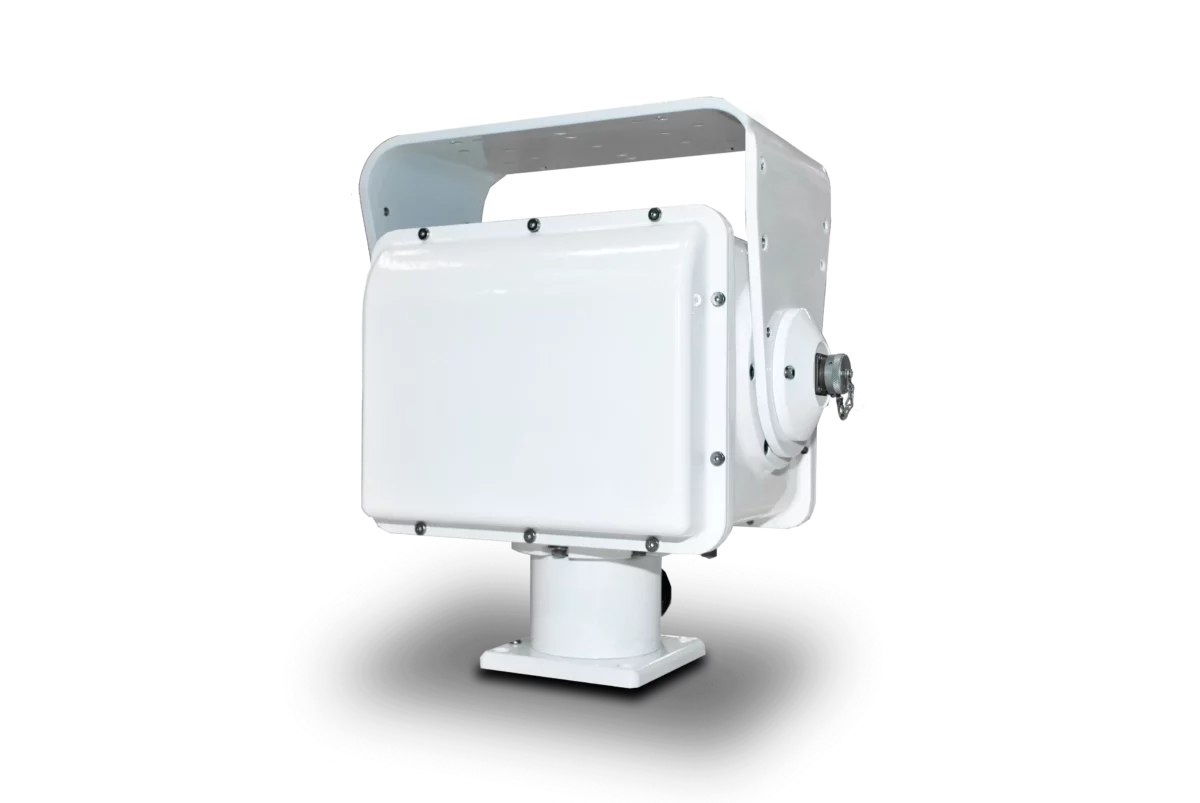
Why our portfolio is right for you
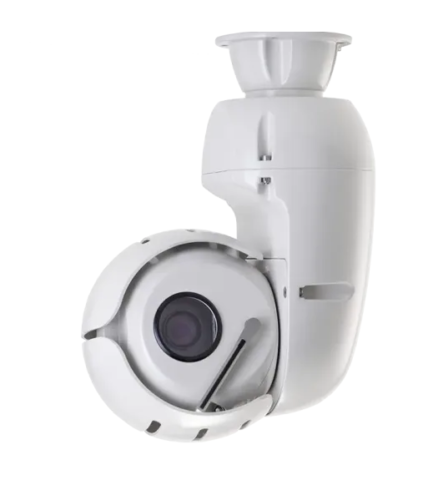
Our EOIR PTZ portfolio is designed for applications where reliable imaging, precise positioning and long-range observation are essential. By combining visible and infrared sensing with controlled pan, tilt and zoom, these systems provide dependable day-and-night situational awareness across a wide range of operating environments.
We offer a range of modular PTZ solutions, with different sensor resolutions, optical configurations, zoom capabilities and control interfaces to match your application. Whether you are designing a perimeter surveillance system, monitoring critical infrastructure or integrating EOIR capability into a wider platform, our portfolio gives you the flexibility to select the right combination of performance and integration requirements.
Our in-house technical expertise also supports you throughout the selection and integration process — helping you determine the appropriate resolution, zoom range, spectral capability and interface for your system, and ensuring the final solution delivers consistent, dependable performance in the field.
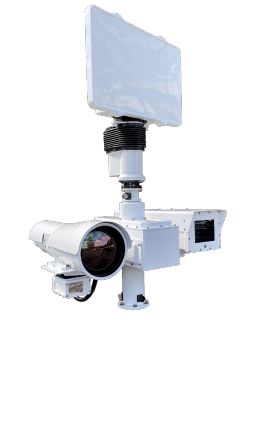
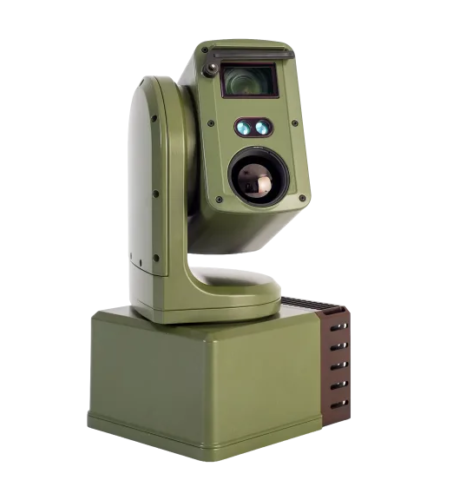
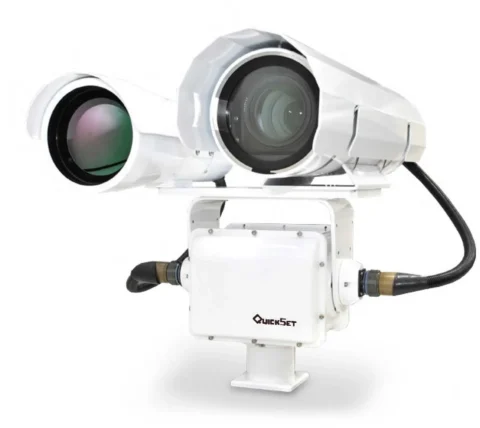
Key selection factors
-
Mounting environment (static vs mobile): EOIR PTZ cameras are best suited to fixed or semi-fixed installations where the mounting platform provides stability. For moving platforms where vibration and motion need to be actively compensated, EOIR gimbals are generally the better choice.
-
Pan/tilt precision and repeatability: Accurate, repeatable positioning is essential when monitoring defined areas, following targets or returning to known points of interest. This is a key strength of PTZ systems.
-
Zoom capability and optical performance: The visible zoom block plays an important role in long-range observation and identification. Higher magnification does not always mean better imagery, so zoom range, optical quality and sensor resolution need to be considered together.
-
Sensor alignment and fusion: Accurate alignment between visible and LWIR channels helps operators move seamlessly between sensor views and maintain a consistent understanding of the scene. Alignment also needs to remain stable as the system experiences changes in temperature and operating conditions.
-
System complexity vs alternatives: PTZ systems offer more flexibility than fixed camera modules while avoiding much of the mechanical and control complexity associated with stabilised EOIR gimbals. They provide a practical balance between capability, integration effort and cost.
-
Environmental robustness: Outdoor systems need to perform reliably through changing weather, temperatures, dust and other contaminants. Housing design, materials and environmental protection should therefore be considered alongside optical and positioning performance.
Technical overview
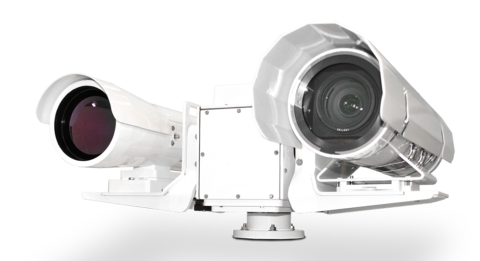
EOIR PTZ cameras bring several functions together in a single system, typically combining a visible camera, an LWIR thermal camera, motorised pan and tilt axes, and optical zoom.
The visible channel delivers high-resolution imagery for scene detail and identification, while the LWIR channel detects thermal contrast and supports observation in low light, darkness and other challenging conditions.
Unlike EOIR gimbals, which compensate for movement and vibration on mobile platforms, PTZ systems are intended for stable installations where accurate directional control is the priority. Visible and thermal sensors generally use separate optical paths, with alignment and synchronisation designed to keep both channels working together effectively.
Optical zoom is typically provided on the visible channel through an integrated zoom block, while thermal systems may use digital zoom or interchangeable lenses depending on the configuration. These systems are well suited to applications such as perimeter surveillance, infrastructure monitoring, site security and long-range observation.
Integration notes
EOIR PTZ cameras are typically supplied as integrated systems, with interfaces for video, power and control of the pan, tilt and zoom functions. This simplifies system-level integration while still giving engineers control over how the camera is positioned and operated.
Mechanical integration is relatively straightforward, but the mounting structure still needs to be rigid enough to maintain positioning accuracy. Even small amounts of vibration or movement can affect image stability and pointing accuracy, particularly at high zoom levels.
Control systems need to coordinate pan, tilt, zoom and sensor operation, often through standard control interfaces and protocols. Another important consideration is maintaining alignment between the visible and LWIR channels over the lifetime of the system, particularly where installations experience significant temperature changes or mechanical stress.
Compared with EOIR gimbals, PTZ systems remove the need for active stabilisation, making integration simpler while retaining precise pointing and tracking capability.
FAQ’s
They are used for surveillance, monitoring, and long-range observation where both thermal detection and visual identification are required. Typical applications include perimeter security and infrastructure monitoring. They provide flexible coverage without moving the entire system.
The main difference is system behaviour: • PTZ cameras: controlled positioning on fixed mounts • EOIR gimbals: active stabilisation for moving platforms PTZ systems are simpler and suited to stationary installations.
EOIR stands for electro-optical and infrared. It refers to the combination of visible-light and thermal imaging sensors in one system. This enables both detection and identification.
Zoom is critical for long-range identification and flexible field of view. Visible zoom blocks are typically used to achieve optical zoom. The performance of the zoom system directly affects usability.
Typical challenges include: • Ensuring stable mounting • Aligning visible and thermal sensors • Integrating control systems These factors influence system accuracy and reliability.
Yes, the LWIR thermal channel can detect heat signatures without visible light. However, the visible channel will require illumination. The system’s effectiveness depends on how both channels are used.
Yes, they are often designed for outdoor use with protective housings. Environmental sealing and durability are important for long-term operation. System design must match deployment conditions.
Typical issues include: • Choosing insufficient zoom range • Ignoring alignment between sensors • Underestimating mounting stability requirements These can reduce system performance if not addressed early.